MarketLens
Is BYD's 5-Minute Charging a Game-Changer for the EV Market

Key Takeaways
- BYD's new Blade Battery 2.0 and 1.5MW Flash Charging system promises a 10% to 70% charge in just 5 minutes, a significant leap in EV convenience.
- While Tesla's Supercharger network remains a global benchmark, BYD's charging speed and vertical integration pose a formidable challenge, especially after BYD surpassed Tesla in 2025 as the world's top BEV seller.
- Despite BYD's technological edge in charging, Tesla's strategic pivot towards AI and robotics, coupled with its robust software ecosystem, suggests a divergent long-term vision that investors are still heavily betting on.
Is BYD's 5-Minute Charging a Game-Changer for the EV Market?
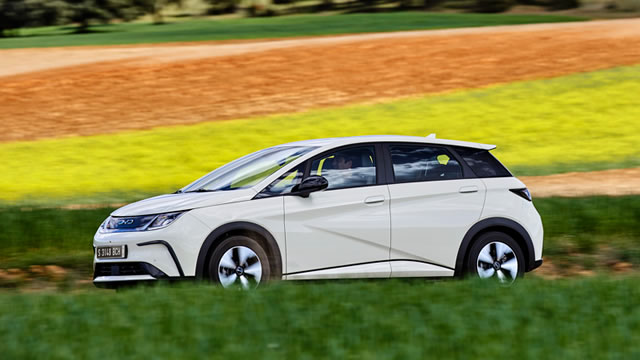
BYD Company Limited (BYDDY) has just unveiled its second-generation Blade Battery 2.0 alongside a revolutionary 1,500-kilowatt (1.5MW) Flash Charging system, a development that could fundamentally reshape consumer perceptions of electric vehicle (EV) ownership. This new technology promises to recharge compatible vehicles from 10% to 70% in a mere five minutes under optimal conditions, and from 10% to 97% in roughly nine minutes. Even in sub-zero temperatures, the system can achieve a 20% to 97% charge in about 12 minutes, effectively eliminating one of the biggest psychological barriers to EV adoption: charging anxiety.
The implications for the broader EV market are profound. Imagine pulling into a charging station and "filling up" your EV as quickly as a traditional gasoline car. This is the "brass ring" that automakers have been chasing, and BYD appears to have grasped it. The new system, operating at a 1,000V architecture and delivering up to 1,500 kW of power, can theoretically add around 400 kilometers (250 miles) of range in just five minutes. This speed is a stark contrast to the typical 20-30 minutes required for many current EVs to achieve an 80% charge.
To support this innovation, BYD is aggressively rolling out new flash charging stations across China. The company aims to deploy 20,000 stations in 2026, with 18,000 of these adopting a "station-within-a-station" model within existing public charging sites. An additional 2,000 highway stations are planned, covering one-third of highway service areas and placing a flash charger every 100 km. Crucially, BYD has addressed potential grid overload by incorporating energy storage batteries at each station, allowing them to draw power from the grid slowly and deliver rapid charges from stored energy. This strategic infrastructure build-out, combined with the technological leap, positions BYD to set new global standards for EV charging.
How Does BYD's New Tech Stack Up Against Tesla's Supercharger Network?
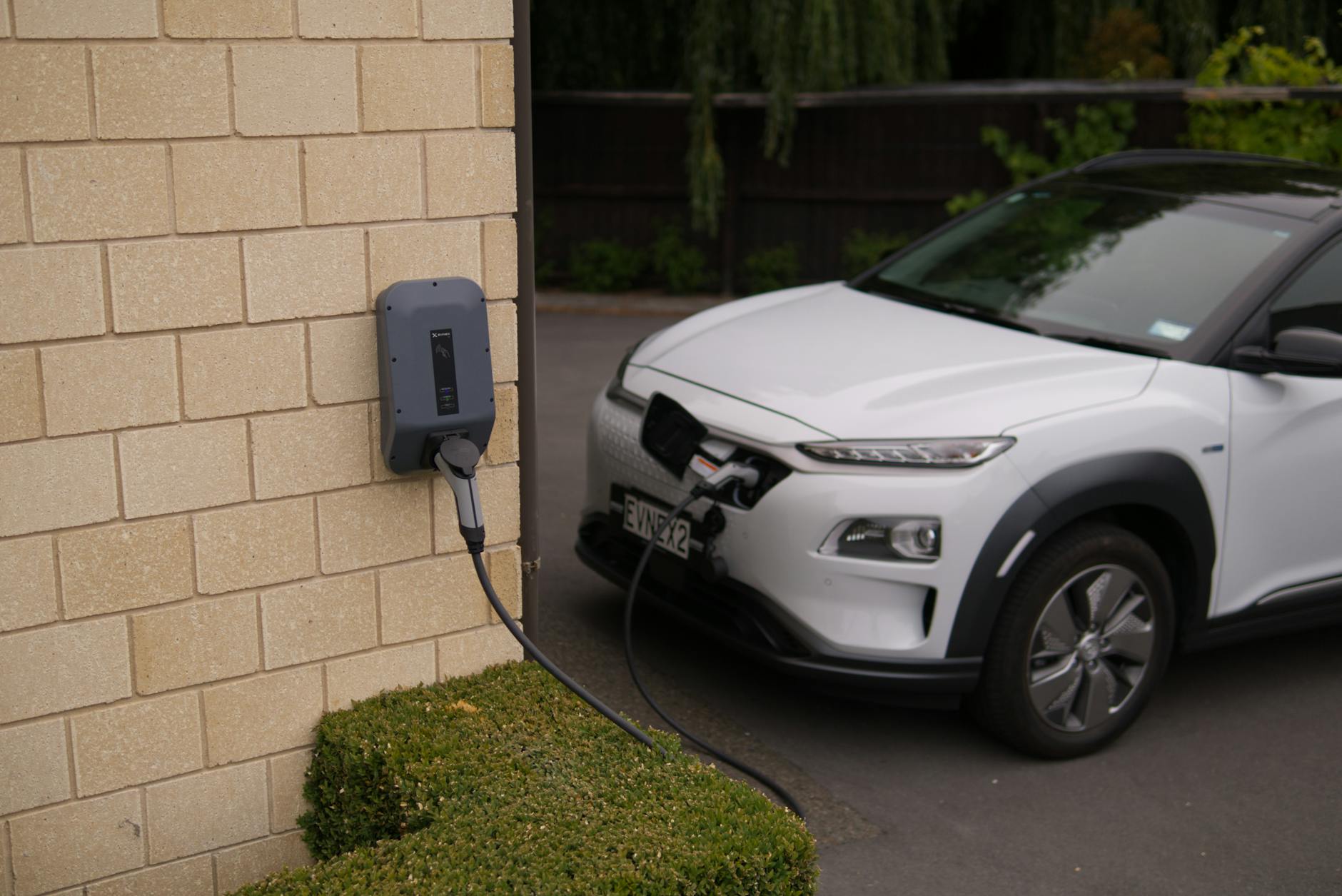
When comparing BYD's new Flash Charging system to Tesla's (TSLA) established Supercharger network, the immediate takeaway is a significant divergence in peak charging speeds. Tesla, long the benchmark for EV charging infrastructure, currently offers V3 Superchargers delivering up to 250 kW and newer V4 models pushing the limit to 350 kW. In practical terms, a Tesla typically charges from 10% to 80% in 18-20 minutes, adding approximately 275 kilometers (170 miles) in 15 minutes. This is a proven, reliable experience across Tesla's global network of over 50,000 connectors.
BYD's new system, by contrast, boasts a staggering 1,500 kW (1.5 MW) output and a 1,000V architecture, dwarfing Tesla's current 400V system. This allows BYD to achieve its headline-grabbing 5-minute charge for a 10% to 70% boost, or 400 km of range in the same timeframe. The difference in raw power output is roughly six times that of Tesla's fastest chargers today. This technological leap by BYD directly challenges Tesla's long-held advantage in charging convenience, which has been a key differentiator for many EV buyers.
However, the comparison isn't solely about peak power. Tesla's strength lies in its extensive, mature, and highly integrated global network. Tesla vehicles benefit from an integrated thermal system that preconditions the battery during navigation, ensuring optimal charging temperatures and consistent performance. While BYD is rapidly deploying its new stations in China, the international rollout is still in its nascent stages, with "precious few" 1,500 kW hubs outside its home market. This infrastructure gap means that while BYD's technology is superior on paper, its real-world accessibility for global consumers still lags behind Tesla's ubiquitous Supercharger network.
Has BYD Already Overtaken Tesla in the Global EV Race?
The narrative of Tesla's undisputed dominance in the EV market officially shifted in 2025, when BYD Company Ltd. surpassed Tesla as the world's top seller of battery-electric vehicles (BEVs) on an annual basis. BYD logged record sales of 2.26 million BEVs in 2025, marking a 28% increase year-over-year. In contrast, Tesla's annual deliveries fell 8% to approximately 1.64 million units. This isn't just a quarterly anomaly; it represents a historic handover of the EV sales crown, underscoring BYD's aggressive expansion and market penetration.
BYD's surge is rooted in a formidable, vertically integrated supply chain. The company controls nearly every aspect of its production, from batteries (including its innovative Blade Battery) to semiconductors. This vertical integration allows for aggressive cost control and rapid scaling, enabling BYD to offer a wide spectrum of vehicles, from affordable city cars to premium models, capturing a broader global market. While Tesla struggled with high price points and an aging product lineup, BYD flooded the market with diverse and competitively priced options, helping China achieve a staggering 51% EV market share in 2025.
Tesla's stumble in 2025 was exacerbated by several factors. The expiration of the $7,500 U.S. tax credit under legislation supported by President Donald Trump stifled domestic demand. Internationally, Tesla's market share in key European markets like France and Sweden plummeted by nearly two-thirds in December alone. Furthermore, backlash against CEO Elon Musk's political activities has reportedly damaged the company's reputation both at home and abroad. While Tesla remains by far the world's most valuable carmaker, with a market cap of $1.47 trillion compared to BYD's $110.60 billion, the sales figures clearly indicate a shift in the operational leadership of the BEV market.
What Do the Financials Say About BYD and Tesla's Competitive Standing?
A deep dive into the trailing twelve months (TTM) financial fundamentals reveals a fascinating contrast between BYD (BYDDY) and Tesla (TSLA), reflecting their differing stages of growth and market strategies. BYD, trading at $12.28, boasts a market capitalization of $110.60 billion. Its valuation metrics appear more grounded, with a P/E ratio of 23.70, P/S of 1.07, and EV/EBITDA of 10.59. These figures suggest a company with strong underlying profitability and a more reasonable valuation relative to its earnings and sales. BYD's net profit margin stands at a healthy 4.6%, with a robust ROE of 17.6% and ROIC of 8.4%. The company's revenue growth for FY2024 was an impressive 29.0%, with net income growing 34.0% and EPS up 34.1%.
Tesla, currently priced at $391.20, commands a significantly larger market cap of $1.47 trillion. However, its valuation multiples are substantially higher, with a P/E ratio of 333.15, P/S of 15.48, and EV/EBITDA of 124.09. These elevated metrics indicate that investors are pricing in substantial future growth, often tied to its ventures beyond automotive. Tesla's net margin is 4.0%, slightly below BYD's, and its returns on equity, assets, and invested capital (ROE 4.8%, ROA 2.8%, ROIC 3.0%) are considerably lower than BYD's, suggesting less efficient capital deployment in the TTM. Furthermore, Tesla's FY2025 saw a revenue decline of -2.9% and a sharp drop in net income of -46.8%, with EPS also falling -47.0%.
While BYD's free cash flow (FCF) is negative at -$2.71 per share (FCF Yield -2.8%), reflecting heavy investment in expansion, its operating cash flow growth for FY2024 was still a negative -21.4%. Tesla, despite its revenue and net income contraction, managed a positive FCF of $1.93 per share (FCF Yield 0.4%) and a remarkable 73.7% FCF growth in FY2025, indicating better cash generation from its operations. BYD's cumulative 3-year revenue growth of 255.3% and net income growth of 1206.4% dwarfs Tesla's 13.0% revenue growth and -70.7% net income decline over the same period, highlighting BYD's explosive recent expansion.
What Does BYD's Innovation Mean for Tesla's Future Trajectory?
BYD's new 5-minute charging technology and its aggressive market share gains present a clear and present danger to Tesla's long-term competitive positioning, particularly in the core EV manufacturing business. For years, Tesla's Supercharger network was its "last great advantage," a crucial differentiator that justified its premium pricing and fostered brand loyalty. Now, BYD is not only matching but potentially exceeding Tesla's charging convenience, a factor that a 2026 Deloitte study found to be a primary hesitation for 44% of U.S. EV buyers. This directly impacts Tesla's brand image as the cutting-edge EV manufacturer.
However, Tesla's strategy has increasingly diversified beyond just selling cars. Elon Musk has consistently articulated a vision where Tesla becomes a leader in robotics and artificial intelligence, with products like robotaxis and humanoid robots taking center stage. The company's market valuation of $1.47 trillion, far exceeding that of any other automaker, reflects investor confidence in this broader, more ambitious technological pivot. Tesla's decision to halt production of its Model S and X in favor of robotics development, as well as its focus on autonomous capabilities, underscores this shift. While BYD is dominating the "here and now" of EV sales and charging tech, Tesla is betting on the "next big thing."
The challenge for Tesla is that while it pursues these futuristic endeavors, its core automotive business is facing intense pressure. The company's reliance on external battery suppliers, even as it develops its own 4680 cells, could force it to adapt to BYD's advancements. If BYD's Blade Battery 2.0 proves too competitively powerful, Tesla might need to integrate similar technologies, potentially at the expense of its proprietary Supercharger network's exclusivity. The reputational impact alone could be significant, as consumers increasingly view BYD as the innovation leader in practical EV technology. Tesla's future trajectory hinges on whether its AI and robotics bets pay off before its automotive lead erodes too deeply.
Which EV Giant is Better Positioned for Future Growth?
Determining which EV giant, BYD or Tesla, is better positioned for future growth depends heavily on an investor's time horizon and risk appetite. BYD is clearly the momentum play in the traditional automotive sector. Its vertical integration, aggressive pricing, and now, game-changing charging technology, position it to continue dominating global EV sales, especially in price-sensitive markets and regions with developing infrastructure. The company's rapid growth in revenue and net income, coupled with a more reasonable valuation, suggests a compelling investment for those focused on the tangible expansion of the EV market.
Tesla, on the other hand, is a bet on a much broader, more speculative future. Its valuation is not solely tied to car sales but to its potential to revolutionize AI, robotics, and energy storage. While its automotive growth has stalled and profitability has declined in the TTM, the company's vast cash reserves (Current Ratio of 2.16) and negative net debt position provide a strong foundation for these ambitious ventures. Investors in Tesla are essentially buying into Elon Musk's vision of a multi-faceted tech conglomerate, accepting higher risk for potentially exponential returns if these moonshot projects succeed.
For the near to medium term, BYD appears to have the stronger hand in the EV market, driven by its superior charging technology and proven ability to scale production and sales globally. Its strategic solution to grid overload and rapid charging station rollout underscore a practical, market-driven approach. Tesla's path is riskier but holds the promise of greater disruption if its AI and robotics initiatives come to fruition. Investors must weigh BYD's current operational excellence and market leadership against Tesla's long-term, high-reward technological aspirations.
In the rapidly evolving EV landscape, BYD's tangible innovations in charging and its dominant sales figures make it a compelling choice for investors seeking robust growth in the automotive sector. Tesla, while facing headwinds in its core business, offers a high-stakes bet on a transformative future driven by AI and robotics. The coming years will reveal whether practical innovation or visionary disruption ultimately wins the race for market leadership and investor confidence.
Want deeper research on any stock? Try Kavout Pro for AI-powered analysis, smart signals, and more. Already a member? Add credits to run more research.
Related Articles
Category
You may also like


Is Archer Aviation Stock Your Ticket to Becoming a Millionaire?

Is Sandisk the Next Nvidia?

Is General Motors Gaining Momentum in China's NEV Market?
Breaking News
View All →Featured Articles
Top Headlines

1 Unbelievable Stat That Makes Me Bullish on AI Stocks

Meta Stock Plummets As Massive 20% Layoffs Loom: What Investors Need To Know

Meta Platforms Stock Dips on AI Model Worries. Time to Buy?

The $700 Billion AI Spending Boom: 3 Tech Stocks Positioned to Win in 2026