MarketLens
Is Tesla's Mega-Supercharger Hub a Game Changer for EV Adoption

Key Takeaways
- Tesla's planned 400+ stall Supercharger hub in California is a strategic move to solidify its charging network dominance and address growing EV congestion, particularly as its network opens to other brands.
- The widespread adoption of the North American Charging Standard (NACS) by major automakers, coupled with Tesla's cost-efficient "flywheel" deployment model, positions the company to capture significant revenue from non-Tesla EV drivers.
- While Tesla's market share in new charging deployments is naturally declining as the overall industry expands, its unparalleled reliability and scale remain a critical competitive advantage that underpins the broader EV adoption narrative.
Is Tesla's Mega-Supercharger Hub a Game Changer for EV Adoption?
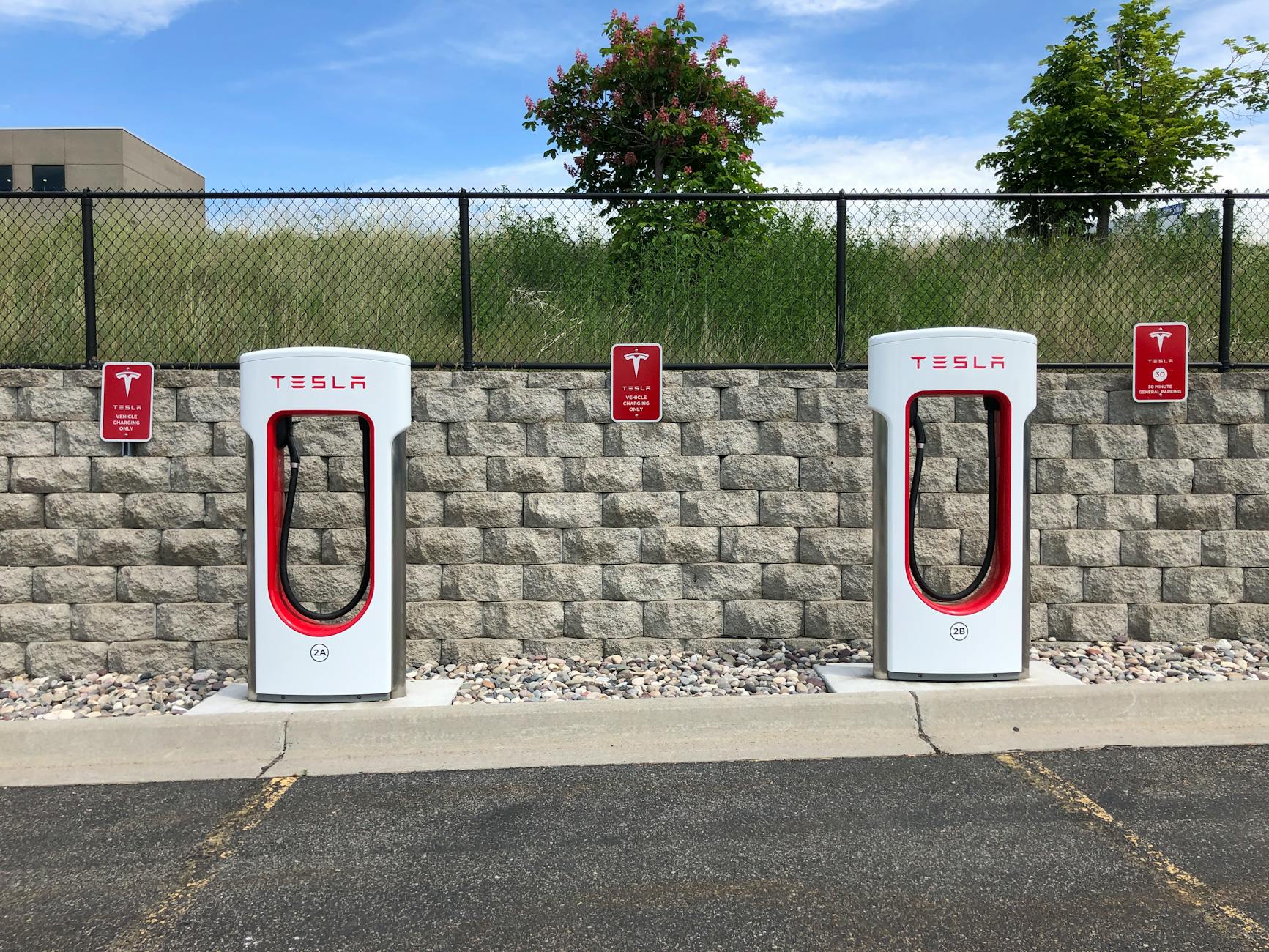
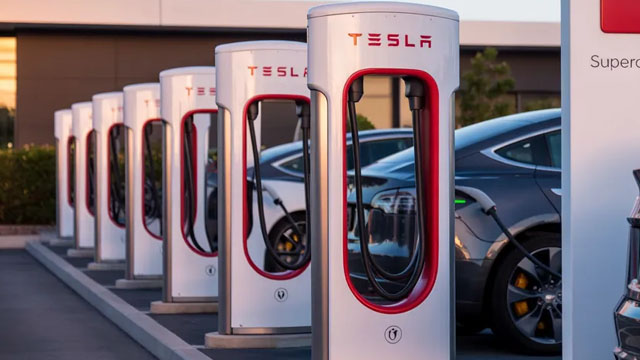
Tesla is making a bold statement about the future of EV charging infrastructure with its planned 400+ stall Supercharger hub in California. This colossal project, slated for the existing Eddie World Supercharger in Yermo along the heavily trafficked Interstate 15 corridor between Los Angeles and Las Vegas, is far more than just another charging station; it's a blueprint for alleviating range anxiety and congestion on an unprecedented scale. By creating a charging destination that dwarfs existing sites like Lost Hills (164 stalls) and Barstow (120 stalls), Tesla aims to absorb the variability of charging demand and solidify its network as the backbone of North American EV travel.
This expansion comes at a critical juncture for the EV market. Despite a cautious narrative in 2025, the US fast-charging industry saw astounding growth, adding over 18,000 new DC fast-charging ports, a 30% year-over-year increase. Tesla, of course, led this charge, deploying 6,786 Supercharger ports in 2025, more than the next nine operators combined. The Firebaugh-like hubs, with their integrated amenities like dining and retail, are designed not just for charging but to transform the entire travel experience, offering a glimpse into a future where EV stops rival traditional gas stations in convenience and capacity.
The sheer scale of these new hubs directly addresses one of the most persistent barriers to EV adoption: the fear of running out of power or facing long queues, especially on long-distance trips. With hundreds of stalls, including pull-through bays for larger vehicles like the Cybertruck and even dedicated Megachargers for the Tesla Semi, these sites are engineered for high throughput. This strategic deployment, particularly along vital freight routes like California's I-5, is crucial for unlocking electric trucking and significantly contributing to clean air goals in high-volume corridors.
Moreover, the integration of amenities at these "Supercharger Oases" transforms a necessary stop into a potential revenue stream for Tesla. With charging sessions typically lasting 15-30 minutes to go from 10-60% on many modern EVs, drivers will have time to spend at on-site restaurants like Cracker Barrel and McDonald's, or convenience stores. This holistic approach to the charging experience not only enhances user satisfaction but also creates an economic opportunity for Tesla to monetize waiting times, turning charging stations into profitable retail destinations.
How Does NACS Adoption Reshape Tesla's Charging Dominance?
The widespread adoption of the North American Charging Standard (NACS), now officially standardized as J3400, is fundamentally reshaping the EV charging landscape and solidifying Tesla's strategic advantage. By early 2026, most major EV brands in North America, including Ford, General Motors, Rivian, Hyundai, Kia, Honda, and BMW, have either committed to or already offer Supercharger access. This industry-wide embrace means that Tesla’s once-proprietary network is rapidly becoming the de facto standard, providing a critical revenue stream and reinforcing its infrastructure leadership.
While the transition isn't entirely seamless yet—many non-Tesla EVs still require an OEM-approved CCS-to-NACS adapter and interaction with the Tesla app—the future points to native NACS ports on new models from 2025 onward. This will eventually eliminate the need for adapters, streamlining the charging experience for all EV drivers. Tesla doesn't charge a flat membership fee for non-Tesla drivers, instead opting for per-kWh pricing that can be slightly higher than for Tesla owners, varying by location and time of day. This tiered pricing model allows Tesla to capture additional revenue while still offering competitive rates, especially with the option for non-Tesla drivers to purchase a monthly membership to access Tesla-owner pricing.
Despite the growing industry momentum, non-Tesla charging networks have been notably slow to deploy NACS hardware. As of Q2 2025, a staggering 89% of all publicly available NACS ports were at Tesla sites, compared to a mere 6.8% on non-Tesla networks. Non-Tesla networks had only installed 918 NACS cable connectors by Q2 2025, with a growth rate described as a "snail's pace." This disparity highlights Tesla's significant head start and its continued dominance in providing NACS-compatible infrastructure, even as other players like Mercedes-Benz HPC and Ionna begin to scale up their multi-standard, high-capacity sites.
This strategic opening of the network, initially through "Magic Dock" integrated adapters and now through native NACS ports, is a masterstroke. It allows Tesla to leverage its extensive infrastructure, built with a lower CAPEX per stall (target of under $40,000 for V4 chargers, significantly below the industry average exceeding $100,000), to generate revenue from a rapidly expanding pool of EV drivers. This move not only enhances Tesla's financial position but also accelerates the overall adoption of EVs by providing a reliable and ubiquitous charging solution, addressing a key pain point for potential buyers.
How Does Tesla Address Range Anxiety and Congestion for All EV Drivers?
Tesla's massive Supercharger expansions, like the planned 400+ stall hub, are directly targeting the twin anxieties that have long plagued EV adoption: range anxiety and charging congestion. For years, the fear of running out of power on long trips or encountering broken or occupied chargers has deterred many potential EV buyers. Tesla's strategy of building "Supercharger Oases" with hundreds of stalls, strategically located on major travel corridors, fundamentally shifts this narrative from scarcity to abundance.
Consider the impact on a busy route like I-15 between Los Angeles and Las Vegas. Even with over 200 high-power charging stalls already in the area, peak travel periods still lead to congestion. A 400-stall facility provides an enormous buffer, ensuring that drivers, whether in a Tesla or a compatible non-Tesla EV, can reliably find an open charger. This scale is crucial for accommodating the growing fleet of EVs and the influx of non-Tesla vehicles now accessing the network, creating a seamless experience that mirrors the convenience of traditional gas stations.
Reliability is another cornerstone of Tesla's advantage. While the overall fast-charging industry is expanding rapidly, a J.D. Power study highlights that Tesla owners generally express few concerns about charger availability or outages. This "it just works" experience is a significant differentiator. However, the study also revealed that non-Tesla EV owners, despite gaining access, often find the process and payment systems less streamlined than Tesla owners do, sometimes facing higher per-kWh rates. This friction point, while manageable, underscores the ongoing challenge of integrating diverse vehicle ecosystems into a unified charging experience.
The physical layout of Superchargers also presents a practical challenge for non-Tesla drivers. Supercharger cables are designed for Tesla's rear driver-side charge port, often making it awkward for other EVs with different port locations to park and connect without straining the cable or blocking other stalls. While the NACS transition and native ports will alleviate some of this, careful parking and adapter management remain part of the non-Tesla Supercharging experience for now. Despite these minor frictions, the sheer availability and reliability of the Supercharger network offer an unparalleled safety net for all EV drivers, especially on road trips.
What Are the Economics Behind Tesla's Charging Flywheel?
Tesla's approach to building out its Supercharger network isn't just about installing more plugs; it's a meticulously engineered "flywheel" that leverages economies of scale, vertical integration, and a product-centric mindset to achieve unparalleled cost efficiency and reliability. This model is difficult for other charge point operators (CPOs) to replicate, giving Tesla a significant competitive edge in the rapidly expanding EV charging market.
At the core of this flywheel is Tesla's ability to deploy charging infrastructure at a significantly lower cost per stall. While the industry average for a DC fast-charging stall often exceeds $100,000, Tesla's hardware cost for a Supercharger stall is approximately $40,000-$45,000, with a target of under $40,000 per stall for its newer V4 chargers. This cost advantage stems from a standardized site layout, centralized power cabinets, relatively tight parking spots to minimize land lease costs, and the use of pre-fabricated Supercharger units that reduce installation timelines and expenses.
Large-format sites, like the upcoming 400+ stall hub, further amortize grid interconnection, permitting, and construction works across a greater number of chargers. This strategy not only lowers the cost per dispenser but also creates a deployment machine that behaves more like a product rollout than a traditional infrastructure project. By treating charging as a product, Tesla can scale rapidly and efficiently, funding faster network expansion and upgrades for all users through increased revenue from both Tesla and non-Tesla drivers.
Beyond direct charging revenue, these mega-hubs present opportunities for ancillary income. The integration of dining, retail, and convenience stores at "Supercharger Oases" allows Tesla to monetize the 15-30 minute average charging stop. This transforms charging stations into potential retail destinations, generating additional revenue streams and enhancing the overall customer experience. Furthermore, large-scale sites often incorporate Megapack battery storage systems, which can shave peak demand, store solar energy, and stabilize the local grid, potentially offering further cost savings and revenue opportunities through grid services.
How Does Tesla's Charging Strategy Impact the Broader EV Ecosystem?
Tesla's aggressive expansion and opening of its Supercharger network are having a profound impact on the broader EV ecosystem, driving both competition and collaboration. While Tesla remains the dominant public fast-charging operator, its share of new fast-charging capacity is naturally declining as the overall market diversifies and other networks rapidly expand. This shift indicates a maturing industry where multiple players are contributing to infrastructure growth, rather than a single entity holding a monopoly.
In 2025, the US fast-charging industry saw record growth, with over 18,000 new DC fast-charging ports installed, a 30% year-over-year increase. While Tesla added 6,786 Supercharger ports, its share of new deployments fell to 37.6% as total market growth outpaced any single company's ability to scale. New and expanding players like Mercedes-Benz HPC, Ionna, and Red-E significantly exceeded forecasts, demonstrating robust private-led investment in charging infrastructure. This diversification is crucial for the long-term health and resilience of the EV market.
The industry is also witnessing a clear pivot toward higher-capacity infrastructure. In Q2 2025, the share of 250+ kW chargers rose sharply from 25% to 38%, while lower-power units declined. This trend, particularly among non-Tesla networks, reflects the increasing demand for faster charging speeds to accommodate modern EVs with larger battery packs. The deployment of multi-standard, high-capacity sites by players like BP Pulse and AppleGreen, alongside the growing adoption of NACS connectors at non-Tesla stations, signals a move towards a more integrated and user-friendly charging experience across the board.
Despite the momentum, challenges persist. Charging deployment remains geographically uneven, with coastal states and major corridors leading, while parts of the Midwest lag. Connector compatibility and adapter requirements also remain a source of friction during the ongoing transition to NACS. However, the overall trend points to a "Charging 2.0" era, where large retailers, automakers, and fuel & convenience-store operators, whose primary business is not charging, are significantly scaling up. These new entrants are expected to dominate the 2026 leaderboard, fostering a more competitive and robust charging landscape that ultimately benefits the EV consumer.
What Are the Investor Implications for Tesla (TSLA)?
For investors in Tesla (NASDAQ: TSLA), currently trading at $387.02 with a market cap of $1.45 trillion, the Supercharger network's expansion and opening represent a complex but largely positive narrative. While the company's primary revenue driver remains vehicle sales, the charging infrastructure is evolving into a significant strategic asset and a growing revenue stream. The ability to monetize its vast network by charging non-Tesla EVs, coupled with its cost-efficient deployment model, provides a defensive moat and a competitive advantage that is difficult for rivals to match.
The "flywheel" effect of lower CAPEX per stall and the ability to amortize costs across massive hubs means Tesla can continue to expand its network profitably, even as its share of new deployments declines. This ensures that as the overall EV market grows, Tesla captures a substantial portion of the charging revenue, bolstering its services segment. The shift to NACS further solidifies this, effectively turning Tesla's proprietary standard into an industry-wide norm, granting it a first-mover advantage and ongoing influence over the charging ecosystem.
However, investors must also consider potential headwinds. The increasing competition from other CPOs, many of whom are deploying higher-power chargers and multi-standard sites, means Tesla's dominance, while still significant, will face erosion over time. The challenges for non-Tesla drivers using Superchargers, such as cable length and slightly less streamlined payment processes, could also impact customer satisfaction and utilization rates. Furthermore, the sheer demand from hundreds of vehicles charging simultaneously at mega-hubs could strain local grids, requiring substantial investment in battery storage and smart grid integration, though Tesla's Megapack solutions are designed to address this.
Ultimately, Tesla's Supercharger strategy is a long-term play that underpins the entire EV value proposition. It addresses fundamental consumer concerns, drives broader EV adoption, and creates a sticky ecosystem that benefits Tesla directly and indirectly. While the stock is currently down 2.45% today, reflecting broader market dynamics and perhaps some profit-taking, the robust expansion of its charging network, coupled with its cost advantages and the NACS adoption, provides a strong foundation for future growth and reinforces its position as a leader in the electric vehicle revolution.
Tesla's continued investment in its Supercharger network, exemplified by the Firebaugh mega-hub, is a powerful statement of confidence in the long-term EV transition. This strategic infrastructure play not only addresses critical barriers to adoption but also positions TSLA to capture significant value from the expanding electric vehicle market. Investors should view this as a key pillar supporting Tesla's enduring market leadership and future revenue diversification.
Want deeper research on any stock? Try Kavout Pro for AI-powered analysis, smart signals, and more. Already a member? Add credits to run more research.
Related Articles
Category
You may also like


Can Tesla Solve EV Congestion With 400+ New Supercharger Stalls?

Can Solana's 755% payment surge trigger a SOL supercycle?

Tesla is making a subtle change that could have big implications
Breaking News
View All →Featured Articles
Top Headlines

Tesla Finally Has Its First Semi-Truck and It's Already a Hit With Truckers

Amazon acquires Rivr, maker of a stair-climbing delivery robot

Netflix (NFLX) Falls More Steeply Than Broader Market: What Investors Need to Know

U.S. tech execs smuggled Nvidia chips to China, prosecutors say