MarketLens
Is Rapid Space Launch the New Frontier for Defense Stocks

Key Takeaways
- Lockheed Martin and Firefly Aerospace’s recent VICTUS DIEM exercise underscores a pivotal shift towards rapid, tactically responsive space capabilities, crucial for modern national security.
- The U.S. Space Force's increased budget allocation for Tactically Responsive Space (TacRS) missions, including $168 million in FY2026, signals robust government investment in this burgeoning sector.
- Lockheed Martin, a defense titan, is strategically positioning itself at the forefront of this evolution, leveraging commercial partnerships to accelerate technology deployment and secure future contracts.
Is Rapid Space Launch the New Frontier for Defense Stocks?
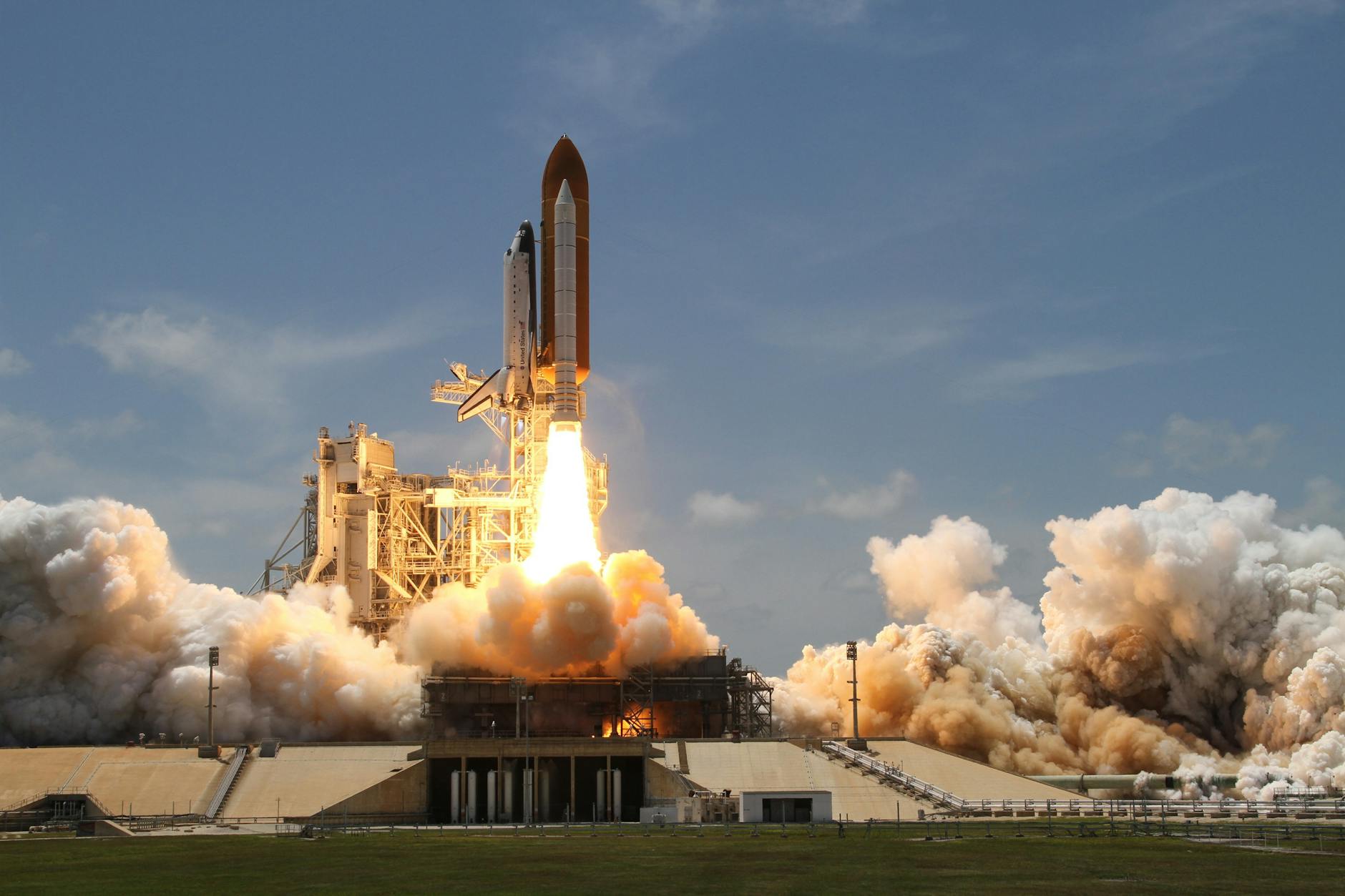
The recent VICTUS DIEM exercise, a collaborative effort between Lockheed Martin and Firefly Aerospace for the U.S. Space Force, has thrown a spotlight on the critical importance of tactically responsive space capabilities. This isn't just another military drill; it's a clear demonstration of a paradigm shift in national security, emphasizing speed and agility in space operations. The ability to process payloads in under 12 hours and simulate a rapid launch within 36 hours of a "notice to launch" fundamentally changes the calculus of space-based defense.
This exercise, part of the broader VICTUS program, is designed to refine and codify repeatable processes for rapid launch, integrating commercial partners into government operations. Such capabilities are no longer theoretical; they are becoming operational necessities in a rapidly evolving geopolitical landscape. Consider the implications: in a crisis, the ability to quickly deploy or replace satellites could mean the difference between maintaining or losing a critical strategic advantage. This agility directly addresses the need to counter evolving threats and ensure continuous space domain awareness.
The U.S. Space Force is not just testing concepts; it's actively transitioning Tactically Responsive Space (TacRS) from a demonstration effort to full-scale operations. The fiscal year 2026 budget includes a significant $168 million for TacRS, a substantial increase from previous years' $30 million to $40 million. This funding surge is earmarked not only for a busy schedule of missions like VICTUS SOL and VICTUS SURGO but also for essential ground infrastructure, launch range improvements, and advanced software to support future TacRS operations. This commitment signals a long-term investment trend that investors should not ignore.
This strategic pivot is driven by the recognition that traditional, months-long satellite deployment cycles are too slow for modern conflicts. The VICTUS DIEM exercise, which included a tabletop phase in late 2025 and a field training exercise in early 2026, showcased how commercial collaboration can drastically shorten timelines. Lockheed Martin's involvement, alongside Firefly Aerospace, highlights how established defense contractors are adapting, integrating agile commercial innovation to meet urgent warfighter demands. This blend of legacy expertise and startup speed is a powerful combination for the future of space defense.
How is Lockheed Martin Capitalizing on This Shift?
Lockheed Martin, a titan in the aerospace and defense sector with a market capitalization of $144.44 billion, is not merely participating in these exercises; it's actively shaping the future of responsive space. Its collaboration with Firefly Aerospace in the VICTUS DIEM exercise demonstrates a proactive strategy to accelerate the deployment of new technologies and incorporate feedback from government stakeholders. This isn't just about building hardware; it's about integrating capabilities and processes that enhance military responsiveness on an unprecedented scale.
The company's involvement in rapid payload processing, completing operations in under 12 hours, and the 36-hour rapid launch simulation, are tangible examples of its commitment. This operational agility is critical for national security, enabling American and allied forces to quickly launch assets to counter threats or augment degraded systems. Lockheed Martin's role extends beyond just a prime contractor; it's a key enabler of the Space Force's vision for a more agile and resilient space architecture.
Furthermore, Lockheed Martin's strategic focus aligns perfectly with the Pentagon's broader push to ramp up war supplies and defense systems. Recent agreements with the Department of War to quadruple Precision Strike Missile production, announced on March 25, 2026, underscore the company's critical role in national defense. This robust demand environment, coupled with the burgeoning space defense sector, provides a strong tailwind for LMT's long-term revenue growth. Analysts project LMT's revenue to reach $87.0 billion by FY2029 and $88.9 billion by FY2030, reflecting confidence in its sustained performance.
The company's stock, currently trading at $624.20, up 2.30% today, reflects investor confidence, though it remains within its 52-week range of $410.11 to $692.00. With a consensus analyst price target of $625.18 and a median of $654.00, there appears to be modest upside potential from current levels. The company's consistent dividend of $3.45/share quarterly, yielding 1.99%, also makes it an attractive option for income-focused investors looking for exposure to the defense sector's growth. Lockheed Martin's strategic positioning in responsive space, combined with its strong fundamentals and defense spending tailwinds, makes it a compelling consideration for portfolios.
What are the Investment Implications for the Space Defense Sector?
The burgeoning space defense sector, propelled by initiatives like TacRS, represents a significant growth opportunity, moving beyond traditional satellite manufacturing to encompass rapid launch, on-orbit servicing, and enhanced space domain awareness. This shift is creating a new ecosystem where agility and commercial innovation are highly valued. Investors should recognize that this isn't just about large prime contractors; it's also about the smaller, more nimble players that are driving technological advancements.
The Space Force's increased budget for TacRS, with $168 million allocated for FY2026, is a clear signal of sustained government investment. This funding will not only support missions but also critical infrastructure upgrades at federal launch ranges, which have historically faced bottlenecks due to aging facilities and staffing shortages. The Space Force plans to spend $1.4 billion from 2024 through 2028 on its "Spaceports of the Future" project, addressing needs like expanded launch support facilities and improved transportation infrastructure. These investments create a ripple effect, benefiting a wide array of companies involved in space infrastructure, logistics, and technology.
Commercial partnerships, as demonstrated by Lockheed Martin and Firefly Aerospace, are becoming integral to this strategy. Firefly Aerospace, for instance, has been awarded a $21.81 million contract for the VICTUS SOL mission, highlighting the government's reliance on commercial providers for responsive launch services. Firefly's Alpha rocket, which successfully launched a demonstrator payload for Lockheed Martin on March 11, 2026, is a prime example of how smaller, innovative companies are securing significant government contracts. While specific public market data for Firefly Aerospace (the US entity) is not readily available, its role underscores the vitality of the commercial space ecosystem.
Investors should look for companies with proven rapid launch capabilities, advanced satellite technology, and strong partnerships with government agencies. The sector is characterized by high barriers to entry, requiring significant capital investment and specialized expertise, which favors established players and well-funded startups. The long-term trend of increasing militarization of space, coupled with the need for resilient and responsive assets, suggests a robust growth trajectory for companies operating in this critical domain.
What are the Risks and Opportunities in Responsive Space?
The responsive space sector, while promising, is not without its risks. Technical challenges remain paramount; rocket anomalies, as seen with Firefly's Alpha rocket in April 2025 and a separate ground test anomaly in late September, can cause significant delays and cost overruns. While Firefly has since been cleared to launch and successfully completed its Alpha Flight 7 on March 11, 2026, such setbacks highlight the inherent complexities and risks in space launch operations. Investors must weigh the potential for innovation against the realities of rocket science.
Another key risk lies in the regulatory and infrastructural bottlenecks at federal launch ranges. Despite the Space Force's "Spaceport of the Future" initiative, which includes $1.3 billion in funding from FY2024 to FY2028, issues like staffing shortages, transportation limitations, and scheduling conflicts with other military activities persist. The Space Force reached 100 launches per year in 2025, a milestone it initially projected for 2030, indicating that demand is outstripping current infrastructure capacity. These bottlenecks can impact launch cadences and, consequently, revenue streams for launch providers.
However, the opportunities far outweigh these challenges for companies that can execute. The Space Force's commitment to TacRS is unwavering, with missions like VICTUS SOL and VICTUS SURGO planned for 2026. This sustained demand provides a clear runway for growth for companies like Lockheed Martin and Firefly Aerospace. Lockheed Martin's ability to integrate new technologies rapidly, as demonstrated in VICTUS DIEM, positions it as a preferred partner for complex, high-priority national security missions.
Furthermore, the dual-use nature of space technology means that advancements in responsive space for defense can also translate into commercial applications, such as rapid satellite deployment for constellations or emergency communications. This broadens the market potential beyond government contracts. Companies that can leverage common flight-proven technologies across both defense and commercial segments, like Firefly Aerospace with its Alpha rocket, stand to benefit from economies of scale and diversified revenue streams. The strategic importance of space, coupled with ongoing geopolitical tensions, ensures that investment in this sector will remain a national priority.
What Does This Mean for Investors?
For investors, the rapid evolution of tactically responsive space capabilities presents a compelling long-term growth narrative, particularly for established defense contractors like Lockheed Martin and innovative commercial space companies. Lockheed Martin's participation in the VICTUS DIEM exercise is not just a news item; it's a strategic indicator of where significant defense spending is headed. The company's deep ties to the U.S. government, coupled with its proven ability to deliver complex systems, make it a cornerstone investment in this expanding sector.
Lockheed Martin's financial health remains robust, with analysts maintaining a "Buy" consensus rating based on 37 analysts, including 20 "Buy" and 16 "Hold" ratings. While its last earnings in January 2026 saw an EPS miss at $5.80, the company's long-term revenue and EPS estimates are strong, with projected EPS of $35.02 by FY2029 and $37.48 by FY2030. Its beta of 0.20 also suggests lower volatility compared to the broader market, offering a degree of stability in a dynamic sector.
The broader space defense market is poised for sustained growth, driven by geopolitical imperatives and technological advancements. Investors should consider a diversified approach, looking at both prime contractors and specialized commercial players that offer unique capabilities in areas like rapid launch, satellite manufacturing, and space domain awareness. The increased budget allocations for TacRS and spaceport infrastructure underscore a long-term commitment from the U.S. government, creating a fertile ground for investment.
However, due diligence is crucial. Evaluate companies based on their technological readiness, contract wins, and ability to navigate regulatory and operational challenges. The space industry is capital-intensive and subject to technical risks, so a strong balance sheet and experienced management team are vital. For those looking to gain exposure to this critical and growing segment of the defense industry, the current landscape offers intriguing opportunities.
Is Lockheed Martin a "Buy" in the Responsive Space Era?
Lockheed Martin stands as a compelling investment in the burgeoning responsive space era, leveraging its unparalleled defense expertise with agile commercial partnerships. The company's strategic alignment with the U.S. Space Force's TacRS initiatives positions it for sustained growth, backed by significant government funding. With a strong analyst consensus and robust forward estimates, LMT offers a blend of stability and exposure to a critical national security domain.
While the sector carries inherent technical and operational risks, Lockheed Martin's proven track record and proactive engagement in cutting-edge programs like VICTUS DIEM mitigate much of this uncertainty. The ongoing militarization of space ensures a long-term demand for its advanced systems and services. For investors seeking a foundational play in the future of space defense, Lockheed Martin presents a solid case for consideration.
Want deeper research on any stock? Try Kavout Pro for AI-powered analysis, smart signals, and more. Already a member? Add credits to run more research.
Related Articles
Category
You may also like


Firefly Rockets Lockheed Payload To Orbit: Is FLY a High‑Beta Defense Trade?

The New War Portfolio: 3 Stocks Built for a High-Tech War

RKLB vs. AVAV: Which Stock is Better in the Space Race Right Now?
Breaking News
View All →Featured Articles
Top Headlines

Argentarii LLC Purchases 3,891 Shares of Microsoft Corporation $MSFT
Argentarii LLC Acquires 20,602 Shares of NVIDIA Corporation $NVDA

13,241 Shares in iShares Russell 2000 ETF $IWM Purchased by ASL Financial LLC