MarketLens
BHP Group: Copper's Ascent Fuels Record Earnings, But Can Demand Sustain the Rally?

BHP Group (NYSE: BHP) recently delivered a robust half-year performance, signaling a significant strategic shift that has propelled copper to the forefront of its earnings engine. The world's largest miner is increasingly leaning into future-facing commodities, with copper now contributing the majority of its underlying earnings for the first time. While iron ore remains a critical component, the company's aggressive organic growth pipeline in copper and its substantial investment in potash position it strongly to capitalize on global decarbonization and electrification trends.
Key Takeaways
- BHP's HY2026 results saw copper become the largest contributor to underlying EBITDA, driven by higher prices and increased production.
- The company is aggressively expanding its copper production capacity, targeting ~2.5 Mtpa copper equivalent by FY35 through organic projects.
- Strong demand for copper, fueled by AI, data centers, and the energy transition, points to a potential structural deficit, supporting long-term price forecasts.
Has BHP Group's Strategic Pivot to Copper Paid Off?
BHP Group's financial results for the half-year ended December 31, 2025, unequivocally demonstrate the success of its deliberate strategy to pivot towards "future-facing" metals, particularly copper. The company reported a substantial 22% rise in underlying attributable profit, reaching $6.2 billion, a figure that comfortably surpassed analyst expectations and sent shares to record highs in Australia. This impressive performance was largely underpinned by the surging rally in industrial metals, which effectively offset softer conditions observed in its traditional iron ore unit.
A pivotal milestone in these results is copper's emergence as the dominant earnings driver. For the first time since the segment's introduction in FY13, copper contributed a remarkable 51% of the Group's Underlying EBITDA, totaling $8 billion. This marks a significant shift from the previous half-year, where iron ore held the larger share at 56%. This rebalancing of the portfolio highlights BHP's foresight in positioning itself ahead of the strengthening copper market, a move that CEO Mike Henry emphasized was the result of "deliberate actions to grow our copper business."
The company's commitment to shareholder returns remained firm, with an interim dividend of 73 cents per share declared for HY2026. This reflects a 60% payout ratio, indicating a balance between returning cash to investors and funding its ambitious growth projects across copper, iron ore, and potash. This strategic allocation of capital, combined with operational excellence, has allowed BHP to maximize earnings from the recent run-up in copper prices, while also benefiting from strong contributions from by-products like gold, silver, and uranium.
How is BHP Capitalizing on the Copper Boom?
BHP's strategy to capitalize on the burgeoning copper market is multi-faceted, combining aggressive production growth with a robust pipeline of organic projects. The company has already achieved approximately 30% growth in copper production over the last four years, positioning it advantageously ahead of the anticipated market tightening. This proactive expansion is now aligning perfectly with rising global demand driven by electrification, renewable energy, and digital infrastructure.
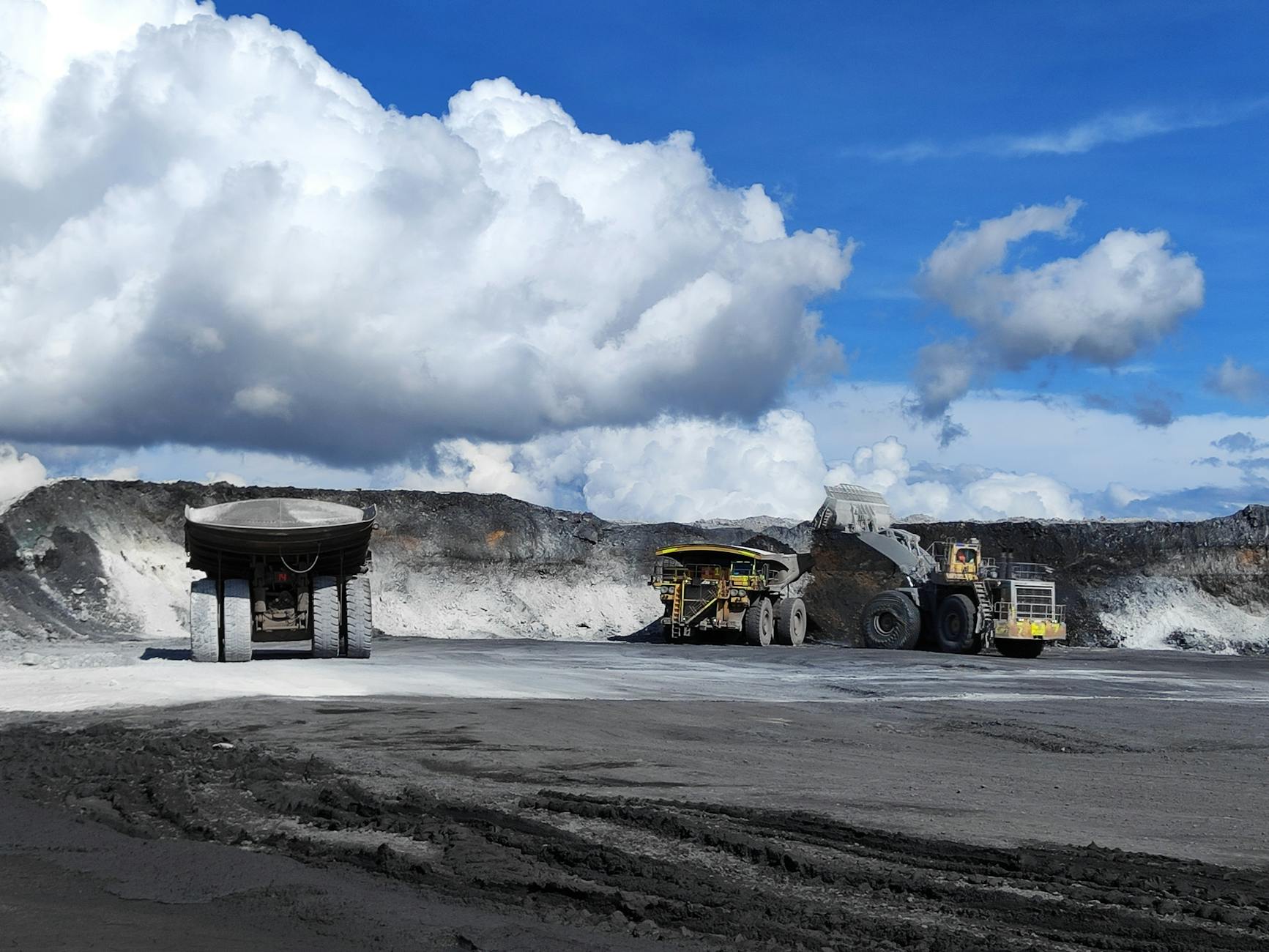
The copper division's underlying EBITDA soared by 59% to $8 billion in the first half of FY26, largely due to higher realized copper prices, which were up about a third. Operational excellence at key assets like Escondida in Chile, the world's largest copper mine, played a crucial role, reporting record concentrator throughput and improved recoveries. Solid contributions from other operations in Chile and South Australia further bolstered these results. Reflecting this confidence, BHP increased its FY26 group copper production guidance to between 1.9 million and 2.0 million tonnes, a notable upgrade from its previous forecast of 1.8 million to 2.0 million tonnes, even as some competitors scaled back their own projections.
Looking further ahead, BHP boasts a significant organic copper growth pipeline, which it estimates could increase its attributable copper production to approximately 2.5 Mtpa copper equivalent by FY35. This represents a substantial ~40% increase above current attributable copper production levels. These growth projects are spread across key regions including Chile (Escondida, Pampa Norte), Argentina (Vicuña joint venture), Arizona, and South Australia (Olympic Dam, Carrapateena, Oak Dam). The first phase of these growth projects is expected to have competitive capital intensities of US$16-21k/t CuEq, underscoring a disciplined approach to expansion.
What Role Do Other Commodities Play in BHP's Future?
While copper has undeniably taken center stage, BHP's diversified portfolio ensures that other commodities continue to play a vital role in its overall financial health and future growth trajectory. Iron ore, historically the company's largest earner, remains a significant contributor, providing a stable foundation of cash flow. In HY2026, iron ore production reached 134 Mt, a 2% increase from the previous half-year. The average realized price for Western Australia Iron Ore (WAIO) was US$84.71/wmt, up 4% from HY25.
The iron ore division generated an underlying EBITDA of US$7.5 billion, contributing 48% to the Group's total Underlying EBITDA. This segment also maintained a robust 62% Underlying EBITDA margin and an impressive 43% Underlying Return on Capital Employed (ROCE). WAIO, in particular, has consistently been recognized as the lowest-cost iron ore producer globally for over four years, a critical competitive advantage. BHP continues to expect FY26 iron ore production of 258-269 Mt, with WAIO contributing 251-262 Mt.
Beyond its core metals, BHP is making a strategic push into potash with its Jansen Stage 1 project in Canada. This large-scale, low-cost, high-grade resource boasts a mine life exceeding 100 years. The project is currently 75% complete, with a total investment of US$8.4 billion, and first production is anticipated in mid-CY27. Once operational, Jansen Stage 1 is expected to produce 4.15 million tons of potash annually. Furthermore, Stage 2 of the project is already 14% complete, aiming to double total production capacity to 8.5 million tons per year by the end of the decade, positioning BHP as a major global potash producer. The company also reported strong contributions from by-products at its copper assets, including 259 koz of gold, 8.9 Moz of silver, and 1.5 kt of uranium sales, collectively delivering US$2.1 billion in revenue, a 46% increase from HY25.
Is the Global Copper Market Headed for a Structural Deficit?
The macroeconomic landscape for copper is increasingly bullish, with strong indicators pointing towards a potential structural deficit in the coming years. This outlook is a significant tailwind for BHP, which has strategically positioned itself as the world's largest copper producer. The demand surge is primarily driven by the global energy transition, encompassing electrification, decarbonization, and digitalization, all of which are highly copper-intensive.
Adding to this demand pressure is the burgeoning artificial intelligence (AI) sector and the rapid expansion of data centers. J.P. Morgan Global Research forecasts that copper demand from data center installations could reach 475,000 tonnes in 2026, an increase of ~110,000 tonnes from the previous year. While still a relatively small portion of overall global demand, this growth adds significant pressure to an already tight market. The International Copper Study Group (ICSG) has noted a slower-than-expected global mine supply growth, with refined production projected to grow only marginally at 0.9% in 2026 due to concentrate shortages.
Analysts are forecasting a continued rally in copper prices. J.P. Morgan expects prices to reach $12,500/mt in the second quarter of 2026, averaging ~$12,075/mt for the full year. Goldman Sachs, while anticipating a slight decline from recent record highs in 2026 (averaging $10,710 in H1 2026), remains bullish beyond that, projecting demand to outpace supply from 2029 onwards and LME copper prices to hit $15,000 per tonne by 2035. This long-term bullish sentiment is reinforced by the metal's critical role in grid and power infrastructure, which Goldman Sachs projects will drive over 60% of copper demand growth until 2030. The confluence of limited new mine commissioning, slipping output from South America, and robust demand from strategic sectors creates a compelling narrative for sustained high copper prices.
What Are the Key Risks and Opportunities for BHP Investors?
Investing in a diversified mining giant like BHP Group comes with a unique set of risks and opportunities, particularly given its increasing exposure to copper. On the opportunity side, the structural demand for copper driven by the energy transition, AI, and data centers presents a compelling long-term growth narrative. BHP's proactive investment in expanding its copper production, targeting 2.5 Mtpa copper equivalent by FY35, positions it to capture significant value from this trend. The company's strong operational performance at assets like Escondida, coupled with its low-cost iron ore production, provides a robust financial base. Furthermore, the Jansen potash project offers a new, long-life revenue stream that diversifies the portfolio and taps into global food security trends.
However, investors must also weigh several key risks. Commodity prices, by their nature, are cyclical and subject to significant volatility. While the long-term outlook for copper is strong, short-term fluctuations due to global economic slowdowns, particularly in China, or unexpected supply increases could impact earnings. Goldman Sachs, for instance, projects a 160kt copper surplus in 2026, suggesting the market may not enter a shortage immediately. Geopolitical risks in key operating regions like Chile and Argentina, including changes in mining royalties or regulatory environments, could also affect profitability and project timelines. BHP's substantial capital expenditure on growth projects, such as the $8.4 billion Jansen Stage 1, requires disciplined execution to ensure projected returns are met.
From a valuation perspective, BHP currently trades at a P/E ratio of 21.07 and offers a dividend yield of 3.2%. Its net debt of US$14.7 billion and gearing of 20.9% are within typical large-miner ranges, indicating a solid balance sheet. The company's ability to generate strong free cash flow (FCF Yield of 4.7%) allows it to fund growth while returning capital to shareholders. The market's valuation of copper producers has seen multiples increase from ~6.5x to ~9.5x in the last three years, and BHP's increasing copper contribution to EBITDA could further enhance its valuation.
The Road Ahead for BHP
BHP Group's strategic pivot towards copper is clearly paying dividends, transforming its earnings profile and aligning it with some of the most powerful global economic trends. The company's strong HY2026 results, driven by record copper earnings and robust production, underscore the success of its proactive investments. With a substantial organic growth pipeline in copper and a significant new revenue stream from potash on the horizon, BHP is well-positioned to capitalize on the increasing demand for future-facing commodities. While commodity price volatility and execution risks remain, the long-term structural tailwinds for copper, coupled with BHP's operational strength and disciplined capital allocation, present a compelling case for investors seeking exposure to the materials sector. The company's ability to navigate these dynamics will dictate its continued outperformance in the years to come.
Want deeper research on any stock? Try Kavout Pro for AI-powered analysis, smart signals, and more. Already a member? Add credits to run more research.
Related Articles
Category
You may also like


Record Sales, Rising Tariffs: Can AVO Keep the Growth Flowing?

Is chip giant ASML about to hit a ceiling, or break through it?

Is Barrick Mining Stock Worth Buying After a 195% Surge in a Year?
Breaking News
View All →Featured Articles
Top Headlines

The Strait of Hormuz is facing a blockade. These countries will be most impacted

Amazon Web Services Confirms Drone Strikes Caused Structural Damage In UAE And Bahrain, Warns Operating Environment 'Remains Unpredictable'

Why Amazon Stock Lost 12% in February

Amazon says drone strikes damaged 3 facilities in UAE and Bahrain