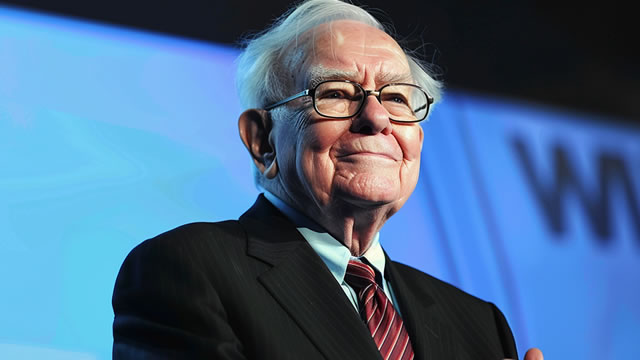
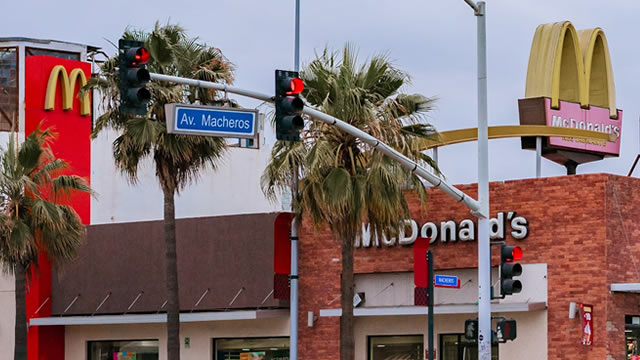
Greg Abel's Bold Housing Play: Why Berkshire's $8.5 Billion Taylor Morrison Bet Defies the Downturn

Key Takeaways
- Berkshire Hathaway, under CEO Greg Abel, is making a significant contrarian bet on the U.S. housing market with its $8.5 billion acquisition of Taylor Morrison Home Corporation, a move that signals confidence despite current industry headwinds.
- The deal, which awaits a shareholder vote on July 22, 2026, is poised to integrate Taylor Morrison with Berkshire's existing housing assets, creating the fourth-largest homebuilder in the United States and a vertically integrated residential platform.
- This strategic capital deployment, alongside a substantial $397 billion cash pile and recent divestments from energy holdings, underscores Abel's emerging long-term vision for Berkshire Hathaway's diversified portfolio.
Abel's Big Bet on a Battered Housing Market
Berkshire Hathaway (NYSE: BRK.A, BRK.B), the sprawling conglomerate helmed by CEO Greg Abel, is on the cusp of a transformative move in the U.S. housing market. Just ten days from now, on July 22, 2026, Taylor Morrison Home Corporation (NYSE: TMHC) shareholders will vote on Berkshire's proposed $8.5 billion acquisition, a deal that represents a bold, contrarian wager on the future of American homeownership. This investment comes at a pivotal moment, with Berkshire Hathaway's Class A shares trading at $740,289.40 and Class B shares at $493.71, reflecting a market capitalization of $1.06 trillion. The proposed acquisition, announced on May 31, 2026, has already sent ripples through the industry, positioning Berkshire to become a dominant force in residential construction at a time when many see the market struggling.
The timing of this significant capital deployment is particularly intriguing. The U.S. housing market has been grappling with persistent challenges, including elevated mortgage rates and subdued consumer confidence. Yet, Berkshire's leadership, under Abel's direction, appears to be embracing the long-term investment philosophy that has defined the company for decades. This acquisition is not merely a financial transaction; it is a strategic integration designed to consolidate Berkshire's diverse housing-related businesses, from materials to construction and financial services, into a unified and formidable platform.
The Numbers: A Premium for Integration
Berkshire Hathaway's agreement to acquire Taylor Morrison for an enterprise value of $8.5 billion is a testament to the strategic value it sees in the homebuilder. The deal offers Taylor Morrison shareholders $72.50 per common share in cash, representing a 24% premium over the company's closing price of $58.50 on May 29, 2026. This translates to an equity value of approximately $6.8 billion. Taylor Morrison, currently ranked as America's sixth-largest homebuilder, delivered nearly 13,000 homes in 2025 and operates across 21 markets in 12 states. Its portfolio includes brands like Taylor Morrison and Esplanade for entry-level to resort lifestyle buyers, and Yardly for build-to-rent communities, alongside ancillary financial services such as mortgage financing and title services.
The premium paid reflects Berkshire's confidence in Taylor Morrison's asset quality and its potential within a broader, integrated housing ecosystem. This acquisition is a significant deployment of capital from Berkshire's substantial war chest, which stood at a record $397 billion in cash and Treasury bills at the end of the first quarter of 2026. Such a large-scale investment underscores a strategic shift under Greg Abel, who assumed the CEO role in January 2026, signaling a proactive approach to capital allocation beyond the traditional public equity holdings.
The Story Behind the Numbers: Building a Housing Colossus
The Taylor Morrison acquisition is more than just adding another company to Berkshire's vast portfolio; it's about creating a vertically integrated housing powerhouse. Berkshire Hathaway already owns Clayton Homes, America's twelfth-largest homebuilder with 9,953 closings in 2025, along with a suite of building product subsidiaries like Benjamin Moore paints and Johns Manville roofing materials, and the Berkshire Hathaway HomeServices brokerage network. By combining Taylor Morrison's 12,997 closings from 2025 with Clayton Properties' figures, Berkshire Hathaway's combined housing platform would have delivered approximately 22,950 homes in 2025. This back-of-the-envelope analysis by ResiClub suggests Berkshire would become the fourth-largest homebuilder in the United States, trailing only D.R. Horton, Lennar, and PulteGroup.
This consolidation strategy aims to leverage synergies across the entire homebuilding value chain. Sheryl Palmer, Taylor Morrison's Chairman and Chief Executive Officer, articulated this vision, stating on the May 31, 2026 press release, "Berkshire Hathaway's long-term orientation is uniquely well-suited to the multi-year investment cycle of homebuilding, and this combination will allow us to scale the Taylor Morrison platform in ways that would not be possible as a standalone company." Greg Abel echoed this sentiment, noting in a May 2026 press release that Berkshire expects "to unify our site-built homebuilding operations into a combined platform enabling us to deliver the dream of homeownership to more Americans." This strategic vision extends beyond mere scale, aiming for operational efficiencies and a more consistent project pipeline across manufactured, site-built, and build-to-rent segments.
Abel's Capital Reallocation: From Energy to Ecosystems
The Taylor Morrison acquisition is a clear signal of Greg Abel's evolving capital allocation strategy, which has seen Berkshire Hathaway pivot from certain traditional holdings to new, integrated ecosystems. In the first quarter of 2026, Berkshire significantly reduced its position in Chevron, trimming its stake by approximately $8 billion. This divestment, executed at an average disposal price of about $182.59, allowed Berkshire to realize gains from an initial position established in 2020 at around $65 per share and increased in 2022 at an average of $124. The capital freed up from this energy sector profit-taking has, in part, provided the liquidity support for large-scale acquisitions like Taylor Morrison.
This shift is not limited to housing. Under Abel, Berkshire has also increased its exposure to technology, making Alphabet a core holding with a $31.1 billion position and participating in a $10 billion private placement to support Alphabet's AI infrastructure build-out. This, alongside a long-standing $58 billion stake in Apple, gives Berkshire direct participation in both AI compute demand and device distribution. The combined strategy of divesting from energy at highs, building an integrated housing platform, and making concentrated bets in technology highlights a deliberate move to reshape Berkshire's risk and return profile, deploying its massive cash reserves into areas with long-term growth potential and operational control.
The Bear Case: Navigating a Shaky Foundation
While Berkshire's long-term vision for housing is compelling, the immediate landscape presents significant headwinds that form the core of the bear case. The U.S. residential market is currently in a trough, characterized by challenging conditions. Late May data revealed that new home sales fell to an annualized rate of 623,000 units, significantly below expectations. Furthermore, 30-year mortgage rates have remained stubbornly high at 6.89%, dampening buyer demand, and the inventory turnover cycle has lengthened to 9.8 months. Homebuilder sentiment, as measured by the National Association of Home Builders/Wells Fargo Housing Market Index, has been stuck in negative territory for the past two years, reflecting widespread caution. Sales of newly built homes were also 11.3% lower year-over-year in April, with both single-family housing starts and building permits showing annual declines.
Integrating Taylor Morrison and McGuinn Homes into Clayton's platform also introduces execution risk. Combining large, established companies can be complex, and achieving the envisioned operating efficiencies may take time and face unforeseen challenges, especially if construction costs continue to rise or demand weakens further. The housing market's multi-year investment cycle, while attractive to Berkshire's long-term philosophy, also means that the benefits of this acquisition may not materialize quickly, requiring patience from shareholders. Moreover, the increased concentration in a unified housing platform, alongside substantial tech bets, could amplify company-specific risks if either the housing market recovery falters or the technology investments underperform.
Analyst View: Bottoming Out for the Long Haul
Despite the current housing market challenges, analysts largely view Berkshire Hathaway's acquisition of Taylor Morrison as a shrewd, long-term play. The consensus among industry observers is that sophisticated buyers, like Berkshire, are entering the market at a point where valuations are bottoming out. Margaret Whelan, founder and CEO of Whelan Advisory, specializing in homebuilder M&A, noted that "very sophisticated buyers think the valuations have bottomed." She added that such buyers would typically "wait and buy later or pay less if they thought the market was still going down," suggesting a belief that the worst of the downturn is either past or nearing its end.
John Burns, founder and CEO of John Burns Research and Consulting, echoed this sentiment, observing that "many [homebuilder] stocks are valued at or below book value right now because of the short-term outlook for the industry, which is exactly the time that long-term oriented investors can find great bargains." This perspective aligns perfectly with Berkshire's historical contrarian approach, which often involves acquiring high-quality assets during periods of market weakness. The expectation is that while the immediate outlook for housing may not be bright, the long-term fundamentals of American homeownership and pent-up demand will eventually drive a recovery, making current acquisition prices attractive for patient capital.
The Verdict: A Long-Term Foundation for Growth
Berkshire Hathaway's $8.5 billion acquisition of Taylor Morrison is a defining moment for Greg Abel's leadership, cementing a strategic shift towards a more integrated and formidable housing platform. This contrarian bet, made amidst a challenging housing market, aligns with Berkshire's deep-rooted value investing principles and its capacity for long-term capital deployment. The upcoming shareholder vote on July 22, 2026, is a critical near-term catalyst, but the broader narrative is one of strategic consolidation and a confident wager on the enduring American dream of homeownership.
For investors looking to align with Berkshire's long-term vision, the current price levels of BRK-B offer an entry point into a diversified conglomerate actively reshaping its portfolio. We establish an entry zone for BRK-B between $485 and $495, acknowledging the stock's current trading range and the potential for short-term volatility around the vote. Our 12-month target for BRK-B is $550, reflecting the anticipated benefits of the integrated housing platform and the broader strategic capital allocation under Abel. This thesis would be invalidated if BRK-B shares close below $460, signaling a breakdown in the market's confidence in Abel's strategic direction or a significant deterioration in the housing market beyond current expectations. Berkshire Hathaway is building for the future, one home at a time.
Want deeper research on any stock? Try Kavout Pro for AI-powered analysis, smart signals, and more. Already a member? Add credits to run more research.
Related Articles
Category
You may also like


Taylor Morrison CEO: 'Lot of runway' with Berkshire

$8.5 Billion: Berkshire's Greg Abel Just Made His First Big Bet, and It's Wildly Contrarian

Greg Abel: Clayton Homes numbers down, driven by interest rates and challenged consumer
Breaking News
View All →Featured Articles
Top Headlines

Planned Amazon data center could become the biggest climate polluter in the U.S.

MSFT Deadline: Rosen Law Firm Urges Microsoft Corporation (NASDAQ: MSFT) Stockholders with Losses in Excess of $100K to Contact the Firm for Information About Their Rights

GOOG Investors Have Opportunity to Join Alphabet Inc. Fraud Investigation with SBS Law

Why SpaceX Stock Just Gained 15.8%