


Stock News•2 weeks ago
Walmart's MASSIVE price cuts spark HEATED Trump debate
Walmart slashed prices on thousands of items, sparking debate over whether the cuts stem from competition, consumer demand, or Trump's economic agenda.

Key Takeaways
Amazon (NASDAQ: AMZN) has officially surpassed Walmart (NASDAQ: WMT) as the world's largest company by total annual sales, marking a historic shift in the global retail landscape. This milestone, with Amazon reporting $717 billion in 2025 sales against Walmart's $713.2 billion, ends Walmart's remarkable 13-year reign at the top. However, a closer look reveals this isn't a simple retail knockout; it's a victory largely orchestrated by Amazon's diversified business model, particularly its formidable cloud computing arm, Amazon Web Services (AWS).
Without AWS, Amazon's 2025 revenue would have been an estimated $588 billion, placing it well behind Walmart's retail-heavy top line. As Kirthi Kalyanam, executive director of the Retail Management Institute at Santa Clara University, aptly put it, "Amazon didn't beat Walmart in the retail game. It just beat them in revenue by launching a new business Walmart doesn't operate in." This perspective underscores the importance of Amazon's strategic diversification into high-margin, high-growth sectors beyond traditional retail.
The market acknowledges this divergence, with Amazon's current market capitalization standing at a staggering $2.20 trillion, more than double Walmart's $1.02 trillion. This disparity highlights investor confidence in Amazon's broader ecosystem, which includes not just e-commerce and cloud, but also advertising, streaming, and a growing portfolio of AI-driven ventures. While Walmart has adapted, Amazon's ascent to the top sales spot is a testament to its relentless innovation and willingness to venture into entirely new industries, fundamentally reshaping what it means to be a "retailer."
Amazon's impressive growth trajectory is fueled by a powerful combination of its dominant e-commerce platform and the highly profitable Amazon Web Services (AWS) cloud computing division. The company has essentially created a virtuous cycle where its retail scale drives data, which in turn fuels AWS, and the profits from AWS can be reinvested into further enhancing its e-commerce capabilities, including advanced AI and logistics. This dual-engine approach has allowed Amazon to outpace traditional retail growth significantly.
In e-commerce, Amazon remains the undisputed king, attracting an astounding 2.7 billion visits to its website and mobile apps each month and commanding roughly 40% of the U.S. digital retail sales market. The company is continuously expanding its lead through aggressive investments in AI, which enhances everything from personalized shopping experiences to an emerging AI content marketplace for publishers. Crucially, Amazon's logistics network is unparalleled, delivering over 8 billion items same or next day to Prime members in 2025, a 30% increase year-over-year, and even testing 30-minute "Amazon Now" delivery options in select cities.
However, the true financial powerhouse is AWS. This cloud computing behemoth generated nearly $129 billion in sales last year, providing a vast network of computing, storage, and artificial intelligence options to companies and governments worldwide. AWS is not just a revenue driver; it's a key profit engine that often offsets thinner margins in the retail segment. Its critical role in the age of artificial intelligence, providing the foundational infrastructure for countless businesses, positions Amazon at the heart of the digital economy's most rapidly expanding sector.
Despite Amazon's ascendance, Walmart is far from a stagnant incumbent; it's a revitalized retail giant actively reshaping its business model to thrive in a hybrid physical-digital world. The company has demonstrated remarkable resilience, with its stock recently surpassing $1 trillion in market value and its shares rising 167% over the past five years, significantly outperforming Amazon during that period. This resurgence is driven by a multi-pronged strategy focused on leveraging its vast physical footprint, expanding its e-commerce capabilities, and diversifying its revenue streams.
Walmart's core strength remains its physical stores, with over 10,000 locations globally, making it the world's largest physical retailer. It's strategically using these stores as hubs for its rapidly growing omnichannel services, including same-day delivery from over 4,600 stores and curbside pickup at nearly all U.S. locations. This "store-fulfilled" model represents a key competitive advantage over pure-play e-commerce rivals. Its e-commerce operations, which accounted for approximately 18% of total revenue in fiscal 2025, are now profitable and growing rapidly, with U.S. e-commerce sales up 20% in Q4 fiscal 2025.
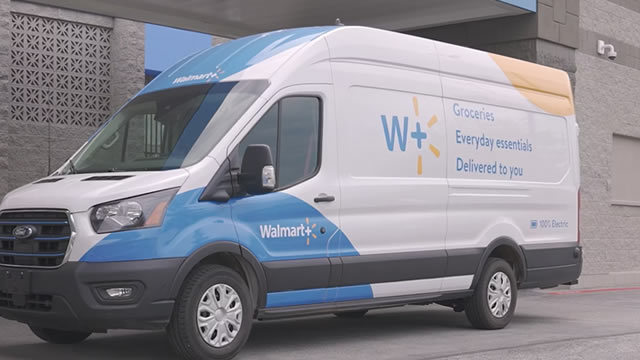
Beyond traditional retail, Walmart is aggressively building out higher-margin businesses. Its Walmart Connect advertising revenue grew 24% in Q4 fiscal 2025, and its marketplace now hosts over 160,000 active sellers, with marketplace sales growing 34% in the same quarter. The Walmart+ membership program, offering perks like free same-day delivery and streaming services, is also successfully attracting more affluent shoppers. Furthermore, Walmart is investing heavily in AI, including a buzzy partnership with Google to integrate its products into the AI assistant Gemini, signaling its intent to be seen as a tech-forward company, even moving its stock listing to the Nasdaq to underscore this shift.
A deep dive into the financial fundamentals reveals distinct investment profiles for Amazon and Walmart, reflecting their differing business models and growth trajectories. Amazon, with its tech-heavy, high-growth narrative, trades at a premium, while Walmart offers a more defensive, value-oriented proposition.
Looking at valuation multiples, Amazon's trailing twelve-month (TTM) P/E ratio stands at 28.29, significantly lower than Walmart's 46.70. However, Amazon's Price-to-Sales (P/S) ratio is 3.07 compared to Walmart's 1.43, indicating that investors are paying more for each dollar of Amazon's revenue, likely due to its higher growth and profitability from AWS. Amazon's operating margin of 11.2% and net margin of 10.8% are substantially higher than Walmart's 4.2% and 3.1%, respectively, underscoring the profitability advantage of AWS.
In terms of growth, Amazon's revenue grew 12.4% year-over-year in FY2025, with net income surging 31.1% and EPS up 29.7%. Its 5-year cumulative revenue growth per share is an impressive 73.4%. Walmart, while growing slower, is still robust, with FY2026 revenue growth of 4.7% and EPS growth of 13.3%. Walmart's 5-year cumulative revenue growth per share is 35.7%. Walmart also offers a dividend yield of 0.7% with a payout ratio of 33.4%, providing income to investors, whereas Amazon does not pay a dividend. Analyst consensus rates both stocks as a "Buy," with Amazon's consensus price target of $283.86 suggesting a substantial upside from its current $205.21, while Walmart's consensus target of $132.29 offers a more modest upside from its current $128.24.
The rivalry between Amazon and Walmart extends far beyond just sales figures, encompassing critical strategic battlegrounds that will define the future of retail and technology. Both giants are heavily investing in artificial intelligence, advanced logistics, and new service offerings to capture market share and enhance customer loyalty. The ongoing "K-shaped" economic reality, where affluent households continue to spend while lower-income brackets face inflationary pressures, also shapes their respective strategies.
Amazon's future hinges on its ability to maintain AWS's rapid growth and profitability while simultaneously innovating in its core e-commerce business. The company is pushing the boundaries of delivery speed, with initiatives like 30-minute "Amazon Now" and continued expansion of same-day perishable food delivery to over 1,000 cities. Its integration of AI across its platforms, from personalized recommendations to an AI content marketplace, aims to deepen customer engagement and drive higher conversion rates. However, Amazon still faces challenges in establishing a robust physical grocery presence, despite its acquisition of Whole Foods Market in 2017 and recent efforts to integrate its grocery operations.
Walmart, conversely, is doubling down on its omnichannel strategy, leveraging its extensive physical store network as a competitive advantage. Its success in making e-commerce profitable, driven by higher-margin services like advertising and marketplace fees, is a significant turnaround. The company is also expanding into higher-margin categories online, such as premium beauty and collectibles, and investing in automated micro-fulfillment centers for faster urban delivery. Walmart's focus on everyday low prices, combined with its ability to attract more affluent shoppers through Walmart+ and improved food offerings, positions it well to navigate diverse economic conditions. The battle for grocery e-commerce, where most of Walmart's online sales originate, remains a crucial front.
For investors, the choice between Amazon and Walmart boils down to risk appetite and investment horizon. Amazon offers a higher-growth, tech-centric play with significant upside potential, particularly through its AWS segment and relentless innovation in e-commerce and AI. However, its valuation remains elevated, and its stock can be more volatile, as indicated by its Beta of 1.39.
Walmart, on the other hand, presents a more defensive, stable investment. Its strong position in groceries and everyday essentials provides resilience during economic downturns, and its consistent dividend offers income. The company's impressive strides in e-commerce profitability and omnichannel integration demonstrate its adaptability, making it a compelling choice for those seeking steady growth and lower volatility (Beta of 0.67). Ultimately, both companies are titans of industry, each with unique strengths to navigate the evolving retail and tech landscape.
Want deeper research on any stock? Try Kavout Pro for AI-powered analysis, smart signals, and more. Already a member? Add credits to run more research.