MarketLens
Has Nvidia's Exit Derailed Applied Digital's AI Ambitions

Key Takeaways
- Nvidia's full divestment from Applied Digital (APLD) has created short-term volatility, but the underlying operational fundamentals for APLD's AI infrastructure business remain robust.
- Applied Digital boasts a substantial $16 billion in non-cancellable hyperscale lease commitments and aggressive expansion plans, including the 430 MW Delta Forge 1 AI Factory.
- Despite being pre-profit and capital-intensive, APLD's explosive revenue growth and attractive forward valuation suggest significant upside potential for long-term, risk-tolerant investors.
Has Nvidia's Exit Derailed Applied Digital's AI Ambitions?
The recent news that NVIDIA Corporation (NVDA) has fully exited its equity position in Applied Digital (APLD) sent ripples through the market, causing APLD shares to slip by 7.90% to $29.04 on February 20, 2026. This divestment, revealed through SEC filings, naturally rattled investor confidence. Nvidia's initial investment in 2024, which included 7,716,050 shares valued at approximately $177 million, had long been viewed as a strategic endorsement of Applied Digital's burgeoning AI infrastructure ambitions. The market often interprets such a high-profile exit as a red flag, prompting a reassessment of the "strategic backer" narrative that previously buoyed APLD.
However, a closer look suggests that while the news creates short-term noise, it doesn't necessarily signal a fundamental crack in Applied Digital's business model. Nvidia's decision to reallocate capital, while significant, does not unwind APLD’s commercial footing or its substantial pipeline of AI data center projects. The company continues to push ahead with its large-scale build-out plans, demonstrating that its operational trajectory is largely independent of any single institutional investor's stake. For informed investors, the key question isn't why Nvidia sold, but rather whether Applied Digital can execute its ambitious growth strategy on its own merits.
This market reaction highlights the inherent volatility in AI-adjacent names, especially those with high short interest, which for APLD sits at a notable 26-33% of its float. Such crowded positioning can amplify price movements on headline-driven news, triggering sharp sell-offs. Yet, several analysts, including Roth Capital, have reaffirmed "Buy" ratings, maintaining price targets as high as $58 and even a Street-high target of $99, suggesting that the dip could be an attractive entry point rather than a reason for alarm. They argue that the development does not alter Applied Digital’s fundamental business outlook, which remains anchored to the structural demand for AI infrastructure.
The broader context of Nvidia's portfolio rebalancing also needs consideration. The AI chip giant has been actively adjusting its holdings, selling stakes in other companies like Recursion Pharmaceuticals and Arm Holdings, while acquiring shares in CoreWeave and Intel. This suggests a strategic recalibration across its investment portfolio, rather than a specific indictment of Applied Digital's prospects. Therefore, while the market's initial reaction was swift and negative, it's crucial to differentiate between a portfolio management decision and a fundamental business impairment.
What Does Applied Digital's Core Business Look Like Post-Nvidia?
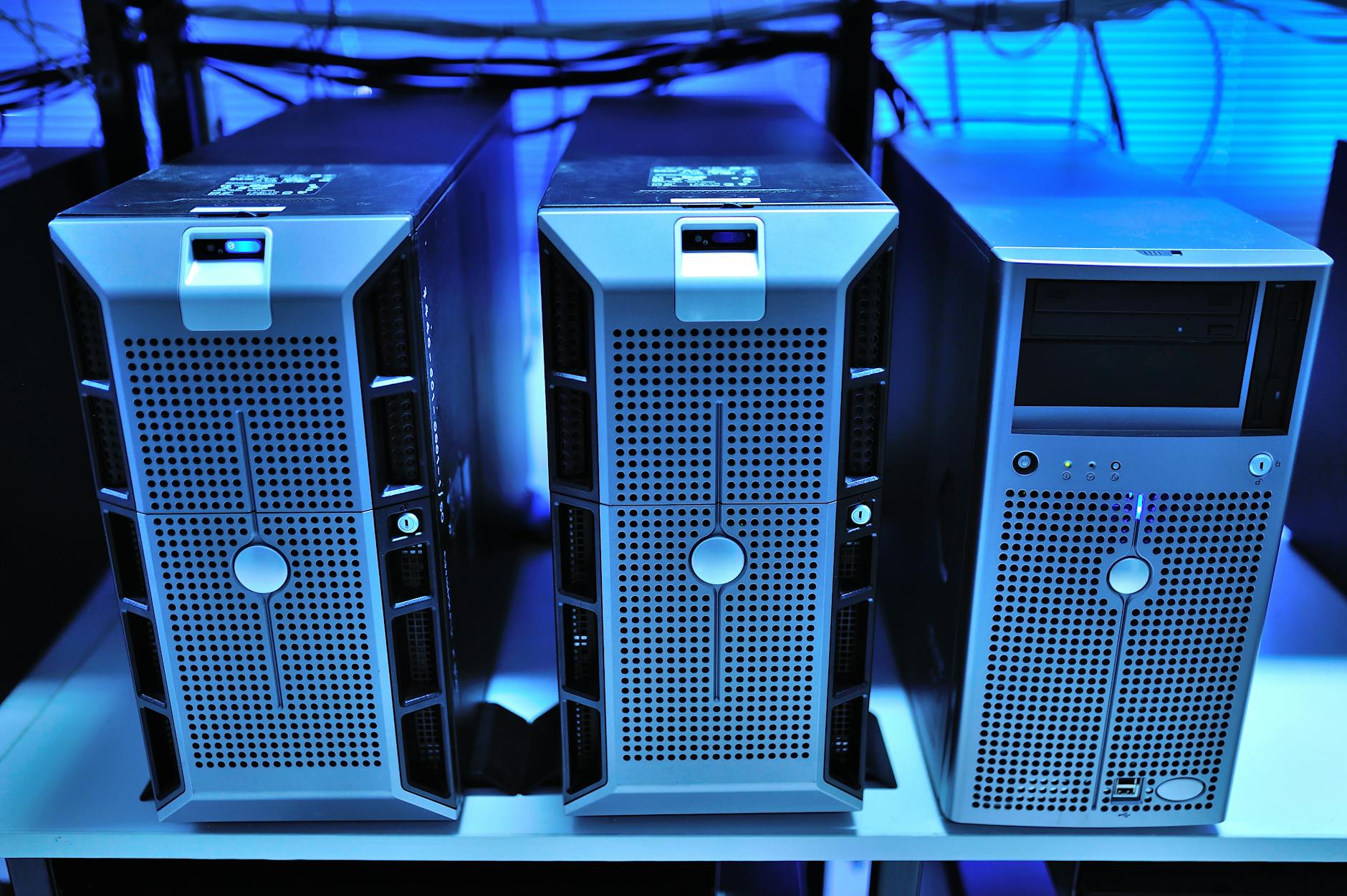
Applied Digital's core business is firmly rooted in designing, building, and operating next-generation digital infrastructure tailored for high-performance computing (HPC) and artificial intelligence (AI) workloads. The company has successfully pivoted from its earlier focus on cryptocurrency hosting to become a significant provider of AI-first data center infrastructure. This strategic shift is critical, as it aligns APLD with the explosive demand for compute power driven by the AI revolution, which is now entering its "industrial phase" where physical infrastructure is the new bottleneck.
A cornerstone of Applied Digital's strategy is its long-term lease commitments with hyperscalers. The company boasts approximately $16 billion in non-cancellable lease commitments tied to its Polaris Forge 1 and 2 campuses. A substantial portion of this backlog comes from a multi-year, $11 billion contract with CoreWeave, an AI cloud provider, and a second $5 billion deal with another unnamed investment-grade hyperscaler. These contracts provide high revenue visibility and directly support the narrative of recurring AI infrastructure revenue, validating APLD's ability to build and energize data centers on schedule.
The company is aggressively expanding its footprint, having recently broken ground on Delta Forge 1, a massive 430 MW AI Factory campus in a strategic southern U.S. state. This facility is designed to support significant utility power across two buildings, with initial operations expected to commence in mid-2027. This expansion, alongside its existing 106 MW Jamestown and 180 MW Ellendale facilities in North Dakota, underscores APLD's commitment to scaling its capacity. North Dakota was strategically chosen for its cool climate and abundant, low-cost energy, which provides natural cooling for powerful chips, reducing energy costs and improving operating efficiency.
Beyond its data center hosting business, Applied Digital is also evolving its cloud services. The company's cloud subsidiary is set to merge with Ekso Bionics to create ChronoScale, a separate AI-focused vehicle where Applied Digital will hold roughly 97% equity at closing and significant board influence. This move introduces a distinct AI cloud platform angle, diversifying APLD's business mix beyond just data center leasing and power access. It positions Applied Digital to capture value higher up the AI stack, offering potential optionality and further growth avenues in the rapidly expanding AI ecosystem.
How Do APLD's Financials and Growth Prospects Stack Up?
Applied Digital's financial profile, while showing impressive growth, also reveals the characteristics of a capital-intensive, pre-profit company in an aggressive expansion phase. For the trailing twelve months (TTM), APLD reported a market capitalization of $8.12 billion and an Enterprise Value (EV) of $8.81 billion. Its valuation metrics reflect its growth stage: a negative P/E ratio of -63.19 (due to losses), a high P/S ratio of 28.82, and a negative P/FCF of -6.05. These figures suggest that traditional valuation metrics are not the best yardstick for a company prioritizing aggressive build-out and market share capture over immediate profitability.
However, the growth story is compelling. In fiscal Q2 2026 (ended November 30, 2025), Applied Digital reported revenues of $126.6 million, a staggering 250% year-over-year increase, significantly beating analyst estimates. This surge was primarily driven by its HPC Hosting Business, which contributed approximately $85 million to the increase. The company's Data Center Hosting Business segment alone generated $41.6 million in revenue, up 15% year-over-year, with a segment operating profit of $16.0 million. Management is targeting $1 billion in annual operating profit within the next five years, a goal that could substantially lift the stock given its current market cap.
Despite the revenue growth, profitability remains a challenge, with TTM gross margins at 16.4%, operating margins at -31.5%, and net margins at -43.5%. The net loss attributable to common stockholders was $31.2 million in Q2 2026, though this represented a 76% reduction from the prior year comparable period. The company has consistently beaten EPS estimates, reporting an actual EPS of -$0.03 for Q1 2026, significantly exceeding the estimated -$0.14. Analysts project a full-year EPS of negative $0.14 for fiscal 2026, improving to a $0.36 loss per share, indicating a path towards narrowing losses.
Leverage is a key consideration, with a Debt/Equity ratio of 1.80. However, the current ratio of 4.82 indicates strong short-term liquidity. The capital-intensive nature of data center construction means significant upfront investment, which impacts free cash flow (TTM FCF of -$5.04 per share). Yet, the massive contracted backlog provides a strong foundation for future revenue and cash flow generation. The market is clearly pricing in execution risk, but if APLD delivers on its pipeline, the valuation gap compared to peers like Equinix (EV/MW of ~$31.0M) and Applied Digital (~$4.9M/MW) could close rapidly, offering substantial upside.
What Are the Key Risks and Opportunities for APLD Investors?
Investing in Applied Digital is not for the faint of heart; it's a high-growth, high-volatility play. The stock's Beta of 7.18 underscores its sensitivity to market movements, and its history includes severe drawdowns, such as an 82.6% fall during the 2022 inflation shock. This inherent volatility means position sizing and risk limits are paramount for any investor considering exposure. However, for those with a two-to-three-year horizon and a high-risk tolerance, the setup presents compelling opportunities.
One of the primary risks is customer concentration. CoreWeave accounts for the bulk of APLD's $16 billion backlog, tying Applied Digital's fortunes heavily to a single counterparty. While CoreWeave is a significant player in the AI cloud space, such concentration introduces counterparty risk. Execution risk in data center construction is another major concern. Delays in energizing capacity at the Polaris Forge campuses or the new Delta Forge 1 AI Factory would push revenue recognition further out, impacting financial projections and investor sentiment. The company is competing for AI data center spend with larger, established operators like Digital Realty and Equinix, which have greater scale and financial resources.
On the opportunity side, the structural demand for AI infrastructure is immense and accelerating. Hyperscaler capital expenditures now exceed $400 billion annually, creating a massive tailwind for companies like Applied Digital. APLD's "first-mover advantage" in securing power rights and developing purpose-built, next-generation data centers in regions like North Dakota, with abundant low-cost energy and natural cooling, positions it strongly. The company's proprietary waterless cooling and rapid deployment capabilities are crucial differentiators in a market where cooling high-density AI chips (like Nvidia's Blackwell) is a critical challenge.
The creation of ChronoScale through the Ekso Bionics merger introduces a separate AI cloud platform angle, potentially unlocking new revenue streams and diversifying its business model. This move could capture value higher up the AI stack, beyond just physical infrastructure. Furthermore, analysts' consensus price target of $49.15 implies an upside of 69% from current levels, with some street-high targets reaching $99. This bullish sentiment is driven by expectations of explosive revenue growth, a massive contracted backlog, and improving unit economics as more capacity comes online. The forward P/S ratio, estimated to drop to roughly 16x with projected fiscal 2027 revenues of $536 million, looks far more reasonable for a high-growth AI infrastructure company compared to its TTM multiple.
Is Applied Digital a Buy, Hold, or Sell After the Nvidia Shake-Up?
The market's knee-jerk reaction to Nvidia's exit from Applied Digital has created a classic "headline risk" scenario, presenting a potential buying opportunity for investors who can look past the short-term noise. While the stock's 7.90% drop to $29.04 on the news was significant, it doesn't fundamentally alter Applied Digital's strong position in the booming AI infrastructure market. The company's substantial $16 billion in contracted hyperscale leases and aggressive build-out plans for its AI Factory campuses remain intact, providing a clear path to future revenue growth.
Applied Digital is an aggressive growth play, not a value stock for the risk-averse. Its high volatility, capital-intensive nature, and current unprofitability mean it demands a higher risk tolerance. However, for investors with a long-term horizon (2-3 years) who believe in the sustained demand for AI compute infrastructure, the current valuation, especially on a forward revenue basis, appears attractive. The company's strategic focus on power-rich locations and advanced cooling solutions addresses critical bottlenecks in the AI industry, giving it a competitive edge.
The key to APLD's success lies in its execution. Bringing its massive pipeline of data center capacity online on time and within budget will be crucial to realizing its $1 billion annual operating profit target. While customer concentration with CoreWeave is a risk, the sheer scale of the contracts provides significant revenue visibility. Therefore, for investors comfortable with high growth, high risk, and a long-term outlook, Applied Digital appears to be a Buy at current levels, offering substantial upside potential if it continues to deliver on its ambitious plans.
Applied Digital stands at a pivotal juncture, navigating the post-Nvidia landscape with ambitious expansion and a clear focus on the AI infrastructure boom. For those with the conviction and patience, the current dip could prove to be a compelling entry point into a company poised for explosive growth in the foundational layer of the AI revolution. However, vigilance on execution and capital management will be key to unlocking its full potential.
Want deeper research on any stock? Try Kavout Pro for AI-powered analysis, smart signals, and more. Already a member? Add credits to run more research.
Related Articles
Category
You may also like


Where Will Applied Digital Be in 5 Years

NVIDIA Gives Up On China

Did Nvidia Just Deliver a Crushing Blow to AMD?
Breaking News
View All →Featured Articles
Top Headlines

Meta Recruits Dreamer Team to Scale Personalized AI Agents

Melius analyst: Microsoft's Copilot reorganization is a ‘red flag'

Apple (AAPL) Beats Stock Market Upswing: What Investors Need to Know

Microsoft hires former Ai2 CEO Ali Farhadi and key researchers for Suleyman's AI team