MarketLens
How Did Jet Fuel Prices Skyrocket So Dramatically

Key Takeaways
- Jet fuel prices have surged by 100% to over $195 a barrel globally, driven by the Iran war and Strait of Hormuz closure, severely impacting airline profitability.
- Airlines are responding with aggressive fare hikes, fuel surcharges, and capacity cuts, with some like United Airlines facing an $11 billion annual cost increase if current prices persist.
- Delta Air Lines stands out as a relative winner due to its refinery ownership, while American Airlines' heavy debt load and lack of fuel hedging make it particularly vulnerable.
How Did Jet Fuel Prices Skyrocket So Dramatically?
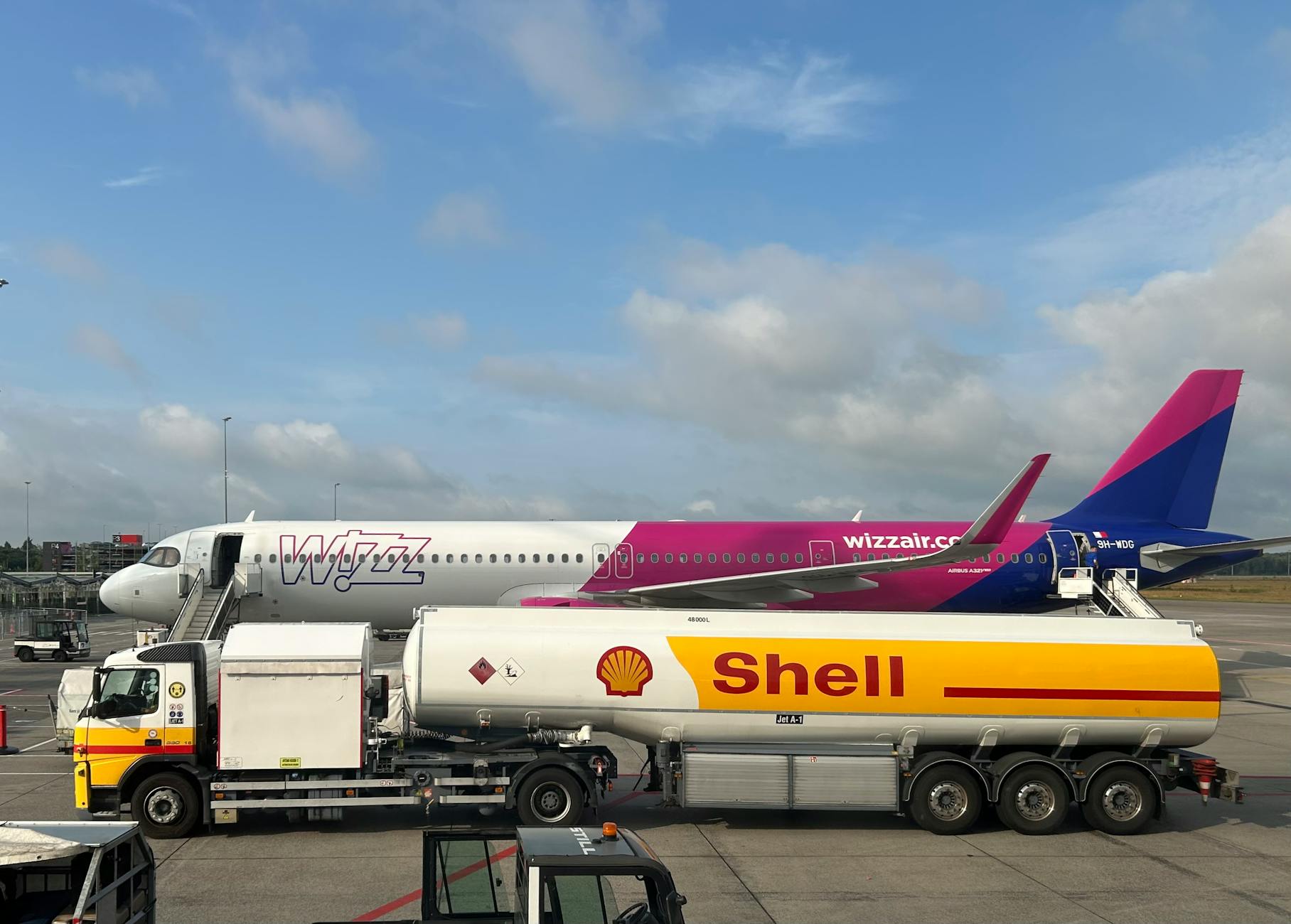
The friendly skies have turned turbulent, not from weather, but from a geopolitical shockwave that has sent jet fuel prices soaring by an unprecedented 100% in just over a month. This dramatic escalation traces its roots to late February 2026, when the U.S.-Israeli war on Iran intensified, leading to the closure of the Strait of Hormuz. This critical maritime chokepoint, through which approximately 20% of the world’s seaborne crude oil and LNG exports pass, became inaccessible, immediately sending Brent crude prices above $130 per barrel.
While crude oil itself saw a significant 50% increase since the conflict began, the true pain point for the global economy, and particularly the airline industry, has been the disproportionate surge in refined products like jet fuel. By April 3, 2026, the global average price for jet fuel had more than doubled to over $195 a barrel, or $4.88 per gallon in the U.S. This "crack spread"—the cost of refining crude oil into jet fuel—recorded an 80% surge since the conflict began, as refining capacity struggled to keep pace with the sudden supply disruption and a lack of certain crude oil types.
The International Air Transport Association (IATA) had projected a stable 2026 with fuel averaging roughly $2.10 per gallon in December 2025. These projections were rendered obsolete by mid-March 2026, catching major carriers off guard. Many had moved away from traditional financial hedging programs in the low-volatility environment of 2024 and 2025, leaving them exposed to this sudden "fuel shock." Analysts now suggest this could cost the U.S. airline sector an additional $25 billion in unbudgeted expenses this year.
This crisis is further exacerbated by restricted airspace. The Iran war has led to the closure of key flight corridors between Africa, Asia, and Europe, forcing airlines to reroute flights along longer paths that circumnavigate the Middle East. This not only adds to journey time but also significantly increases fuel consumption, compounding the financial burden on carriers already grappling with exorbitant fuel costs.
What Does This Mean for Airline Profitability and Operations?
The immediate implication of this fuel price surge is a rapid and painful squeeze on airline profit margins. Fuel typically represents the second-largest expense for airlines after labor, often making up about a quarter of operating costs. A 100% increase in this core expense directly translates into reduced profitability or even route-level losses, forcing carriers to make difficult operational and financial decisions.
Initial market reactions were swift and brutal. On news of the refining capacity crunch in late March, airline stocks faced a broad sell-off, with the NYSE Arca Airlines Index dropping 12% in a single week. Major U.S. carriers like American Airlines (NASDAQ: AAL) and United Airlines (NASDAQ: UAL) were forced to issue revised guidance almost immediately, warning that the "lag" between fuel price increases and ticket revenue would result in a difficult first half of 2026. United Airlines CEO Scott Kirby warned that the airline’s annual fuel bill could swell by an astounding $11 billion if current prices persist.
Airlines are responding with a multi-pronged strategy to mitigate the impact. Capacity cuts are widespread, with United Airlines planning to cancel about 5% of its scheduled flights in the near term, and Scandinavian carrier SAS canceling at least 1,000 flights in April. These cuts often involve reducing frequencies on low-demand routes or temporarily suspending services, particularly those served by older, less fuel-efficient aircraft. The goal is to ensure that every plane in the air is flying at near-100% capacity, a strategy known as "down-gauging" routes.
Beyond capacity adjustments, airlines are implementing tactical measures to optimize fuel consumption. This includes route optimization, weight reduction, and improved load factor management. Many airlines are also introducing or increasing fuel surcharges, especially on international flights. For instance, a London round-trip fare that had a fuel surcharge of approximately $300 in February saw it jump to $800 by April. In the U.S., where explicit surcharges are less common, these costs are more likely to be built into higher base fares or adjusted fees for add-ons like seat upgrades.
Who Are the Winners and Losers in This High-Fuel Environment?
The impact of the current fuel spike is not being felt equally across the airline industry; it's a "survival of the fittest" scenario that highlights the strategic advantages and vulnerabilities of different carriers. This uneven risk exposure is reshaping capacity and margins, creating clear winners and losers.
Delta Air Lines (NYSE: DAL) has emerged as a relative winner, largely due to its unique ownership of the Monroe Energy refinery in Pennsylvania. This facility acts as a natural hedge, allowing Delta to capture the refining margins that are currently punishing its competitors. While Delta still faces higher crude costs, its "refinery benefit" is expected to offset hundreds of millions of dollars in expenses that other carriers must pay to third-party refiners. Consequently, Delta has maintained its 2026 earnings guidance of $6.50 to $7.50 per share, a stark contrast to its peers who have been forced to retrench. Delta CEO Ed Bastian noted the jet fuel spike added as much as $400 million in costs in March alone, but the refinery model provides a crucial buffer.
In stark contrast, American Airlines (NASDAQ: AAL) is facing a significant crisis. Burdened by a substantial $36.5 billion debt load and a complete lack of fuel hedging, American is highly sensitive to every penny increase in fuel costs. For every one-cent rise in the price of jet fuel, American’s annual costs increase by approximately $50 million. Analysts at major firms like UBS have already slashed American’s 2026 earnings estimates from over $2.00 per share to a mere $0.43, as the carrier struggles to pass costs on to a consumer base already feeling the pinch of rising gasoline prices. American expects fuel to add about $400 million to its first-quarter expenses.
United Airlines (NASDAQ: UAL) occupies a middle ground. While not benefiting from a refinery, United leverages its premium international traffic to mask some of the domestic pain. However, CEO Scott Kirby’s warning of an $11 billion annual fuel bill underscores the immense pressure. United has responded by raising baggage fees and cutting unprofitable regional routes, a move mirrored by Southwest Airlines (NYSE: LUV). Low-cost carriers like Spirit Airlines (NYSE: NK) and Frontier Airlines (NYSE: F9), with their typically thinner margins and less diversified revenue streams, are particularly exposed to this fuel shock.
How Are Consumers Reacting to Rising Airfares and What's the Demand Outlook?
The surge in jet fuel prices is directly translating into higher airfares, forcing consumers to re-evaluate their travel plans. Airlines are already passing these increased costs on, with last-minute transcontinental fares jumping by as much as 20% in the last two weeks alone. Tourism Economics expects airfares to rise "more than would otherwise be the case," projecting them to be 5-10% higher than previously expected over 2026 and 2027, with potential for sharper increases in specific markets if fuel prices remain elevated.
This widespread increase means that it doesn't matter whether it's a budget airline or a global network carrier, or whether one is flying first class or coach; higher fares are being seen for every type of flight on every route. Beyond base fares, airlines are increasingly introducing or increasing fuel surcharge fees, particularly on international flights, which can add hundreds of dollars to a round trip. This "dual-pronged energy crisis" is squeezing consumer discretionary income while simultaneously threatening to erase airline profit margins.
So far, demand hasn't taken a significant hit, largely propped up by premium travelers who seem undeterred by rising prices. Many people tend to book plane tickets a month to three months in advance, meaning summer travel plans were often made before the full impact of the war-driven price surge was felt. However, the sustainability of this demand is questionable. The U.S. national gasoline average has crossed the psychological threshold of $4.08 per gallon, the highest level in four years. Historically, when gas prices stay above $4.00 for prolonged periods, leisure travel demand traditionally drops as households prioritize essential spending over vacations.
The current environment echoes the fuel spikes of 2008 and 2011, both of which led to a wave of airline consolidations and bankruptcies. While major U.S. carriers are in a stronger cash position today than a decade ago, the approaching "consumer wall" suggests that a sustained period of high fuel and gasoline prices will inevitably dampen leisure travel demand. This will force airlines to balance the need to recoup costs with the risk of pricing out a significant portion of their customer base, especially as the summer travel season progresses.
What Strategic Pivots Are Airlines Making for the Long Term?
The current energy crisis is forcing airlines to undertake significant strategic pivots, not just for immediate survival but for long-term resilience. One of the most critical areas of focus is fleet modernization. Older widebody aircraft and early-generation narrowbodies consume significantly more fuel per seat than modern, fuel-efficient models. As a result, routes served by legacy aircraft are at much higher financial risk if fuel prices remain elevated.
Airlines are accelerating the retirement of older, fuel-intensive aircraft and expanding their next-generation fleets. Efficiency gains of 15-30% from modern aircraft help mitigate the impact of price spikes. Boeing (NYSE: BA) and Airbus (OTC: EADSY) may see a surge in orders for models like the 737 MAX 10 and A321neo as carriers look to replace "fuel-guzzlers" earlier than planned. However, supply chain constraints remain a bottleneck, meaning airlines may be stuck with less efficient fleets for longer than they would like, prolonging the margin squeeze.
Another potential strategic pivot involves a return to aggressive fuel hedging. After years of shunning the practice due to its costs and the risk of financial losses if prices fell, boards at United and American are reportedly under pressure from shareholders to lock in prices, even at today’s elevated levels. While hedging requires significant liquidity and carries its own risks, it provides cost predictability, minimizes earnings volatility, and ensures margins when prices rise suddenly. This shift reflects a re-evaluation of risk tolerance in a geopolitically uncertain environment.
Finally, the push for Sustainable Aviation Fuel (SAF) may receive a second wind. While currently more expensive than traditional jet fuel, the narrowing price gap between fossil-based fuel and bio-alternatives could accelerate the adoption of green energy in aviation as a long-term risk mitigation strategy. This isn't just about environmental responsibility; it's becoming a pragmatic financial decision to reduce exposure to volatile fossil fuel markets. The ability to combine immediate operational adjustments with longer-term fleet strategy and hedging will determine which airlines emerge resilient and competitive in this challenging environment.
What Does This Mean for Investors?
Investors in the airline sector face a complex and volatile landscape, demanding a highly selective approach. The current environment underscores a "survival of the fittest" narrative, where carriers with robust balance sheets, superior revenue management technology, and the most fuel-efficient fleets are best positioned to outperform. Expect a volatile Q2 2026 earnings season, with significant differentiation in performance.
Focus on airlines with strong operational hedges, like Delta's refinery, or those with significant hedging programs in place. Conversely, carriers with heavy debt loads and minimal fuel hedging, such as American Airlines, present higher risk. The long-term outlook favors manufacturers like Boeing and Airbus, who stand to benefit from accelerated fleet modernization, though supply chain issues remain a concern.
The airline industry is navigating an unprecedented fuel shock, forcing rapid strategic shifts and exposing inherent vulnerabilities. While premium demand has held up so far, the broader consumer landscape, marked by rising gasoline prices, suggests a challenging period ahead. Investors should remain vigilant, prioritizing financial strength and strategic adaptability in their airline holdings.
Want deeper research on any stock? Try Kavout Pro for AI-powered analysis, smart signals, and more. Already a member? Add credits to run more research.
Related Articles
Why Did Petco (WOOF) Stock Skyrocket Today
Category
You may also like


Crude Oil Volatility in Travel: Soaring Jet Fuel Prices Test Record Demand

Here's who and what to blame for oil skyrocketing to $120 a barrel and causing widespread panic

Why Are Oil Prices Rising Faster Than Gas Prices?
Breaking News
View All →Featured Articles
Top Headlines

Nvidia vs. Micron: Which AI Chip Stock Has More Upside Potential?

2 Monster EV Stocks Worth Owning While the Sector Is Still Out of Favor

The S&P 500 smashed back above 2 key moving averages, in a rare display of strength. Here's what history shows happens next.

5 Artificial Intelligence (AI) Stocks Trading at Bargain Prices After the March Correction