MarketLens

Log in

How is AI Redefining Customer Service and What Does it Mean for Businesses

1 week ago
SHARE THIS ON:

How is AI Redefining Customer Service and What Does it Mean for Businesses

Key Takeaways

  • Artificial intelligence is rapidly transforming customer service, shifting from basic chatbots to intelligent agents, but consumer preference for human interaction remains strong.
  • The insatiable energy demands of AI data centers are straining power grids and infrastructure, creating both immense investment opportunities and significant operational challenges.
  • While AI promises unprecedented productivity gains, the potential for widespread job displacement and economic disruption necessitates careful strategic planning and investment.

How is AI Redefining Customer Service and What Does it Mean for Businesses?

Artificial intelligence is no longer an optional add-on for customer service; it's becoming an indispensable core component for businesses aiming to stay competitive in 2026 and beyond. The shift is profound, moving past simple FAQ bots to sophisticated AI agents capable of managing complex inquiries and end-to-end tasks. Generative AI, machine learning, and automation are setting new benchmarks for customer support, promising speed, personalization, and 24/7 availability without the constant overhead of human staff.

This technological leap allows companies to handle massive bursts in queries without a drop in service quality, significantly reducing the need for extensive hiring and training. For instance, AI agents can now reset passwords, check order statuses, and even guide users through multi-step troubleshooting processes, all while understanding natural language. This efficiency is a game-changer for operational costs and scalability, enabling businesses to serve a larger customer base with fewer resources.

However, the path to full AI integration isn't without its caveats. Despite AI's capabilities, consumers overwhelmingly prefer human interaction. A 2025 SurveyMonkey study revealed that 79% of Americans strongly prefer speaking with a human, and 63% don't believe AI can ever fully replace human roles in customer service. A significant 56% of people also harbor negative feelings about companies using AI for customer experience, with 81% believing it's primarily a cost-saving measure, not a service improvement.

The critical takeaway for businesses is to strike a delicate balance. While AI delivers the speed customers expect, human connection ultimately builds loyalty and trust. Companies that automate too aggressively risk losing the empathetic, cohesive, and trustworthy interactions that only personal connection can provide. The most successful strategies will pair powerful automation with intentional human oversight, ensuring AI enhances, rather than replaces, the human touch.

What are the Investment Implications of AI's Energy Demands?

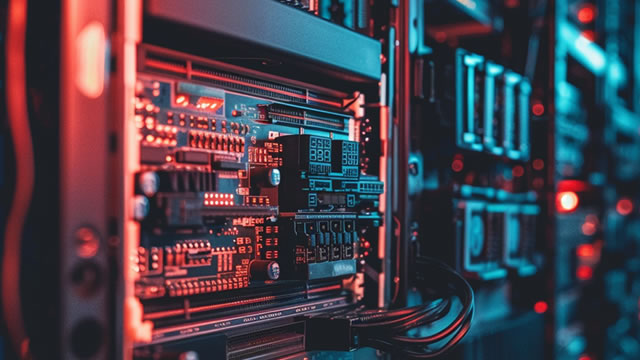
The relentless march of artificial intelligence is creating an unprecedented surge in demand for data center infrastructure, fundamentally reshaping the energy landscape and opening up massive investment opportunities. AI models require specialized, high-density data centers equipped with powerful graphics processing units (GPUs) and robust power connections. This isn't just about more data centers; it's about a new class of "AI factories" designed for intense computational workloads.

The energy consumption figures are staggering. U.S. data centers consumed 183 terawatt-hours (TWh) of electricity in 2024, accounting for over 4% of the country's total electricity. This figure is projected to skyrocket by 133% to 426 TWh by 2030, a demand roughly equivalent to the annual electricity consumption of the entire nation of Pakistan. A single AI-focused hyperscaler can consume as much electricity as 100,000 households, with larger facilities under construction expected to use 20 times that amount. Globally, data center electricity demand is anticipated to double between 2022 and 2026.

This exponential growth is putting immense strain on national power grids. In some regions, AI-driven energy demand is already outpacing available capacity, leading to project delays and forcing companies to seek direct power contracts or even install inefficient natural gas generators. Deloitte's 2025 AI Infrastructure Survey highlighted grid stress as the leading challenge for data center development, with a reported seven-year wait on some grid connection requests. The U.S. power capacity for data centers is expected to jump from 30 GW in 2025 to over 90 GW by 2030, representing a 22% annual growth rate.

Investors should eye companies involved in power generation, transmission, and distribution, especially those focused on renewable energy solutions that can meet this escalating demand more sustainably. Furthermore, firms specializing in advanced cooling technologies, such as liquid cooling systems, and those developing AI-driven infrastructure management software will be critical enablers. The sheer scale of investment needed to upgrade and expand the grid, coupled with the specialized requirements of AI data centers, presents a multi-decade growth runway for the utilities and technology sectors.

How is AI Disrupting Traditional Data Center Models?

The traditional data center model, built on over-provisioning for peak capacity, is rapidly becoming obsolete under the weight of AI workloads. AI servers consume up to ten times more energy than conventional servers, driving rack power densities to unprecedented levels of 80-100+ kW. This intense heat generation necessitates a fundamental shift from traditional air cooling to advanced liquid cooling systems, introducing new design and operational complexities. The entire infrastructure playbook that worked in 2024 is now considered outdated for 2026.

Beyond power and cooling, AI is also revolutionizing networking within data centers. AI training generates massive "east-west" data flows, where thousands of servers communicate with each other, rather than the traditional "north-south" traffic of users accessing servers. This requires a complete rethinking of network architectures, moving beyond leaf-spine designs to accommodate high-density optics and connectors everywhere. Network bottlenecks can lead to GPU stalling, where delays cascade across thousands of GPUs, wasting significant capital and time.

The rise of AI is also decentralizing data center development. While hyperscalers continue to build multi-gigawatt campuses, AI infrastructure is spreading to more states and deploying closer to users to provide faster responses. This trend is fostering hybrid ecosystems that span hyperscale clouds, private data centers, and edge computing environments. Companies are pursuing these hybrid models not just for cost savings, but for greater control over their AI-scale operations, potentially diminishing the monopoly of cloud providers.

This disruption creates a fertile ground for innovation in data center operations. Manual capacity planning is too slow and error-prone for AI's exponential growth, leading to stranded capacity and costly outages. Consequently, AI itself is emerging as the solution to its own problem. Intelligent automation tools for predictive capacity planning, real-time optimization, and risk mitigation are becoming essential. This shift means investing in companies that offer AI-driven infrastructure management, digital twin technologies for consolidated views, and advanced networking solutions designed for east-west traffic.

What are the Broader Economic and Societal Risks of AI Adoption?

While the potential for AI-driven productivity gains is immense, the broader economic and societal risks, particularly concerning labor market disruption, are substantial and cannot be ignored. Estimates for job displacement vary widely, from 14% to 30% of the U.S. workforce, with as many as 80% of Americans being impacted in some way. Dario Amodei, CEO of Anthropic, one of the world's largest AI companies, predicts that 50% of entry-level white-collar jobs could be disrupted within five years, potentially leading to an unemployment spike as high as 20%.

Such a scenario would rival the unemployment rates seen during the Great Financial Crisis in 2009 and even approach the peak of the Great Depression in 1933. Unlike previous economic downturns where job loss was often temporary, AI-induced displacement could mean that certain jobs simply cease to exist, leading to a prolonged plateau in unemployment until a substantial portion of the workforce can be reskilled for new roles that AI cannot perform. This could create a society where GDP grows robustly due to AI, but large segments of the population become economically obsolete, a recipe for instability.

The speed of this transformation is a major concern. While some economists predict a gradual adoption, others, like Amodei, suggest it could happen "almost overnight," reminiscent of the initial spike in unemployment during the COVID-19 pandemic. The International Monetary Fund projects that AI could affect roughly 40% of jobs worldwide, compressing years of change into months. This rapid reorganization of work would test political institutions already showing signs of brittleness.

Beyond job displacement, there are concerns about the environmental impact and the "human touch" in an AI-dominated world. The massive energy consumption of AI data centers contributes to environmental strain, and public opinion is divided on AI's overall environmental impact. Furthermore, the push for automation in customer service, while efficient, risks eroding the personal connection that consumers value. Companies must navigate these complex trade-offs, balancing technological advancement with social responsibility and human well-being.

What Does This Mean for Investors and the Market?

For investors, the AI revolution presents a bifurcated landscape of immense opportunity and significant risk. The Technology sector, despite its already high valuation, continues to show strength, up +0.93% today with an average P/E of 40.0. This reflects the ongoing belief in AI's transformative power. Companies at the forefront of AI development, particularly those providing the foundational hardware (like advanced GPUs, liquid cooling systems) and software (AI models, infrastructure management tools), are poised for substantial growth.

However, the market is already pricing in much of this potential. The challenge for investors is identifying companies that can sustain growth amidst intense competition, escalating infrastructure costs, and evolving regulatory landscapes. The "picks and shovels" providers for the AI gold rush – power utilities, data center operators, and specialized component manufacturers – warrant close attention. Their growth is directly tied to the fundamental build-out required for AI, offering a potentially more stable, albeit less explosive, investment thesis than pure-play AI software companies.

The broader economic implications of AI, particularly job displacement, introduce a layer of systemic risk. While the J.P. Morgan Private Bank suggests a "doomsday scenario" of mass unemployment akin to the Great Depression is a stretch, the potential for significant disruption and suppressed consumer demand before productivity gains are fully realized cannot be dismissed. This could lead to volatility in sectors heavily reliant on consumer spending, such as Consumer Cyclical (currently up +0.96% with an average P/E of 88.4).

Ultimately, a balanced approach is key. Investors should consider a diversified portfolio that captures AI's growth potential while hedging against its disruptive forces. This includes exposure to the core AI enablers, but also to sectors that might benefit from a more resilient, localized economy, or those that are less susceptible to immediate AI-driven automation. The long-term winners will likely be those companies that not only embrace AI but also strategically manage its societal and environmental impacts.

The AI revolution is a marathon, not a sprint, demanding continuous adaptation and a keen eye on both technological advancements and their broader societal ripples. Investors who understand these complex dynamics will be best positioned to navigate the opportunities and challenges ahead.


Want deeper research on any stock? Try Kavout Pro for AI-powered analysis, smart signals, and more. Already a member? Add credits to run more research.

SHARE THIS ON:

Related Articles

Category

You may also like

Stock News1 week ago

Burger King Tests AI Tracking Employee Courtesy: Will Extra 'Please' And 'Thank Yous' Lift The Stock?

Burger King is testing new AI tools to improve restaurant operations and customer service for the first time in about 10 years, changes that may boost sales for parent company Restaurant Brands Intern...
Stock News2 weeks ago

Consumers Demand More from AI-Powered Customer Service, Says Research

Research by Pegasystems and YouGov involving 4,700+ consumers found that customers lack trust in current AI-driven customer service experiences due to inaccuracy and unpredictability.
Stock News2 weeks ago

New N-able and Futurum Report Reveals How AI Is Reshaping Cyber Resilience

N-able and The Futurum Group released a new report examining how AI is redefining the cyber threat landscape for small to mid-sized businesses. The study outlines a modern framework for improving cybe...
Stock News1 months ago

How AI Is Supercharging American Industrial Spending

U.S. domestic business spending and investment may enter an unprecedented era in the coming years, driven by the integration of Artificial Intelligence.

Breaking News

View All →

Top Headlines

View More →
Stock News26 minutes ago

Oracle: The Worst Spending Fears Might Be Behind After A Solid Quarter

Stock News28 minutes ago

Meta Taps AI to Combat Fraud Across WhatsApp and Facebook

Stock News38 minutes ago

GLW Gains From Strength in Specialty Materials: Will it Sustain?

Stock News40 minutes ago

Nvidia stock stuck below $190: can GTC event be a catalyst?

Stock News43 minutes ago

Google Completes $32 Billion Purchase of Cybersecurity Firm Wiz