Stock News•5 days ago
Intel begins production of most-advanced chip, inching closer to possible Apple deal
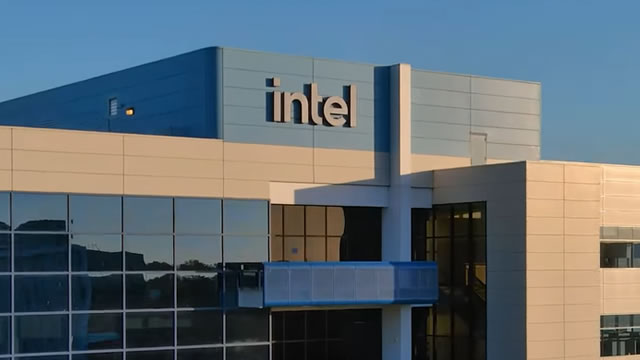
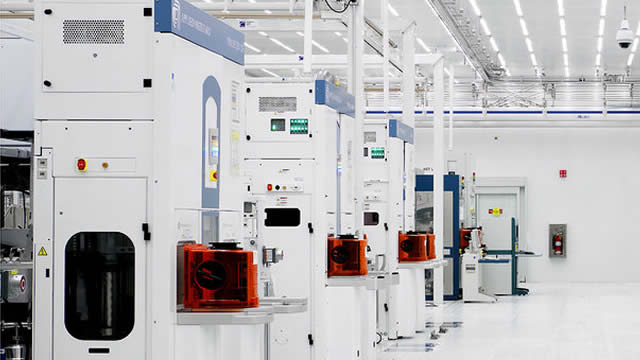
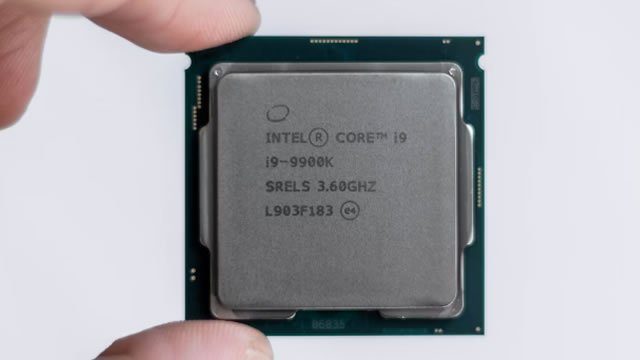
Intel began risk production of its most-advanced 18A-P chip node, inching closer to a potential Apple deal.

Intel Corporation (NASDAQ: INTC) is having a moment. The semiconductor giant, long overshadowed by Taiwan Semiconductor Manufacturing Company (NYSE: TSM) in advanced chip manufacturing, has seen its stock surge, trading at $133.99 as of June 18, 2026, near its 52-week high of $135.48. This rally, which has seen Intel's shares climb more than 500% over the past year, is fueled by an increasingly convincing foundry turnaround, including a reported chipmaking agreement with Apple and collaborations with Nvidia. Yet, beneath the headlines and technological breakthroughs, a stark financial reality persists: Intel's foundry business is still a nascent, loss-making venture, while TSMC continues to operate as a highly profitable, indispensable titan of the industry.
While Intel's 18A process and strategic foundry pivot signal a credible technological resurgence, the company's financial performance and external customer adoption still position it far behind TSMC's established market dominance and superior profitability. This article will dissect the technological race between Intel's 18A and TSMC's N2 nodes, compare their financial realities, and assess which company is truly better positioned to capitalize on the surging demand for AI and high-performance computing chips.
A direct comparison of the latest available financial data reveals the immense chasm between Intel and TSMC, particularly in profitability and scale. While Intel is making strides in its turnaround, TSMC operates on an entirely different plane of financial health and market capitalization.
| Metric (TTM) | Intel (INTC) | TSMC (TSM) |
|---|---|---|
| Market Cap | $673.43 billion | $2.40 trillion |
| P/E Ratio | -216.11x | 33.41x |
| P/S Ratio | 12.53x | 15.70x |
| Gross Margin | 35.4% | 61.9% |
| Operating Margin | -9.4% | 53.2% |
| Net Margin | -5.9% | 47.0% |
| EPS | $-0.62 | $74.38 |
| Revenue Growth (FY25 YoY) | -0.5% | 33.0% |
| Net Income Growth (FY25 YoY) | 98.6% | 49.8% |
Data as of TTM, retrieved 2026-06-21. Market Cap and P/E for TSM are from FMP API, which shows $64.44T for Market Cap, which is likely an error. Using $2.40T from real-time quote for consistency.
TSMC's market capitalization of $2.40 trillion dwarfs Intel's $673.43 billion, underscoring its dominant position in the global semiconductor landscape. This scale translates directly into superior profitability. TSMC boasts a gross margin of 61.9%, an operating margin of 53.2%, and a net margin of 47.0% on a trailing twelve-month basis. Intel, by contrast, is still navigating a period of significant investment and restructuring, reflected in its negative margins across the board: a 35.4% gross margin, a -9.4% operating margin, and a -5.9% net margin.
The disparity extends to growth. While Intel's net income growth of 98.6% for FY2025 appears impressive, it's a recovery from a deeply negative base. Its revenue growth for the same period was a slight contraction of 0.5%. TSMC, already a behemoth, delivered robust FY2025 year-over-year growth of 33.0% in revenue, 49.8% in net income, and 44.3% in EPS, demonstrating its ability to expand rapidly from a position of strength. This financial foundation allows TSMC to invest heavily in R&D and capacity without the same profitability pressures currently facing Intel.
The core of Intel's resurgence lies in its foundry business, Intel Foundry Services (IFS), and its advanced 18A process node. Intel is aggressively pushing to regain process technology leadership, a goal central to its IDM 2.0 strategy. The company's 18A node, utilizing innovative RibbonFET gate-all-around transistors and PowerVia backside power delivery, is a technological showcase. This combination is designed to enhance chip performance while reducing power consumption, critical metrics for AI infrastructure.
Intel's 18A is expected to enter high-volume manufacturing (HVM) in mid-2025, potentially weeks or even months ahead of TSMC's competing N2 node, which is slated for late 2025 HVM with product availability in mid-2026. According to Pradeep Khannur, Intel's 18A could offer a 15% improvement in performance per watt and 30% more transistors compared to its previous 3nm node. Analysts at Tom's Hardware believe Intel's 18A will lead the industry in terms of performance and power efficiency. The PowerVia technology, by leaving the front side of the wafer almost entirely for signal interconnects and logic transistors, could offer significant advantages in effective usable area, despite TSMC's N2 being projected to have a higher raw SRAM density of 38 Mb/mm² compared to Intel's 31.8 Mb/mm².
However, the technological edge comes with a cost. Intel's 18A is likely a more expensive process technology to fabricate than TSMC's N2 due to the complexities of backside power delivery. While Intel has de-risked RibbonFET and PowerVia separately, implementing them simultaneously in a production node is a somewhat risky move. Success hinges not just on technological prowess but on yield rates, cost control, and broad ecosystem adoption. Intel's management noted in Q1 FY26 that 18A yields are running ahead of internal projections, a positive sign for its ramp-up.
Intel's foundry ambitions are not just about technology; they are about attracting external customers and diversifying its revenue streams. The company has committed to being the world's second-largest external foundry by 2030, and by next year (2027), it expects to be the second-largest foundry overall based on internal volume, projecting manufacturing revenue greater than $20 billion. This aggressive target is supported by a new "internal foundry" model, where Intel's product business units engage with the manufacturing group at arm's length, similar to how fabless companies work with external foundries. This shift is expected to unlock significant efficiencies and cost savings, targeting more than $8-10 billion exiting 2025, and contribute to long-term non-GAAP gross margins of 60% and operating margins of 40%.
Intel has secured commitments from four customers for its 18A process, with a total lifetime deal value exceeding $10 billion across wafer manufacturing and advanced packaging. Speculated customers include major players like Microsoft, Nvidia, and potentially Apple, following recent news reports. However, the conversion of these commitments into meaningful external revenue has been slow. In Q1 FY26, Intel Foundry reported $4.667 billion in revenue, but only $174 million came from external customers, representing a mere 3% of the segment's total. The segment also posted a substantial operating loss of $2.32 billion for the period. CEO Lip-Bu Tan expects early design commitments from external customers to emerge in the second half of 2026 and extend into the first half of 2027.
TSMC, on the other hand, commands an unassailable lead in customer adoption and market share. It controls approximately 70% of the pure-play foundry market and over 90% of the world's leading-edge production. In Q1 FY26, TSMC reported a staggering $35.9 billion in foundry revenue, with nearly all of it sourced from external clients. Its 7nm and below technologies accounted for 74% of its wafer revenue, with 3nm alone contributing 25%. TSMC serves as the default manufacturing partner for industry giants like Apple, Nvidia, AMD, and Qualcomm, a testament to its decades-long track record of execution, scale, and mature yields. As TSMC Chairman and CEO C.C. Wei noted on the company's Q1 FY26 earnings call, demand is "very robust, especially from the HPC and AI applications," with supply remaining tight despite efforts to ramp up capacity.
Despite Intel's promising technological advancements and strategic restructuring, the bear case centers on significant execution risks and the formidable challenge of unseating an entrenched leader like TSMC. Intel's history is fraught with past attempts to break into the foundry business that ultimately fell short. Its track record on deploying new nodes has been inconsistent, which can deter potential customers who face substantial redesign costs and risks when switching foundries. As one analyst noted on TechPowerUp, "Intel's track record on deploying new nodes is probably keeping companies away. When you have to redesign everything for Intel's tools you don't want to be trapped there on an old node."
The financial burden of Intel's turnaround is immense. The company is managing substantial fab construction and tooling expenses, with its foundry division recording a loss exceeding $10 billion in the last quarter of 2025. While government incentives help, the capital intensity required to build out capacity competitive with TSMC is staggering. Intel's 2025 GAAP gross capital expenditures are projected at $18.0 billion. The company's internal foundry model, while aiming for efficiencies, still needs to prove it can consistently deliver competitive yields and cost structures. The fact that Intel still relies on TSMC to manufacture many of its own newest products underscores the challenge.
Furthermore, TSMC's scale is not just about revenue; it's about a mature manufacturing ecosystem, including IP libraries, advanced packaging, and deep customer integration developed over decades. This ecosystem creates a powerful network effect, making it incredibly difficult for new entrants to gain significant traction, especially at the leading edge where the most advanced AI and smartphone chips are produced. Even with Intel's 18A potentially leading in performance, TSMC's N2 is projected to deliver comparable gains, and its established efficiency and density advantages remain significant. The reported Apple agreement, while a major win, is just one piece of a much larger puzzle. The question remains whether Intel can consistently establish itself as a foundry that major external clients can depend on for leading-edge nodes, year after year.
Analysts generally acknowledge Intel's significant progress and the strategic importance of its foundry pivot, but many remain cautious about the long road ahead. The recent stock surge, driven by news of potential high-profile customer wins, reflects growing optimism. However, this enthusiasm is tempered by the financial realities.
Brendan Burke, an analyst at Futurum Group, noted in an April 27, 2026, report that Intel's Q1 FY26 results show "stronger-than-expected demand across server CPUs and improving supply execution," with momentum extending into long-term customer agreements. He highlighted Intel's focus on scaling manufacturing output and positioning Intel Foundry and advanced packaging for "revenue conversion starting in FY 2027." This aligns with Intel's own projections for external customer design commitments to emerge in the second half of 2026 and into 2027.
However, the consensus still points to TSMC as the more robust investment. The Motley Fool, in a June 21, 2026, article, stated that while Intel is "stealing the foundry spotlight," TSMC is "probably the one I'd want to own if I had to choose between the two." The article emphasized TSMC's multi-year lead at the leading edge, its unmatched scale and yields, and its ability to attract customers because "no one else can match its scale and yields at the cutting edge." The article also highlighted TSMC's valuation at "about 40 times earnings," reflecting a business that is "growing quickly and posting some of the widest margins in the industry," in contrast to Intel, which is "still losing money in the foundry business central to its comeback."
The average analyst price target for Intel is not explicitly provided in the data, but its current price of $133.99 is near its 52-week high of $135.48, suggesting that much of the near-term optimism may already be priced in. For TSMC, trading at $462.12, also near its 52-week high of $465.22, analysts appear to be valuing its consistent growth and market dominance. The implied upside for Intel is contingent on flawless execution of its foundry roadmap and a rapid acceleration of external customer revenue, while TSMC's outlook is more tied to sustaining its current trajectory amidst insatiable AI demand.
Intel's foundry turnaround, spearheaded by its technologically advanced 18A process, represents a genuine and significant effort to regain leadership in semiconductor manufacturing. The company's strategic pivot to an internal foundry model, coupled with early customer commitments and a potential lead in high-volume manufacturing timing over TSMC's N2, signals a credible resurgence. However, the financial reality remains stark: Intel's foundry segment is currently a capital-intensive, loss-making venture with minimal external revenue, while TSMC continues to operate as an overwhelmingly dominant, highly profitable, and indispensable player in the global chip ecosystem.
For investors seeking exposure to the surging demand for AI and advanced computing, TSMC offers a proven, high-margin business with unparalleled scale and an entrenched customer base. Intel, while showing promise, is a turnaround story with substantial execution risks and a long path to profitability in its foundry operations.
Entry Zone (INTC): Given the recent surge and the speculative nature of the foundry turnaround's profitability, a more conservative entry for Intel would be closer to the $100-$110 range, allowing for potential pullbacks as the market digests the long-term implications of its strategy.
12-Month Target (INTC): If Intel continues to demonstrate strong execution on 18A yields and secures more tangible external customer revenue, a 12-month target of $155 could be achievable, reflecting a premium for its technological leadership and strategic progress.
Invalidation Level (INTC): A sustained break below $90 would invalidate the bullish thesis on Intel's foundry turnaround, signaling significant setbacks in either execution, customer adoption, or financial performance that undermine its long-term potential.
TSMC, despite its high valuation, remains the gold standard in advanced chip manufacturing, offering a more secure, albeit potentially less explosive, growth profile. Intel is making the right moves, but the gap in financial performance and market entrenchment is still immense.
Want deeper research on any stock? Try Kavout Pro for AI-powered analysis, smart signals, and more. Already a member? Add credits to run more research.