MarketLens
Intel's Foundry Gamble: High Stakes, High Reward, and a Divided Wall Street

Key Takeaways
- Intel's multi-billion dollar foundry investment, particularly in its 18A and 14A process nodes, is attracting major external customers like Microsoft and AWS, signaling potential long-term diversification.
- Despite a stronger-than-expected Q1 FY26 for server CPUs and renewed demand, Intel faces an uphill battle against AMD and ARM in market share, with its foundry unit still reporting significant operating losses.
- A stark divergence in analyst sentiment, from HSBC's aggressive $200 price target to a consensus "Hold" with substantial implied downside, underscores the binary nature of Intel's turnaround story.
The Phoenix Rises: Intel's Turnaround at a Crossroads
Intel (NASDAQ: INTC) finds itself at a pivotal juncture, navigating a multi-year transformation that has captivated and divided Wall Street. Trading at $120.35 as of July 2, 2026, the semiconductor giant commands a market capitalization of $604.88 billion, a significant rebound from its 52-week low of $18.97, yet still below its $142.35 high. The current narrative centers on Intel's ambitious "IDM 2.0" strategy, which aims to re-establish its manufacturing leadership through Intel Foundry Services (IFS) and revitalize its core CPU businesses.
This high-stakes gamble has created a chasm in analyst sentiment. On one side, firms like HSBC have doubled their price target to $200, maintaining a "Buy" rating and implying a remarkable 60% upside, calling the foundry business "too good to ignore." On the other, the broader consensus remains a "Hold," with an average price target of $98.08, suggesting a potential downside of 18.50% from current levels. This divergence highlights the binary nature of Intel's future: either a triumphant return to dominance or another costly false dawn. Investors are keenly awaiting Intel's Q2 FY26 earnings report on July 23, which will offer the next critical update on this complex turnaround.
The Foundry Bet: Billions Invested, Profitability Distant
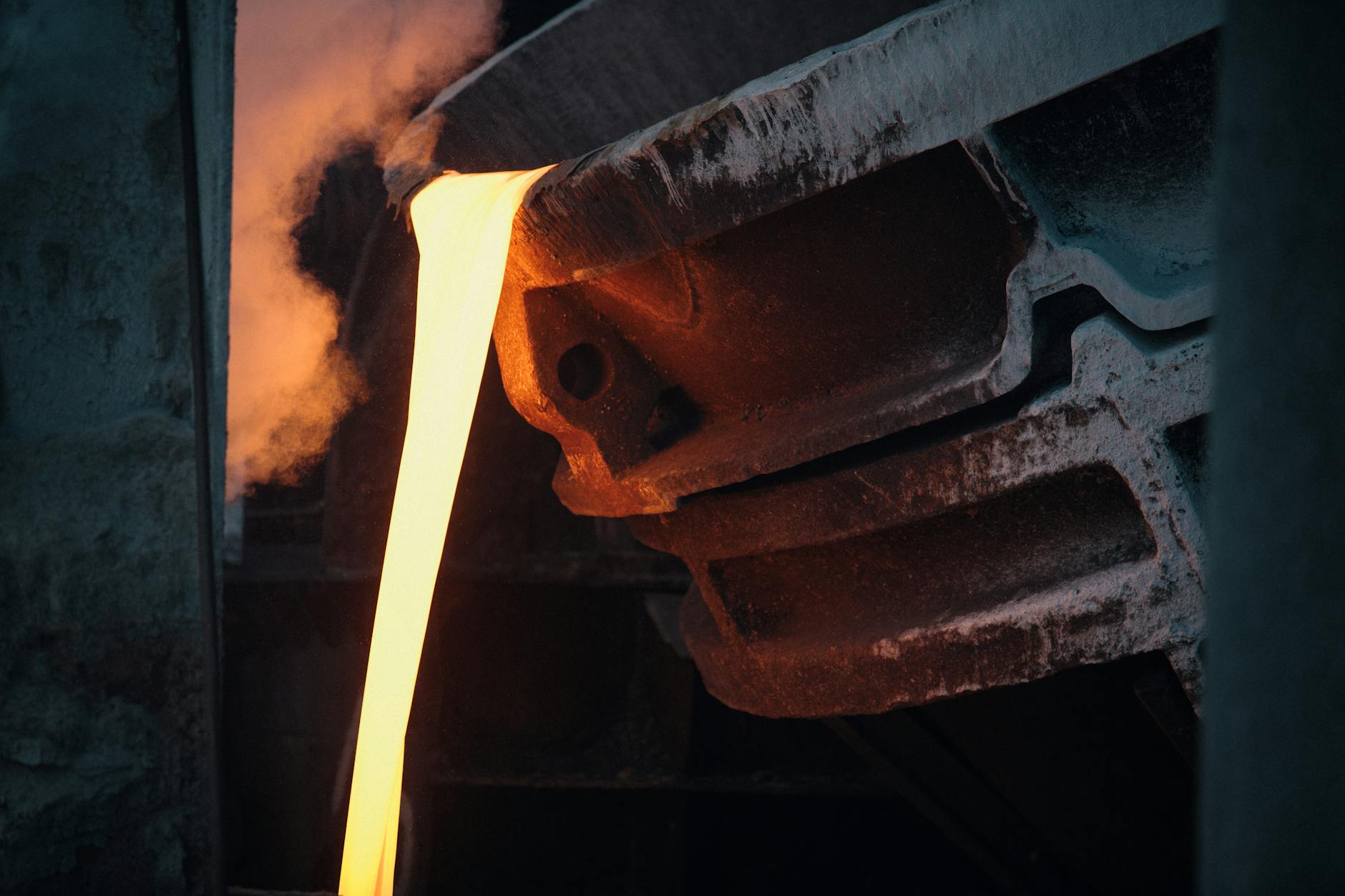
Intel Foundry Services (IFS) is the cornerstone of CEO Pat Gelsinger's vision, aiming to transform Intel into a major contract chip manufacturer, challenging the long-standing dominance of Taiwan Semiconductor Manufacturing Company (TSMC). This strategy has necessitated unprecedented capital investment, with Intel carrying a depreciation expense approaching $20 billion per year, reflecting over $100 billion in global fab investments across Arizona, Ohio, Oregon, Ireland, and Germany.
Despite these massive outlays, the foundry unit remains deeply unprofitable. For the full year 2025, IFS reported a staggering $10.318 billion operating loss on sales of $17.826 billion, following a $2.249 billion loss in 2024. The first quarter of 2026 also saw IFS post an operating loss of $2.4 billion. While Intel has made yield improvements for its new 18A process and is accelerating investment in 14A, the financial reality is stark. Jeff Morrison of Morrison Consulting estimates that IFS, if evaluated as a standalone enterprise today, would command a valuation of only $20 billion to $30 billion, acknowledging that "meaningful earnings remain far over the horizon." Intel's Chief Financial Officer, David Zinsner, has consistently emphasized that the company remains in the "investment phase" of its foundry strategy.
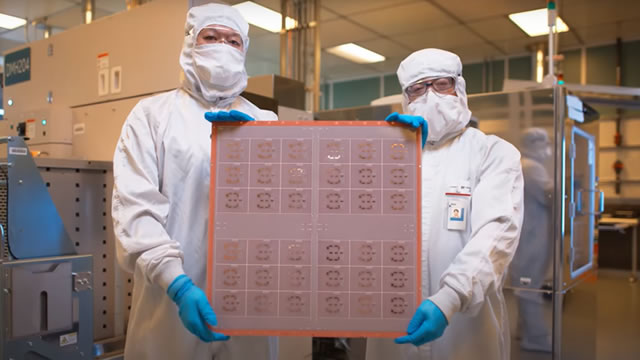
However, there are encouraging signs of progress. Intel has confirmed Microsoft and AWS as anchor customers for custom AI silicon built on its 18A node, a significant validation of its advanced process technology. The company is also reportedly delivering a toolkit to SpaceX and Apple to test its 14A node, with Google also placing orders for its specialized Tensor Processing Units (TPUs). Intel aims to secure roughly $2 billion annually in external foundry production commitments, a critical step toward diversifying its revenue beyond its internal product lines. The company reported that its 18A yields are running ahead of internal projections, and 14A maturity and yield are tracking ahead of 18A at a comparable point, with earlier design commitments expected to emerge in late 2026 and early 2027.
Recapturing the Data Center: A Hard-Fought Battle
While the foundry business represents Intel's long-term pivot, its Data Center and AI Group (DCAI) remains the primary driver of earnings growth for 2026 and 2027. Intel maintains a dominant position in x86 CPUs, holding over 70% market share in client computing. However, the server CPU market has seen intense competition, with Intel's once-unbeatable lead significantly eroded. From nearly 100% market share in 2017, Intel's slice of server CPU revenue slipped to approximately 63% by late 2022.
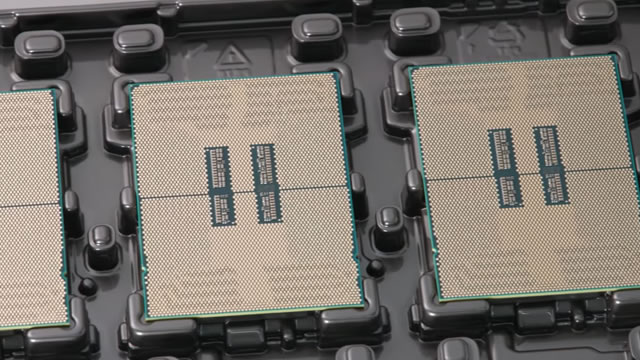
Advanced Micro Devices (AMD) has emerged as Intel's most formidable challenger, with its EPYC processors capturing about a third of every dollar spent on server CPUs by late 2025, and analysts projecting AMD could approach a 40% revenue share by 2027. Mercury Research, via DigiTimes, suggests AMD is poised to match Intel's server CPU market share by 2026. Furthermore, ARM-based server chips are making significant inroads, forecast to account for roughly 9% of CPU revenue by 2025 and potentially 10-12% by 2027, as hyperscale cloud providers seek more energy- and cost-efficient options.
Despite these competitive pressures, Intel's DCAI segment is showing signs of a genuine inflection. Q4 2025 DCAI revenue came in at $4.7 billion, marking a 15% sequential increase and a 9% year-over-year rise, which CFO David Zinsner characterized as the fastest sequential DCAI growth in a decade. The custom AI processor business within DCAI grew more than 50% year-over-year in 2025, reaching an annualized revenue run rate above $1 billion in Q4 alone. Management views this as a launchpad into a $100 billion total addressable market, where Intel currently captures roughly 1% share.
Intel's Q1 FY26 results also pointed to stronger-than-expected demand across server CPUs and improving supply execution. Management highlighted signing multiple long-term agreements in Q1 FY26, with Google cited as an example, structured around volume and pricing to ensure predictable supply. Intel is betting on the CPU's role in orchestration and control-plane infrastructure as AI workloads shift from training to inference and agentic execution. The company noted that its Intel 3-based Xeon 6 and Intel 18A-based Core Series 3 are in volume production, representing its fastest ramps in five years.
The AI PC and Geopolitical Tailwinds
Beyond the data center, Intel is aggressively pursuing the "AI PC" market, a new battleground where it faces competition from Apple's neural engines in Macs, Qualcomm's AI-enabled Windows laptops, and AMD's "Ryzen AI" models. Intel must demonstrate compelling AI use cases, such as enhanced video calls or local machine learning applications, to drive sales of its new processors. Failing to establish a strong position in AI could mean missing out on the tech industry's fastest-growing segment.
The broader semiconductor sector is benefiting from significant tailwinds, particularly the AI data center buildouts projected to drive a $1 trillion market by 2030. Hyperscalers are expected to spend over $600 billion in 2026 on AI infrastructure, a 36% increase year-over-year. The server microprocessor market itself is projected to expand from $20.66 billion in 2026 to $29.74 billion by 2031, registering a compound annual growth rate of 7.56%.
Geopolitical factors also play a crucial role in Intel's strategy. The company benefits from U.S. policy support, including over $8.9 billion in CHIPS Act funding, which mitigates risks associated with manufacturing concentration in Asia. Intel leverages its U.S.-based capacity as a selling point for customers concerned about supply chain resilience. However, this relationship with the U.S. government is a double-edged sword, coming with oversight and limitations, such as restrictions on expanding advanced fab capacity in China. Intel is exposed to ongoing U.S.-China tech tensions, with approximately 25-27% of its revenue historically coming from China. Any retaliatory measures from China could significantly impact Intel's business.
The Bear Case: Execution, Competition, and Market Realities
Despite the bullish narrative surrounding Intel's foundry and AI initiatives, significant risks persist. While Intel's Q1 FY26 earnings (EPS $0.29, Revenue $13.6 billion) exceeded expectations, the underlying structural challenges of the foundry business remain. Jeff Morrison of Morrison Consulting, in his mid-quarter outlook for late April 2026, had projected net losses between $1.2 billion and $1.6 billion for the quarter, driven by accelerating losses as new process nodes move into production. While the actual Q1 results were better, Morrison's analysis highlights the ongoing financial pressures. He warned that Intel's losses could increase even as manufacturing volumes grow, due to heavy depreciation and process learning costs associated with underutilized capacity.
Execution risk is paramount. Intel is juggling multiple new fabs and advanced technologies, including EUV lithography and new materials. Any significant delay or yield miss in its 18A or 14A process nodes could not only hurt Intel's cost structure but also damage its credibility with potential external foundry customers. The company's ambition to secure $2 billion annually in external foundry commitments is challenging, as it requires a fundamental mindset shift for its fabs, which historically built Intel's own chips on a known cadence. Early slip-ups, such as yield issues for a customer or missed deliveries, could tarnish IFS's reputation.
Competitive pressure from AMD and ARM in the server CPU market is relentless. AMD's chiplet-based EPYC lineup has delivered significantly better performance per dollar, leading to increased adoption by hyperscalers. The emergence of ARM-based servers, like Amazon's Graviton chips, further threatens Intel in low-power cloud instances. In the AI compute market, Nvidia's dominance with its GPUs, and AMD's integrated APUs like the MI300, could leave Intel struggling to gain traction despite its R&D investments in high-end GPUs and AI chips.
Macroeconomic conditions also pose a threat. High interest rates pressure capital-intensive firms like Intel, increasing the cost of funding fab builds. Cyclical slowdowns in PC demand, exacerbated by factors like high RAM or GPU costs, could dampen sales even if Intel's chips are superior. If the cloud capex cycle doesn't pick up as anticipated, or if enterprises pull back on spending, Intel's server revenue could stagnate. Even if Intel executes perfectly internally, external demand might not meet expectations, potentially leading to inventory issues or pricing wars.
Wall Street's Divided View: A High-Stakes Bet
The analyst community remains deeply split on Intel's prospects, reflecting the high-stakes nature of its turnaround. According to FMP data, the consensus analyst rating for INTC is a "Hold," based on 84 analysts, with 31 rating it a "Buy," 46 a "Hold," and 7 a "Sell." This broad consensus suggests a wait-and-see approach, acknowledging the potential but remaining cautious about execution.
The average 12-month price target from FMP analysts stands at $98.08, with a median of $92.50. This implies a significant downside of 18.50% from Intel's current price of $120.35. The range of targets is vast, from a low of $45.00 to a high of $200.00, underscoring the uncertainty.
However, several firms have taken a more aggressive stance. HSBC, for instance, recently raised its price target to $200 from $100, maintaining a "Buy" rating and citing stronger server CPU shipments and growing demand for Intel Foundry services. This represents a potential 60% upside from current levels. Other notable recent rating changes include Goldman Sachs upgrading Intel from "Sell" to "Neutral" on June 25, 2026. Cantor Fitzgerald maintains a "Neutral" rating with a $150 price target, while Mizuho boosted its target to $160 with a "Buy" rating on June 21, 2026. Conversely, Sanford C. Bernstein reiterated a "Market Perform" rating with a $100 price target on June 17, 2026. This wide dispersion of targets and ratings highlights that Intel's future is far from a settled matter on Wall Street.
The Verdict: A Binary Bet on Execution
Intel's journey from a struggling chip giant to a resurgent leader hinges on its ability to execute flawlessly on its IDM 2.0 strategy. The foundry business, while a long-term play, is showing promising signs with major customer wins and process node advancements. Simultaneously, the core server CPU business is demonstrating a nascent recovery, driven by AI infrastructure buildouts and strategic long-term agreements. Yet, the path is fraught with challenges, from intense competition and persistent foundry losses to the ever-present risk of execution missteps.
For investors, Intel represents a binary bet. If the company successfully navigates its manufacturing complexities, secures substantial external foundry commitments, and continues to gain traction in the AI-driven data center and PC markets, the upside could be substantial, aligning with the most bullish analyst projections. However, any significant delays, yield issues, or failure to convert demand into profitable revenue streams could see the stock revert to the more conservative consensus targets.
Given the current price and the high-stakes nature of Intel's transformation, a strategic approach is warranted.
- Entry Zone: Investors with a high conviction in Intel's long-term execution may consider initiating or adding to positions on dips towards the $100-$110 range, which aligns with the higher end of some "Hold" ratings and offers a better risk-reward profile relative to the current price.
- 12-Month Target: If Intel continues to demonstrate strong execution in its foundry ramp and server CPU recovery, a 12-month price target of $200.00 is plausible, reflecting the upside seen by the most bullish analysts like HSBC.
- Invalidation Level: A sustained close below $45.00 would invalidate the bullish thesis, signaling fundamental failures in the IDM 2.0 strategy or a significant deterioration in market share and profitability.
Intel's future is not merely about technological prowess; it's a test of operational discipline and strategic vision in one of the most capital-intensive industries on the planet.
Want deeper research on any stock? Try Kavout Pro for AI-powered analysis, smart signals, and more. Already a member? Add credits to run more research.
Related Articles
Category
You may also like


Intel: The Three Things The Bulls And Bears Are Both Getting Wrong

Intel CEO says foundry business is gaining momentum as customer interest grows
Can Intel Stock Reclaim The Silicon Throne?
Breaking News
View All →Featured Articles
Top Headlines

Rivian Just Raised Its 2026 Outlook While Tesla Stock Stumbled. Is the Electric Vehicle Underdog Finally a Buy?

ChatGPT-Maker OpenAI Is Headed for a $1 Trillion IPO. The Biggest Winner Could Be Microsoft Stock.

The Smartest Dividend Stock to Buy With $1,000 Right Now

Warren Buffett's Berkshire Hathaway Owns $41 Billion of Alphabet Stock: Here Are 3 Possible Reasons Why