Stock News•1 week ago
Abercrombie & Fitch (ANF) Suffers a Larger Drop Than the General Market: Key Insights
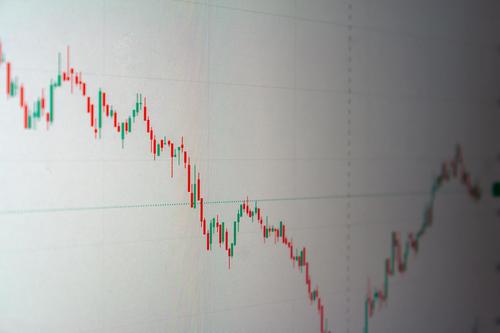
Abercrombie & Fitch (ANF) fell 2.19% to $95.24 in the latest session, underperforming the broader market.
Key Takeaways
Abercrombie & Fitch (ANF) has recently experienced a notable shift in its institutional ownership landscape, signaling a potential re-evaluation by large investment firms. While no single "Delta Global" hedge fund exit is explicitly detailed in recent filings, the broader trend indicates a significant reduction in institutional holdings. The latest Q1 2026 data reveals a substantial decrease, with the number of institutional holders falling by 257 from the prior quarter, bringing the total to 232. More strikingly, overall institutional ownership has plummeted by 68.47 percentage points, now standing at just 29.6%.
This widespread divestment is a critical development for ANF investors. It suggests that a considerable portion of the smart money is either rotating out of the apparel retail sector or specifically reducing exposure to Abercrombie & Fitch, despite the company's recent operational improvements. The total invested capital by institutions still stands at a hefty $1.33 billion, but the net outflow trend is undeniable. Over the last 24 months, institutional investors have sold approximately 11.0 million shares, totaling about $1.11 billion in transactions, even as buying activity amounted to 17.7 million shares or $1.79 billion. This indicates a dynamic environment where some funds are increasing positions, but a larger number are closing out or significantly reducing stakes.
The put/call ratio, a measure of market sentiment, has also seen a significant shift, dropping by 51.4% to 1.16. While a ratio above 1 typically indicates a bearish bias, the sharp decline suggests a lessening of extreme negative sentiment compared to the prior quarter. However, the overall reduction in institutional presence and the net selling pressure from a substantial number of funds cannot be ignored. This could reflect concerns about the sustainability of ANF's turnaround, the broader economic outlook, or specific company-level risks that are prompting large investors to de-risk their portfolios.
Top holders like BlackRock, Inc. and State Street Corp have slightly reduced their stakes, by 2.4% and 0.1% respectively, though they remain significant shareholders. Conversely, AQR Capital Management LLC increased its holdings by 37.7%, demonstrating that not all institutional players are uniformly bearish. The divergence in institutional activity highlights the mixed signals surrounding ANF, making a deeper dive into the underlying fundamentals and market conditions essential for retail investors.
The significant institutional divestment and the stock's recent volatility can be attributed to a confluence of macroeconomic pressures and specific company dynamics, creating a challenging environment for Abercrombie & Fitch. The stock is currently trading at $70.57, down 2.42% on the day, and has seen a staggering 35.4% decline year-to-date, now sitting 38.5% below its 52-week high of $133.11. This sharp correction suggests that the market is pricing in substantial headwinds, despite what appear to be strong operational results.
A major factor is the resurgence in U.S.-Iran tensions, which sent oil prices sharply higher earlier in May 2026. This geopolitical event immediately reignited concerns about the consumer's discretionary spending power and the escalating costs for a globally sourced supply chain. Apparel retailers like ANF are particularly vulnerable to these pressures. Higher ocean-freight costs, exacerbated by shipping lane rerouting around the Middle East, directly impact landed costs for spring and summer collections. This comes at a time when retailers' ability to raise shelf prices is weakening, threatening both gross margins and full-price sell-through.
While ANF reported record first-quarter net sales of $1.1 billion, an 8% year-over-year increase that outperformed guidance, the market's reaction has been muted, if not negative. The Abercrombie brand itself experienced a 4% decline in net sales, largely due to efforts to clear carryover inventory and softer category performance compared to a strong prior year. This brand-specific weakness, even amidst overall company growth driven by Hollister, could be a red flag for institutions concerned about the flagship brand's long-term health and pricing power.
Furthermore, analysts have trimmed price targets recently, with JPMorgan lowering its target to $110 and UBS to $149, despite a consensus "Moderate Buy" rating. This cautious recalibration by analysts, coupled with the broader market's sensitivity to inflation and consumer spending, suggests that the market is prioritizing potential future margin compression and cost inflation over past performance. The stock's high volatility, with 29 moves greater than 5% over the last year, underscores the market's uncertainty and quick reactions to both positive and negative news.
Abercrombie & Fitch has undeniably made significant strides in its turnaround efforts, but the sustainability of this momentum is now under intense scrutiny given the current economic climate. The company's recent financial performance paints a picture of operational strength, with Q1 net sales hitting a record $1.1 billion, an 8% year-over-year increase. This growth was broad-based across all regions, with the Hollister brand showing "exceptional gains." This indicates that the company's strategy of brand revitalization, inventory discipline, and customer engagement is resonating with consumers, particularly within the Hollister segment.
However, the Abercrombie brand's 4% decline in net sales in Q1, attributed to inventory clearance and softer category performance, highlights an uneven recovery. While management might frame this as a strategic move to optimize inventory, it raises questions about the brand's ability to consistently drive growth in a competitive fashion landscape. The company's guidance for Q1 2026 EPS is set at $1.20-$1.30, with a full-year 2026 EPS forecast of $10.20-$11.00. These figures, alongside a prior quarterly EPS beat of $3.68 against estimates of $3.56, suggest a healthy underlying business.
Beyond sales, ANF's commitment to shareholder returns and balance sheet strength is notable. The company repurchased $200 million of shares in Q1, representing approximately 5% of shares outstanding, with a substantial $1.1 billion remaining under its current authorization. This aggressive capital return policy, coupled with a strong liquidity position of approximately $940 million and $511 million in cash and cash equivalents, demonstrates management's confidence and financial prudence. The planned addition of around 100 new store experiences in 2025, including 60 new stores and 40 remodels, also signals a forward-looking real estate strategy aimed at enhancing customer experience and optimizing its physical footprint.
Despite these positive internal factors, the external environment poses significant risks. Rising cost pressures from global supply chains and potential softening of consumer discretionary spending could erode the impressive gross margins and profitability ANF has worked hard to achieve. The market's current valuation, with the stock down 35.4% YTD and trading at a P/E of 7.5, suggests that investors are heavily discounting these future risks, questioning whether the turnaround can sustain its trajectory against a backdrop of increasing economic uncertainty.
For investors considering Abercrombie & Fitch (ANF), the current landscape presents a clear bull and bear case, each with compelling arguments. Understanding both perspectives is crucial for making an informed decision, especially with the stock trading significantly below its 52-week high and institutional ownership in flux.
The Bull Case: Bulls point to ANF's strong operational turnaround and robust financial health. The company delivered record Q1 net sales of $1.1 billion, an 8% year-over-year increase, driven by exceptional performance in Hollister. This demonstrates effective brand revitalization and a successful strategy in a competitive retail segment. Management's forward guidance for Q1 2026 EPS of $1.20-$1.30 and FY2026 EPS of $10.20-$11.00 indicates continued confidence in profitability. Furthermore, the aggressive share repurchase program, with $200 million executed in Q1 and $1.1 billion remaining, signals a commitment to enhancing shareholder value and a belief that the stock is undervalued. The company's strong balance sheet, with $511 million in cash and $940 million in liquidity, provides a buffer against economic shocks and supports future growth initiatives, including the planned 100 new store experiences. With a consensus "Moderate Buy" rating and an average analyst price target of $117.45, there's a significant upside potential of over 66% from the current price of $70.57.
The Bear Case: Bears, on the other hand, highlight the significant institutional divestment, with ownership dropping by 68.47 percentage points and 257 fewer institutional holders in Q1 2026. This mass exodus suggests that large funds see fundamental risks outweighing the recent positives. The stock's sharp 35.4% year-to-date decline and its current trading price, 38.5% below its 52-week high, reflect deep market skepticism. Macroeconomic headwinds, such as rising U.S.-Iran tensions, higher oil prices, and concerns about consumer discretionary spending, pose substantial threats to ANF's margins and sales growth. The 4% decline in the Abercrombie brand's net sales in Q1, even as Hollister surged, indicates an uneven recovery and potential weakness in the flagship brand. Analysts trimming price targets, despite overall "Buy" ratings, also signal a more cautious outlook. Bears fear that increasing supply chain costs and a softening consumer environment could quickly erode ANF's profitability, making its current valuation, even at a P/E of 7.5, vulnerable to further downside.
As Abercrombie & Fitch (ANF) prepares to report its first-quarter 2026 results on May 27, 2026, investors should focus on three critical factors that will likely dictate the stock's near-term trajectory and provide insight into its long-term viability. These elements will offer a clearer picture of whether the company can maintain its operational momentum amidst a challenging retail environment.
First, Gross Margins and Cost Management will be paramount. While ANF has demonstrated strong sales growth, particularly with Hollister, the market is increasingly concerned about rising input costs and supply chain disruptions. Geopolitical tensions have pushed oil prices higher, directly impacting freight and raw material costs. Investors will be scrutinizing the gross margin percentage to see if the company can effectively mitigate these pressures through pricing strategies, operational efficiencies, or a favorable product mix. Any significant compression in margins could signal that the macroeconomic headwinds are starting to bite, regardless of top-line performance.
Second, pay close attention to the Abercrombie Brand's Performance and Inventory Levels. The Q1 2026 report noted a 4% decline in net sales for the Abercrombie brand, attributed to inventory clearance. While this might be a strategic move, investors need to understand if this trend is stabilizing or if it indicates deeper issues with brand relevance or consumer demand for its specific offerings. Commentary on inventory health, particularly for the Abercrombie brand, will be crucial. A continued need for aggressive markdowns could pressure profitability, while a successful inventory reset could pave the way for healthier full-price sales in subsequent quarters.
Finally, Management's Outlook and Guidance for Q2 and Full-Year 2026 will be the most forward-looking indicator. The company has already provided Q1 2026 EPS guidance of $1.20-$1.30 and FY2026 EPS guidance of $10.20-$11.00. Any adjustments to these figures, either up or down, will send a strong signal to the market about management's confidence in navigating the current economic climate. Specific commentary on consumer spending trends, promotional activity, and the impact of their new store experiences will provide valuable context. Investors will be looking for clear communication on how ANF plans to sustain growth and profitability in an environment marked by inflation and cautious consumer behavior.
Abercrombie & Fitch finds itself at a critical juncture, balancing a commendable operational turnaround with a volatile market and significant institutional re-evaluation. The upcoming Q1 earnings report on May 27 will be a pivotal moment, offering clarity on whether the company can sustain its momentum against a backdrop of rising costs and cautious consumer spending. Investors should brace for continued volatility, as the market weighs ANF's internal strengths against external pressures.
Ultimately, ANF's ability to maintain strong gross margins, revitalize its Abercrombie brand, and provide a confident outlook will determine if it can regain institutional favor and climb back towards its analyst-backed price targets. For now, the stock remains a high-conviction play for those who believe in the enduring power of its brand refresh, but a risky proposition for those wary of broader economic headwinds.
Want deeper research on any stock? Try Kavout Pro for AI-powered analysis, smart signals, and more. Already a member? Add credits to run more research.