MarketLens
Is Canadian Natural Gas Entering a New Era of Demand

Key Takeaways
- Canadian natural gas producers like Tourmaline Oil (TOU.TO) are poised for sustained growth, driven by accelerating global LNG demand and surging electricity needs from AI data centers.
- Tourmaline Oil is demonstrating strong operational execution, achieving record production and strategically expanding infrastructure to capitalize on tightening North American and global gas markets.
- ARC Resources (ARX.TO) offers a distinct investment profile, with its recent CA$22 billion acquisition by Shell underscoring the strategic value of its Montney assets and LNG export potential.
Is Canadian Natural Gas Entering a New Era of Demand?
The North American natural gas market is undergoing a significant structural shift, driven by two powerful forces: the relentless expansion of liquefied natural gas (LNG) exports and the burgeoning electricity demand from AI data centers. This confluence of factors is creating a compelling long-term demand narrative for Canadian gas producers, moving beyond traditional pipeline exports to the U.S. and offering a new era of growth. The International Energy Agency's (IEA) Q1 2026 Gas Market Report projects global LNG supply growth to accelerate by over 7% (more than 40 billion cubic meters) in 2026, with North America accounting for over 85% of this increase.
This robust growth is not merely theoretical; it's translating into concrete demand. An ICF report from Q4 2025 forecasts a 25% rise in U.S. natural gas demand by 2030 relative to 2024, with nearly 60% of this incremental demand stemming from LNG exports. Crucially, another 22% is attributed to the power sector, fueled by rebounding electricity consumption and the substantial, reliability-sensitive loads of expanding data centers across various regions. The Canadian Energy Regulator (CER) also highlights LNG exports as a key driver for Canadian natural gas production, projecting growth ranging from 15% to nearly 75% by 2050 compared to 2024 levels across different scenarios, with much of this growth directed towards LNG exports.
The operationalization of projects like LNG Canada is a game-changer for the Western Canadian Sedimentary Basin (WCSB). Phase 1 of the LNG Canada export facility in Kitimat, B.C., is nearing completion and is targeting to ramp up its LNG exports by mid-2025, projected to reach 1.84 billion cubic feet per day (Bcf/d). This single project alone is anticipated to add approximately 10% to current WCSB natural gas consumption, as noted by TD Securities in their July 2025 report. This substantial new demand outlet is fundamentally reshaping the supply-demand balance, creating a more favorable pricing environment for Canadian producers who can efficiently deliver gas to these export facilities.
How is Tourmaline Oil Capitalizing on Tightening Gas Markets?
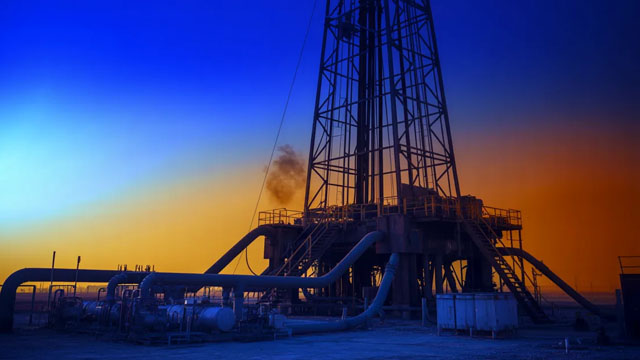
Tourmaline Oil Corp. (TOU.TO), Canada's largest natural gas producer, is strategically positioned to benefit from these evolving market dynamics, demonstrating strong operational performance and a clear vision for future growth. The company reported record production in Q4 2025 and again in January 2026, with output averaging approximately 685,000 boe per day before a significant asset sale. This consistent outperformance underscores Tourmaline's efficiency in its core Montney assets, particularly in northeast British Columbia, where management is focused on well performance and infrastructure expansion.
Tourmaline's drilling programs are continuously optimizing, moving towards longer laterals and updated completion designs. In northeast BC, the average completed lateral length increased to about 8,400 feet in 2025, which is approximately 1,100 feet longer than in 2024. This technical advancement contributes to lower per-unit costs and enhanced recovery, allowing Tourmaline to maintain highly competitive breakeven gas prices, estimated around CA$2.00/Mcf in the Alberta Deep Basin and an even lower CA$1.40/Mcf in the BC Montney. Such low breakeven costs provide a significant competitive advantage, allowing the company to remain profitable even during periods of regional price weakness.
Management has also indicated a strategic flexibility in managing new production, noting their ability to drill wells but delay completions, which represent about 60% of total well cost. This allows them to time new supply entry into the market, optimizing for favorable pricing conditions. With the anticipated tightening of North American and global LNG markets, Tourmaline is well-positioned to respond with increased volumes. The company's focus on infrastructure, including new AltaGas storage and expanded LNG contracts, further solidifies its ability to capture value from rising demand. Analysts are projecting higher free cash flow expectations for Tourmaline in 2026 and 2027, reflecting confidence in its operational leverage to the improving market fundamentals.
What Does the Shell Acquisition Mean for ARC Resources?
ARC Resources Ltd. (ARX.TO) presents a unique investment case, particularly following the significant announcement on April 27, 2026, that Shell plc will acquire all issued and outstanding common shares of ARC in a cash and share transaction valued at approximately CA$22 billion, including assumed net debt. This acquisition is a resounding endorsement of ARC's high-quality Montney assets and its strategic positioning in the burgeoning Canadian LNG export landscape. Shell's CEO, Wael Sawan, emphasized that the deal establishes "Canada as a heartland for Shell," gaining access to low-cost supply from the Montney to build up LNG Canada.
Prior to the acquisition announcement, ARC had already demonstrated robust performance, reporting record production in Q1 2026. Total production averaged a record 418,522 boe per day, a 12% increase from a year earlier, with natural gas comprising 61% of this output. Natural gas production alone increased by 9%, driven by the demand momentum from LNG Canada and stabilizing Canadian benchmark prices. For the full year 2026, ARC's guidance estimates average annual production between 405,000 and 420,000 boe per day, with 61% natural gas and 39% crude oil and liquids, alongside capital expenditures of CA$1.8 billion to CA$1.9 billion.
ARC's strategic moves extend beyond immediate production. In March 2025, ARC announced a long-term sale and purchase agreement with ExxonMobil LNG Asia Pacific (EMLAP) for the supply of approximately 1.5 million tonnes per annum of LNG from the Cedar LNG Project, commencing with commercial operations expected in late 2028. This agreement, alongside its significant Montney asset base like Attachie, which spans over 360 net sections and is condensate-rich, makes ARC a highly attractive target for a global energy major like Shell. The acquisition highlights the increasing importance of securing reliable, low-cost natural gas supply for global LNG markets.
How Do TOU and ARX Compare on Key Financials and Performance?
While both Tourmaline Oil and ARC Resources operate in the same dynamic Canadian natural gas landscape, their recent performance and financial profiles, particularly in light of the Shell acquisition for ARX, offer distinct considerations for investors. Over the past 12 months, ARC Resources has demonstrated superior stock performance, delivering a return of +7% compared to Tourmaline Oil's +2% growth. This outperformance for ARX was likely bolstered by the market's anticipation and eventual reaction to the Shell acquisition, which valued the company at a significant premium.
Looking at trailing twelve-month (TTM) financial fundamentals, ARC Resources generally presents a more attractive valuation and stronger profitability metrics compared to Tourmaline. ARX trades at a P/E ratio of 12.49, significantly lower than TOU's 35.81. Similarly, ARC's P/FCF (Price to Free Cash Flow) stands at 14.83, substantially better than Tourmaline's 63.91. The EV/EBITDA (Enterprise Value to EBITDA) ratio for ARX is 6.00, indicating a more efficient valuation relative to its operational cash flow, versus TOU's 7.61. These metrics suggest that, on a standalone basis, ARC was trading at a more compelling valuation relative to its earnings and cash generation.
In terms of profitability and returns, ARC also shows stronger figures. Its TTM Gross Margin is 42.0%, Operating Margin is 33.3%, and Net Margin is 22.2%. In contrast, Tourmaline's margins are considerably lower, with Gross Margin at 7.4%, Operating Margin at 8.3%, and Net Margin at 12.8%. ARC's Return on Equity (ROE) is 17.4%, Return on Assets (ROA) is 9.2%, and Return on Invested Capital (ROIC) is 11.6%, all significantly higher than Tourmaline's respective 4.4%, 3.1%, and 1.6%. These figures underscore ARC's superior efficiency in converting revenue into profit and generating returns for shareholders and on capital employed.
What are the Risks and Opportunities for Canadian Gas Producers?
Despite the bullish outlook driven by LNG exports and AI data centers, Canadian natural gas producers face a complex array of risks and opportunities that warrant careful consideration. One primary risk is the potential for an oversupply in the global LNG market. The Norton Rose Fulbright 2026 outlook for the Canadian LNG industry suggests a wave of new global supply, with 300 billion cubic meters of new export capacity scheduled to come online by 2030, representing a 50% increase. This could lead to a supply glut by late 2026, exerting downward pressure on LNG prices, even as demand grows.
Another critical factor is infrastructure timing and constraints. While demand growth is accelerating, particularly along the U.S. Gulf Coast for LNG and in various regions for power, the ability to transport gas from low-cost producing basins to these demand centers remains a challenge. The ICF report highlights that infrastructure, not resource availability, is the binding constraint. Permitting challenges, opposition, and rising costs for interstate pipeline development can lead to regional bottlenecks and price volatility. For Canadian producers, this means ensuring adequate pipeline capacity to LNG export terminals like Kitimat, B.C., and efficient access to premium U.S. markets.
However, significant opportunities remain. The Canadian Energy Regulator (CER) projects that natural gas production in Canada will grow in all scenarios, ranging from 2 to 9 Bcf/d higher than 2024 levels by 2035. This sustained growth is underpinned by the profitability of drilling new wells and the assumptions on LNG exports. Furthermore, the diversification of Canadian natural gas trade, from nearly all exports going to the U.S. via pipeline to potentially over a third reaching global markets via LNG by 2050, reduces reliance on a single market and offers access to higher international prices. Producers like Tourmaline, with their low breakeven costs and strategic infrastructure, are well-positioned to navigate these market dynamics.
The Outlook: Navigating Growth and Volatility
The landscape for Canadian natural gas producers is undeniably shifting, presenting both substantial opportunities and inherent risks. The structural demand drivers from global LNG markets and the burgeoning AI sector are creating a compelling long-term growth narrative, but investors must remain vigilant regarding market oversupply and infrastructure bottlenecks. Companies like Tourmaline Oil, with their low-cost production and strategic capacity management, are well-equipped to capitalize on these trends.
For ARC Resources, the Shell acquisition provides a clear, near-term value realization for shareholders, while also validating the strategic importance of Western Canadian Montney assets. As the global energy transition unfolds, natural gas is increasingly recognized as a crucial bridge fuel, offering reliability and lower emissions compared to other fossil fuels. Therefore, Canadian producers with robust asset bases and efficient operations are likely to remain attractive, albeit within a market that will continue to experience periods of price volatility.
Want deeper research on any stock? Try Kavout Pro for AI-powered analysis, smart signals, and more. Already a member? Add credits to run more research.
Related Articles
Is Copper the New "Red Gold" of the AI Era
Category
You may also like


Canada As An Energy Superpower: Can It Unlock Its Potential?

While Asia and Europe scramble for natural gas, the US glut has nowhere to go

Criterium Energy Delivers Strong 2025 Results and Advances Transformational Gas Development
Breaking News
View All →Featured Articles
Top Headlines

Apple Siri AI Extends Personal Context Across Devices and Apps

Jim Cramer says sovereign AI is Nvidia's powerful new growth driver

Alphabet Inc. (GOOG) Stock Drops Despite Market Gains: Important Facts to Note

Alphabet (GOOGL) Stock Slides as Market Rises: Facts to Know Before You Trade