Key Takeaways
- Caterpillar (CAT) faces a complex US-China trade landscape, with potential tariff relief offset by persistent geopolitical friction and a challenging Chinese market.
- The company's strategic pivot towards high-margin services, AI-driven power solutions, and a robust $51 billion backlog provides a significant buffer against trade volatility.
- Despite a strong valuation, upcoming US-China trade talks in April, particularly Trump's visit, could offer crucial signals for Caterpillar's future revenue and margin stability.
Is Caterpillar's China Exposure a Blessing or a Curse Amid Trade Tensions?
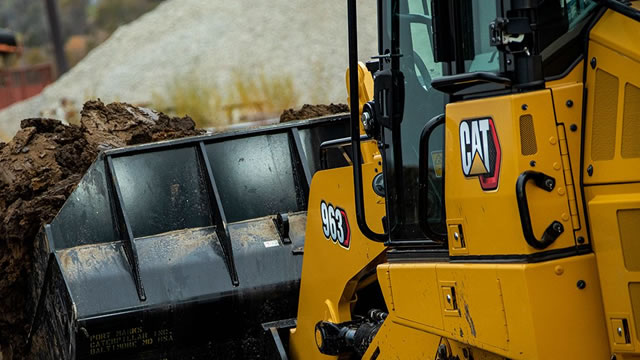
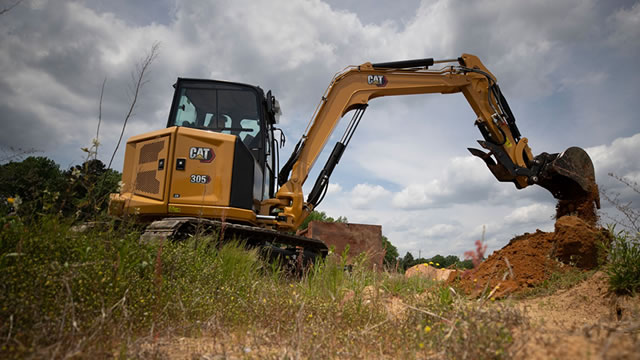
Caterpillar Inc. (NYSE: CAT) stands as a titan of industry, its iconic yellow machinery a ubiquitous sight from construction sites to mining operations across the globe. For decades, the company has been a bellwether for global economic health, its fortunes often mirroring the ebb and flow of infrastructure development and commodity cycles. However, in 2026, the narrative around Caterpillar is far more nuanced, deeply intertwined with the unpredictable currents of US-China relations. The question for investors isn't just about demand for heavy equipment, but how effectively CAT can navigate a bifurcated world where geopolitical risk is now a structural feature of doing business.
The current climate is one of "relative calm" at the leadership level, following a truce between Trump and Xi in October 2025. Yet, beneath this surface, political, regulatory, and security pressures continue to build, creating a complex operating environment for global giants like Caterpillar. While sweeping blanket tariff hikes might be off the table for now, the risk of more targeted duties, export controls, and sanctions aimed at specific, sensitive industries remains a significant concern. This delicate balance means that while some companies might recalibrate their investment decisions to be more bullish, it comes with careful adjustments to a new operating reality.
Caterpillar's global reach is approximately evenly balanced between the US and the rest of the world, with its construction segment skewing more domestic, while other divisions are more geographically diversified. This global footprint, while a source of strength, also exposes it directly to the vagaries of international trade policy. The company has historically urged stronger trade relations, recognizing China as one of its largest export markets. However, the current environment demands a more agile and resilient strategy, one that acknowledges the ongoing shift towards de-risking supply chains and embedding geopolitical considerations into long-term planning.
The company's recent performance underscores this duality. Caterpillar reported a record-breaking Q4 2025 with $19.1 billion in sales and revenues, an 18% increase year-over-year, driven by strong volumes across all primary segments. Full-year sales and revenues reached an all-time high of $67.6 billion, marking 4% year-over-year growth. This robust performance, however, was achieved despite significant tariff headwinds, highlighting both the company's underlying strength and the persistent challenges it faces in a fragmented global trade landscape.
How Do Tariffs and Trade Talks Impact Caterpillar's Bottom Line?
Tariffs have been a persistent thorn in Caterpillar's side, directly impacting its manufacturing costs and, consequently, its operating profit margins. The company faced net incremental tariff headwinds of $1.7 billion in 2025, a substantial drag on its financial performance. Looking ahead, management has warned that these incremental tariff costs are expected to rise further, reaching around $2.6 billion in 2026, an $800 million increase from the previous year. This projected increase underscores the ongoing pressure on Caterpillar's profitability, even as it navigates a period of robust demand in other areas.
However, a significant and unexpected development has emerged that could provide a substantial financial tailwind: a landmark Supreme Court ruling in February 2026. This ruling, stemming from the IEEPA case, struck down several executive-imposed tariffs as unconstitutional. Analysts now estimate that Caterpillar could receive between $1.5 billion and $1.8 billion in retroactive tariff refunds by the end of the year. This potential "windfall" is a game-changer, offering a much-needed boost to the company's cash reserves and providing flexibility for capital allocation.
The company has already signaled its intent to return this windfall to shareholders, with plans for an upsized $10 billion share buyback program. This move would not only enhance shareholder value but also reflect management's confidence in Caterpillar's long-term financial health, despite the ongoing tariff challenges. Such a substantial buyback could significantly impact EPS, making the stock more attractive to investors seeking both growth and capital returns.
Historically, Caterpillar has been highly sensitive to trade policy. Back in 2018, the deepening US-China trade war led to a downgrade by Goldman Sachs, citing headwinds in both the China and North America construction equipment markets. The company's shares lost about 25% of their value in early 2018 as trade tensions escalated, driving up raw material and freight costs. Fast forward to 2026, and while the context has evolved, the fundamental sensitivity to trade policy remains. The upcoming trade deal negotiations, particularly Trump's planned visit to China in April, are therefore critical. Any agreements on rare earths access, expanded Chinese purchases of US agricultural products, or renewed cooperation on fentanyl could signal a broader de-escalation, potentially mitigating future tariff impacts and fostering a more stable operating environment for Caterpillar.
What Strategic Moves is Caterpillar Making to Mitigate Geopolitical Risks?
Caterpillar is not merely a passive observer in the face of geopolitical shifts; the company is actively pursuing a refreshed enterprise strategy centered on three key pillars: commercial excellence, being the advanced technology leader, and transforming how it works, all built upon a foundation of continued operational excellence. This strategic pivot is designed to build resilience and drive profitable growth, even amidst a volatile global landscape. A key aspect of this strategy is the aggressive push into high-margin services, which provides a crucial buffer against the cyclical nature of heavy equipment sales and geopolitical disruptions.
The company's focus on advanced technology is particularly noteworthy. Caterpillar unveiled the next era of industrial AI and autonomy at CES 2026, highlighting its role in providing critical minerals, reliable power, and physical infrastructure for the digital world. This includes the launch of its new Cat AI Assistant, designed to help customers buy, maintain, manage, and operate equipment more easily. This technological leadership extends to its Resource Industries segment, where customer interest in autonomous hauling solutions remains strong, with 827 autonomous haul trucks in operation by the end of 2025, up from 690 in 2024.
Perhaps the most compelling growth story for Caterpillar in recent quarters has been its Power & Energy segment, which has been significantly boosted by the AI-driven data center boom. This segment's sales to users grew a robust 37% in Q4 2025, with power generation alone surging 44%, driven by strong demand for large gensets and turbines used in data center applications. The AI boom has transformed Power & Energy into Caterpillar's largest business by sales, surpassing its traditional construction unit. This diversification into high-growth, technology-driven sectors provides a powerful counter-narrative to the trade headwinds.
Furthermore, Caterpillar is making substantial capacity investments, planning around $3.5 billion in capital expenditures in 2026, to double its large engine capacity and more than double its industrial gas turbine capacity by 2030. These investments are aimed at meeting the surging demand from data centers and other energy-intensive applications, further solidifying its position as a critical infrastructure provider for the digital economy. The company also pledged $25 million to ensure the future workforce has the tools needed for advanced technology, underscoring its long-term commitment to innovation and talent development.
Is China Still a Growth Engine for Caterpillar, or a Headwind?
The Chinese market, once a primary growth engine for Caterpillar, has evolved into a more complex and challenging landscape. While the company anticipates "positive momentum" in China for 2026, particularly with full-year growth in the above 10-ton excavator industry, the competitive environment has intensified significantly. Domestic brands like SANY Group and XCMG have aggressively expanded, capturing more market share with low-cost, high-tech alternatives, leading to price wars that erode margins for all players. This shift means Caterpillar must now navigate a market where its peerless global dealer network, which provides 24/7 service, remains a key differentiator against local competitors.
The broader US-China trade dynamics also cast a long shadow over Caterpillar's operations in China. The US's domestic policy continues its move toward a more restrictive outbound investment environment, exemplified by the 2026 National Defense Authorization Act (NDAA), which incorporates acts directly targeting China. While these measures primarily focus on technology and capital, they contribute to an overall climate of scrutiny and potential friction that can impact business confidence and investment decisions for foreign companies operating in China. China has already reacted strongly to the NDAA, threatening countermeasures if provisions related to China are implemented.
For foreign companies like Caterpillar, the combination of a de facto truce at the leadership level and ongoing US legislative and regulatory scrutiny creates a bifurcated policy landscape. Tactical engagement and dealmaking may occur at the top, but continued targeting of Chinese technology and capital at the legislative level means considerable investment risks remain. Companies operating in affected sectors will continue to find themselves caught between competing regulatory regimes and political priorities, necessitating a heightened focus on risk management and supply chain resilience.
Despite these challenges, China's overall foreign trade and economy remain resilient, even as Chinese exports to the US have plunged under tariffs. Many Chinese exporters have successfully diverted shipments to new markets, including Europe, Latin America, and other Asian economies. This adaptability, however, does not fully offset the impact of "Country of Origin" trade policies and "Design in America" incentives, which are forcing Caterpillar to rethink its manufacturing footprint and supply chain strategies globally. The long-term trend of pushback against China’s increasing advantage in industrial manufacturing, with countries like Mexico and the EU levying their own barriers, further complicates the outlook for a global manufacturer like Caterpillar.
Is CAT's Current Valuation Justified by Its Growth Prospects?
Caterpillar's stock has seen a significant re-rating, with shares gaining about 60% over the last year, roughly four times the S&P 500's gains in that time. This impressive performance has shifted investor perception, moving the company beyond a mere cyclical manufacturer of "heavy iron" to a high-tech infrastructure powerhouse at the nexus of the global energy transition and the AI-driven data center boom. However, this re-rating also brings its valuation into sharp focus.
Currently, CAT trades at a P/E ratio of 36.49, significantly exceeding its five-year average of 19x. Other valuation metrics also reflect a premium: P/B at 15.19, P/S at 4.81, and EV/EBITDA at 24.10. While the company's record backlog of $51 billion and its strategic pivot to high-margin services and advanced technology certainly justify some of this premium, investors must carefully assess whether the stock is "priced for perfection." Any slowdown in data center builds or an escalation in trade wars could trigger a sharp correction, as critics worry.
Wall Street analysts remain largely bullish on Caterpillar, with a consensus rating of Buy from 53 analysts (25 Buy, 21 Hold, 7 Sell). The consensus price target is $697.07, with a median of $703.50, suggesting limited upside from the current price of $693.99. The high target of $825.00 indicates significant optimism from some, while the low of $425.00 points to considerable downside risk if challenges materialize. Institutional ownership remains high at approximately 72%, with major firms like BlackRock and Vanguard increasing their positions in late 2025, signaling continued institutional confidence.
Caterpillar's financial fundamentals show a mixed picture. While gross margins are healthy at 32.3% and operating margins at 16.6%, net income growth for FY2025 was -17.8% and EPS growth was -14.6%, largely due to the tariff headwinds. However, free cash flow (FCF) growth was robust at 16.5%, and the company boasts strong returns with ROE at 45.1% and ROIC at 11.4%. The dividend yield is modest at 0.9%, but the payout ratio of 31.0% suggests ample room for future increases, especially with the anticipated tariff refunds.
The company's 2026 outlook anticipates sales and revenues growth around the top of its 5% to 7% long-term compound annual growth rate target, supported by volume growth in all three primary segments and positive price realization of about 2% of total sales and revenues. Full-year adjusted operating profit margin is expected to exceed 2025 levels, but remain near the bottom of the target range, reflecting the ongoing impact of tariffs. This guidance, coupled with the potential tariff refund, paints a picture of resilient growth, but one that still faces margin pressures.
What Key Signals Should Investors Watch For in 2026?
For investors tracking Caterpillar, 2026 presents several critical junctures and macroeconomic signals that could significantly impact the company's trajectory. The most immediate and high-impact event is Trump's planned visit to China in April. This meeting with Xi presents the best opportunity for a longer-term and more durable trade deal. Investors should closely monitor any pre-meeting statements or leaks from lower-level officials, as these could offer early clues about potential concessions or commitments on the table, particularly regarding tariff reductions or specific trade agreements that could benefit Caterpillar.
Beyond the April summit, the expiration of the current trade deal with China in October 2026 is another crucial date. The outcome of negotiations leading up to this deadline will determine the stability of the trade environment for the latter half of the year and beyond. Any indications of renewed tariff threats or a failure to reach a new agreement could reignite volatility and pressure Caterpillar's margins. Conversely, a successful negotiation could solidify the "truce" and provide a more predictable operating landscape.
On the domestic front, the implementation of the $1.5 billion to $1.8 billion in retroactive tariff refunds, expected by year-end, is a significant financial catalyst. Investors should watch for official announcements regarding the timing and specifics of this refund, as well as the execution of the $10 billion share buyback program. These actions will directly impact shareholder returns and signal management's confidence in the company's financial strength.
Macroeconomic indicators also warrant close attention. The Philadelphia Fed Manufacturing Index (Mar), New Home Sales (Jan), and Initial Jobless Claims (Mar/14) are all due in the coming days, providing insights into the health of the US economy and, by extension, demand for construction equipment. Furthermore, Fed Chair Powell's speech on March 21st could offer clues on interest rate policy, which directly influences construction activity and capital expenditure decisions globally. A prolonged period of high rates could eventually dampen private-sector construction, a key market for Caterpillar.
Finally, the ongoing global push for "Reshoring" and "Decarbonization" will continue to shape the machinery sector. The massive shift of manufacturing back to North America and Europe creates a permanent bid for high-end construction equipment, while the "Critical Minerals" boom for EV batteries keeps demand for Resource Industries high. Investors should monitor Caterpillar's progress in these areas, particularly its R&D spend on electric and hydrogen-powered equipment, as these secular trends represent significant long-term growth opportunities.
Caterpillar stands at a fascinating crossroads, balancing the inherent cyclicality of heavy industry with the transformative potential of AI and a shifting global trade order. While trade tensions and tariff headwinds remain a tangible risk, the company's strategic pivot, robust backlog, and the unexpected tariff windfall position it for continued resilience. Investors should remain vigilant, focusing on the upcoming US-China trade talks and the company's execution of its advanced technology and services strategy to gauge its long-term trajectory.
Want deeper research on any stock? Try Kavout Pro for AI-powered analysis, smart signals, and more. Already a member? Add credits to run more research.