MarketLens
Is Corning (GLW) the Unsung Hero of the AI Infrastructure Boom

Key Takeaways
- Corning (GLW) is strategically positioned to capitalize on the surging demand for AI data center infrastructure, with its optical communications segment becoming a primary growth engine.
- Recent financial performance, including strong Q4 2025 results and an increased "Springboard" growth plan, signals robust execution and a positive outlook for future revenue and earnings.
- Despite a significant rally and elevated valuation metrics, the company's long-term contracts with hyperscalers like Meta, coupled with a "Buy" consensus from analysts, suggest potential for sustained upside, albeit with notable insider selling as a cautionary flag.
Is Corning (GLW) the Unsung Hero of the AI Infrastructure Boom?
Corning Incorporated (NYSE: GLW) has seen its shares surge, trading at $139.51 as of February 20, 2026, marking a significant +7.32% jump today alone. This impressive rally, which has seen the stock climb over 100% in the past year and 50.2% year-to-date in 2026, is largely fueled by growing optimism around its pivotal role in the artificial intelligence (AI) revolution. While the spotlight often shines on chipmakers and software giants, the infrastructure that carries the immense data loads generated by AI is equally critical, and Corning, a materials science powerhouse, is strategically aligned to dominate this essential space.
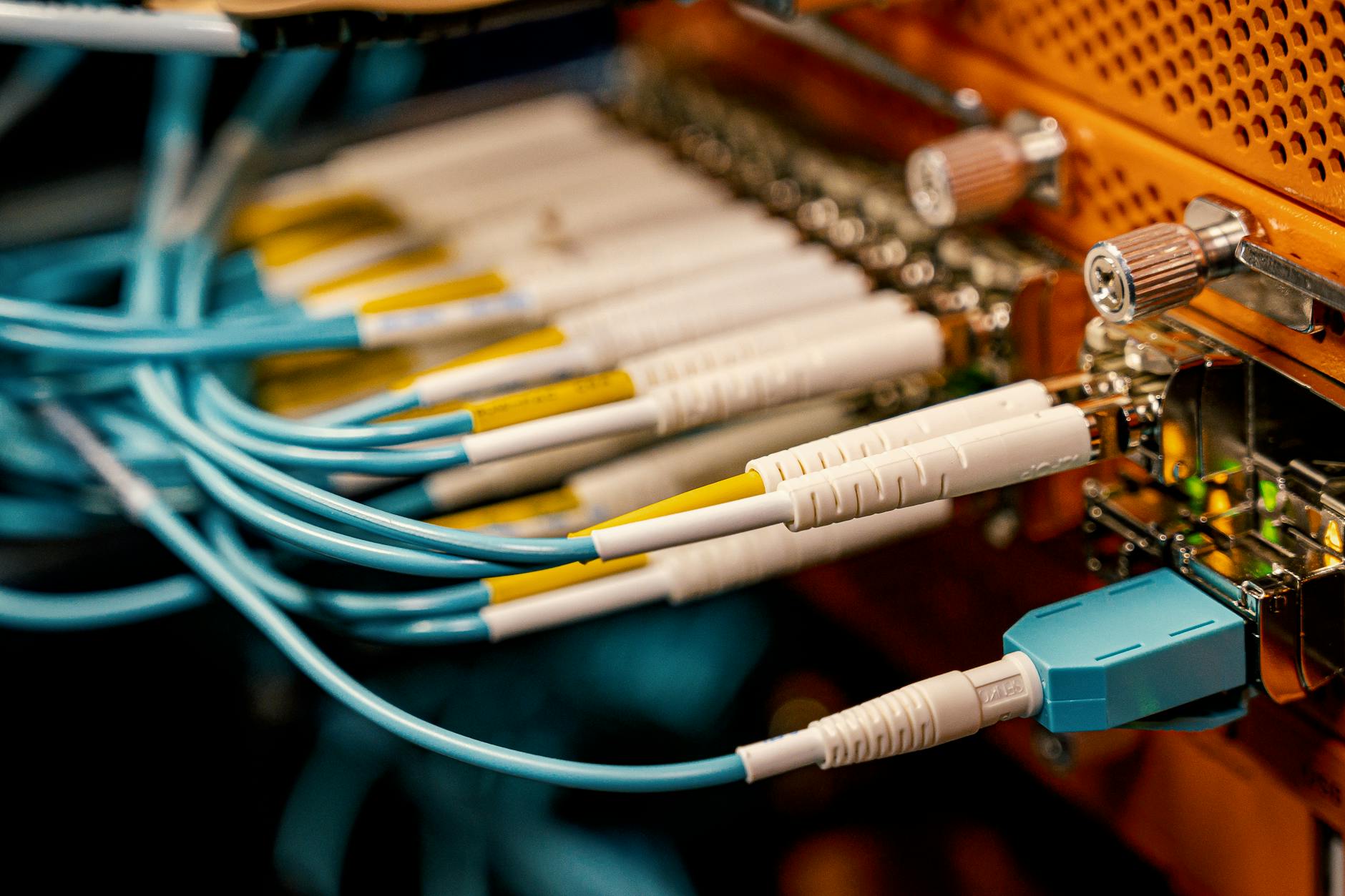
The demand for high-speed, high-efficiency data transfer is skyrocketing as AI-powered data centers become the new frontier of technological advancement. Hyperscalers like Amazon, Alphabet, Meta, Microsoft, and Oracle are collectively committing an unprecedented $660 billion to $690 billion to capital expenditure in 2026, nearly doubling 2025 levels, with the vast majority directed at AI compute, data centers, and networking. This massive infrastructure sprint creates a significant tailwind for companies like Corning, whose optical communication components are becoming indispensable. The company's extensive portfolio, including optical fiber, hardware, cables, and connectors, positions it as a foundational enabler for the next generation of AI-driven networks.
Corning's long history, spanning over 175 years, has traditionally been associated with consumer electronics glass and display panels. However, the company is undergoing a strategic transformation, with its optical communications segment rapidly emerging as the core growth engine. This shift is not merely opportunistic; it's a calculated alignment with the structural expansion of data transmission requirements. The market is increasingly re-rating foundational components like optical fiber, moving beyond chip-level performance to system-wide efficiency and scalability, where Corning's solutions are proving to be "must-haves" for AI computing.
The company's leadership has repeatedly emphasized accelerating orders from hyperscale data center customers, indicating a shift from cyclical inventory restocking to long-term structural expansion. This robust demand visibility provides Corning with the confidence to expand production capacity and accelerate technological upgrades, ensuring it can meet the tightening constraints on space and power consumption in AI data centers. The current market enthusiasm, while high, appears to be grounded in tangible shifts in industry demand and Corning's demonstrated ability to adapt and innovate.
What Strategic Partnerships Are Driving Corning's AI Ambitions?
Corning's strategic alignment with major technology players is a cornerstone of its AI growth strategy, providing both significant revenue streams and validation of its technological leadership. The most prominent example is the multi-year agreement with Meta Platforms (META), a deal valued at up to $6 billion through 2030. Under this agreement, Corning will supply cabling, optical fiber, and other communication components crucial for Meta's next-generation AI data centers. This landmark partnership underscores the critical role of optical fiber in supporting the massive GPU clusters and high-frequency data exchange required for AI training and inference.
Beyond Meta, Corning is also a key technology partner for generative AI-focused semiconductor behemoth NVIDIA Corp. (NVDA), supporting its silicon photonics ecosystem-based AI infrastructure. This collaboration highlights Corning's ability to integrate its optical solutions within the most advanced AI computing environments, ensuring high-density fiber, cable, and connectivity solutions meet the stringent requirements for bandwidth, optimized power consumption, and reduced space usage. These partnerships are not just about sales; they are about embedding Corning's technology at the heart of the AI infrastructure build-out, securing long-term demand visibility.
The significance of these large-scale, multi-year orders cannot be overstated. They provide Corning with greater confidence to expand capacity and accelerate technological upgrades, moving beyond short-term revenue contributions to locking in multi-year demand visibility. This approach, which includes customer prepayments and stringent long-term customer commitments, also reduces the risks associated with fluctuating demand and capital expenditure, fostering sustainable growth. For instance, Meta is advancing multiple hyperscale AI data center projects across the United States, including gigawatt-scale facilities in Ohio and Louisiana, all expected to extensively deploy Corning’s optical fiber products.
Corning's enterprise segment within optical communications is specifically projected to experience significant growth, particularly in areas related to generative AI products. This growth is further bolstered by strategic alliances like the partnership with Lumen Technologies, which reserves 10% of Corning's global fiber capacity for the next two years. Such agreements solidify Corning's position in the expanding fiber infrastructure market and demonstrate the strong, sustained demand for its fiber optic solutions from major data center operators and network providers. These collaborations are a clear signal that AI competition is extending beyond chips into the underlying data transmission infrastructure, structurally re-rating foundational components like optical fiber.
How Strong Are Corning's Recent Financials and Future Outlook?
Corning's recent financial performance has been robust, providing a solid foundation for its AI-driven growth narrative. The company reported strong fourth-quarter 2025 earnings results on January 28, 2026, with adjusted earnings per share (EPS) of $0.72, surpassing the Zacks Consensus Estimate of $0.70 and the year-ago EPS of $0.57. Quarterly revenues also outpaced expectations, reaching $4.41 billion against an estimate of $4.396 billion, representing a 14% year-over-year increase. This marked the fourth consecutive quarter of earnings beats in 2025, with full-year core EPS climbing 26% and operating margins expanding 390 basis points to 20.2%, meeting a key efficiency goal a full year ahead of schedule.
The optical communications business, central to the AI story, showed particularly impressive growth, with net sales climbing 24.3% year-over-year in the reported quarter. For the full year 2025, this segment generated $6.3 billion in revenues, an impressive 35% year-over-year growth, with the enterprise network business growing a staggering 61%. Corning started shipping data center products in early 2025, and sales have increased significantly since then, underscoring the immediate impact of AI demand. Free cash flow nearly doubled in 2025 to $1.72 billion from $880 million in 2024, demonstrating strong operational efficiency and cash generation.
Looking ahead, Corning's guidance reflects continued optimism and accelerated growth. The company projected core sales to be in the range of $4.2 billion to $4.3 billion for the first quarter of 2026, with adjusted per-share earnings expected between $0.66 and $0.70. More significantly, GLW raised its internal "Springboard" growth plan, now expecting to generate $6.5 billion in incremental annualized sales by the end of 2026 and a substantial $11 billion by the end of 2028. This is a significant upgrade from the previous guidance of $6 billion and $8 billion for 2026 and 2028, respectively, signaling management's increased confidence in its growth trajectory.
Analysts are largely aligned with this positive outlook. The Zacks Consensus Estimate for the current year’s earnings has improved by 0.3% in the last seven days, with an expected revenue and earnings growth rate of 11% and 20.5%, respectively, for the current year. The stock also boasts a long-term (3-5 years) EPS growth rate of 18.8%, which is notably higher than the S&P 500’s growth rate of 16%. These robust financial figures and forward-looking statements paint a picture of a company well-positioned to capitalize on the AI boom, with strong execution and clear growth catalysts.
Is Corning's Current Valuation Justified, or Is It Overpriced?
Corning's impressive rally has naturally led to questions about its valuation. The stock is currently trading at $139.51, near its 52-week high of $140.27. Its market capitalization stands at a substantial $119.69 billion. Looking at traditional valuation metrics, GLW appears stretched. The trailing twelve-month (TTM) Price-to-Earnings (P/E) ratio is 75.17, significantly higher than the industry average and around its highest point in the past year, though it has been higher in early 2025. The Price-to-Book (P/B) ratio is 10.16, and the Price-to-Sales (P/S) ratio is 7.66, while the EV/EBITDA stands at 34.47. These figures suggest that the market has already priced in a substantial amount of future growth.
However, the narrative around Corning's valuation is complex, reflecting the high-growth potential associated with AI. While the current P/E ratio of 75.17 might seem elevated, especially when compared to its earnings yield of 1.3% and free cash flow (FCF) yield of 1.2%, many analysts view this as a premium justified by its strategic positioning. The company's revenue growth of 19.1% and net income growth of 215.4% year-over-year for FY2025, along with EPS growth of 219.0%, demonstrate explosive growth that can quickly re-rate these multiples. The long-term EPS growth rate of 18.8% also provides a forward-looking justification for a higher valuation.
Wall Street analysts maintain a generally positive outlook, with a consensus rating of "Buy" from 36 analysts (21 Buy, 13 Hold, 2 Sell). The average analyst price target for GLW is $118.67, with a median of $120.00. The highest target is $135.00, and the lowest is $100.00. It's important to note that the current stock price of $139.51 has already surpassed the high analyst target, suggesting that some analysts may need to update their models to reflect the recent surge and increased guidance. UBS Group, for instance, recently raised its price target from $125.00 to $160.00 and maintained a "Buy" rating, indicating a belief in further upside.
The debate over GLW's valuation often boils down to whether the market is accurately discounting its future AI-driven revenue streams. While some investors might consider the stock in "overvalued territory" based on current metrics, the unprecedented scale of hyperscaler AI capital expenditure—with estimates for 2026 reaching up to $750 billion for the top 5 hyperscalers—suggests that the demand for Corning's core products is not a fleeting trend but a structural shift. This long-term demand visibility, coupled with Corning's risk-sharing business model (including customer prepayments), could support a higher valuation multiple than historical averages.
What Are the Key Risks and Challenges Facing Corning?
Despite the bullish sentiment surrounding Corning's AI prospects, several risks and challenges warrant investor attention. One notable concern is the significant insider selling activity observed recently. Over the past year, 14 Corning insiders have sold shares, with no insider purchases recorded. In the last three months alone, insiders sold approximately $17 million worth of shares, and the first quarter of 2026 is on pace to exceed that, with about $11 million in GLW stock already exited. For instance, Eric S. Musser, President and COO, sold 160,000 shares for an estimated $15.1 million over the last six months. While insider selling can be for various personal reasons and doesn't always signal a lack of confidence, a consistent pattern of selling without corresponding buying can raise caution flags for investors.
The optical communications industry, while currently experiencing a boom, has historically been cyclical. Periods of rapid expansion have often been followed by sharp pullbacks. While AI-driven demand benefits from greater technological certainty and broader application scenarios compared to earlier internet infrastructure cycles, the possibility of future fluctuations in investment pacing from individual customers remains. If AI adoption progresses more slowly than anticipated, or if efficiency gains reduce the compute required per workload more quickly than expected, the return on these massive infrastructure investments could disappoint, potentially impacting Corning's growth trajectory.
Competition in the optical communications market is also intensifying. Corning faces rivals such as Amphenol Corporation (APH) and Ciena Corporation, as well as emerging players like Arista Networks (ANET) and AudioCodes (AUDC). To maintain its competitive edge, Corning must continue to innovate and differentiate its products and services, especially as technology advancements create demand for more densely packed, smaller-diameter fiber cables that allow operators to install more capacity quickly. While Corning has strong relationships with global leaders, the dynamic nature of the market requires continuous investment in research and development, which stood at 8.30% of revenue TTM.
Finally, Corning's debt management also presents a potential challenge. The company's debt-to-equity ratio stands at 0.87 (TTM), which surpasses industry norms and suggests a substantial amount of debt. While the current ratio of 1.59 indicates adequate short-term liquidity, a high debt load could pose financial challenges if market conditions deteriorate or if the anticipated AI growth does not materialize as expected. These factors, combined with the fact that the stock has already soared significantly, mean that investors need to carefully weigh the substantial upside potential against these inherent risks and the current elevated valuation.
What Does This Mean for Investors?
Corning's journey from a materials science stalwart to a pivotal player in the AI infrastructure boom presents a compelling, yet nuanced, investment case. The company's strategic pivot towards optical communications, bolstered by massive hyperscaler capital expenditures and key partnerships with industry giants like Meta and NVIDIA, positions it for significant long-term growth. Its robust Q4 2025 earnings, strong guidance, and an ambitious "Springboard" plan underscore management's confidence and operational execution.
However, investors must balance this optimism with a clear-eyed assessment of the risks. The stock's current valuation, with a P/E ratio of 75.17, is elevated, suggesting that much of the future growth is already priced in. The notable insider selling activity, while not a definitive red flag, warrants careful monitoring, as does the cyclical nature of the optical communications industry and the intensifying competitive landscape.
For those considering an investment, Corning appears to be a "buy the dip" opportunity for long-term investors who believe in the sustained, structural demand for AI infrastructure. The company's ability to lock in multi-year contracts and its continuous innovation in high-density fiber solutions are strong competitive advantages. However, short-term traders might find the current price extended, with the stock trading above most analyst price targets. Monitor upcoming earnings reports and hyperscaler capex guidance for 2027 to gauge the sustainability of this growth trajectory.
Want deeper research on any stock? Try Kavout Pro for AI-powered analysis, smart signals, and more. Already a member? Add credits to run more research.
Related Articles
Category
You may also like
No related articles available
Breaking News
View All →No topics available at the moment