MarketLens
Is the AI Boom Fueling a Global Memory Crisis

Key Takeaways
- The insatiable demand for High-Bandwidth Memory (HBM) from AI data centers has triggered an unprecedented global memory chip shortage, driving prices up dramatically across the entire tech ecosystem.
- Memory manufacturers like Micron and SK Hynix are prioritizing high-margin HBM production, leading to constrained supply and surging costs for conventional DRAM used in PCs, smartphones, and broadband equipment.
- While NVIDIA and memory giants are clear beneficiaries, the crisis presents significant challenges for OEMs, cloud providers, and consumers, with no substantial relief expected until late 2027 or 2028.
Is the AI Boom Fueling a Global Memory Crisis?
The artificial intelligence revolution, while promising transformative advancements, is simultaneously igniting an unprecedented crisis in the global memory chip market. Demand for High-Bandwidth Memory (HBM), the specialized DRAM essential for powering AI accelerators and data centers, has skyrocketed, creating a severe supply-demand imbalance that is now rippling across the entire technology landscape. This isn't just a cyclical blip; it's a fundamental reshaping of semiconductor economics, with profound implications for investors and consumers alike.
DRAM prices have surged by an astonishing 80-90% this quarter alone, according to Counterpoint Research, with the most common types of RAM seeing a 50% increase quarter-over-quarter. For those desperate to secure supply faster, manufacturers are reportedly charging two to three times the standard price. This aggressive pricing reflects the critical role HBM plays in AI infrastructure, where systems like NVIDIA’s latest Blackwell platform can demand 192 gigabytes of RAM per chip, or even 13.4 terabytes for a single NVL72 rack-scale system.
The sheer scale of AI's memory appetite is staggering. Each NVL72 rack consumes enough memory for a thousand high-end smartphones, illustrating the immense pressure on the supply chain. This voracious demand has forced memory manufacturers to reallocate significant wafer capacity towards HBM, leaving less for traditional consumer and enterprise products. The result is a tightening of supply across all memory types, from the cutting-edge to the legacy.
Experts predict this shortage is far from over. Unlike previous boom-and-bust cycles, the current situation is driven by a structural shift in demand, not just temporary fluctuations. The Global Electronics Association's chief economist, Shawn DuBravac, suggests that while new fabs will help at the margin, faster gains will come from process learning and tighter coordination. However, the consensus among economists and industry leaders points to sustained high prices and constrained supply for years to come, with "no relief until 2028" as Intel CEO Lip-Bu Tan recently stated.
What's Driving This Unprecedented Memory Crunch?
To understand the current memory crisis, one must appreciate the confluence of historical industry dynamics and the disruptive force of AI. The DRAM market has always been notoriously cyclical, characterized by periods of massive investment and oversupply followed by devastating busts. Building a new fabrication plant (fab) can cost upwards of $15 billion and take 18 months or more to become operational, often leading to new capacity arriving well after initial demand surges, thus exacerbating market volatility.
The origins of today's crunch trace back to the COVID-19 pandemic, when hyperscalers like Amazon, Google, and Microsoft stockpiled memory to support the remote work boom. This led to inflated prices, but then data center expansion slowed in 2022, causing a sharp plummet in memory prices. The subsequent recession in 2023 saw major players like Samsung cutting production by 50% to prevent prices from falling below manufacturing costs. This period of underinvestment in 2024 and most of 2025 created the perfect storm, as manufacturers became wary of expanding capacity just as AI demand exploded.
The primary culprit in this supply-demand swing is High-Bandwidth Memory (HBM). HBM is a marvel of 3D chip packaging, stacking as many as 12 thinned-down DRAM chips (dies) vertically, connected by through-silicon vias (TSVs). This "DRAM tower" is then stacked atop a base die that shuttles data to the processor, offering unparalleled bandwidth crucial for AI workloads. However, HBM production is incredibly wafer-intensive, requiring significantly more silicon resources than standard DRAM.
The demand for HBM is projected to increase by 70% year-over-year in 2026, with HBM consuming 23% of total DRAM wafer output in 2026, up from 19% last year. This aggressive shift means that every wafer allocated to an HBM stack for an NVIDIA GPU is a wafer denied to a mid-range smartphone or a consumer laptop. Micron CEO Sanjay Mehrotra stated that the aggregate industry supply would remain "substantially short of the demand for the foreseeable future," reaching previous demand forecasts two years earlier than expected. This isn't just a shortage; it's a strategic reallocation of global silicon wafer capacity towards higher-margin, enterprise-grade AI components.
How is the Memory Shortage Impacting the Broader Tech Landscape?
The memory chip shortage, initially driven by the insatiable appetite of AI data centers, is now casting a long shadow over the broader technology ecosystem. While the spotlight often falls on high-end AI accelerators, the ripple effects are profoundly impacting everything from personal computers and smartphones to broadband infrastructure and enterprise hardware. This isn't merely an inconvenience; it's a fundamental reshaping of product availability and pricing strategies across industries.
Consider the consumer market: memory prices for smartphones have jumped 3x over the last nine months, while prices for memory used in broadband products have surged by nearly 7x. Routers, once commodity items, are now seeing memory account for more than a fifth of their total manufacturing costs, up from just 3% a year ago. This dramatic increase is forcing telcos to face higher procurement costs and potential delays in broadband rollout plans, as they struggle to compete with hyperscale data centers for scarce components.
The burgeoning "AI PC" segment is also feeling the pinch. Devices like Microsoft's Copilot+ PCs require a minimum of 16GB of RAM, with many higher-end systems shifting towards 32GB or more to handle on-device AI models. Just as the industry needs to integrate more RAM, it has become prohibitively expensive and difficult to secure. This could lead to higher prices for AI PCs, lower margins for manufacturers, or even a "downmix" in the amount of RAM offered in new systems – a detrimental outcome at a critical juncture for this new product category.
Beyond consumer devices, enterprise hardware manufacturers like Dell, HPE, and Lenovo are grappling with potential production delays. Memory has become the constraining component in AI-optimized server configurations, with lead times for enterprise hardware potentially extending from a typical 8-12 weeks to 20-26 weeks. Hyperscale cloud providers such as AWS, Microsoft Azure, and Google Cloud may also need to revise their infrastructure deployment timelines, impacting enterprise customers relying on cloud-based AI services. The memory shortage is not just a component issue; it's a supply chain crisis that threatens to slow the pace of digital transformation across the board.
Which Companies Are Benefiting from the HBM Boom?
In this environment of scarcity and surging prices, certain companies are positioned to reap substantial financial rewards. The memory manufacturers themselves, particularly those leading in HBM production, are seeing their fortunes reverse dramatically after recent downturns. Similarly, the primary designers of AI accelerators, which are the core drivers of HBM demand, are experiencing unprecedented growth.
Micron Technology (MU) stands out as a clear beneficiary. The Idaho-based company, a top maker of RAM chips, has seen its stock trade at $411.66, near its 52-week high of $455.50. Its market capitalization has swelled to $463.33 billion. Micron's TTM P/E ratio is 38.89, with an impressive ROE of 22.4% and ROIC of 16.3%. The company's revenue is expected to more than double in the fiscal year ending August 2026, driven by higher memory chip prices. Micron is actively expanding its HBM capacity, with new fabs in Singapore and Taiwan expected to begin production in 2027, and a massive complex in New York slated for full production by 2030.
NVIDIA Corporation (NVDA), the undisputed leader in AI accelerators, is the primary engine behind the HBM demand. Trading at $182.78 with a colossal market cap of $4.45 trillion, NVIDIA's financial performance reflects its dominance. The company boasts a TTM P/E of 44.82, a P/S of 23.78, and an astonishing net margin of 53.0%. Its revenue growth for FY2025 was 114.2%, with net income surging 144.9%. NVIDIA's latest Blackwell platform, with its immense HBM requirements, ensures continued demand for high-end memory. While NVIDIA doesn't produce memory, its GPU sales directly translate into massive HBM orders for its partners, effectively making it the orchestrator of the HBM boom.
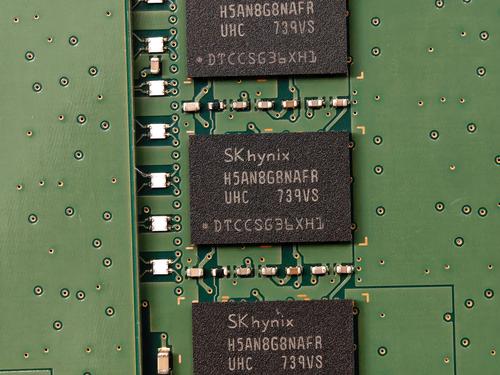
Other major memory players like Samsung and SK Hynix, though not publicly traded on US exchanges as primary listings, are also experiencing significant tailwinds. SK Hynix's sales more than doubled in 2024 and are projected to double again this year. These companies, alongside Micron, control the vast majority of the memory market and are strategically reallocating resources to meet the lucrative HBM demand, where margins are significantly higher. This strategic pivot ensures that these memory giants will continue to capture the lion's share of the value generated by the AI-driven memory crunch.
Who Faces Headwinds and What Are the Strategic Responses?
While memory manufacturers and AI accelerator giants are riding the wave, the memory shortage creates significant headwinds for a broad spectrum of other technology companies. These firms, ranging from PC and smartphone makers to data center solution providers, are grappling with escalating costs, supply chain disruptions, and the need for urgent strategic adjustments. The "zero-sum game" of wafer allocation means that every HBM chip produced for AI comes at the expense of conventional memory for other devices.
Intel Corporation (INTC), despite its efforts to re-enter the foundry business and compete in AI, faces a complex challenge. Its core PC and server CPU businesses rely heavily on standard DRAM, which is now scarcer and more expensive. Intel's TTM financials reflect a company in transition, with a negative P/E of -850.98 and a net margin of -0.5%. While its market cap stands at $233.72 billion, its revenue growth for FY2025 was a slight -0.5%. The company's push into AI PCs, which require more RAM, will be directly impacted by the rising cost and limited availability of memory, potentially eroding margins or forcing higher retail prices.
Super Micro Computer, Inc. (SMCI), a key provider of server and storage solutions for AI data centers, is in an interesting position. While it benefits from the overall AI build-out, it also faces the challenge of procuring memory components. Its current price of $30.54 and market cap of $18.29 billion reflect a company with strong growth in revenue (46.6% for FY2025) but a negative net income growth (-9.0%). SMCI's ability to secure consistent, cost-effective memory supply for its server configurations will be crucial for maintaining its competitive edge and profitability in a constrained market.
Hyperscale cloud providers like Alphabet (GOOGL), Microsoft (MSFT), and Amazon (AMZN), while driving much of the AI demand, also face procurement cost inflation. Organizations should expect 40-60% price increases for HBM components, translating to 15-25% higher costs for AI-capable server configurations. These tech giants, with market caps of $3.70 trillion, $2.98 trillion, and $2.13 trillion respectively, have the scale to absorb some costs, but persistent shortages could impact their data center expansion timelines and ultimately their cloud service margins.
To mitigate these headwinds, companies are adopting several strategic responses:
- Extend Planning Horizons: Procurement teams are shifting from quarterly to 18-24 month planning cycles for memory-intensive hardware.
- Diversify Supplier Relationships: Moving beyond primary OEMs to include memory module manufacturers and system integrators like Kingston or Crucial.
- Implement Strategic Inventory Buffers: Carrying 90-120 day inventory buffers for critical memory components, balancing against obsolescence risks.
- Negotiate Flexible Contract Terms: Structuring supplier agreements with volume flexibility clauses and price escalation protections.
- Explore Alternative Technologies: Investigating emerging solutions like processing-in-memory architectures or high-bandwidth flash (HBF) as potential alternatives to HBM, though these are still nascent.
What Does This Mean for Investors and the Road Ahead?
The current memory chip crisis is more than a temporary market fluctuation; it represents a fundamental recalibration of the semiconductor industry driven by the insatiable demands of artificial intelligence. For investors, this environment presents both significant opportunities and considerable risks, requiring a nuanced understanding of market dynamics and company-specific exposures. The road ahead is complex, with no quick fixes in sight.
The consensus among industry experts is that the memory shortage will persist well into the foreseeable future, with meaningful relief not expected until late 2027 or even 2028. While new fabs from Micron, Samsung, and SK Hynix are under construction, the lead times for these massive investments mean their output won't significantly impact supply for several years. Even then, economists warn that prices, once elevated, tend to come down slowly and reluctantly, especially given the "insatiable demand for compute."
For investors, this implies continued strength for companies directly benefiting from HBM demand, such as NVIDIA and the major memory manufacturers like Micron. Their ability to command premium pricing and reallocate capacity to high-margin products positions them favorably. However, the high valuations of these companies, such as NVIDIA's TTM P/E of 44.82 and Micron's 38.89, suggest that much of this positive outlook is already priced in. Any signs of demand softening or new capacity coming online sooner than expected could lead to significant corrections.
Conversely, companies heavily reliant on conventional DRAM for their products, including PC and smartphone OEMs, as well as some data center solution providers, will continue to face margin pressure and potential supply constraints. Their ability to pass on higher costs to consumers or innovate with more memory-efficient architectures will determine their resilience. Investors should closely monitor inventory levels, procurement strategies, and any shifts towards alternative memory technologies that could alleviate the bottleneck in the long term.
The memory shortage highlights the critical importance of supply chain resilience and strategic planning in the tech sector. This era of cheap, abundant memory is over, at least for the medium term. Investors should focus on companies with strong balance sheets, diversified supply chains, and a clear strategy to navigate this new, more expensive reality.
Want deeper research on any stock? Try Kavout Pro for AI-powered analysis, smart signals, and more. Already a member? Add credits to run more research.
Related Articles
Category
You may also like
No related articles available
Breaking News
View All →No topics available at the moment