MarketLens
What's Driving the Shifting Tides in the Global EV Market

Key Takeaways
- The global EV market is transitioning from explosive growth to a more disciplined, fleet-led expansion, with pricing pressures and volatile residual values becoming central challenges.
- Automakers, including Ford and GM, are increasingly leveraging their multi-billion dollar battery investments to pivot into stationary energy storage, diversifying revenue streams amid slowing EV demand.
- While Tesla maintains a commanding US market share, its premium valuation and recent sales declines contrast with legacy players like GM and Stellantis, which offer more attractive valuations and dividend yields for a balanced investment approach.
What's Driving the Shifting Tides in the Global EV Market?
The electric vehicle market is undergoing a significant recalibration, moving away from the era of hyper-growth and towards a more sustainable, albeit complex, phase of development. OEMs are now prioritizing "sustainable execution" over sheer speed, grappling with persistent supply-chain constraints and evolving regulatory landscapes. While the UK maintains tighter ZEV mandate requirements, Europe has seen some softening in CO2 compliance, offering manufacturers greater flexibility but potentially impacting the pace of adoption in certain segments.
A crucial dynamic shaping the 2026 outlook is the dominance of fleet-driven electrification, which has become the "structural backbone" of EV growth. Corporate decarbonization targets, benefit-in-kind incentives, and regulatory compliance are propelling leasing companies, rental operators, and corporate fleets to accelerate their EV adoption. This robust fleet demand provides volume stability for OEMs and retailers, helping to offset the more fragile and slower uptake from private consumers, who remain cautious due to pricing pressures, residual value concerns, and uncertainty around long-term running costs.
Indeed, EV residual values are proving to be one of the most decisive factors in the market, remaining more sensitive than their internal combustion engine (ICE) counterparts. This volatility is influenced by rapid technology cycles, shifting incentives, and uneven demand across different segments. As higher volumes of leased EVs return to the market, particularly in Europe, the struggle for private demand to absorb this growing supply intensifies pricing pressures. Battery transparency, including health and degradation data, is becoming essential to narrow the confidence gap among buyers.
The shift in manufacturing strategy also reflects this new reality, moving from rapid expansion to sustainable scaling. OEMs are now focused on balancing cost, resilience, and innovation within complex EV supply chains. Localisation and modular manufacturing platforms are gaining traction, aiming to achieve scale with reduced operational complexity. This disciplined approach, driven by policy and commercial realities, underscores that the next phase of electrification will be defined by strategic recalibration and profitability, rather than just proving technological feasibility.
Is Tesla's Dominance Sustainable Amidst Shifting Market Dynamics?
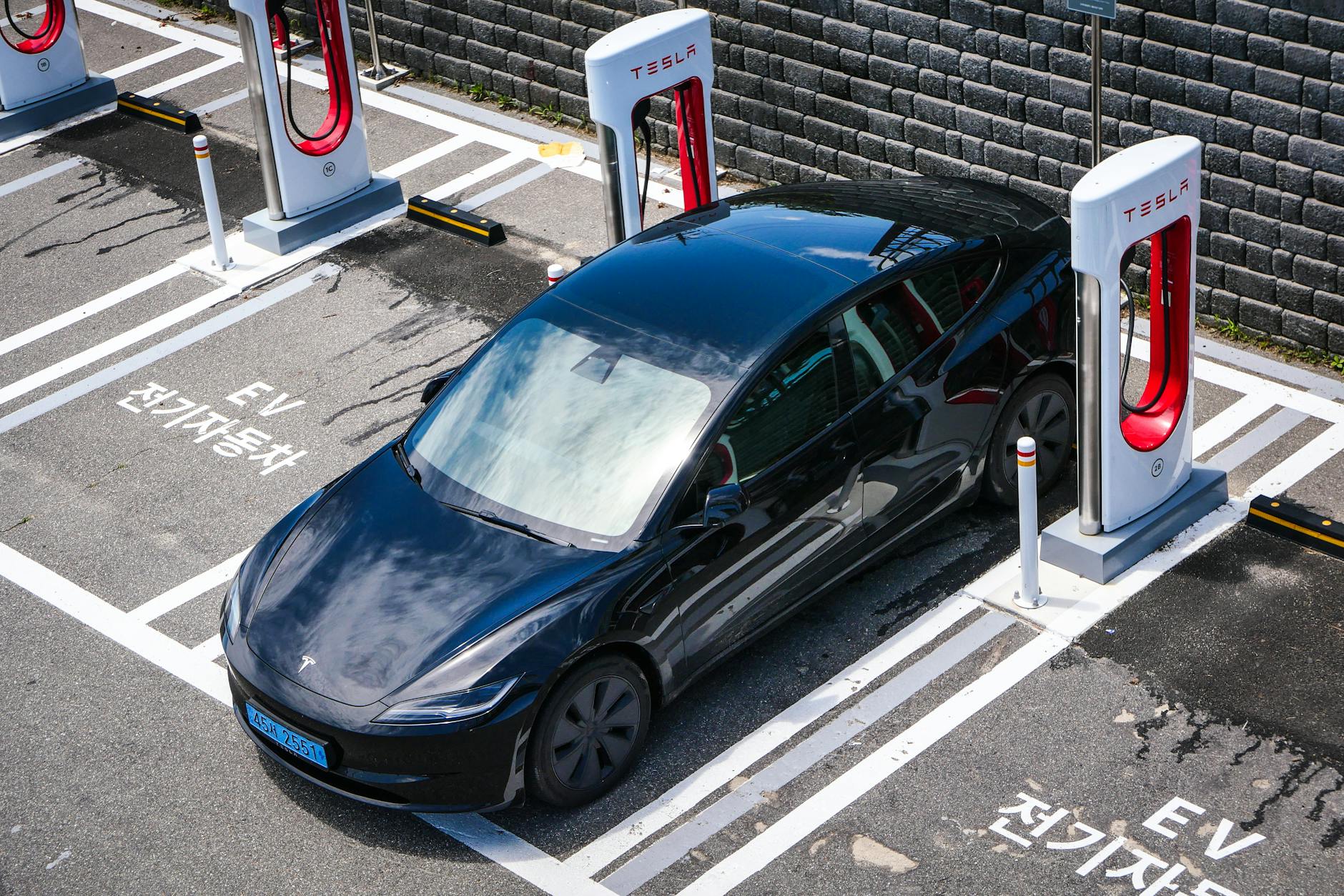
Tesla, Inc. (TSLA) continues to hold a commanding position in the US EV market, with its Model Y and Model 3 retaining an "unrivaled duopoly." In 2025, Tesla delivered an estimated 357,528 Model Y units and 192,440 Model 3 sedans, collectively accounting for over 55% of all electric cars sold in the country. The brand's total market share neared 60% of all US EV deliveries in 2025, a level of hegemony rarely seen in the automotive industry. This performance is particularly notable given a general softness in the US EV sector, which saw total sales slip approximately 2% year-to-date.
However, Tesla's market leadership faces increasing headwinds. The termination of federal EV tax credits at the end of September 2025 significantly impacted sales, with US BEV sales falling 31% year-over-year in Q4 2025. Analysts project Tesla's US deliveries to decrease by approximately 8.9% in 2025 compared to 2024, dropping from around 634,000 to an estimated 577,000 vehicles. This slowdown, coupled with a 29.8% projected decline in Q4 2025 sales compared to Q3 2025, highlights the challenges of transitioning from an early-adopter market to mainstream adoption without external incentives.
While Tesla introduced lower-priced versions of the Model 3 and Model Y in 2025 to attract more buyers, these efforts have not fully offset the decline. The premium segment of Tesla's offerings, including the Cybertruck, Model S, and Model X, experienced steep declines in sales volume, pointing to increased price sensitivity among American EV buyers. The luxury EV market has also become significantly more crowded, with high-quality alternatives from Lucid, Rivian, Porsche, and Mercedes-Benz intensifying competition.
From a valuation perspective, Tesla remains a growth stock with a P/E ratio of 355.50 and a P/S of 14.64, indicating high investor expectations despite recent revenue growth of -2.9% and net income growth of -46.8% in FY2025. The company's focus on robotaxis, AI-powered robots, and solar panels, as touted by CEO Elon Musk, suggests a long-term vision beyond just vehicle sales, but these ventures are still nascent. Wall Street analysts currently hold a "Hold" consensus on TSLA, with a median price target of $500.00, suggesting limited upside from its current price of $417.44.
How Are Legacy Automakers Adapting to the EV Shift and Energy Storage Boom?
Traditional automotive giants like Ford Motor Company (F) and General Motors Company (GM) are navigating the EV transition with a dual strategy: pushing their own electric vehicle lineups while increasingly pivoting towards the burgeoning energy storage market. This strategic shift is largely a response to the softening demand for EVs in key markets and the need to leverage multi-billion dollar investments in battery manufacturing capacity. Ford, for instance, announced a $19.5 billion writedown and reset its EV strategy in December 2025, explicitly stating plans to repurpose existing US battery manufacturing capacity in Glendale, Kentucky, for battery energy storage systems. This move aims to utilize "currently underutilised" EV battery capacity to create a "new, diversified and profitable revenue stream."
Ford's pivot is further evidenced by its agreement with South Korean battery manufacturer SK On to dissolve their joint venture, BlueOval SK, which was intended to build three battery manufacturing plants in the US. This highlights a broader trend where energy companies are diverting EV battery investment to stationary energy storage, where demand appears more robust. Similarly, GM has made significant announcements in 2025 regarding its entry into energy storage, competing directly with Tesla's established Powerwall business. This reflects a wider industry recognition that energy storage systems rely on much of the same underlying technology as EV batteries, making it a natural extension for automakers.
The rising demand for electricity, fueled by the expansion of data centers and the electrification of appliances and transportation, makes the energy storage market particularly attractive. After years of relatively flat growth, US electricity consumption is on the rise, creating a compelling opportunity for automakers to stabilize revenues amidst volatile EV sales. Companies like Redwood Materials have also launched new business lines to repurpose used EV batteries into grid-scale energy storage systems, targeting applications like AI data centers and utility storage.
From a financial standpoint, Ford's TTM P/E is -6.87 and GM's is 22.52, reflecting their different stages in the EV transition and profitability. Ford reported a TTM net margin of -4.4% and ROE of -18.0%, while GM shows a TTM net margin of 1.8% and ROE of 5.1%. Both companies offer dividends, with Ford yielding 4.2% and GM yielding 0.7%, providing income for investors during this transitional period. Analyst consensus for GM is a "Buy" with a median price target of $97.50, while Ford holds a "Hold" consensus with a median target of $12.80, suggesting more optimism for GM's current trajectory.
Can Rivian Carve Out a Profitable Niche in the Competitive EV Landscape?
Rivian Automotive, Inc. (RIVN) has emerged as a compelling, albeit volatile, player in the electric vehicle market, particularly within the adventure-focused truck and SUV segments. The company offers five-passenger pickup trucks and sports utility vehicles, alongside its Rivian Commercial Vehicle platform, developed in collaboration with Amazon.com for electric Delivery Vans. Rivian's stock saw a significant surge of +26.64% on February 13, 2026, trading at $17.73, following an upgrade from UBS from Sell to Neutral, indicating a potential shift in market sentiment.
Despite this recent positive movement, Rivian faces substantial challenges on its path to profitability. The company's TTM financials reveal a P/E of -6.00, a gross margin of 1.3%, and a net margin of -67.7%, underscoring the significant losses it continues to incur. Its ROE stands at -66.4%, and free cash flow per share is -$2.02, reflecting the heavy investment required in manufacturing and scaling operations. While revenue growth for FY2025 was 8.4%, and net income growth was 23.2%, these figures are off a low base and still represent a company far from sustainable profitability.
Rivian operates in a highly competitive environment, not only against established players like Ford and GM, which also offer electric trucks, but increasingly against Tesla, which is rumored to be entering the electric truck segment more aggressively. The market for premium electric adventure vehicles, while growing, is still a niche compared to the broader passenger EV market. Rivian's ability to differentiate its brand, build a loyal customer base, and achieve manufacturing efficiencies will be critical for its long-term viability.
The company's current market capitalization of $21.67 billion reflects investor belief in its future potential, but its valuation metrics are typical of a high-growth, pre-profitability startup. Wall Street analysts currently hold a "Hold" consensus for RIVN, with a median price target of $18.00, suggesting that while the recent upgrade is positive, significant hurdles remain. Rivian's success hinges on its ability to scale production, manage costs effectively, and expand its charging infrastructure and service network to support its unique product offerings.
The Battery Battleground: Innovation, Cost, and Geopolitics
The electric vehicle revolution is inextricably linked to advancements in battery technology, a dynamic sector undergoing rapid evolution driven by both innovation and intense pricing pressures. Global average battery prices are projected to fall towards $80/kWh by 2026, a nearly 50% drop from 2023, according to Goldman Sachs Research. This significant decline is fueled by technological innovations, such as increased energy density through cell-to-pack designs, and a sustained downturn in critical battery metal prices like lithium and cobalt, which account for nearly 60% of battery costs.
This cost reduction is a game-changer, expected to bring battery electric vehicles to ownership cost parity with gasoline-fueled cars in the US by 2026 on an unsubsidized basis, potentially ushering in a "consumer-led adoption phase." However, the market is not without its complexities. Record low lithium iron phosphate (LFP) battery prices, which fell by over 15% in 2025, have made them more than 40% cheaper than NMC alternatives, leading LFP to account for over half of EV batteries and over 90% of battery energy storage systems globally. Yet, concerns about the sustainability of these price levels, with many LFP cathode producers operating at a loss, suggest potential market consolidation ahead.
Beyond cost, the geopolitics of battery supply chains are shifting dramatically. While lithium-ion remains the default chemistry, there's growing interest in cheaper alternatives like sodium-ion batteries, which are moving closer to commercialization post-2025 for cost-sensitive applications. CATL, a major player, is set to launch vehicles with its Naxtra sodium-ion batteries in mid-2026, offering a compelling mix of cost, safety, and performance, including 90% capacity retention at -40°C. This could capture significant market share from LFP sooner than anticipated, creating a ripple effect that might provide solid-state batteries more breathing room for their longer-term development.
The global battery market, valued at USD 62.5 billion in 2024, is projected to reach USD 112.5 billion by 2032, growing at a 7.6% CAGR. This expansion is driven by increasing demand for high-capacity battery packs in various applications, from passenger cars to buses and trucks, alongside the critical need for grid-scale energy storage. The true supply-chain bottleneck lies not in mining, but in refining and chemical processing, with long-term advantage favoring players who control these midstream processes, along with recycling and software, rather than just manufacturing scale.
Investment Implications: Navigating a Maturing EV Landscape
The automotive sector, particularly its EV segment, is at an inflection point, demanding a nuanced investment approach. The era of "growth at all costs" is yielding to a focus on sustainable profitability and strategic diversification. Investors must look beyond headline sales figures and delve into underlying margins, cash flow generation, and strategic pivots. The shift towards fleet-led demand and the critical role of residual values mean that companies with robust financial discipline and diversified product portfolios are likely to outperform.
Tesla, despite its undeniable brand power and technological vision, presents a high-risk, high-reward proposition. Its premium valuation, coupled with recent sales declines in the crucial US market and significant investments in unproven ventures like robotaxis, suggests that much of its future growth is already priced in. While analyst consensus is "Hold" with a median target of $500.00, its current P/E of 355.50 and P/S of 14.64 demand exceptional execution to justify.
Conversely, legacy automakers like General Motors and Stellantis offer a different value proposition. GM, with a P/E of 22.52 and a TTM FCF Yield of 14.6%, appears more attractively valued, especially with its strategic moves into energy storage. Stellantis, trading at a remarkably low P/E of 2.88 and offering a TTM FCF Yield of 22.1%, stands out for its strong profitability (Net Margin 9.4%) and efficient asset utilization (Asset Turnover 0.96). Both companies also provide dividends, offering a tangible return while they execute their long-term EV strategies. Rivian, while showing promise in its niche, remains a speculative play given its significant losses and high cash burn.
The battery supply chain is another critical area for investors. Companies that can secure stable, cost-effective access to raw materials, innovate in battery chemistries (like sodium-ion), and achieve manufacturing excellence will be key beneficiaries. The growing energy storage market also presents a significant opportunity, as automakers leverage existing battery infrastructure for grid-scale applications. Investors should prioritize companies demonstrating clear pathways to profitability, strong balance sheets, and strategic flexibility in this evolving automotive landscape.
The automotive industry's future is electric, but the path forward is less about a single winner and more about strategic adaptation, technological innovation, and disciplined execution across diverse revenue streams. Investors should seek out companies demonstrating resilience, diversified growth avenues, and a clear understanding of the evolving market dynamics to capture long-term value.
Want deeper research on any stock? Try Kavout Pro for AI-powered analysis, smart signals, and more. Already a member? Add credits to run more research.
Related Articles
What's Driving Fastly's Recent Surge
Category
You may also like
No related articles available
Breaking News
View All →No topics available at the moment