MarketLens

Log in

What's Fueling the Latest Oil Price Surge? Geopolitical Tensions and the Strait of Hormuz

2 hours ago
SHARE THIS ON:

What's Fueling the Latest Oil Price Surge? Geopolitical Tensions and the Strait of Hormuz

Key Takeaways

  • Heightened US-Iran tensions, particularly around the Strait of Hormuz, are injecting a significant geopolitical risk premium into crude oil prices, which have climbed to $67.00 per barrel.
  • A major escalation, such as a prolonged disruption of the Strait, could trigger a 15-20% surge in crude prices, potentially pushing Brent to $100 or even $108 per barrel.
  • Investors should consider defensive strategies like overweighting gold and maintaining moderate exposure to energy equities and select oil-linked ETFs to hedge against inflation and supply shocks.

What's Fueling the Latest Oil Price Surge? Geopolitical Tensions and the Strait of Hormuz

The global oil market is once again gripped by geopolitical uncertainty, as escalating tensions between the United States and Iran push crude prices to six-month highs. This isn't just about rhetoric; recent actions, including Iran's temporary closure of parts of the strategic Strait of Hormuz for naval drills, have sent a clear message to Washington, even as diplomatic efforts in Geneva appear to be faltering. The market is now actively pricing in a "war premium," reflecting the very real risk of supply disruptions.

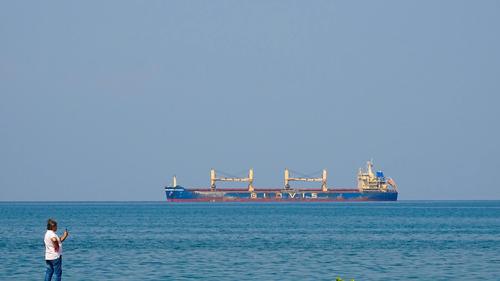
At the heart of this tension lies the Strait of Hormuz, a narrow maritime chokepoint between Oman and Iran, just 35 kilometers wide at its narrowest point. This waterway is critically important, handling approximately one-fifth (20%) of the world's total daily oil consumption, or around 20 million barrels of oil, along with significant volumes of liquefied natural gas (LNG), fertilizers, copper, and aluminum. Any major disruption here would have immediate and severe global repercussions, far beyond the Middle East.

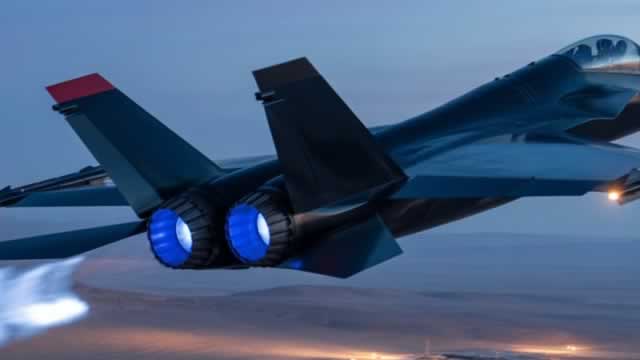
Iran's recent naval exercises, while described by some analysts as a "temporary operational disruption" and "not uncommon practice," are widely interpreted as calculated signaling. This comes amidst reports of significant US military deployments to the region, including F-35 and F-22 stealth aircraft, two aircraft carriers, and dozens of warships. The confluence of stalled nuclear talks, an increasingly confrontational tone from Iran's Supreme Leader Ayatollah Ali Khamenei, and US President Donald Trump's imposition of 25% secondary tariffs on countries doing business with Iran, creates a volatile cocktail.

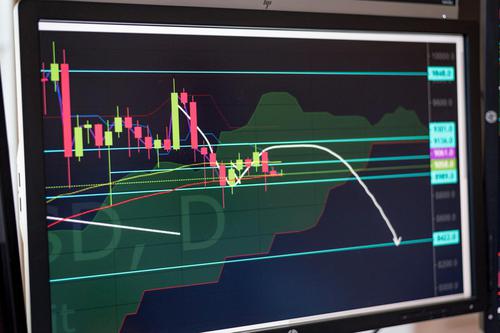
Crude oil (CLUSD) has responded sharply, trading at $67.00 per barrel as of February 20, 2026, marking a +3.00% increase from its previous close of $65.05. This move has pushed prices to their highest levels since October 2025, well above the 50-day moving average of $60.74 and the 200-day average of $62.34. The market is clearly strengthening an already notable geopolitical risk premium, signaling that the world's most important oil artery is once again within striking distance of a potential conflict.

How Much Higher Could Oil Prices Go if Tensions Escalate?

The immediate question for investors is how much further oil prices could climb if the situation deteriorates. Analysts are already modeling scenarios that suggest a significant upside, with a major disruption potentially adding a substantial premium to current crude prices. While the recent naval drills caused only minor delays, the market is now grappling with the prospect of more severe and prolonged interruptions.

Kamco Invest's Junaid Ansari suggests that any major disruption, such as a war or a prolonged closure of the Strait of Hormuz, could add anywhere from 15% to 20% to crude oil prices. Lombard Odier echoes this sentiment, stating that a temporary spike in oil prices to $100 a barrel – or beyond – is plausible. BloombergNEF, while forecasting Brent crude to average $55 per barrel in 2026 under a stable scenario, estimates that a complete removal of Iran's oil exports from global markets could push Brent to an average of $71/bbl in Q2 2026, and potentially $91/bbl in Q4 2026 if the disruption persists.

An extreme scenario, such as a full blockage of the Strait of Hormuz, would be a game-changer. With 20% of global petroleum liquids consumption traversing this chokepoint, such an event would overwhelm existing supply buffers. Historical analysis and academic studies suggest that price responsiveness to supply shocks can range from 2 to 6 times the size of the shock. Applying this, a complete closure of Hormuz, which removes roughly one-fifth of global oil supply, could lead to an 80% surge in crude prices. From an early 2026 baseline of around $60, this shock would drive crude towards $108 per barrel.

It's important to note that a "modest war premium" of around $4 a barrel is currently built into crude oil prices, according to BloombergNEF. However, this premium could surge dramatically if the risk of oil flow interruption increases. The market is not yet fully pricing in the probability of a full-scale conflict, suggesting that further upside remains if the diplomatic window continues to narrow and military confrontation becomes more likely.

What Does a $15/Barrel Spike Mean for the Global Economy?

A $15 per barrel spike in crude oil prices, or even more, would send ripples throughout the global economy, impacting everything from consumer spending to central bank policy. Such an increase would not merely be a blip; it would represent a significant inflationary shock, particularly given that crude is already trading at $67.00, near its 52-week high of $78.40. This kind of surge would quickly translate into higher energy costs across the board, affecting transportation, manufacturing, and ultimately, consumer prices.

Higher oil prices directly feed into inflation through increased fuel costs for vehicles, shipping, and air travel. Businesses would face elevated input costs, which would likely be passed on to consumers, further exacerbating inflationary pressures. This scenario would present a difficult challenge for central banks, including the Federal Reserve, which are already navigating a complex economic landscape. With the Federal Funds Rate currently at 3.64%, a significant oil-induced inflation spike could reduce the pace or number of anticipated interest rate cuts, or even force a hawkish pivot, potentially stifling economic growth.

The impact would be felt unevenly across sectors. Industries heavily reliant on energy, such as airlines, shipping companies, and industrial manufacturers, would see their operating costs rise sharply. While some might have hedging strategies in place, a sustained spike would erode margins and could lead to increased volatility in their equity valuations. Conversely, oil-producing nations and energy companies would likely benefit from higher revenues, though regional producers in the Middle East would only see positive returns if oil and gas continue to flow unimpeded.

Even with some pipeline capacity available to reroute approximately 2.6 million barrels per day of crude oil from Saudi Arabia and the UAE, this offers only a partial cushion against a major disruption. The sheer volume of oil passing through Hormuz means that alternative routes cannot fully compensate for a prolonged closure. The global crude market, despite forecasts of supply outpacing demand by an average of 3.2 million barrels per day in 2026 under normal conditions, could quickly flip to a supply deficit if Iranian crude is completely removed or the Strait is impeded.

What Investment Strategies Can Mitigate Risk or Capitalize on Escalation?

In an environment of escalating geopolitical risk and potential oil price spikes, investors need to consider strategies that can both mitigate downside risk and capitalize on upward momentum in energy markets. Goldman Sachs, in a May 2025 note, emphasized the importance of strategic allocations to gold and oil as effective long-term hedges for balanced portfolios, especially when traditional buffers like bonds may be failing.

For risk mitigation, gold stands out as a traditional safe-haven asset. Goldman Sachs analysts recommend an overweight allocation to gold, citing institutional credibility risks and central bank buying as key drivers. Gold has already surged 26.6% year-to-date, trading at $5,041.00 per ounce as of February 16, 2026, and Goldman forecasts it could reach $3,700/oz by end-2025 and potentially $4,000/oz by mid-2026. This commodity has historically delivered positive real returns during periods when both stocks and bonds saw negative real returns, making it a crucial hedge against inflation and policy uncertainty.

To capitalize on potential oil price appreciation, investors can consider direct exposure to energy equities and certain oil-linked exchange-traded funds (ETFs). While Goldman Sachs suggests a moderate underweight for oil in the near term due to ample spare capacity, they stress the importance of maintaining some exposure as a hedge against geopolitical or energy shocks. Select oil and integrated energy companies with low break-evens, disciplined capital allocation, and strong free-cash-flow generation remain attractive.

For those with a higher risk tolerance, leveraged oil and energy ETFs have shown significant gains amidst rising tensions. For example, on February 18, 2026, the ProShares Ultra Bloomberg Crude Oil (UCO) added 8.3%, while MicroSectors Energy 3X Leveraged ETNs (WTIU) gained about 4%. Other leveraged options include Direxion Daily Energy Bull 2X Shares (ERX) and Direxion Daily S&P Oil & Gas Exp. & Prod. Bull 2X Shares (GUSH), which also saw gains of around 4% on the same day. These instruments offer magnified exposure to oil price movements but come with increased volatility and risk, making them suitable only for active traders or sophisticated investors.

What Are the Key Risks and Counterarguments to an Oil Price Spike?

While the current geopolitical climate strongly suggests upward pressure on oil prices, it's crucial for investors to consider the counterarguments and potential risks that could temper or even reverse a significant spike. The oil market is a complex interplay of supply, demand, and geopolitical factors, and not all signals point to an inevitable, sustained surge. Understanding these nuances is key to a balanced investment approach.

One significant factor is the current state of global oil supply. BloombergNEF highlights that the crude market is amply supplied in the near-term, forecasting that supply will outpace demand by an average of 3.2 million barrels per day in 2026. This projected supply glut suggests that the market might be able to withstand oil flow interruptions to some extent, depending on the size and duration of the disruption. Iran, while a major producer, contributes fewer barrels compared to Russia, meaning its impact on global oil flows, while significant, might be smaller than what was feared during the Russia-Ukraine conflict.

Furthermore, the history of Middle East geopolitics shows that not all conflicts lead to lasting oil price spikes. Since Hamas's 2023 attack on Israel, Middle Eastern geopolitics and global oil prices have largely moved on separate trajectories. Many geopolitical shocks, especially those distant from key oil fields in Iran, Iraq, and the Gulf, often have limited to no impact on prices. Even surgical attacks on oil facilities, like the 2019 attack on Saudi oil sites that briefly took half its production offline, can have only a limited impact if facilities are quickly repaired.

Diplomatic efforts, however fragile, also represent a potential off-ramp for escalation. Despite the "nothingburger" description of recent Geneva talks, both sides have engaged in negotiations. Economic realities could ultimately favor compromise, as the financial and political costs of war – particularly its effect on global energy markets – create strong incentives for a pragmatic, temporary arrangement. A plausible outcome could involve freezing enrichment levels in exchange for limited sanctions relief, buying time for more comprehensive negotiations. Investors should closely monitor any signals from the White House regarding a final strike decision and the timing of Iran's written proposals.

Finally, the potential for a global economic slowdown could also cap oil price gains. Tepid economic growth, as anticipated by JPMorgan for 2026, would naturally dampen oil demand. While geopolitical tensions can create supply shocks, a significant downturn in global demand could offset some of the upward pressure, leading to a more abundant supply environment and reducing price expectations.

What's Next for Investors as the Geopolitical Chess Game Continues?

The coming weeks will be critical as the US-Iran geopolitical chess game unfolds, with markets poised to react swiftly to any diplomatic breakthroughs or military escalations. Investors must remain vigilant, recognizing that the current environment demands a dynamic and adaptable portfolio strategy. The interplay of fragile diplomacy and calibrated brinkmanship means that the Middle East remains suspended between potential compromise and imminent confrontation, directly impacting global energy markets.

For now, the heightened geopolitical risk premium in oil prices is a reality, with crude trading at $67.00 per barrel. This situation underscores the importance of diversifying portfolios with assets that can act as effective hedges against both inflation and supply shocks. Gold, with its proven track record as a safe haven, and strategic exposure to energy equities and select oil ETFs, offer avenues for investors to navigate this volatile landscape.

The market will be closely watching key economic indicators, particularly the Core PCE Price Index and Durable Goods Orders, due on February 26, 2026, as these could influence central bank decisions on interest rates. Any signs of persistent inflation, exacerbated by rising oil prices, could lead to a more hawkish stance from the Federal Reserve, further complicating the investment outlook. Ultimately, success in this environment will hinge on a disciplined approach, continuous monitoring of geopolitical developments, and a willingness to adjust strategies as new information emerges.

The stakes are high, not just for the Middle East, but for the global economy and every investor's portfolio.


Want deeper research on any stock? Try Kavout Pro for AI-powered analysis, smart signals, and more. Already a member? Add credits to run more research.

SHARE THIS ON:

Related Articles

Category

You may also like

No related articles available

Breaking News

View All →

No topics available at the moment