MarketLens
Is EQT Poised to Capitalize on the AI Energy Boom

Key Takeaways
- EQT Corporation is strategically positioned to capitalize on surging natural gas demand, primarily driven by the exponential growth of AI data centers and expanding LNG export capacity.
- The company's vertically integrated, low-cost production model in the Appalachian Basin underpins robust free cash flow generation and provides a significant competitive advantage.
- While EQT boasts strong financial performance and a positive analyst consensus, investors should carefully weigh the risks associated with commodity price volatility and increasing operating expenses.
Is EQT Poised to Capitalize on the AI Energy Boom?
EQT Corporation (NYSE: EQT), the largest natural gas producer in the United States, appears exceptionally well-positioned to benefit from the unprecedented surge in energy demand, particularly from the burgeoning artificial intelligence (AI) sector. The narrative around AI's insatiable power needs is shifting from a theoretical discussion to a tangible investment theme, and EQT, with its vast Appalachian Basin resources, stands directly in the crosshairs of this opportunity. Global power consumption is escalating at its fastest pace in over a decade, with annual demand projected to rise by more than one trillion kilowatt-hours per year through 2030. AI-driven data centers alone are expected to contribute nearly one-fifth of this growth, with their power consumption increasing by approximately 126 GW annually through 2028 – a figure almost equivalent to Canada's total annual power demand.
This isn't just about general electricity demand; it's about reliable, on-demand power that the existing grid often struggles to provide. Data center developers are already facing power shortages and connection delays, pushing them towards direct contracts with private producers and on-site generation. Natural gas, as a cleaner-burning and readily available fuel, is emerging as a critical component in bridging this energy gap. EQT estimates that the combined trends of gas-fired power plants, data center expansion, and coal plant retirements could generate nearly 10 billion cubic feet per day (Bcf/d) of incremental gas demand by 2030. This structural shift in demand provides a powerful tailwind for a pure-play natural gas producer like EQT.
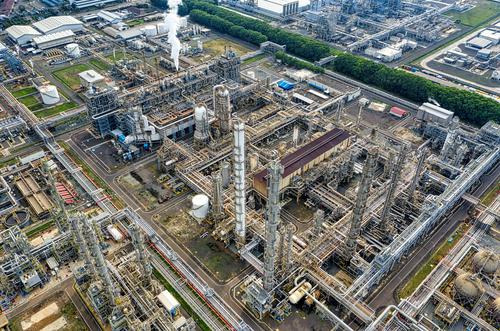
The company's strategic advantage lies in its ability to meet this demand efficiently. EQT controls an extensive gas resource position in the Appalachian basin and owns significant natural gas infrastructure, including gathering lines, storage capacity, and long-haul transmission pipelines. This vertical integration makes it one of the lowest-cost gas producers in the country, with a breakeven level of around $2 per MMBtu. Such a cost structure allows EQT to generate strong profits even when natural gas prices are not at their peak, providing resilience against market volatility. The market is clearly recognizing this potential, with EQT's stock currently trading at $67.15, up 2.79% today and having gained 31% over the past year.
What Gives EQT a Competitive Edge in Natural Gas Production?
EQT's competitive advantage is deeply rooted in its operational efficiency and strategic infrastructure control, setting it apart in the volatile natural gas market. The company's vertical integration, from upstream production to midstream transportation, allows for unparalleled cost control and market access. With a breakeven level of approximately $2 per MMBtu, EQT is positioned as one of the lowest-cost gas producers in the nation. This low-cost structure is crucial, enabling the company to maintain profitability and generate substantial free cash flow even during periods of lower commodity prices.
The company's infrastructure assets are a key differentiator. EQT owns extensive natural gas gathering lines, storage capacity, and long-haul transmission pipelines, which not only reduce its reliance on third-party services but also provide direct access to key markets. This control over its supply chain is further bolstered by its increased ownership in the Mountain Valley Pipeline, now at approximately 53%. This strategic investment, alongside a planned $580 million to $640 million in other infrastructure projects like compression and water systems, is designed to support higher 2026 volume outlooks and capture premium pricing opportunities in the Appalachian region. These investments are critical for EQT to effectively deliver its gas to market, especially as demand from LNG export terminals and data centers continues to grow.
EQT's ability to consistently generate strong free cash flow underscores its operational prowess. The company reported robust free cash flows of approximately $750 million in the fourth quarter, contributing to over $2.5 billion in cumulative free cash flow in 2025 at an average NYMEX natural gas price of just $3.40 per MMBtu. Management projects this to reach approximately $3.5 billion in 2026 at recent strip pricing. This significant cash flow generation provides financial flexibility, allowing EQT to repay debt, repurchase shares, and increase its dividend, all while investing in high-return growth opportunities. The combination of low operating costs, expanding pipeline capacity, and strong free cash flow generation positions EQT to capitalize on growing natural gas demand for years to come.
How Strong Are EQT's Financials and Shareholder Returns?
EQT's financial performance in the trailing twelve months (TTM) paints a picture of robust growth and improving efficiency, reinforcing its investment appeal. The company has demonstrated impressive top-line expansion, with TTM revenue reaching $9.07 billion and a remarkable 73.7% year-over-year revenue growth in FY2025. This revenue surge has translated directly to the bottom line, with net income growing an astounding 784.4% and EPS increasing by 707.3% in FY2025. The TTM EPS stands at $3.27, reflecting strong operational leverage and favorable market conditions.
Profitability margins are also compelling, indicating EQT's ability to convert revenue into earnings effectively. The TTM gross margin is a healthy 48.9%, operating margin stands at 34.7%, and the net margin is 22.5%. These figures underscore the company's low-cost production model and efficient operations. Furthermore, EQT has been a free cash flow powerhouse, reporting TTM free cash flow per share of $4.56. The company's operating cash flow grew by 81.3% and free cash flow by an impressive 395.0% in FY2025, demonstrating its capacity to generate significant cash from its core operations. This strong cash generation is critical for funding growth initiatives, reducing debt, and returning capital to shareholders.
EQT's balance sheet also appears well-managed, with a TTM debt-to-equity ratio of 0.33 and a net debt-to-EBITDA of 1.31, suggesting a manageable leverage profile. The company's commitment to deleveraging, with a target of reducing net debt to $5 billion or less, aims to support an investment-grade profile and enhance financial flexibility for future capital allocation. In terms of shareholder returns, EQT currently offers a quarterly dividend of $0.17 per share, translating to a yield of 1.12%. With a payout ratio of just 19.1%, there's ample room for future dividend growth. The company's strong free cash flow generation also provides the flexibility for potential share repurchases, further enhancing shareholder value.
What Are Analysts Saying About EQT's Future Outlook?
Wall Street analysts hold a generally optimistic view on EQT's future, with a consensus "Buy" rating from 44 analysts, including 28 "Buy" recommendations and 16 "Hold" ratings, with no "Sell" or "Strong Sell" calls. This strong consensus reflects confidence in EQT's strategic positioning and financial trajectory. The average analyst price target for EQT is $41.11, with a median of $44.00, a high of $55.00, and a low of $23.00. It's important to note that the current stock price of $67.15 significantly exceeds these consensus targets, suggesting that the market may have already priced in much of the anticipated upside, or that analyst models are lagging the rapid shifts in the energy landscape.
Despite the discrepancy between current price and consensus targets, recent analyst actions indicate continued positive sentiment. JP Morgan and Barclays both maintained "Overweight" ratings on EQT in mid-March 2026, signaling their belief in the stock's continued outperformance. Looking ahead, analysts project robust financial growth for EQT. The consensus forward estimate for FY 2029 revenue is $11.6 billion with an EPS of $7.53, further increasing to $11.9 billion in revenue and $7.79 EPS by FY 2030. These projections indicate sustained growth in both top and bottom lines, driven by increasing natural gas demand and EQT's operational efficiencies.
However, some analyst narratives also highlight potential risks. While EQT's low-cost production is a significant advantage, the company's decision to keep a majority of its 2026 and beyond natural gas production unhedged (only 20% hedged beyond Q1) exposes it to commodity price volatility. This strategy could be highly beneficial if natural gas prices strengthen, but it also increases exposure to price declines, which could impact cash flows. Additionally, some analysts point to the increasing prominence of renewables as a long-term risk, potentially limiting traditional fossil fuel use. Despite these headwinds, the overall sentiment remains positive, with analysts emphasizing EQT's strong free cash flow generation and leverage to tightening gas markets as key drivers for future performance.
What Are the Key Risks and Opportunities for EQT Investors?
Investing in EQT, despite its compelling growth narrative, comes with a distinct set of risks and opportunities that investors must carefully consider. On the opportunity side, the most significant catalyst remains the burgeoning demand for natural gas, particularly from AI data centers and LNG export terminals. EQT is uniquely positioned to supply this demand, with its vast Appalachian resources and integrated infrastructure. The company's low-cost production model, with a breakeven around $2 per MMBtu, provides a substantial margin of safety and allows it to thrive even in a volatile pricing environment. Furthermore, EQT's strong free cash flow generation, projected to reach $3.5 billion in 2026, offers financial flexibility for debt reduction, share buybacks, and dividend growth, directly benefiting shareholders.
The company's strategic investments in infrastructure, including its increased stake in the Mountain Valley Pipeline, are designed to enhance its ability to deliver gas to premium markets and capture higher prices. This vertical integration not only optimizes costs but also provides greater control over the supply chain, a critical advantage in a rapidly evolving energy landscape. EQT's consistent outperformance of free cash flow estimates, as seen in its $750 million in Q4 and $2.5 billion in cumulative 2025 free cash flow, underscores its operational efficiency and robust financial health. The positive analyst consensus and strong institutional ownership, with about 91% of the stock held by institutional investors, further validate the company's long-term potential.
However, several headwinds warrant caution. The primary risk is the inherent volatility of natural gas prices. While EQT's decision to keep a significant portion of its production unhedged could lead to substantial upside if prices rise, it also exposes the company to significant downside risk if prices decline unexpectedly. This unhedged exposure, particularly beyond Q1 2026, makes EQT's financial performance more susceptible to market fluctuations. Another concern is the material increase in operating expenses, which rose to $5.4 billion in 2025 from $4.6 billion in 2024, with operating and maintenance costs more than doubling. Such increases could pressure profitability and partially offset the benefits of higher production and prices.
Long-term, the increasing prominence of renewable energy sources poses a structural risk to all fossil fuel producers. The global shift towards sustainability could limit the long-term demand for natural gas, potentially impacting EQT's volume growth. While natural gas is seen as a transition fuel, the pace and scale of renewable adoption could accelerate, creating future challenges. Moreover, the current stock price of $67.15 significantly exceeds the consensus analyst price targets, suggesting that the market may already be pricing in much of the anticipated growth and positive catalysts. This could limit immediate upside potential for new investors, requiring a longer-term perspective to realize value.
What Does This Mean for Investors?
EQT presents a compelling investment case driven by the structural tailwinds of AI-driven energy demand and expanding LNG exports, underpinned by its low-cost production and robust free cash flow. While the stock has already seen significant gains, its strategic positioning and strong financial performance suggest continued potential.
However, investors must balance this optimism with a clear understanding of the risks, particularly natural gas price volatility and rising operating costs. A long-term perspective, focusing on EQT's ability to consistently generate cash and its strategic infrastructure investments, will be key to navigating the dynamic energy market.
Want deeper research on any stock? Try Kavout Pro for AI-powered analysis, smart signals, and more. Already a member? Add credits to run more research.
Related Articles
Category
You may also like


NVIDIA vs IonQ: Can Quantum Replicate AI's $4 Trillion Giant in 2026?

Is Comfort Systems Redefining Construction With Robots and AI?

M&A: An Overlooked ETF Investing Zone of AI Boom?
Breaking News
View All →Featured Articles
Top Headlines

Boeing-built Space Launch System Core Stage Powers First Crewed Artemis Mission around the Moon

Prediction: Nvidia's Vera Rubin Platform Will Create at Least 2 New Artificial Intelligence (AI) Millionaire-Maker Stocks by the End of 2026

Tesla Fans Could Be the Next Big Wave of SpaceX Investors

Prediction: This Will Be Nvidia's Stock Price in One Year