MarketLens

Log in

Is Equinor Positioned to Capitalize on Geopolitical Energy Shocks

6 days ago
SHARE THIS ON:

Is Equinor Positioned to Capitalize on Geopolitical Energy Shocks

Key Takeaways

  • Equinor (EQNR) is navigating a complex energy landscape, balancing heightened geopolitical risks and strong demand for traditional energy with its long-term energy transition strategy.
  • Despite a consensus "Hold" rating, analysts see significant upside potential, with a median price target of $82.50 against the current $35.25 share price.
  • The company's commitment to capital discipline, 3% production growth in 2026, and robust shareholder returns (including a $0.39 quarterly dividend and $1.5 billion buyback) underpin its investment thesis amidst commodity volatility.

Is Equinor Positioned to Capitalize on Geopolitical Energy Shocks?

Equinor, Norway's state-owned energy giant, finds itself at the epicenter of a global energy market grappling with unprecedented geopolitical volatility. Recent conflicts in the Middle East, particularly disruptions to shipments through the Strait of Hormuz, have sent Brent crude surging above $100 per barrel for the first time since the 2022 energy crisis. This dramatic shift underscores a renewed global focus on energy security and affordability, often at the expense of decarbonization efforts, creating a complex operating environment for integrated energy companies like Equinor.

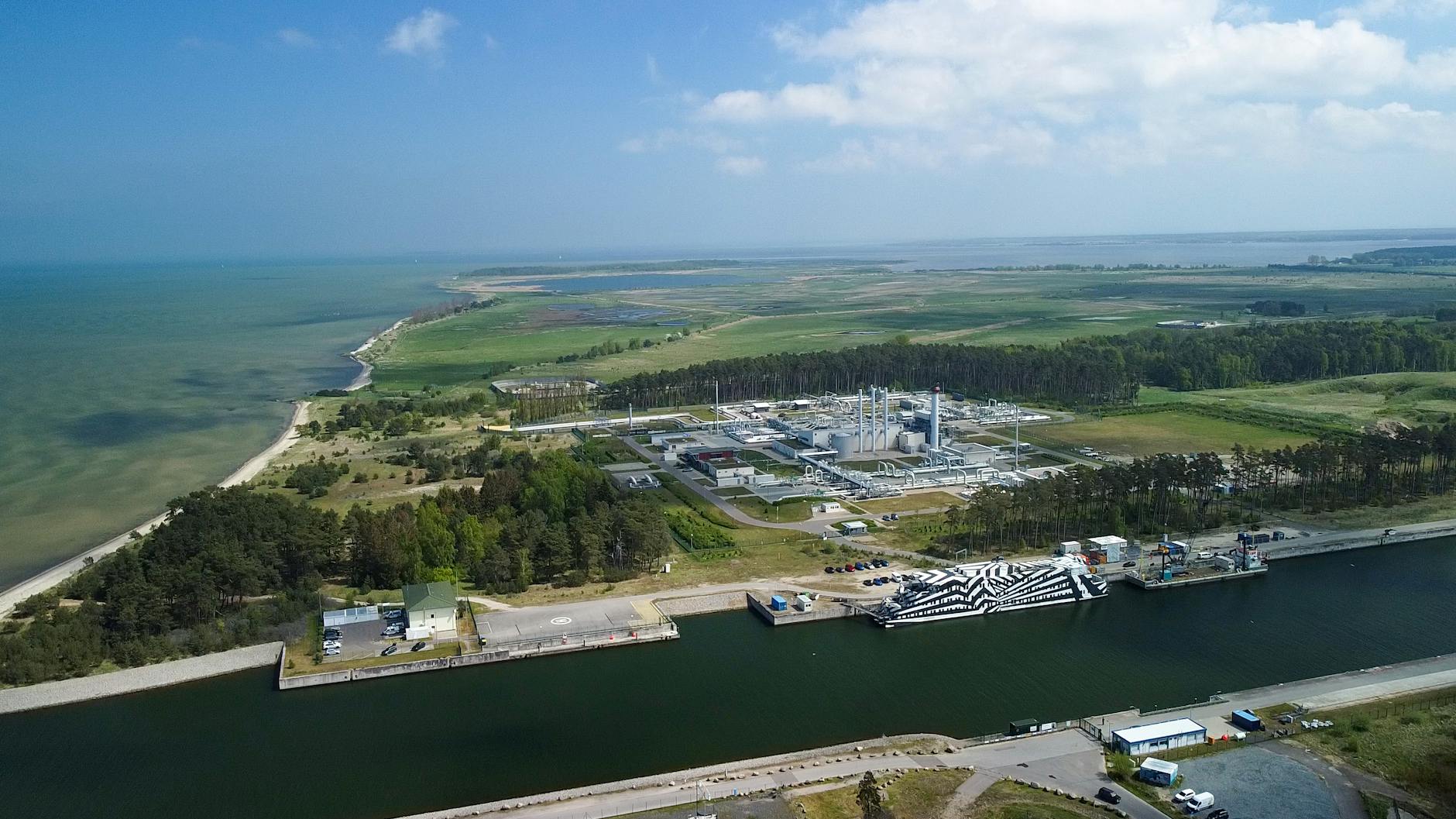
The company's role as Europe's largest natural gas supplier and a key oil provider has become even more critical. With European benchmark gas prices also surging, the continent's reliance on stable supplies from Norway is undeniable. This geopolitical backdrop, characterized by a lack of global cooperation and increasing trade conflicts, directly impacts Equinor's strategic planning, as highlighted in its "Energy Perspectives 2025" report. The report emphasizes that political priorities are shifting away from climate ambitions towards immediate energy needs, a reality Equinor must navigate while maintaining its long-term vision.

However, capitalizing on these market dynamics isn't straightforward for Equinor. While the company is a crucial player, its CEO, Anders Opedal, recently stated that Equinor does not possess the spare capacity to significantly increase its oil and gas output. This limitation, despite soaring demand and prices, means the company's focus remains on maximizing existing production and ensuring reliability for its operating markets. The current situation contrasts sharply with 2022, when Norway was able to ramp up exports by approximately 10% through increased production quotas and adjusted maintenance schedules.

The current environment, therefore, presents a dual challenge: how to meet immediate global energy needs while simultaneously advancing a long-term energy transition. Equinor's strategic response involves a delicate balancing act, emphasizing capital discipline and shareholder returns while selectively investing in both traditional hydrocarbons and renewable projects. This approach aims to deliver competitive returns and maintain financial resilience, even as the global energy landscape remains highly unpredictable.

What Are Equinor's Production Realities and Capacity Constraints?

Equinor is currently operating at near maximum capacity, a critical factor for investors to understand given the ongoing global energy supply shortages. CEO Anders Opedal explicitly stated that the company cannot materially lift its oil and gas output, despite the severe shortfall in global supply caused by Middle Eastern disruptions and the U.S.-Iran conflict. This reality means Equinor's contribution to easing immediate supply pressures is limited to maintaining its current high production levels and ensuring reliability.

The company's production performance in 2025 was robust, with oil and gas output rising 3.4% year-over-year to a record 2.14 million barrels of oil equivalent per day. This growth was primarily driven by new fields on the Norwegian continental shelf and strong performance in the U.S. Looking ahead, Equinor expects around 3% oil and gas production growth in 2026, building on these record levels. This modest, yet consistent, growth is a testament to the company's operational execution and its strategy of focused expansion in its international oil and gas portfolio.

However, the inability to significantly boost output beyond these planned increases highlights a structural constraint. Unlike the 2022 energy crisis, when Norway could increase exports by adjusting quotas and maintenance schedules, the country has since been producing at near full capacity. This means that while Equinor is a vital energy provider, particularly for Europe, it cannot act as a swing producer to quickly fill large supply gaps. Its focus, as articulated by Opedal, is on being a "reliable provider" and ensuring "the highest production possible" within its existing operational framework.

This constraint has significant implications for market dynamics. With a key supplier like Equinor unable to easily increase volumes, global energy markets remain highly sensitive to supply shocks. For investors, it means that while Equinor benefits from higher commodity prices, its upside from increased volume is capped. The company's value proposition, therefore, shifts towards its operational efficiency, cost discipline, and strategic allocation of capital, rather than its ability to rapidly scale production in response to short-term market opportunities.

How is Equinor Balancing Financial Performance and Shareholder Returns?

Equinor's financial strategy for 2026 is clearly focused on strengthening free cash flow, maintaining capital discipline, and delivering competitive shareholder returns, even amidst a challenging commodity price environment. The company's fourth-quarter 2025 results, while showing strong production, revealed significant pressure on profitability, with adjusted operating income falling 22% year-over-year to $6.20 billion. This was primarily due to lower liquids prices, partially offset by higher production and gas prices in the U.S.

In response, Equinor is taking decisive actions to enhance its financial resilience. A key initiative is a $4 billion reduction in organic capital expenditures for 2026/27, alongside a target to cut operating costs by 10% in 2026. These measures are designed to improve cash flow and ensure robustness against potential price fluctuations. The company aims to achieve a return on average capital employed of around 13% for 2026/27, signaling a commitment to efficient capital deployment.

Shareholder returns remain a priority, underscored by a proposed increase in the fourth-quarter cash dividend to $0.39 per share. This translates to a healthy dividend yield of 3.41% based on the current share price of $35.25. Furthermore, Equinor has announced a share buyback program of up to $1.5 billion for 2026. These capital distribution initiatives demonstrate the company's confidence in its cash flow generation and its commitment to returning value to investors, even as it navigates market uncertainties.

From a valuation perspective, Equinor appears to offer a compelling case for value investors. The company trades at a P/E ratio of 17.29 and an EV/EBITDA of 3.08, which are relatively attractive compared to some peers. Its free cash flow yield stands at 6.7%, indicating strong cash generation relative to its market capitalization of $89.36 billion. The balance sheet also shows strength, with $21 billion in cash and equivalents and moderate net leverage, providing flexibility to navigate commodity cycles and continue strategic investments.

What Does Equinor's Energy Transition Plan Entail Amidst Global Fragmentation?

Equinor's "Energy Perspectives 2025" report paints a stark picture of a global energy transition that has become "severely delayed and more fragmented." This assessment, driven by rising greenhouse gas emissions in 2024 and a lack of international cooperation, directly influences Equinor's strategic approach to balancing traditional energy production with its long-term decarbonization goals. The company acknowledges that political priorities have shifted towards energy affordability and security, complicating the path to a Paris-aligned future.

The report outlines four scenarios – Walls, Silos, Plazas, and Bridges – which are not predictions but rather contrasting pathways designed to aid strategic planning. The "Bridges" scenario alone aligns with the 1.5°C ambition of the Paris Agreement, highlighting the immense, rapid, and cooperative changes needed. However, the prevailing geopolitical landscape, characterized by trade conflicts and a lack of trust, suggests that the world is currently on a trajectory closer to the "Walls" or "Silos" scenarios, where climate action is slow and uneven.

Despite this challenging backdrop, Equinor is committed to its energy transition plan, albeit with updated ambitions. The company's net carbon intensity ambition for 2030 and 2035 has been adjusted to 5-15% and 15-30% respectively, reflecting changing markets and fewer value-creating opportunities in certain renewable projects. This pragmatic adjustment acknowledges the current realities of the energy trilemma – balancing energy security, affordability, and environmental sustainability.

Equinor's strategy involves continuing to develop the Norwegian continental shelf to maximize value, pursuing focused growth in international oil and gas, and building an integrated power business. The company is particularly focused on the execution of already-sanctioned projects in renewables, rather than aggressively pursuing new, less certain ventures. This disciplined approach aims to deliver a carbon-efficient portfolio, with a CO₂ upstream intensity of 6.3 kg/boe for Equinor operated assets in 2025, while adapting to the slower pace of the global energy transition.

How Will European Natural Gas Dynamics Impact Equinor's Outlook?

Europe's natural gas market is undergoing a significant transformation, with Equinor playing a pivotal role as the continent's largest supplier. The ongoing geopolitical tensions and the cessation of Russian pipeline gas have solidified LNG's position as a critical component of Europe's energy security. Kpler forecasts total European LNG imports to reach 145 million tons in 2026, an 18 million ton increase over 2025, primarily driven by higher LNG availability from the U.S.

Equinor anticipates a tight global natural gas market in 2025, with European buyers needing to attract significantly more LNG cargoes to meet storage requirements before next winter. CFO Torgim Reitan noted that Europe would need approximately 230 more LNG cargoes than last year, representing a 20% year-over-year increase. This surge in demand is expected to intensify competition for LNG between Europe and Asia, potentially leading to price volatility.

While the increased demand for LNG presents opportunities, particularly for U.S. producers, it also highlights Europe's vulnerability to global supply dynamics. Equinor's long-term commitment and trusted partnerships are crucial for strengthening Europe’s energy security, as evidenced by recent agreements for gas supplies to the Netherlands and the Czech Republic. The company's ability to maintain high production levels from the Norwegian continental shelf is vital for balancing the continent's energy needs.

However, the outlook for European TTF gas prices in 2026 is bearish, according to Kpler Insight, with an average price forecast reduced to $9.81/MMBtu. This reflects weaker demand in Northeast Asia, which is expected to reduce competition for increasing LNG supply in the Atlantic Basin. Additionally, sluggish gas demand in the EU, with modest economic growth projected for 2026, will help keep prices in check. For Equinor, this suggests that while volumes remain strong, the revenue per unit of gas might face headwinds, emphasizing the importance of cost efficiency and diversified revenue streams.

What's the Investment Thesis for Equinor?

Equinor presents a compelling, albeit nuanced, investment case for those seeking exposure to the energy sector's evolving landscape. The company's current share price of $35.25 sits at the higher end of its $21.41 – $35.67 52-week range, reflecting recent market optimism driven by surging commodity prices. However, the analyst consensus of "Hold" with a median price target of $82.50 suggests a significant potential upside of over 130%, indicating that the market may still be underappreciating its intrinsic value.

The bull case hinges on Equinor's critical role in global energy security, particularly for Europe, and its disciplined approach to capital allocation. The company's commitment to a $0.39 quarterly dividend and a $1.5 billion share buyback for 2026 signals a strong focus on shareholder returns, backed by robust free cash flow generation. Furthermore, its operational efficiency, aiming for a 10% reduction in operating costs and a $4 billion cut in capital expenditures, positions it to deliver competitive returns even in a volatile price environment.

On the other hand, the bear case acknowledges the limitations of Equinor's production capacity, which prevents it from fully capitalizing on short-term commodity price spikes with increased volumes. The company's updated, less ambitious carbon intensity targets also highlight the challenges of the energy transition, suggesting a slower pace of decarbonization than initially envisioned. Geopolitical instability and the inherent cyclicality of commodity markets remain significant risks, potentially impacting profitability and future investment opportunities.

Ultimately, Equinor appears to be a company in transition, balancing the immediate demands of energy security with a long-term, albeit pragmatic, shift towards a more sustainable energy mix. Its strong balance sheet, consistent production growth, and commitment to shareholder returns make it an attractive option for value-oriented investors willing to navigate the complexities of the global energy market. The significant gap between its current price and analyst targets suggests that patient investors could be rewarded as Equinor executes its strategy.


Want deeper research on any stock? Try Kavout Pro for AI-powered analysis, smart signals, and more. Already a member? Add credits to run more research.

SHARE THIS ON:

Related Articles

Category

You may also like

Stock News2 weeks ago

Is Bloom Energy Stock a Millionaire Maker?

Bloom Energy stock is positioned at the intersection of clean energy and data center power, leveraging existing sales and key industry partnerships.
Stock News2 weeks ago

How this under-the-radar U.S. natural-gas exporter could capitalize on a potential shortage in Europe

An under-the-radar U.S. natural gas exporter may benefit from surging global prices following recent Middle East conflict escalation. The U.S.
Stock News3 weeks ago

Chevron or Shell: Which Energy Supermajor Has the Edge Now?

Chevron (CVX) and Shell (SHEL) are being evaluated based on production growth, LNG strength, debt levels, and valuation gaps to determine which energy supermajor currently holds an edge.
Stock News2 months ago

Can GE Vernova's Strategic Acquisitions Boost Its Energy Transition?

GE Vernova is executing targeted acquisitions to enhance its electrification and grid strength capabilities, aiming to expand reach and supply chains to meet increasing power demand.

Breaking News

View All →

Top Headlines

View More →
Stock News4 hours ago

Tesla Is Investing in xAI. Is That Good News for Investors?

Stock News8 hours ago

Here's Why Microsoft (MSFT) Fell More Than Broader Market

Stock News9 hours ago

ETJ's Put Options On The S&P 500 Are Finally In-The-Money - Buy At $8.10

Stock News9 hours ago

3 Bargain Stocks the Market Is Mispricing After the Recent Sell-Off

Stock News10 hours ago

Securities Fraud Investigation Into Alibaba Group Holding Ltd. (BABA) Continues – Investors Who Lost Money Urged To Contact Glancy Prongay Wolke & Rotter LLP, A Leading Securities Fraud Law Firm