MarketLens

Log in

Is GM's ICE Investment a Retreat or a Strategic Masterstroke

1 day ago
SHARE THIS ON:

Is GM's ICE Investment a Retreat or a Strategic Masterstroke

Key Takeaways

  • General Motors is strategically investing CA$63 million in its Oshawa plant to bolster profitable internal combustion engine (ICE) truck production, signaling a pragmatic shift to an "EV-and-ICE" strategy.
  • This move aims to leverage high-margin trucks to fund the slower-than-expected EV transition, while navigating significant EV-related charges and ongoing trade tensions.
  • GM's financial resilience, strong cash flow, and focus on operational efficiency position it to thrive in a volatile market, despite a cooling EV landscape and geopolitical headwinds.

Is GM's ICE Investment a Retreat or a Strategic Masterstroke?

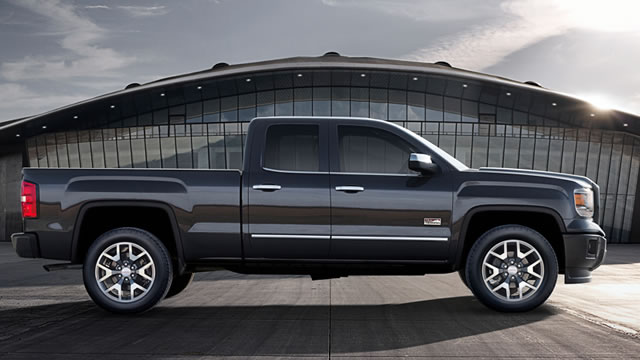
General Motors (NYSE: GM) is making a calculated bet on the enduring power of the American pickup truck, announcing a CA$63 million investment in its Oshawa Assembly plant on February 18, 2026. This capital injection is specifically earmarked for upgrading stamping operations to prepare for the next generation of gas-powered full-size pickups, including the highly profitable Silverado and Sierra lines. The timing is particularly noteworthy, coming just weeks after GM eliminated the third shift at Oshawa due to shifting North American trade dynamics and new U.S. tariffs on Canadian-made auto components.

This investment is far from a retreat; it's a strategic recalibration in a rapidly evolving automotive landscape. GM, like many of its peers, is moving past the "EV-or-bust" mentality towards a more balanced "EV-and-ICE" era. The company recognizes that while the long-term future is electric, the immediate profitability and consumer demand for robust, high-towing ICE trucks remain undeniable. This pragmatic approach allows GM to shore up its cash reserves and fund the capital-intensive transition to zero-emission vehicles, which has proven slower and more costly than initially projected.

The decision underscores a fundamental market reality: demand for traditional gasoline and hybrid platforms is experiencing a resurgence as EV growth plateaus. By focusing on its core strength in full-size trucks, GM is not abandoning its EV ambitions but rather creating a financial shield to navigate technological and geopolitical volatility. This move ensures that the underlying infrastructure for its most profitable segments is primed for the next decade, even as macro-economic headwinds cause production volumes to fluctuate.

Key stakeholders, including GM Canada President and Unifor National President Lana Payne, have emphasized that the new stamping equipment will enable greater vertical integration and faster turnaround times. This operational efficiency is crucial for maintaining market leadership in a segment where GM has historically excelled. The investment in Oshawa is a clear signal that GM intends to maintain its dominance in the truck market, leveraging these profits to fuel its broader strategic objectives.

How Does This Investment Bolster GM's Financial Health?

GM's CA$63 million investment in Oshawa is a direct play for enhanced profitability and robust cash flow, essential elements for navigating the current automotive landscape. The company's full-size trucks, like the Silverado and Sierra, are notorious cash cows, boasting significantly higher margins than most passenger cars or nascent EV models. By upgrading stamping operations, GM aims to optimize the production of these "next generation" ICE trucks, ensuring they remain a powerful engine for earnings.

Looking at GM's TTM financials, the company reported a Gross Margin of 6.3%, Operating Margin of 1.6%, and Net Margin of 1.8%. While these figures reflect the broader industry's capital intensity, the strategic focus on high-margin trucks is designed to push these numbers higher, particularly in North America. Management expects North America EBIT margins to return to the 8-10% range, a significant improvement from 6.8% in 2025, driven by lower costs, a better product mix, and the elimination of one-time headwinds.

This "follow the money" strategy is critical for funding GM's long-term EV transition. Despite the billions spent on battery plants and EV development, the reality is that profitable ICE sales provide the necessary capital. GM's CFO, Paul Jacobson, highlighted the company's strong financial position, ending 2025 with over $20 billion in liquidity, including $12.7 billion of EBIT-adjusted earnings and $10.6 billion of adjusted automotive free cash flow. This financial strength, coupled with a TTM Free Cash Flow Yield of 14.2%, gives GM the flexibility to invest where it sees the clearest path to returns.

The company's 2026 profit guidance reflects this balanced approach, with expected net income attributable to stockholders between $10.3 billion and $11.7 billion, and adjusted earnings before interest and taxes (EBIT) of $13 billion to $15 billion. These projections are underpinned by a planned return to higher margins in North America and ongoing cost reductions in electric vehicles. The Oshawa investment, while modest in isolation, is a key piece of this larger puzzle, securing the profitability of a critical product line that directly contributes to GM's bottom line and future investments.

What Does GM's EV Retrenchment Signal for the Industry?

GM's decision to double down on ICE production in Oshawa is a stark confirmation of a broader industry trend: the "EV retrenchment." Over the last six months leading into early 2026, GM has taken nearly $9 billion in financial charges related to scaling back its EV capacity and delaying several battery-electric launches. This includes a substantial $7.6 billion in EV-related charges in 2025, with a $6 billion writedown in January 2026 alone, signaling a rapid deterioration in its EV outlook.

This pivot is not unique to GM; peers like Ford (NYSE: F) and Stellantis (NYSE: STLA) have also announced significant write-downs and adjustments to their EV strategies. Ford's "Model e" unit, for instance, is projected to incur $20.9 billion in costs through 2027, following a $19.5 billion charge in late 2025. Stellantis booked a massive €22.2 billion ($27 billion) in writedowns in the second half of 2025, reflecting a deep strategic realignment. These figures underscore the immense financial strain and operational losses associated with an overzealous push into an all-electric future.

The industry is grappling with a cooling EV market, driven by weakening consumer demand, high interest rates, and intense price competition, particularly from vertically integrated players like BYD. The initial "EV-or-bust" narrative, fueled by strong policy support and high investor appetite, has given way to a more pragmatic "EV-and-ICE" reality. Automakers are realizing that operational resilience and profitability from legacy ICE and hybrid vehicles are now critical advantages to fund the costly EV transition.

Despite scaling back, GM remains a significant player in the EV space, having sold nearly 170,000 EVs in the U.S. last year, more than double Ford's sales. The company expects EV losses to improve by $1 billion to $1.5 billion in 2026 from "right-sizing capacity and significantly lower volume." This suggests a focus on making EV production more efficient and profitable, rather than a complete abandonment. The industry is learning that a measured, adaptable approach, rather than an aggressive, all-in bet, is the key to long-term success in this evolving market.

What Are the Geopolitical and Trade Implications for GM?

GM's CA$63 million investment in Oshawa is not just an economic decision; it's a complex maneuver within a challenging geopolitical landscape, particularly concerning the USMCA (United States-Mexico-Canada Agreement) framework. The announcement comes amidst rising trade protectionism and newly imposed U.S. tariffs on Canadian-made automotive components, which directly contributed to the elimination of Oshawa's third shift in late January 2026.

Despite these headwinds, GM's decision to keep its high-margin truck production in Canada suggests that the integrated supply chain of the Great Lakes region remains too valuable to abandon. The company is actively navigating the complexities of cross-border trade, indicating that the strategic benefits of maintaining Canadian manufacturing for its critical truck lines outweigh the immediate tariff costs. This move highlights the resilience of established North American auto corridors, even as political rhetoric and policy shifts create uncertainty.

The Canadian government's response also signals a pragmatic policy shift. While Canada has a robust new auto strategy focused on EVs, including CA$2.3 billion for EV purchase incentives and CA$1.5 billion for charging infrastructure, its continued support for "traditional" manufacturing hubs like Oshawa acknowledges the irreplaceable tax revenue and jobs provided by ICE production. This balanced approach from Ottawa, which includes tariff credits and investments in manufacturing, aims to help the auto industry adapt and diversify.

Long-term, the Oshawa facility could serve as a bellwether for the entire North American auto industry. If GM can successfully manage the current "trade war" environment and maintain the profitability of its ICE trucks, Oshawa will remain a crucial asset. However, intensified U.S. protectionism could force GM into a difficult choice between its Canadian legacy and its largest market south of the border. The ongoing USMCA review negotiations will be critical in shaping the future of these cross-border automotive relationships, with GM's strategic investments serving as a key indicator of industry sentiment.

What Does This Mean for Investors in GM and its Suppliers?

For investors, GM's CA$63 million investment in Oshawa underscores a commitment to its most profitable products and a pragmatic approach to market realities. The company's stock, currently trading at $83.67, up 3.02% today, reflects a market capitalization of $78.05 billion. While the investment itself is a fraction of GM's overall capital expenditure, its strategic value is outsized, focusing on a segment that consistently delivers strong margins and cash flow.

This move positions GM as a more resilient investment in a volatile industry. The company's P/E ratio of 23.24 and P/S of 0.42 suggest a reasonable valuation, especially when considering its robust Free Cash Flow Yield of 14.2%. The focus on high-margin ICE trucks provides a stable revenue stream to offset the ongoing costs and slower ramp-up of its EV division. This balanced portfolio approach is designed to deliver sustainable growth and profitability, making 2026 another strong year for the automaker.

Regional suppliers are also poised for a significant win. Magna International (NYSE: MGA), a key provider of frames, seating, and advanced electronics for the Silverado, stands to benefit directly from Oshawa's upgraded stamping capabilities. Similarly, Ontario-based Linamar Corporation (TSX: LNR) and Martinrea International (TSX: MRE) can expect sustained demand for powertrain and structural components as GM prepares for its new engine programs. These companies, deeply integrated into GM's supply chain, will see a boost from the renewed focus on ICE truck production.

Conversely, pure-play EV startups and competitors who over-leveraged themselves into an all-electric future may find themselves at a disadvantage. The market has shifted, and companies that neglected their ICE portfolios are now struggling as consumers retreat towards the reliability and established infrastructure of traditional vehicles. GM's strategy highlights that in the current environment, flexibility, operational efficiency, and a diversified product offering are the new benchmarks for success, providing a clear path for investors seeking stability and growth in the automotive sector.

The Road Ahead: Key Watchpoints for GM

General Motors' strategic pivot to reinforce its ICE truck production in Oshawa is a clear signal of its intent to prioritize profitability and stability in a dynamic market. The CA$63 million investment, while modest, is a critical piece of a larger strategy to leverage high-margin vehicles to fund its long-term, albeit slower, EV transition. This balanced approach, coupled with strong financial fundamentals and a focus on operational efficiency, positions GM to navigate ongoing industry shifts and geopolitical complexities.

Investors should closely monitor GM's North American EBIT margins and free cash flow generation in upcoming quarters, as these will be key indicators of the success of its "EV-and-ICE" strategy. The company's ability to manage trade tensions under the USMCA framework and mitigate tariff costs will also be crucial. Ultimately, GM's resilience and adaptability in balancing traditional strengths with future ambitions will define its trajectory in the evolving automotive landscape.


Want deeper research on any stock? Try Kavout Pro for AI-powered analysis, smart signals, and more. Already a member? Add credits to run more research.

SHARE THIS ON:

Related Articles

Category

You may also like

No related articles available

Breaking News

View All →

No topics available at the moment