MarketLens

Log in

Is Helio Corporation (HLEO) on the Cusp of a Space-Based Solar Revolution

1 week ago
SHARE THIS ON:

Is Helio Corporation (HLEO) on the Cusp of a Space-Based Solar Revolution

Key Takeaways

  • Helio Corporation (OTCID: HLEO) has secured a landmark international agreement with a leading Peruvian gold producer for a pilot Space-Based Solar Power (SBSP) deployment, signaling a critical step towards commercialization.
  • This agreement, following a recent share repurchase program and a prior deal with ELISIUM, validates Helio's first-mover advantage and operational readiness in the rapidly expanding SBSP market, projected to reach $10.7 billion by 2035.
  • While the long-term potential is significant, investors should closely monitor the execution of these pilot projects and the company's capital deployment strategy given the early stage of the SBSP industry.

Is Helio Corporation (HLEO) on the Cusp of a Space-Based Solar Revolution?

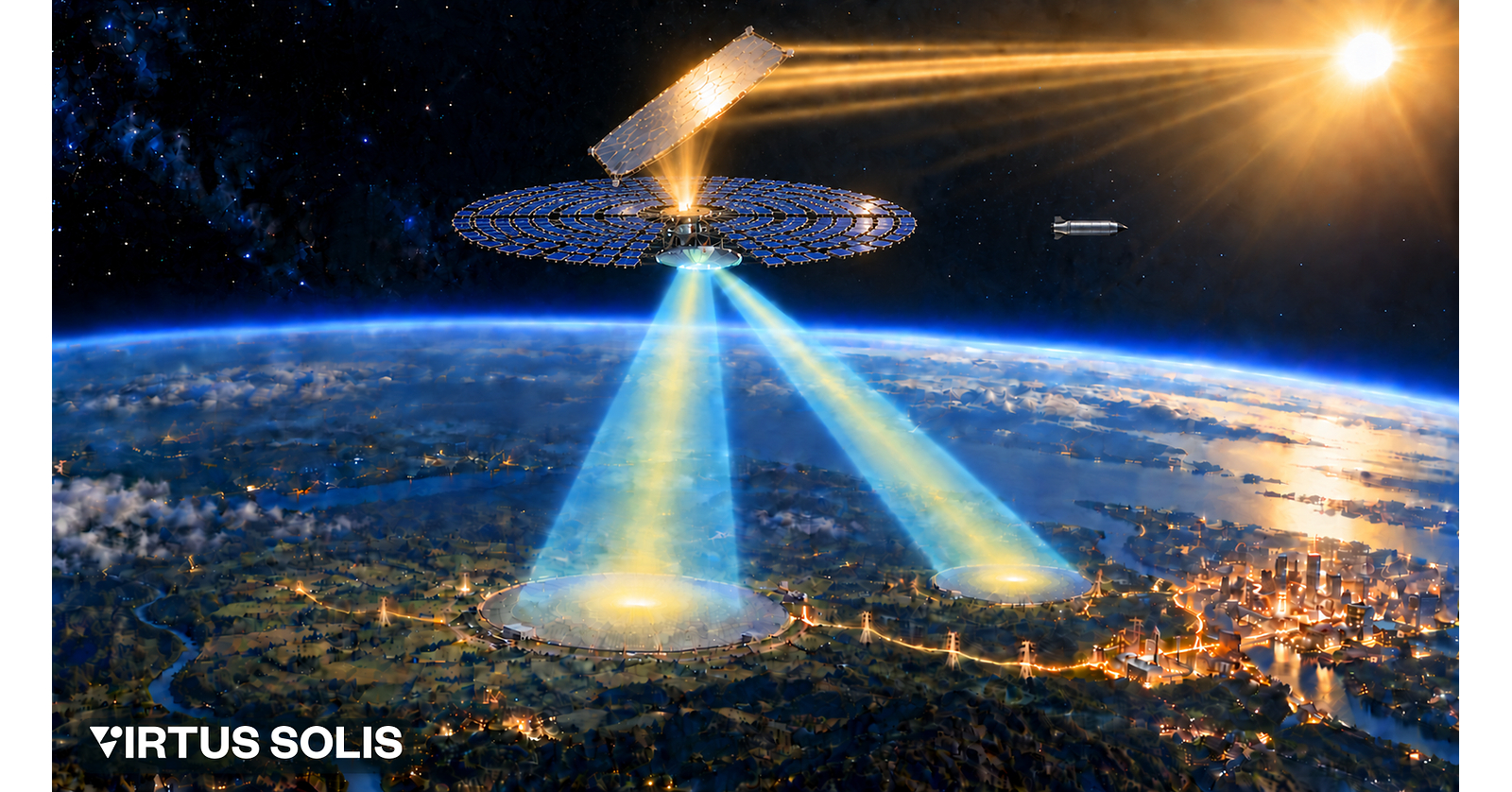
Helio Corporation (OTCID: HLEO) is making a compelling case for its leadership in the nascent, yet potentially transformative, Space-Based Solar Power (SBSP) industry. The company's latest announcement on June 15, 2026, detailing a landmark international agreement with a prominent Peruvian gold producer for a pilot SBSP deployment, marks a pivotal moment. This strategic partnership moves Helio beyond theoretical discussions and into tangible, real-world application, offering a glimpse into the commercial viability of beaming continuous, carbon-free energy from orbit to Earth. The agreement underscores Helio's aggressive push to establish itself as a first-mover in a market that analysts project could swell to $10.7 billion by 2035.

This Peruvian deal isn't an isolated event; it builds on a series of strategic moves by Helio in recent months. On March 23, 2026, the company signed a Memorandum of Understanding (MOU) with ELISIUM, LLC, to power a 4,000-acre microcity in South Florida, marking its first customer agreement for SBSP. Just last week, on June 11, 2026, Helio also announced a share repurchase program, signaling management's confidence in the company's intrinsic value and its commitment to shareholder returns. These developments, particularly the new international pilot, suggest that Helio is not just talking about "power plants in space" but actively laying the groundwork for their deployment.

The SBSP concept itself is gaining significant traction globally, with nations like Japan and the United Kingdom advancing their own prototype launches and deployment programs. Helio's Chairman and CEO, Ed Cabrera, commented on February 19, 2026, that "SBSP timelines are compressing, institutional adoption is accelerating, and commercialization pathways are opening." Helio believes its unique combination of space-qualified hardware manufacturing expertise and systems engineering capabilities, honed over 41 flawless space missions since its founding in 2018, positions it to capitalize on this burgeoning market. The company's track record of zero failures in extreme space environments is a critical differentiator in an industry where execution risk is paramount.

What Does the Peruvian Gold Producer Agreement Entail for HLEO?

The newly announced international agreement with a leading Peruvian gold producer is a significant validation of Helio's commercial strategy and technological readiness. While specific financial terms were not immediately disclosed, the nature of a pilot deployment in a remote, energy-intensive industry like gold mining highlights a key target market for SBSP: off-grid and mission-critical infrastructure. Gold mining operations often require substantial, uninterrupted power, frequently relying on expensive and environmentally impactful diesel generators in remote locations. This makes them an ideal early adopter for SBSP, which promises continuous, weather-independent baseload electricity.

This pilot project is expected to accelerate Helio's path from prototype to profitable infrastructure. The agreement likely involves the deployment of a ground-based receiving station in Peru, which will capture wirelessly transmitted energy from Helio's orbital assets. This real-world application will provide invaluable data on system performance, efficiency, and operational costs, which are crucial for scaling the technology. Success in this pilot could unlock a substantial market within the mining sector globally, demonstrating SBSP's ability to deliver reliable power where traditional grid infrastructure is either non-existent or prohibitively expensive.

Furthermore, this international partnership expands Helio's geographic footprint and diversifies its customer base beyond the domestic ELISIUM project. It signals to the broader market that Helio's SBSP solution is not just a niche offering for futuristic microcities but a practical, globally applicable energy solution. CEO Ed Cabrera has consistently emphasized the transition of orbital energy from concept to asset class, and this Peruvian agreement provides concrete evidence of that shift. It positions Helio as a tangible player in the "new age space race" for energy dominance, moving beyond the speculative phase that often characterizes emerging technologies.

How Does This Agreement Impact Helio's Commercialization Timeline?

The Peruvian gold producer agreement is a critical accelerant for Helio's commercialization timeline, pushing the company closer to its goal of establishing orbital energy platforms as a foundational layer of the global power grid. Helio initially announced its strategic entry into SBSP on January 6, 2026, outlining a phased, scalable development strategy. The ELISIUM MOU, signed on March 23, 2026, projected initial deployment within the next two years, placing the first operational systems online by March 2028. The Peruvian pilot, announced on June 15, 2026, likely runs in parallel or slightly after the ELISIUM project, further de-risking and validating the technology in diverse operational environments.

These early customer agreements are vital for securing non-dilutive funding and demonstrating revenue potential, which are crucial for a company operating in a capital-intensive, cutting-edge industry. Each successful pilot deployment builds confidence among potential investors, partners, and future customers. The data gathered from these initial projects will be instrumental in refining Helio's SBSP architecture, optimizing power conversion efficiency, and streamlining launch logistics—key risk factors identified in broader SBSP studies. Martin Soltau, Co-CEO at Space Solar, a UK-based SBSP company, noted on April 29, 2025, that such projects "accelerate space-based solar power to a new level of maturity, confirming its potential to become a commercially viable clean energy source within the next few years."

Helio's strategy emphasizes leveraging its proven track record in delivering space-qualified systems for entities like NASA and the European Space Agency. This "established excellence in solving the toughest space engineering challenges," as highlighted in a January 13, 2026, Nasdaq press release, is designed to reduce technical and execution risk. By securing these early commercial contracts, Helio is not only validating its technology but also building a pipeline of future power capacity pre-sales. This approach aims to create durable and scalable revenue streams, enhancing long-term shareholder value as the SBSP market matures and expands beyond initial niche applications to utility-scale deployment.

What Are the Broader Implications for the Space-Based Solar Power Market?

Helio's recent agreements, particularly the international pilot in Peru, carry significant implications for the broader Space-Based Solar Power (SBSP) market. They serve as tangible proof points that SBSP is rapidly transitioning from academic research and government prototypes to commercial reality. This shift is critical for attracting further private investment and accelerating the development of the necessary infrastructure. The global SBSP market is already projected to reach $10.7 billion by 2035, expanding at a double-digit Compound Annual Growth Rate (CAGR), according to an SNS Insider report published on March 2, 2026. Helio's moves are helping to solidify this trajectory.

The success of early commercial deployments, like those planned by Helio, will be instrumental in addressing key challenges facing the SBSP industry, such as energy transmission efficiency, cost-effectiveness, and regulatory frameworks. As noted in a European Journal of Energy Research study, "long-term investment in research and development, as well as active international collaboration, can help position space energy as a viable solution for providing clean and scalable energy in the future." Helio's Peruvian agreement exemplifies this international collaboration, potentially setting a precedent for future cross-border SBSP projects.

Moreover, these developments highlight the growing demand for uninterrupted, carbon-free baseload electricity, especially in regions facing energy insecurity or high costs for traditional power. SBSP offers a solution that is insulated from geopolitical disruptions and climate-related risks, providing continuous power independent of weather or daylight cycles. This capability is a "game-changer for clean energy," as Martin Soltau of Space Solar stated on April 29, 2025, positioning SBSP as a crucial complement to intermittent terrestrial renewables like wind and ground-based solar. Helio's early customer wins are not just about its own growth; they are a bellwether for the entire industry's maturation and its potential to redefine global energy infrastructure.

What Are the Risks and Opportunities for HLEO Investors?

For investors considering Helio Corporation (OTCID: HLEO), the landscape presents both substantial opportunities and inherent risks. The primary opportunity lies in Helio's first-mover advantage and proven execution capability in a market poised for exponential growth. With the global SBSP market projected to hit $10.7 billion by 2035, Helio's early commercial agreements with ELISIUM and the Peruvian gold producer position it to capture significant market share. The company's track record of 41 flawless space missions provides a strong foundation of technical reliability, a critical factor in complex space ventures. Furthermore, the share repurchase program announced on June 11, 2026, suggests management's belief that the stock is undervalued, potentially signaling future upside.

However, the risks are equally significant. Space-based solar power, while promising, remains an emerging technology with high capital requirements and long development cycles. The success of Helio's pilot projects, scheduled for initial deployment by March 2028, is not guaranteed, and any technical setbacks could impact commercialization timelines and investor confidence. Regulatory hurdles, including orbital slot allocation, space debris mitigation, and cybersecurity for critical energy infrastructure, are still evolving and could pose challenges. As highlighted in the European Journal of Energy Research, "policy and regulatory considerations" are crucial for the industry's long-term viability.

Investors should also consider the competitive landscape. While Helio claims unique positioning, other entities, including government-backed programs and well-funded private companies, are also advancing SBSP technologies. The ability to scale production, manage launch costs, and achieve competitive Levelized Cost of Energy (LCOE) will be paramount. Helio's current OTCID listing also implies lower liquidity and potentially higher volatility compared to major exchange listings. Despite these risks, the potential for disruptive innovation in the global energy sector, coupled with Helio's recent commercial traction, makes HLEO a high-risk, high-reward proposition for those with a long-term investment horizon and an appetite for frontier technologies.

Helio Corporation's recent international agreement for a pilot SBSP deployment, coupled with its domestic customer win and share repurchase program, signals a critical inflection point for the company and the nascent space-based solar power industry. While the path to widespread commercialization is long and fraught with challenges, Helio's tangible progress in securing early adopters and leveraging its deep space engineering expertise positions it as a compelling, albeit speculative, investment in the future of global energy. Investors should watch closely for further operational milestones and financial disclosures from these pilot projects as the company aims to transform orbital energy from concept to a cornerstone of the global power grid.


Want deeper research on any stock? Try Kavout Pro for AI-powered analysis, smart signals, and more. Already a member? Add credits to run more research.

SHARE THIS ON:

Related Articles

Category

You may also like

Stock News2 weeks ago

Solidion Technology Unveils Patented Extreme-Climate Battery Technology Targeting Low Earth Orbit-Based Artificial Intelligence Data Centers, Lunar Economy, and Space

Solidion Technology (STI) unveiled its patented Gen-ECB battery platform designed for extreme-climate operations in space. The technology targets high-growth sectors including LEO-based AI data center...
Stock News3 weeks ago

Pure Play or Hybrid? Unpacking the Rise of Space ETFs

Dedicated space ETFs have emerged as a new investment vehicle, shifting options beyond traditional broad aerospace and defense funds. This transition provides investors with more targeted exposure to ...
Stock News1 months ago

AST SpaceMobile Is Impossible to Ignore Right Now. Here's What to Do With It.

AST SpaceMobile, a LEO satellite manufacturer, faces a positive long-term outlook according to recent market commentary. The company's future growth potential remains a focal point for investors evalu...
Stock News1 months ago

Why Meta's Space-Based Solar Pact Is Really a Rocket Lab Story

Meta Platforms is exploring space-based solar power to supply its data center fleet. The initiative highlights a strategic reliance on launch providers like Rocket Lab to facilitate the deployment of ...

Breaking News

View All →

Top Headlines

View More →
Stock News57 minutes ago

You're Probably Paying Twice for NVIDIA, Apple, and Microsoft Without Realizing It

Stock News1 hour ago

Why the Market Dipped But Microsoft (MSFT) Gained Today

Stock News1 hour ago

ProShares UltraPro QQQ Charges 0.82% Annually, but the Real Cost Compounds Every Trading Day

Stock News1 hour ago

JEPI's 0.35% Fee Is a Trap: The Real Cost Is the 14.48% Return Gap vs. SPY

Stock News1 hour ago

Google-Parent Alphabet to Replace Verizon in Dow Jones Industrial Average