MarketLens
Is Hormel Foods Finally Shedding its Commodity Drag

Key Takeaways
- Hormel Foods is strategically divesting its whole-bird turkey business to Life-Science Innovations, signaling a clear pivot away from volatile commodity operations towards higher-margin, value-added protein offerings.
- While the immediate financial impact on fiscal 2026 is expected to be minimal, this move, coupled with ongoing corporate restructuring, aims to streamline operations and enhance long-term profitability and organic growth.
- Despite a high dividend payout ratio of 132.4% and recent share price underperformance, the strategic shift and reaffirmed guidance could make Hormel a more attractive investment for those seeking stable, branded food exposure with potential for future margin expansion.
Is Hormel Foods Finally Shedding its Commodity Drag?
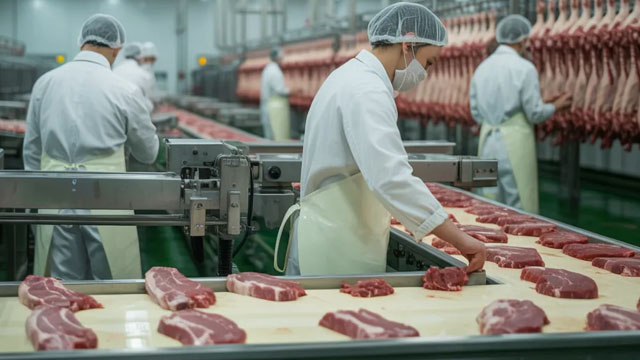
Hormel Foods Corporation (HRL) is making a decisive move to reshape its portfolio, announcing the sale of its whole-bird turkey business to Life-Science Innovations (LSI). This transaction, expected to close by the end of the second quarter of fiscal 2026, marks a significant strategic shift for the branded food giant. It underscores management's commitment to reducing exposure to the notoriously volatile commodity markets, opting instead to double down on more stable, value-added protein offerings.
The divestiture includes key operational assets: the Melrose, Minnesota, whole-bird production facility, the Swanville, Minnesota, feed mill, and associated transportation assets. LSI will also assume supply contracts with third-party turkey growers, ensuring a smooth transition and uninterrupted customer order fulfillment. This careful asset transfer highlights Hormel's focus on maintaining business continuity while executing its strategic pivot.
Crucially, this sale will not impact Hormel's well-known JENNIE-O® brand or its broader product lineup. The company explicitly stated its intention to continue enhancing the value-added aspects of its JENNIE-O® business, which remains a strategic source of profitable growth. This distinction is vital for investors, as it clarifies that Hormel isn't exiting the turkey market entirely, but rather refining its approach to focus on higher-margin segments within it.
While financial details of the transaction have not been disclosed, Hormel anticipates a minimal impact on its adjusted fiscal 2026 net sales and diluted earnings per share guidance. This suggests that the whole-bird turkey business, while substantial in volume, likely contributed less to the company's overall profitability and strategic direction than its branded, value-added counterparts. The move aligns with a broader corporate restructuring initiated in November 2025, which saw a reduction of approximately 250 corporate and sales positions, aimed at optimizing resources and supporting future growth.
What Does This Divestiture Mean for Hormel's Profitability and Growth?
The sale of the whole-bird turkey business is more than just an asset transfer; it's a strategic play to enhance Hormel's long-term profitability and growth trajectory. Commodity-driven businesses are inherently susceptible to price fluctuations in raw materials, which can lead to significant swings in gross margins and make earnings less predictable. By reducing its reliance on these volatile segments, Hormel aims to stabilize its financial performance and improve its overall margin profile.
Hormel's current TTM margins stand at a Gross Margin of 15.6%, Operating Margin of 5.9%, and Net Margin of 4.0%. These figures, while respectable for the packaged foods industry, indicate room for improvement, especially when compared to peers with a stronger focus on highly branded, value-added products. The strategic shift towards these higher-margin offerings is designed to lift these numbers over time, providing more consistent and robust earnings.
Looking ahead, Hormel has reaffirmed its fiscal 2026 guidance, projecting organic net sales growth of 1% to 4% and adjusted operating income growth of 4% to 10%. The company also expects preliminary first-quarter fiscal 2026 net sales of approximately $3 billion, reflecting 2% year-over-year organic growth. This marks the fifth consecutive quarter of organic net sales growth, signaling a stable market demand for its core products. The divestiture, therefore, is not a sign of weakness but a proactive measure to strengthen the foundation for achieving these growth targets more sustainably.
Management has explicitly stated that its strategy for sustainable, profitable growth centers on expanding its value-added protein portfolio to meet evolving consumer needs. This focus on brand leadership and operational excellence is expected to drive margin expansion. The goal is clear: elevate the company's financial performance by concentrating on segments where it can command better pricing power and achieve more consistent profitability, ultimately reshaping its earnings trajectory.
Can Hormel's Portfolio Reshaping Drive Sustainable Shareholder Value?
Hormel's strategic divestiture and ongoing corporate restructuring are critical steps in its journey to drive sustainable shareholder value. The company, with a market capitalization of $12.89 billion, has a rich history of brand leadership, boasting names like PLANTERS®, SKIPPY®, SPAM®, and APPLEGATE®. By streamlining its portfolio, Hormel aims to allocate resources more effectively to these high-performing, consumer-preferred brands, fostering innovation and market penetration.
The focus on value-added proteins is a smart move in a competitive food landscape. Consumers are increasingly seeking convenience, quality, and specific dietary attributes, for which they are often willing to pay a premium. This shift positions Hormel to capture higher margins and less cyclical revenue streams compared to the commodity business it is shedding. This strategic clarity could make Hormel a more appealing investment for those seeking stable growth in the consumer defensive sector.
However, investors must also consider Hormel's current valuation and shareholder returns. The stock is trading at $23.44, nearer its 52-week low of $21.03 than its high of $32.07. With a P/E ratio of 26.98, it's not cheap, especially given the TTM EPS of $0.87 and a significant Net Income decline of -40.6% in FY2025 YoY. The dividend yield currently stands at a robust 5.0%, but this comes with a high payout ratio of 132.4%, raising questions about its long-term sustainability if earnings don't improve.
Despite these concerns, the company's commitment to its dividend, which has seen a 2.6% growth in dividend per share in FY2025, suggests confidence in future cash flow generation. The divestiture, by reducing exposure to volatility, could free up capital and management focus, potentially leading to more consistent earnings growth that can better support the dividend and drive share price appreciation over time. The market's "Hold" consensus from analysts, with an average 1-year price target of $28.29, implies a potential upside of approximately 20.7% from current levels, reflecting cautious optimism about the strategic direction.
What are the Key Financial Metrics to Watch Post-Divestiture?
As Hormel embarks on this new chapter, investors should closely monitor several key financial metrics to gauge the success of its strategic pivot. The immediate impact on fiscal 2026 is expected to be minimal, but the long-term implications for profitability and efficiency are paramount. This divestiture should ideally lead to a more streamlined operation, reflected in improved margins and more stable earnings.
First, watch for Gross Margin and Operating Margin expansion. The whole-bird turkey business, being commodity-driven, likely compressed these margins. As Hormel shifts towards value-added products, we should see these percentages tick upwards from their current TTM levels of 15.6% and 5.9%, respectively. Any sustained improvement here will be a strong indicator that the strategy is working.
Second, keep an eye on Organic Net Sales Growth. Hormel has reported five consecutive quarters of year-over-year organic net sales growth, with 2% expected for Q1 fiscal 2026. The divestiture should not derail this momentum but rather allow for more focused growth in core branded segments. Consistent growth in this metric, particularly in the Foodservice and Retail segments, will demonstrate the effectiveness of the value-added strategy.
Third, Free Cash Flow (FCF) and FCF Yield are critical. While TTM FCF per share is $0.97 and FCF Yield is 4.1%, FY2025 saw a significant -47.1% decline in FCF. A more stable, higher-margin business should generate more predictable and robust FCF, which is essential for supporting the dividend and future investments. Improved FCF will also alleviate concerns about the high dividend payout ratio.
Finally, monitor Return on Invested Capital (ROIC). With a TTM ROIC of 4.3%, there's ample room for improvement. By divesting lower-return assets and focusing on higher-growth, higher-margin opportunities, Hormel should see its ROIC trend upwards, signaling more efficient capital allocation and better returns for shareholders. This metric will be a key indicator of whether the portfolio shaping efforts are truly creating long-term value.
What are the Risks and Opportunities for Hormel Investors?
Investing in Hormel Foods, even after this strategic divestiture, comes with its own set of risks and opportunities. On the opportunity side, the clear pivot towards value-added protein offerings positions the company for more stable and potentially higher-margin growth. This focus aligns with evolving consumer preferences for convenient, high-quality food products, allowing Hormel to leverage its strong brand portfolio more effectively. The reaffirmed fiscal 2026 guidance, including 1% to 4% organic net sales growth and 4% to 10% adjusted operating income growth, provides a baseline of confidence in management's ability to execute.
Furthermore, the divestiture could free up capital and management attention, allowing for increased investment in innovation, marketing, and operational efficiencies within its core segments. This could lead to improved profitability, stronger brand equity, and ultimately, a more attractive valuation for the stock. The company's long history of dividend payments and its commitment to maintaining them, despite a high payout ratio, suggests a dedication to shareholder returns that could appeal to income-focused investors, provided earnings stabilize.
However, significant risks remain. The food industry is highly competitive, and changing consumer tastes can quickly impact demand. Hormel's ability to innovate and adapt its value-added portfolio will be crucial. While reducing exposure to commodity volatility is positive, the company still faces risks from fluctuations in raw material costs for its remaining businesses, as well as potential supply chain disruptions. The high dividend payout ratio of 132.4% is a notable concern; if earnings don't grow as expected, the dividend could become unsustainable, potentially leading to a cut that would severely impact investor confidence and the stock price.
The company's recent financial performance also presents a mixed picture, with TTM Net Income and EPS declining by over 40% in FY2025 YoY, and FCF down by 47.1%. While the divestiture aims to address some of these issues, a turnaround will require consistent execution and a sustained improvement in profitability. Investors should also consider the current valuation, with a P/E of 26.98, which is not cheap for a company facing a restructuring and needing to demonstrate renewed growth. The "Hold" consensus from analysts reflects this balanced view, acknowledging potential upside while recognizing the challenges ahead.
The Road Ahead for Hormel
Hormel Foods is clearly charting a new course, shedding a volatile commodity business to sharpen its focus on higher-margin, value-added proteins. This strategic pivot, coupled with ongoing corporate restructuring, aims to stabilize earnings and drive more predictable growth. While the immediate financial impact is expected to be minimal, the long-term success hinges on consistent execution and a tangible improvement in profitability and free cash flow generation. Investors should watch closely for margin expansion and sustained organic sales growth as key indicators of whether Hormel can truly elevate its financial performance and deliver enhanced shareholder value.
Want deeper research on any stock? Try Kavout Pro for AI-powered analysis, smart signals, and more. Already a member? Add credits to run more research.
Related Articles
Category
You may also like
No related articles available
Breaking News
View All →No topics available at the moment