MarketLens

Log in

Is Lemonade's Autonomous Car Insurance a Game Changer

1 hour ago
SHARE THIS ON:

Is Lemonade's Autonomous Car Insurance a Game Changer

Key Takeaways

  • Lemonade's launch of autonomous car insurance for Tesla FSD users is a bold strategic move, positioning the insurtech as a first-mover in a nascent, high-growth market.
  • The company is targeting substantial In-Force Premium (IFP) and revenue growth, with a clear path to Adjusted EBITDA profitability by Q4 2026.
  • Despite its innovative approach, Lemonade faces significant hurdles from regulatory complexities, established legacy insurers, and the evolving nature of autonomous vehicle technology.

Is Lemonade's Autonomous Car Insurance a Game Changer?

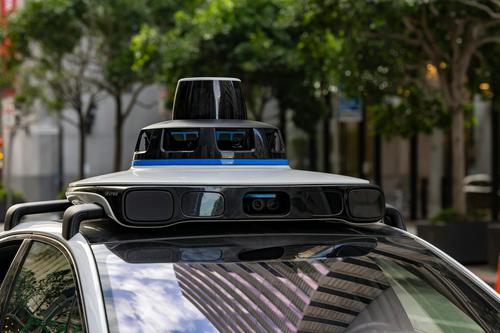
Lemonade (NYSE: LMND) has always positioned itself as an AI-first disruptor in the insurance industry, but its recent move into autonomous vehicle (AV) insurance, starting with Tesla's Full Self-Driving (FSD) system, marks a potentially transformative moment. Announced on January 21, 2026, this new product is a first-of-its-kind offering designed specifically for self-driving cars, initially available in Arizona and Oregon. The core proposition is compelling: a 50% reduction in per-mile rates for FSD-engaged driving, reflecting the data-driven belief that autonomous operation significantly reduces risk.

This isn't just another product launch; it's a strategic declaration. Lemonade is leveraging its deep AI capabilities and telematics integration to price risk with unprecedented granularity, moving beyond traditional demographic factors to actual driving behavior and, crucially, the mode of operation (human vs. AI). Co-founder Shai Wininger has openly expressed a desire to insure FSD vehicles for "almost free," underscoring the company's conviction in the safety benefits of advanced autonomy and its ability to accurately underwrite this emerging risk.

The implications for Lemonade are profound. By aligning with Tesla and its FSD technology, Lemonade is not only tapping into a rapidly expanding market but also setting a precedent for how insurance will adapt to the future of mobility. This initiative could accelerate the adoption of autonomous features by making them more economically attractive for consumers, directly linking safer technology with lower costs. It's a bold bet on the future, but one that aligns perfectly with Lemonade's digital-first, data-driven ethos.

This move also challenges traditional insurers, many of whom still view autonomous features as mere enhancements rather than fundamental shifts in risk exposure. Lemonade's agility in integrating new data sources and deploying innovative products highlights the growing role of insurtech firms in driving industry innovation. For investors, the question becomes whether this early lead can translate into sustainable market share and, ultimately, profitability.

What is the Market Opportunity for Autonomous Vehicle Insurance?

The market for autonomous vehicle insurance is poised for substantial growth, driven by accelerating technological advancements and increasing adoption of self-driving cars. According to Renub Research, the U.S. autonomous vehicles market alone is projected to surge from $28.63 billion in 2025 to $103.19 billion by 2034, representing a robust compound annual growth rate (CAGR) of 15.31%. This expansion creates a parallel demand for specialized insurance products tailored to the unique risks of autonomous driving.

The broader autonomous vehicle insurance market is also on a steep upward trajectory. Congruence Market Insights estimates this segment will grow from $390 million in 2025 to $1.15 billion by 2033, with a CAGR of 14.50%. HTF Market Insights offers an even more aggressive forecast, projecting the global autonomous vehicle insurance providers market to reach $11.2 billion by 2033 from $2.6 billion in 2024, at a 20.10% CAGR. These figures underscore a significant greenfield opportunity for insurers willing to innovate.

Key growth drivers include strong investment in AI and machine learning, continuous improvements in sensor technologies like lidar and radar, and the declining cost of autonomous systems. Beyond personal vehicles, demand is also boosted by autonomous ride-sharing, delivery services, and logistics solutions, where businesses seek to lower operating costs and improve efficiency. Lemonade's strategy to price FSD miles at 50% less than human-driven miles directly taps into the economic incentive for consumers to adopt safer autonomous technologies, potentially accelerating this market expansion.

However, this nascent market also presents unique challenges. Regulatory uncertainty, legal complexities regarding liability, and the lack of extensive historical data for autonomous driving incidents are significant hurdles. Despite these challenges, Lemonade's early entry and data-driven approach position it to capture a meaningful share of this evolving market, especially as it generates proprietary data on FSD performance to refine its underwriting models.

How Does Lemonade Plan to Achieve Profitability and Growth?

Lemonade has laid out an ambitious roadmap for growth and profitability, aiming to transition from a high-growth, loss-making insurtech to a sustainably profitable enterprise. The company recently reported strong Q4 2025 results, with In-Force Premium (IFP) reaching $1.16 billion, marking an 8th consecutive quarter of accelerating IFP growth and achieving 30% year-over-year growth ahead of schedule. Gross Profit soared 113% year-over-year to $80 million, with Gross Profit Margin improving to 41%.

Looking ahead, Lemonade is guiding to 32% IFP growth in 2026 and revenue growth above 60%. Crucially, the company expects to achieve positive Adjusted EBITDA in Q4 2026, with full-year Adjusted EBITDA profitability targeted for 2027. This financial trajectory is supported by a capital-light model and improving loss ratios; the overall Gross Loss Ratio hit an all-time low of 62% in Q3 2025, with the Car Gross Loss Ratio improving significantly to 76%. The company also recently passed 3 million customers, demonstrating consistent customer acquisition momentum.

The autonomous car insurance product is a key component of this growth strategy. By expanding its total addressable market (TAM) through new state launches and innovative offerings like AV insurance, Lemonade aims to sustain and even accelerate its 30% IFP growth target. The ability to offer significantly lower rates for safer autonomous driving could be a powerful customer acquisition tool, attracting a new segment of tech-forward consumers. This aligns with Lemonade's strength in data-driven pricing, leveraging telematics to differentiate risk profiles more precisely than traditional insurers.

While the company still operates at an Adjusted EBITDA loss (reported at $5 million in Q4 2025), the consistent improvement and clear guidance towards profitability signal a maturing business model. The focus on AI and data infrastructure, as emphasized by CEO Daniel Schreiber, is central to optimizing pricing and customer experience, which are critical for maintaining a competitive edge and driving towards those profitability targets.

What are the Competitive and Regulatory Challenges?

Lemonade's foray into autonomous vehicle insurance, while innovative, navigates a complex landscape filled with competitive pressures and significant regulatory hurdles. The market is increasingly dynamic, featuring a mix of established insurance giants and agile insurtech firms. Companies like Allianz SE, AXA XL, State Farm, Progressive Corporation, and Zurich Insurance Group are already developing tailored products for autonomous risk profiles and engaging in partnerships with OEMs. While Lemonade is a first-mover in offering specific FSD-mile discounts, it's not operating in a vacuum.

Regulatory uncertainty is arguably the biggest challenge. Rules and approval processes for autonomous vehicles and their insurance still vary significantly from state to state, creating a fragmented legal environment. Issues related to liability, safety certification, data ownership, and privacy are still evolving. For instance, establishing fault in an AV accident is incredibly complex, as it could involve the car maker, software developer, sensor supplier, or even the data provider, rather than just a human driver. This lack of standardized regulations slows product standardization and expansion.

Moreover, the use of highly detailed sensor data from self-driving systems raises significant privacy concerns. Regulators will need to update guidelines to ensure consumer privacy protections keep pace with technological capabilities, especially as usage-based insurance programs become more sophisticated. Lemonade's ability to expand its autonomous car insurance product to all U.S. states will depend heavily on navigating these diverse and evolving regulatory frameworks.

Traditional insurers, despite their legacy systems, possess vast capital reserves, established distribution networks, and deep regulatory experience. They are also investing in AI and telematics, albeit often at a slower pace. Lemonade's structural and cultural advantage as an AI-first organization is key, but it must continuously innovate to stay ahead. The company's success will hinge on its ability to influence regulatory discussions with empirical data on autonomous driving safety, while also adapting its offerings to diverse state requirements and fending off competition from both insurtech rivals and incumbent players.

How Does Lemonade's Valuation Stack Up for Investors?

Lemonade's current valuation reflects a company in a high-growth, pre-profitability phase, with significant future potential but also inherent risks. Trading at $61.67 with a market capitalization of $4.61 billion, LMND has seen its share price fluctuate significantly, with a 52-week range of $24.31 to $99.90. The stock is currently trading at a negative P/E ratio of -26.33, which is expected for a company still reporting net losses. Its P/S ratio of 7.00 indicates investors are paying a premium for its revenue growth, while a P/B of 8.86 suggests a high valuation relative to its book value.

Wall Street analysts have a mixed view on Lemonade, with a consensus rating of "Sell" among 14 analysts (7 Sell, 3 Hold, 4 Buy). The consensus price target is $84.00, with a median of $85.00, suggesting potential upside from current levels, but the low target of $65.00 is close to the current price. This divergence reflects the speculative nature of the stock, where long-term growth prospects are weighed against near-term profitability challenges. The company's next earnings call is scheduled for May 12, 2026.

From a growth perspective, Lemonade's TTM revenue growth stands at 22.5%, with Net Income and EPS growth at 14.6% and 16.2% respectively for FY2024. The company's 3-year cumulative revenue growth per share is an impressive 253.5%, highlighting its rapid expansion. However, its TTM operating margin of -27.0% and net margin of -26.4% underscore the ongoing challenge of translating top-line growth into bottom-line profits.

For investors, the bull case hinges on Lemonade successfully executing its autonomous car insurance strategy, expanding its customer base, and achieving its Adjusted EBITDA profitability targets by Q4 2026 and full-year 2027. The ability to leverage AI and data to underwrite new, complex risks more efficiently than incumbents could lead to significant market share gains in the long run. The bear case, however, points to persistent regulatory hurdles, intense competition, and the inherent volatility of a company still burning cash. The stock's current valuation already prices in a substantial amount of future growth, making it sensitive to any setbacks in its path to profitability or market expansion.

What Does This Mean for Investors?

Lemonade's strategic pivot into autonomous car insurance presents a compelling, albeit high-risk, investment proposition. The company is clearly betting on its AI-first model to disrupt a nascent market, offering a glimpse into the future of insurance. Investors should closely monitor the uptake of its autonomous car insurance, particularly among Tesla FSD drivers, and track loss ratios on these new policies.

The path to profitability, with positive Adjusted EBITDA targeted for Q4 2026, is a critical milestone. While the long-term vision is clear, the journey will be marked by regulatory challenges and fierce competition. Lemonade's ability to scale this innovative product across more states and potentially to other automakers will be key to unlocking its full potential.

Lemonade is a growth story with significant speculative elements, best suited for investors with a high-risk tolerance and a long-term horizon. Its success hinges on flawless execution and favorable regulatory evolution in the autonomous vehicle space.


Want deeper research on any stock? Try Kavout Pro for AI-powered analysis, smart signals, and more. Already a member? Add credits to run more research.

SHARE THIS ON:

Related Articles

Category

You may also like

No related articles available

Breaking News

View All →

No topics available at the moment