MarketLens

Log in

Is the New Lunar Race a Game-Changer for Investors

1 day ago
SHARE THIS ON:

Is the New Lunar Race a Game-Changer for Investors

Key Takeaways

  • The lunar economy is rapidly transitioning from government-led exploration to a private-sector-driven industrial frontier, projected to reach $19.8 billion by 2030.
  • Investment opportunities are emerging across infrastructure, resource extraction (ISRU), and specialized technology providers, fueled by declining launch costs and strategic government partnerships.
  • While major aerospace players offer stability, smaller, specialized companies in robotics, advanced materials, and lunar services present higher-risk, higher-reward potential for long-term investors.

Is the New Lunar Race a Game-Changer for Investors?

The renewed "space race" is indeed a monumental game-changer for investors, fundamentally reshaping the landscape of aerospace and related industries. Unlike the Cold War era, this competition is largely driven by private capital, with visionaries like Elon Musk and Jeff Bezos igniting an urgency reminiscent of past rivalries. This private influence is accelerating experimentation and innovation at speeds previously unimaginable in publicly funded programs, transforming lunar exploration from a symbolic endeavor into a central arena of economic and technological ambition.

The numbers underscore this shift: the global space economy is projected to reach a staggering $1.42 trillion by 2036, growing at a compound annual growth rate (CAGR) of 8.5% from 2026. More specifically, the lunar exploration market alone is expected to surge from $13.76 billion in 2026 to $19.8 billion by 2030, maintaining a robust CAGR of 9.5%. This growth isn't speculative; it's backed by tangible investment, with global private investments in space technology increasing by $7.4 billion in 2024, a 6% jump from the previous year, signaling strong investor confidence.

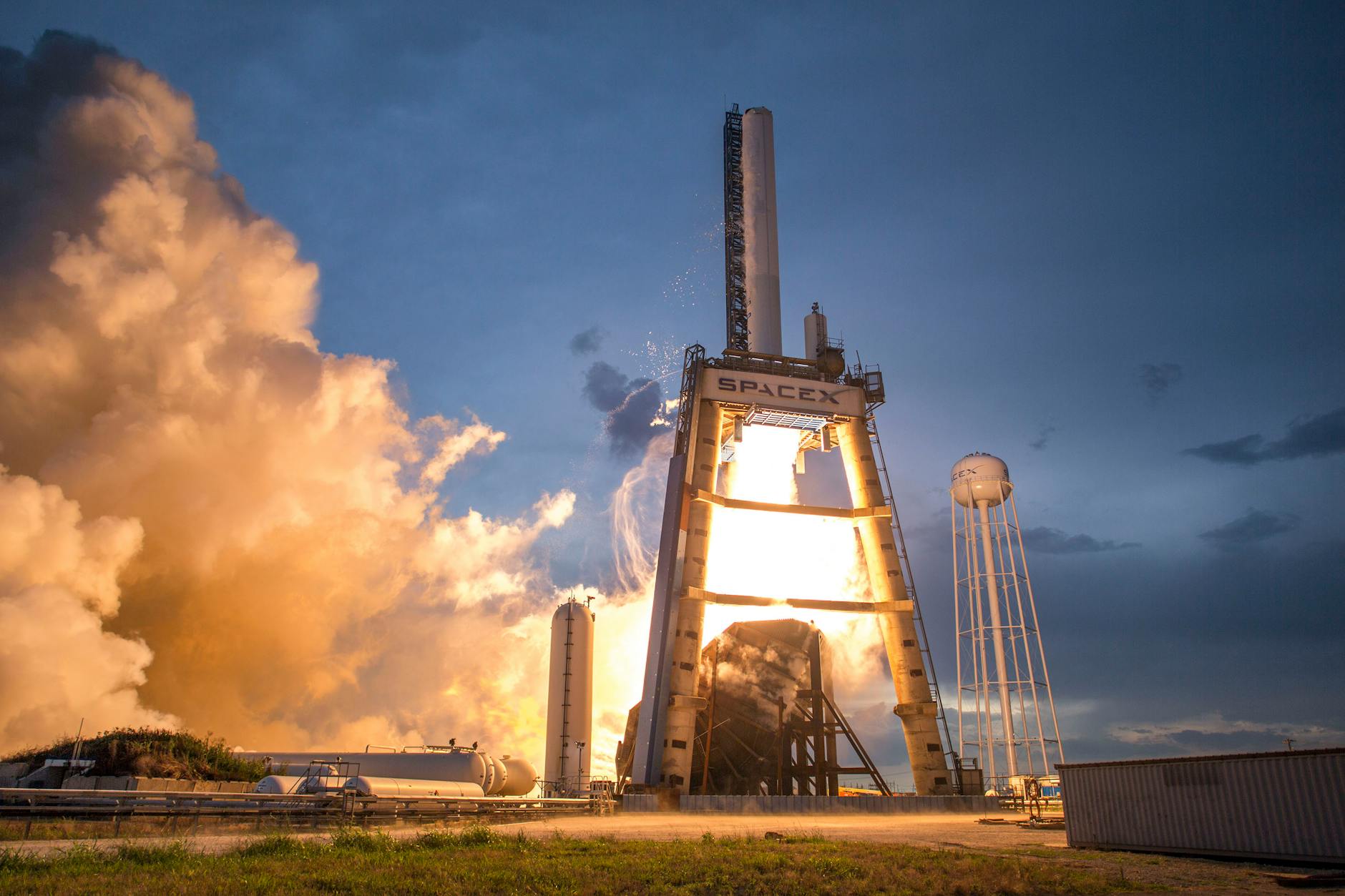
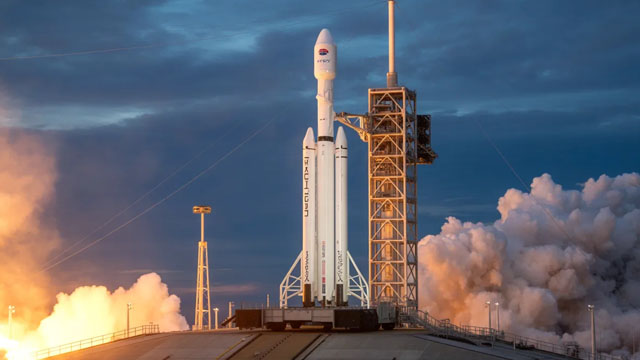
A key enabler of this commercialization is the dramatic reduction in launch costs, primarily due to reusable rocket technology pioneered by companies like SpaceX. What once cost $65,000 per kilogram to send into orbit has plummeted to approximately $1,500 per kilogram, making lunar missions and orbital infrastructure economically viable for a broader range of private entities. This cost efficiency is not just about launches; it's about unlocking a cascade of opportunities across the entire space value chain, from satellite constellations to in-space manufacturing and lunar resource extraction.

This burgeoning ecosystem is attracting significant attention from both established players and nimble startups. The "Commercial Lunar Economy Field Guide," published by Air University Press and influenced by DARPA’s LunA-10 initiative, paints a clear picture: the Moon is transitioning from a scientific curiosity to a self-sustaining industrial marketplace by the 2030s. This vision, supported by government agencies like NASA through programs like Artemis, creates a fertile ground for investors looking to capitalize on the next frontier of economic growth.

What are the Core Pillars Driving the Commercial Lunar Economy?

The nascent commercial lunar economy is built upon several critical technological and infrastructural pillars, moving beyond mere exploration to establish a self-sustaining marketplace. At its heart is the concept of In-Situ Resource Utilization (ISRU), which involves using local lunar materials to produce essentials like oxygen, water, and construction materials. Pioneer Astronautics, now part of Voyager Space Holdings, is at the forefront with its Moon to Mars Oxygen and Steel Technology (MMOST) system, including the Lunar OXygen In-situ Experiment (LOXIE) Production Prototype, designed to extract oxygen and forge steel from lunar regolith. This capability is vital for creating a "circular economy" where expended rocket stages are repurposed and scrap metal is recycled on-site.

Beyond resource extraction, the development of robust lunar infrastructure is paramount. DARPA’s LunA-10 initiative is a catalyst, identifying "scalable nodes" where government investment can accelerate commercial capabilities, similar to how DARPA fostered the internet and GPS. The goal is for NASA and commercial industry to purchase utilities like power and data as services, rather than owning the hardware. This includes establishing infrastructure hubs for power and thermal management, crucial for surviving the 14-day lunar night, a primary mission-killer in the current Exploration Age (2025–2030).

Another critical aspect is interoperability. To prevent vendor lock-in and foster an open platform, DARPA established the Lunar Operating Guidelines for Infrastructure Consortium (LOGIC). This consortium focuses on creating voluntary consensus standards for docking ports, power connectors, and communication protocols, ensuring seamless integration across different companies' hardware. This standardization is essential for building a cohesive lunar ecosystem, moving through the Foundational Age of "trail-building" to the Industrial Age (target: 2035) where large-scale manufacturing and multi-service hubs become commonplace.

Companies like Interlune, founded by former Blue Origin executive Rob Meyerson, are already making strides in specialized areas. Interlune recently announced details of its NASA Small Business Technology Transfer (STTR) project to advance scalable, multipurpose lunar trenching and excavation technology. This project is critical for supporting lunar resource extraction and the construction of Artemis Base Camp, highlighting the immediate commercial applications of these foundational technologies. The ultimate vision, the "Jet Age," envisions self-sufficiency through ISRU, producing propellants like lunar hydrogen and oxygen to enable frequent, low-cost "rocket hop" transport across the lunar surface, servicing permanent settlements and deep space missions.

How Are Property Rights and Market Mechanisms Shaping Lunar Investment?

The legal and economic frameworks governing lunar resources are rapidly evolving, creating both opportunities and potential pitfalls for investors. While the Outer Space Treaty of 1967 prohibits nations from "owning" the Moon, it remains vague on the ownership of extracted resources. This ambiguity has been addressed domestically by the U.S. Commercial Space Launch Competitiveness Act of 2015, which grants American companies the right to own and sell resources mined from celestial bodies. The Artemis Accords, now signed by over 40 nations, further build on these principles, advocating for "Continued Use" and "Allocated" rights, allowing companies exclusive control over resources they extract and infrastructure they build.

This emerging legal landscape is already translating into tangible commercial activity. A significant development is the pre-market contracting for lunar resources, such as the agreement between Finnish firm Bluefors and American company Interlune to purchase tens of thousands of liters of lunar Helium-3. This deal, reportedly worth hundreds of millions of dollars, is not just a commercial milestone but a political act. It establishes pricing benchmarks, demonstrates enforceable title transfer, and signals to insurers and investors that lunar resources can be securitized, effectively creating a paper market before mining even begins. This mirrors terrestrial precedents where commodities like LNG and cobalt are traded through long-term off-take agreements years ahead of delivery.

To attract serious private capital, the Moon needs market transparency. The "Commercial Lunar Economy Field Guide" recommends establishing a Space Commodities Exchange and a Lunar Board of Trade. These institutions would define the quality and value of lunar resources like oxygen and regolith, enabling trading, hedging, and financing mechanisms similar to those for terrestrial commodities. Such market infrastructure is crucial for de-risking investments and providing the liquidity necessary for large-scale commercial operations.

However, this rapid commercialization raises significant governance concerns. Critics argue that profit-driven contracts, if left unchecked, could lead to a new "resource colonialism," where benefits accrue to a few private actors while risks and externalities remain undefined. Developing countries express concern that access to critical resources like Helium-3, vital for quantum computing and fusion, could be monopolized. The choice facing the international community is whether lunar mining will unfold under an exclusionary regime of first movers or a compact that balances private initiative with shared benefit, potentially through mechanisms like royalties or quotas for non-commercial research.

What are the Investment Opportunities Beyond the Mega-Caps?

While giants like SpaceX (privately held, but with a rumored $1.5 trillion valuation for a potential 2026 IPO) and Blue Origin dominate headlines, the burgeoning lunar economy offers a wealth of investment opportunities beyond these mega-caps. The sheer scale of the Artemis program, for instance, which aims to return humans to the Moon by 2026 and establish a permanent presence, necessitates a vast ecosystem of specialized suppliers and service providers. These smaller, often under-the-radar companies are poised to benefit significantly, as Artemis contracts can move their financials more substantially than those of large defense contractors.

One compelling area is advanced robotics and AI for lunar infrastructure. Canadian company MDA Space (OTC: MDAL.F), with a market cap of $3.6 billion, is a prime example. It’s heavily involved in Artemis, supplying advanced robotics systems like the AI-powered "Canadarm3" for the Gateway lunar space station and designing robotic arms for the new Lunar Terrain Vehicle (LTV). MDA Space is profitable, experiencing strong growth, and boasts a huge backlog, making it an attractive option for experienced investors willing to navigate OTC risks.

Another niche is critical life-support and thermal management systems. Graham Corp. (NYSE: GHM), a long-established small-cap company with a market cap of $775 million, is making waves through its Barber-Nichols subsidiary. This subsidiary is collaborating with Axiom Space to supply essential components, such as oxygen fans and thermal loop pumps, for the AxEMU spacesuit designed for the Artemis III mission. Graham Corp. is profitable and offers exposure to the foundational technologies required for human presence on the Moon.

For those seeking higher-risk, higher-reward plays, companies focused on cutting-edge connectivity and in-space services are worth watching. AST SpaceMobile (NASDAQ: ASTS), with a market cap of $22.9 billion, is developing technology to connect everyday mobile phones directly to its satellite constellation, aiming to eliminate cellular dead spots globally. While its future is uncertain and requires significant capital to launch its fleet, its potential to revolutionize global communications makes it a fascinating, albeit volatile, piece for a well-diversified portfolio. Similarly, Rocket Lab (NASDAQ: RKLB), with a market cap of $36.0 billion, provides launch services and space systems solutions, including spacecraft design and manufacturing, positioning it as a key enabler for various lunar missions.

What are the Risks and Headwinds Facing Lunar Investments?

Despite the immense potential, investing in the lunar economy is fraught with significant risks and headwinds that demand careful consideration. Geopolitical rivalry stands out as a primary concern. The new space race is not just a commercial competition but also a strategic one, with the U.S.-led Artemis program competing against a China-Russia bloc aiming for their own International Lunar Research Station by 2035. This superpower rivalry, reminiscent of the Cold War, risks exporting earthly politics to the Moon, potentially leading to fragmented standards, restricted access, and even conflict over strategic lunar real estate like the South Pole's "peaks of eternal light" and ice deposits.

Regulatory uncertainty is another major hurdle. While the Artemis Accords provide a framework for property rights, the international legal landscape around space mining remains murky. The Outer Space Treaty's ambiguity on resource ownership, coupled with the emergence of pre-market contracts, creates a de facto governance regime driven by private law and corporate finance, potentially sidelining multilateral deliberations. This could lead to an "exclusionary regime of first movers," where the benefits accrue to a few, raising concerns about "resource colonialism" and equitable benefit-sharing, particularly from developing nations.

The technological and financial challenges are also immense. While engineering solutions are deemed "DARPA-hard" but solvable, the path to a self-sustaining lunar economy by 2035 requires overcoming significant hurdles. Developing reliable power and thermal management systems for the 14-day lunar night, establishing robust transportation infrastructure, and scaling ISRU technologies are capital-intensive and technically complex endeavors. The failure of a single critical mission or technology could set back timelines and erode investor confidence.

Furthermore, the market for lunar resources is still largely theoretical. While contracts for Helium-3 exist, the actual feasibility and economic viability of large-scale lunar mining and resource utilization are yet to be proven. Many claims about lunar resources, such as water for rocket fuel or Helium-3 for fusion, are still largely rhetorical arguments used to justify government spending. The long commercialization timelines, coupled with the inherent volatility of growth-oriented space stocks, mean that investors must be prepared for a bumpy ride, with potential booms, busts, and unforeseen surprises along the way.

Are There Any Under-the-Radar Stocks Worth Watching?

Beyond the well-known names, a few under-the-radar stocks offer intriguing, albeit speculative, exposure to the burgeoning lunar economy. These companies often operate in specialized niches, providing critical components or services that are essential for the broader space infrastructure build-out. While their market caps might be smaller, their potential upside could be significant if the lunar economy truly takes off.

Consider Virgin Galactic Holdings, Inc. (SPCE), currently trading at $2.56 with a market cap of $161,800,064. While primarily known for space tourism, the underlying technology and operational experience in suborbital and orbital flight could find applications in lunar logistics or personnel transport in the long run. Its 52-week range of $2.18 to $6.64 highlights its volatility, but also the potential for substantial swings on positive news or technological breakthroughs.

Another interesting, albeit tangential, play is Blink Charging Co. (BLNK), trading at $0.69 with a market cap of $71,367,941. While focused on EV charging infrastructure, its expertise in power management and energy solutions could potentially be adapted for lunar power grids or charging stations for lunar rovers and equipment. This is a highly speculative connection, but in an emerging market, cross-sector technological transfers can sometimes yield unexpected opportunities. Its 52-week range of $0.63 to $2.65 indicates it's currently near its lows, suggesting a potential entry point for high-risk investors.

Finally, Hong Kong-listed Metaspacex Limited (1796.HK), trading at $3.10 with a market cap of $1,488,000,000, offers a direct, albeit international, play on the "space" theme. While specific details on its lunar involvement are not readily available, its name suggests an ambition within the broader space sector. For investors comfortable with international markets and seeking diversification beyond U.S.-centric plays, this could be a name to research further. Its 52-week range of $1.42 to $3.90 shows it has seen significant movement, reflecting the speculative nature of the space industry.

The lunar economy is no longer science fiction; it's a rapidly developing investment frontier. While risks abound, the confluence of private capital, government initiatives, and technological breakthroughs presents a compelling long-term narrative. Investors with a high tolerance for volatility and a long-term horizon may find unique opportunities in the companies building the foundations of humanity's next great leap.


Want deeper research on any stock? Try Kavout Pro for AI-powered analysis, smart signals, and more. Already a member? Add credits to run more research.

SHARE THIS ON:

Related Articles

Category

You may also like

No related articles available

Breaking News

View All →

No topics available at the moment