MarketLens
Is Micron Technology Riding the AI Wave to New Heights

Key Takeaways
- Micron Technology (MU) is at the epicenter of the AI memory supercycle, with unprecedented demand for its High Bandwidth Memory (HBM) solutions driving record financial performance.
- The company's strategic investments in HBM4 production and long-term supply agreements have positioned it strongly, but a massive $25 billion capital expenditure plan introduces oversupply risks.
- Despite a recent stock slide, Micron's underlying fundamentals remain robust, with strong analyst sentiment and significant upside potential if it can navigate the industry's historical cyclicality.
Is Micron Technology Riding the AI Wave to New Heights?
Micron Technology (MU) has been a standout performer in the semiconductor space, with its stock price soaring over the past year, currently trading at $377.76 as of April 6, 2026. This impressive rally, which saw shares climb from a 52-week low of $61.54 to a high of $471.34, is largely fueled by the insatiable demand for High Bandwidth Memory (HBM) in the burgeoning artificial intelligence (AI) sector. The company finds itself at the heart of a structural shift in the memory market, where traditional DRAM is giving way to specialized HBM solutions critical for powering advanced AI accelerators.
The recent price action, however, reveals a complex narrative. While the stock closed at $377.76 on April 6, marking a +3.15% gain for the day, it had experienced a notable slide from a high of $377.89 on April 1 to $366.24 on April 2, before rebounding. This volatility underscores investor caution, even as the company reports record-breaking results and analysts raise price targets. The core question for investors is whether this AI-driven memory supercycle is fundamentally different from past boom-and-bust cycles, or if the industry is simply setting itself up for another glut.
Micron's latest earnings report for Q2 FY2026 certainly painted a bullish picture, with revenue up a staggering 196% year-over-year and EPS easily beating consensus. The company's HBM supply is reportedly fully sold out through 2026, with strong visibility extending into 2027. This tight supply-demand dynamic is driving premium pricing and improved revenue predictability, suggesting that the current momentum has a strong foundation. Yet, the memory market has a history of punishing over-exuberance, and investors are keenly watching for any signs of an impending oversupply.
The ongoing build-out of AI infrastructure by hyperscalers like Amazon, Alphabet, Microsoft, Meta Platforms, and Oracle, who are projected to spend over $600 billion on capital expenditures in 2026, is a significant tailwind. These AI data centers demand higher memory per chip, making HBM an indispensable component. Micron's ability to capitalize on this demand, coupled with its strategic capacity expansion and strong pricing power, positions it as a critical linchpin in the global technology supply chain.
How is Micron Capitalizing on the HBM Opportunity?
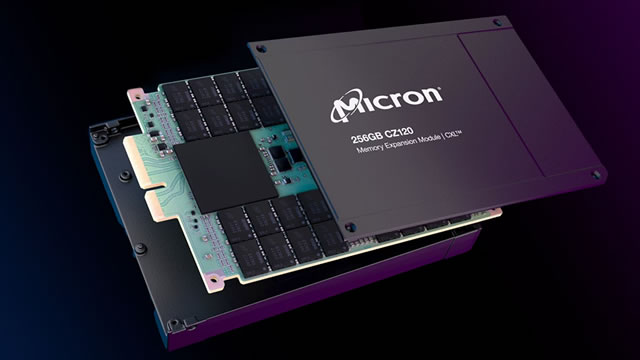
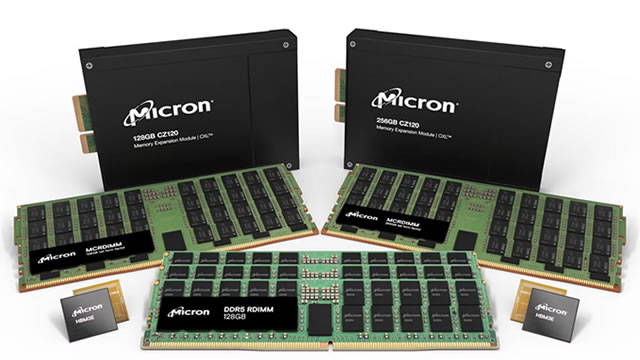
Micron is making aggressive moves to solidify its leadership in the HBM market, a segment that is rapidly becoming the most valuable real estate in the technology sector. The company is actively ramping up HBM4 production and expanding its manufacturing capacity, with plans extending into 2027-2028. This strategic investment is crucial, as the demand for AI-optimized memory continues to outstrip industry supply, creating tight market conditions expected to persist beyond 2026.
A key differentiator for Micron is its shift from being a mere merchant provider of memory components to a custom design partner. As AI giants like Microsoft and Google design their own silicon, they require memory solutions tailored to their specific architectures. Micron's ability to engage in these co-design partnerships for "Custom HBM" will be a significant test of its business model, potentially deepening its relationships with hyperscale clients and creating higher-margin opportunities. This move aligns with a broader industry trend where memory makers are exploring "solution cooperation" models, sharing risks and R&D costs with customers.
The company has already secured its HBM4 orders, with supply largely pre-sold through the end of 2027. This strong backlog provides significant revenue visibility and pricing power, allowing Micron to command premium margins, which are projected to hit a staggering 81% in the next quarter. This is a stark contrast to the historical "boom or bust" nature of the memory business and suggests a potential semi-permanent shift in profitability for leaders in the specialized HBM space.
Beyond data centers, Micron is also eyeing the burgeoning "Edge AI" market. The proliferation of large language models on local devices, such as smartphones and humanoid robots, presents a massive opportunity for high-density mobile memory. Micron is well-positioned to lead in this segment, further diversifying its demand drivers beyond hyperscalers. This multi-pronged approach to HBM and AI-driven memory demand underscores Micron's strategic focus on capturing the full spectrum of the AI revolution.
What Do Micron's Recent Financials Tell Us About Its Growth Trajectory?
Micron's Q2 FY2026 earnings report was nothing short of spectacular, showcasing the immense leverage the company has in the current memory supercycle. The company posted revenue of $23.86 billion, significantly exceeding analyst estimates of $19.94 billion. Adjusted earnings per share (EPS) came in at $12.20, easily beating the $9.21 consensus. This performance represents a remarkable 196% year-over-year surge in revenue, driven by strong demand, tight industry supply, and effective execution.
Looking ahead, management's guidance for Q3 FY2026 further amplified the bullish sentiment. Micron anticipates Q3 revenue in the range of $33.5 billion, plus or minus $750 million, far surpassing estimates of $23.8 billion. EPS is projected between $19.15 per share, plus or minus 40 cents, against estimates of $11.70. The midpoint of this guidance implies a staggering 132.3% revenue growth and 440% EPS growth year over year, signaling an acceleration of financial performance.
Despite this explosive growth, Micron's valuation metrics appear reasonable, especially when considering its forward outlook. The stock currently trades at a trailing 12-month (TTM) P/E of 17.62, P/S of 7.33, and P/FCF of 19.31. However, its forward P/E of 11.52x and price-cash flow ratio of 9.53x sit below sector medians of 21.46x and 17.13x, respectively. While the forward price-sales ratio of 5.80x is moderately above the sector median of 3.05x, this premium is arguably justified by projected forward revenue growth of 60.46% and EPS growth of 305.39%, which significantly outpace sector averages.
The company's TTM gross margin stands at a healthy 58.4%, with an operating margin of 48.5% and a net margin of 41.5%. These margins are expected to expand further, with some analysts forecasting gross margins as high as 83% in Q3. While the triple-digit growth rates may cool as comparisons become more difficult, the underlying demand for AI-optimized memory appears robust, suggesting a period of "high-plateau" growth rather than a sharp decline.
What Are the Key Risks Threatening Micron's Rally?
While Micron's current trajectory is impressive, the memory industry's notorious cyclicality looms large, posing the primary risk to its sustained rally. Historically, memory has been a "boom or bust" commodity business, characterized by periods of high demand and tight supply followed by overcapacity and price crashes. The central question is whether AI-driven demand has fundamentally altered this cycle or merely delayed the inevitable.
Micron's massive $25 billion capital expenditure plan for fiscal 2026, aimed at expanding HBM capacity, is a double-edged sword. While necessary to meet current demand, it also raises the specter of an "oversupply trap." If the AI build-out slows even slightly, or if competitors like SK Hynix and Samsung also ramp up capacity aggressively, the industry could face a glut of expensive HBM, devastating margins. Some analysts, like Morgan Stanley, have already cut price targets to $240, implying a 43% downside, reflecting skepticism about the durability of the turnaround.
Another significant risk stems from the "crowding out" effect. As Micron and its peers prioritize high-margin HBM production, the supply of standard DDR5 and mobile LPDDR6 memory has tightened significantly. This drives up costs for PC manufacturers and smartphone brands, who must now compete with hyperscale cloud providers for basic memory components. This could lead to a contraction in the global smartphone market by 2.9% to 5.2% in 2026, and higher average selling prices for devices, potentially impacting overall memory demand if consumer spending falters.
Furthermore, the threat of "algorithmic efficiency" could challenge Micron's premium margins. Techniques like Google's TurboQuant aim to reduce the memory footprint of AI models, directly challenging the "bigger-is-better" thesis that underpins HBM demand. Micron's ability to maintain its pricing power will depend on its capacity to innovate faster than these software-driven efficiency gains. The market's cautious stance, despite strong earnings, suggests that any stumble on these near-term watchpoints could quickly deflate current valuations.
Who Are Micron's Competitors in the HBM Race, and How Do They Stack Up?
Micron operates in a highly competitive memory market, primarily vying for HBM dominance with South Korean giants SK Hynix and Samsung. This "HBM4 Memory War" has intensified, with all three players making significant announcements at events like CES 2026, signaling a fundamental shift in how memory and logic are integrated for AI. While SK Hynix currently holds the largest market share in HBM (estimated at 62% in Q2 2025), Micron has reportedly overtaken Samsung for the second spot, with 21% compared to Samsung's 17%.
Both SK Hynix and Samsung are also heavily investing in HBM capacity. SK Hynix plans to increase its HBM investment to 2.5 trillion Korean won in 2026, with total capital expenditure exceeding 35 trillion Korean won. Samsung's capital expenditure for 2026 will exceed 40 trillion Korean won, with growth mainly coming from DRAM and HBM, especially as HBM4 yield rates improve. These aggressive investment plans from competitors underscore the potential for future oversupply if demand growth doesn't keep pace.
Beyond direct memory rivals, other players like Intel and Broadcom play crucial roles in the broader HBM supply chain and AI hardware ecosystem. Intel is integrating HBM into its high-performance accelerators, such as the Gaudi 3, which features 128GB of HBM2e memory. Broadcom is developing high-performance custom AI accelerators and advanced networking solutions, co-designing proprietary custom AI chips for major tech companies. While not direct competitors in memory manufacturing, their advancements influence the demand and specifications for HBM.
The competitive landscape is also evolving with a shift towards "solution cooperation." Samsung and SK Hynix are exploring models similar to wafer foundries, customizing memory specifications and sharing R&D costs with customers. SK Hynix is particularly active in this space, planning to announce specific cooperation details in late 2026 or 2027. This transformation aims to cope with slowing growth in other memory segments and enhance customer stickiness, adding another layer of complexity to the competitive dynamics Micron must navigate.
What Does This Mean for Investors in Micron Technology?
For investors, Micron Technology presents a compelling, yet complex, investment thesis. The company is undeniably a critical enabler of the AI revolution, with its HBM solutions in unprecedented demand. Its recent financial performance and forward guidance are exceptionally strong, signaling a period of robust growth and expanding margins. The stock's current price of $377.76 and a market cap of $426.01 billion reflect significant investor confidence in this narrative.
However, the memory industry's inherent cyclicality cannot be ignored. While the "Vera Rubin" era of AI demands a new architectural paradigm for memory, the risk of oversupply from aggressive capital expenditures by Micron and its competitors remains a tangible threat. Investors should closely monitor HBM4 yield rates, the pace of "Edge AI" adoption, and any shifts in the capital spending plans of major cloud providers. The consensus analyst price target for MU is $405.14, with a median of $443.00 and a high of $550.00, suggesting potential upside, but also a low target of $190.00 highlighting the downside risk.
The current market sentiment, with a "Buy" consensus from 55 analysts, indicates a generally positive outlook. However, the recent stock slide and the cautious tone from some analysts, despite record earnings, suggest that the market is already pricing in some of the cyclical risks. Micron's ability to transition from a commodity memory provider to a custom design partner will be crucial for sustaining its premium margins and mitigating future downturns.
Ultimately, Micron is a high-conviction play on the AI supercycle, but it requires investors to size their positions carefully and remain vigilant. The easy money from the initial AI surge may have been made, and the path forward demands a critical assessment of execution, competitive dynamics, and the industry's capacity to avoid its historical oversupply pitfalls.
Micron Technology stands at a pivotal juncture, poised to capitalize on the transformative power of AI, yet tethered to the cyclical nature of the memory market. Its strategic HBM investments and strong financial performance offer a compelling growth story, but investors must weigh the unprecedented opportunity against the inherent risks of oversupply and intense competition. The coming quarters will reveal if this AI-driven supercycle is truly different, or if history is destined to repeat itself.
Want deeper research on any stock? Try Kavout Pro for AI-powered analysis, smart signals, and more. Already a member? Add credits to run more research.
Related Articles
Category
You may also like

Micron Heads Into Earnings With Sky-High Expectations From AI Boom

Should You Forget Micron and Buy This Other Artificial Intelligence (AI) Chip Stock Instead?

Micron Technology, Inc. (MU) Hits Fresh High: Is There Still Room to Run?
Breaking News
View All →Featured Articles
Top Headlines

Apple's Cheap AI Bet Is Paying Off Big

Anthropic pulls ahead of OpenAI as revenue race heats up

Nvidia Redefines The AI Economics

Health Insurance Stocks Are Soaring on a Medicare Update. Here's What You Need to Know.