MarketLens

Log in

Is Northrop Grumman a Safe Haven Amidst U.S.-Iran Escalation

1 day ago
SHARE THIS ON:

Is Northrop Grumman a Safe Haven Amidst U.S.-Iran Escalation

Key Takeaways

  • Northrop Grumman (NOC) is a primary beneficiary of escalating U.S.-Iran tensions, with its stock rallying over 10.9% recently as investors price in heightened demand for advanced defense systems.
  • The company boasts a record $96 billion backlog and projects mid-single-digit revenue growth for 2026, driven by strategic programs like the B-21 bomber and strong international demand.
  • While geopolitical tailwinds are significant, investors should weigh NOC's robust growth prospects against a premium valuation and the inherent uncertainties of long-cycle defense contracts and budget cycles.

Is Northrop Grumman a Safe Haven Amidst U.S.-Iran Escalation?

The recent escalation of tensions between the U.S. and Iran has sent ripples across global markets, but for defense contractors like Northrop Grumman (NOC), it's a familiar playbook. As geopolitical risks intensify, the defense sector historically acts as a safe haven, attracting capital flows from investors seeking insulation from broader market volatility. This dynamic is playing out once again, with defense stocks rallying sharply following reports of a joint military strike that killed Iran's supreme leader, Ayatollah Ali Khamenei, and a U.S. attack on Iran.

Northrop Grumman, trading at $724.38 as of February 27, 2026, has seen its shares climb over 10.9% in this risk-off environment. This surge reflects market expectations of increased military spending, accelerated procurement programs, and potential supplemental appropriations to fund expanded operations in the Middle East. The iShares US Aerospace & Defense ETF (ITA) has already surged 14% in 2026, underscoring the sector's strong performance. Investors are keenly aware that prolonged instability in critical regions like the Middle East translates directly into sustained demand for advanced military technologies.

Historically, periods of heightened conflict, such as the 1990-1991 Gulf War, have shown that defense stocks outperform significantly. While the broader market might experience initial volatility, a clear trajectory of military operations often leads to a quick recovery and a rotation into sectors like defense and energy. This current environment, marked by a significant event like the killing of a supreme leader, amplifies the stakes, positioning companies like Northrop Grumman at the forefront of investor interest. The question now is whether this outperformance is sustainable and what it means for NOC's long-term trajectory.

The immediate market reaction to the U.S.-Iran conflict has seen oil prices jump as much as 8% and gold prices testing record highs above $5,400 per ounce, reinforcing the classic flight to safety. For Northrop Grumman, this translates into a perception of enhanced revenue visibility and a strengthened investment thesis. The company's specialization in critical areas of national security positions it uniquely to capitalize on the evolving geopolitical landscape, making it a compelling, albeit complex, play for investors navigating these turbulent waters.

What Makes Northrop Grumman a Key Beneficiary in a Tense Geopolitical Climate?

Northrop Grumman's strategic positioning as a global aerospace and defense technology company makes it a prime beneficiary of escalating geopolitical tensions. The company's diverse portfolio is directly aligned with the modern warfare needs that arise from conflicts in regions like the Middle East. From stealth aircraft to advanced missile defense solutions and cutting-edge cybersecurity, NOC provides the critical capabilities that governments prioritize when national security is at stake. This comprehensive offering creates a robust competitive moat.

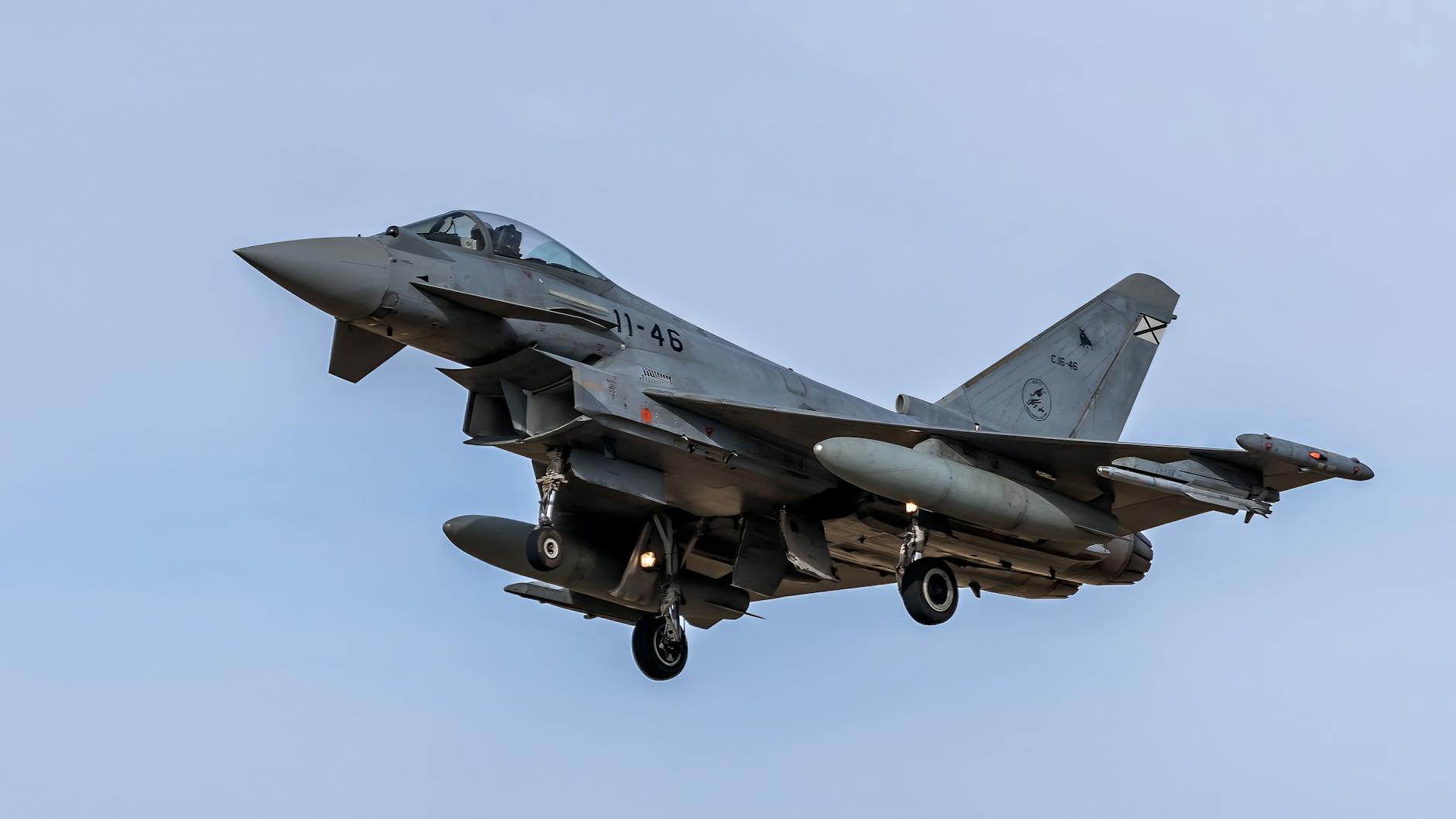
The company's Aeronautics Systems segment, for instance, is responsible for the design and production of military aircraft systems, including the highly anticipated B-21 Raider bomber. The acceleration of B-21 production, a multi-year investment anticipated to be between $2 billion and $3 billion, is a significant growth driver, with accelerated revenue and higher returns expected mainly from 2027 onward. This program alone underscores strong government support and long-term demand for Northrop Grumman's advanced platforms, directly benefiting from increased defense budgets.

Beyond aircraft, Northrop Grumman's Defense Systems segment delivers deterrent systems, advanced tactical weapons, and missile defense solutions—areas that see immediate and sustained demand during conflicts. The Mission Systems segment provides command, control, communications, computers, and reconnaissance (C4ISR) systems, essential for modern battlefield intelligence and coordination. Furthermore, its Space Systems segment is crucial for missile defense and launch systems, offering end-to-end mission solutions that are vital for strategic advantage.

International demand is another powerful tailwind. Northrop Grumman has seen significant interest in its Integrated Battle Command System (IBCS), with 20 countries seeking the system. Additional contract wins are anticipated in munitions, airborne radar programs, and uncrewed system markets, including the E-2D and Triton platforms. This global reach and the critical nature of its offerings ensure that Northrop Grumman is not solely reliant on U.S. defense spending, although the U.S. remains its primary customer. The company's ability to innovate in areas like autonomous systems and cyber warfare further solidifies its position as a leader in next-generation military technologies.

How Does NOC's Financial Performance Stack Up Against Geopolitical Tailwinds?

Northrop Grumman's recent financial performance provides a mixed, yet largely positive, picture that aligns well with the current geopolitical landscape. The company closed 2025 with strong momentum, reporting better-than-expected fourth-quarter results. Net sales climbed 9.6% year-over-year to $11.7 billion, slightly exceeding consensus estimates, driven by solid revenue growth across all reporting segments. Adjusted EPS came in at $7.23, up 13.1% compared to the prior-year quarter and 3.3% above analyst forecasts.

Crucially, Northrop Grumman reported a record backlog of $96 billion at the end of 2025. This substantial backlog provides significant revenue visibility and acts as a strong indicator of future growth, especially in an environment of increasing defense spending. For 2026, the company expects sales to be between $43.5 billion and $44 billion, representing mid-single-digit growth. While management described this outlook as a "balanced approach" given the dynamic environment, they also acknowledged significant opportunities not yet fully incorporated into guidance, such as the B-21 acceleration and the FAXX (Apex) program.

Despite a robust backlog and promising growth opportunities, the Q4 2025 earnings call revealed some investor caution. The company revised its revenue guidance downwards from earlier projections and faces uncertainties in contract timing. For instance, the financial impact of B-21 acceleration in 2026 will be minimal, with the greater impact expected in 2027, 2028, and 2029. Similarly, lower margin guidance for the Aeronautics segment in 2026 is attributed to growth driven by lower-margin development programs like B-21 and TACAMO, though long-term margins are expected to improve as these transition to production.

In terms of capital deployment, Northrop Grumman is shifting its focus toward growth investments. The company plans to keep the share count flat and increase spending on property, plant, and equipment to build out its industrial base. No additional share buybacks are planned beyond January, and the dividend plan will be updated in May. With a current dividend yield of 1.3% and a payout ratio of 30.9%, the company is balancing shareholder returns with strategic investments to capitalize on robust demand. This prudent approach, coupled with strong free cash flow growth of 26.2% in FY2025, positions NOC to fund its expansion initiatives while maintaining financial stability.

What Are the Key Risks and Opportunities for NOC Investors?

Investing in Northrop Grumman, while seemingly straightforward in a heightened geopolitical climate, comes with its own set of risks and opportunities that demand careful consideration. On the opportunity side, the most obvious tailwind is the sustained increase in global defense budgets. The U.S. defense allocation has surged to $1.5 trillion, and European defense budgets are projected to grow at 4.5% annually through 2030. This broad-based demand for advanced military solutions creates a fertile ground for NOC's specialized offerings.

Northrop Grumman is well-positioned to secure transformative contracts like the F/A-XX fighter program and the Golden Dome projects, which could significantly boost future revenue. The company's focus on innovation in areas like autonomous combat aircraft (e.g., YFQ-48A) and solid rocket motor capacity for munitions positions it at the forefront of next-generation defense technologies. International markets, particularly for systems like IBCS and airborne radar, represent a strong growth vector, with 2026 expected to be a strong year for international awards, setting up growth for 2027.

However, risks are inherent in the defense sector. One major concern is the concentrated client base, as government procurement policies are subject to political shifts and budget issues. While the current environment suggests increased spending, contract delays or changes in program priorities could temper immediate performance. The Q4 2025 earnings call highlighted uncertainties in contract timing and financial impacts, with some opportunities not yet firming up into contracts as quickly as anticipated.

Operational cost pressures also pose a challenge. Rising material costs and labor expenses, exacerbated by inflation, could erode NOC’s margin stability if not effectively managed. While the company emphasizes operational efficiency and supply chain partnerships, these factors remain a watch point. Furthermore, the shift towards capital deployment for growth, while strategic, means fewer immediate share buybacks, which might temper investor enthusiasm in the short term. The long-term realization of free cash flow targets, such as $4 billion by 2028, remains contingent on the materialization of pending opportunities like B-21 acceleration.

Is NOC's Current Valuation Sustainable, and What Do Analysts Say?

Northrop Grumman's stock has enjoyed a significant rally, with shares trading near their 52-week high of $745.55 and up 22% over the past six months. This outperformance reflects improving confidence in long-cycle program visibility and expanding missile defense opportunities. However, this robust price appreciation also brings its valuation into focus. NOC currently trades at a P/E ratio of 24.75, a P/S of 2.45, and an EV/EBITDA of 16.40. These metrics suggest a premium valuation compared to some industrial sector peers, reflecting the market's bullish outlook on defense spending.

The company's P/FCF of 31.09 and FCF Yield of 3.2% indicate that while free cash flow is growing, the stock price has run ahead, making it less attractive on a free cash flow basis compared to some other opportunities. The market capitalization stands at $102.81 billion, with an Enterprise Value of $118.14 billion, reflecting its substantial scale and market leadership. While these valuations are elevated, they are often justified by the perceived stability and long-term growth prospects of defense contractors, especially during periods of geopolitical instability.

Wall Street analysts generally maintain a positive outlook on Northrop Grumman. The stock has a consensus rating of "Buy" from 35 analysts, with 20 rating it a Buy and 14 a Hold. The average analyst price target is $736.31, suggesting a modest upside from its current price of $724.38. The median price target is even higher at $752.00, with a high target of $815.00. Firms like Argus recently raised their price target to $785 from $625, maintaining a Buy rating, citing increased demand for defense spending, strong cash flow, and margin expansion.

However, not all analysts are as bullish. Jefferies, for instance, maintains a Hold rating with a price target of $690, acknowledging a solid Q4 report but perhaps exercising more caution on the near-term upside. The mixed outlook from the Q4 2025 earnings call, with revised guidance and uncertainties in contract timing, could be contributing to this divergence in analyst sentiment. While the long-term growth story remains compelling, especially with forward estimates for revenue reaching $55.6 billion by FY2030 and EPS at $36.50, investors should be mindful that a significant portion of future growth is already priced into the current valuation.

What Does This Mean for Investors Considering NOC?

For investors eyeing Northrop Grumman, the current environment presents a compelling, yet nuanced, opportunity. The escalating U.S.-Iran conflict undeniably provides a strong tailwind, reinforcing the investment thesis for defense contractors as geopolitical hedges. NOC's robust backlog of $96 billion, coupled with its leadership in critical defense technologies like the B-21 bomber and missile defense systems, positions it for sustained long-term growth. The company's ability to secure international contracts further diversifies its revenue streams beyond domestic budget cycles.

However, investors should temper enthusiasm with a realistic assessment of the short-term outlook. While the long-term picture is bright, the Q4 2025 earnings call highlighted a "balanced approach" to guidance, with some significant opportunities like B-21 acceleration not expected to materially impact revenue until 2027 and beyond. The current valuation, trading at a P/E of 24.75, suggests that much of this future growth is already priced in, leaving less room for immediate upside unless there are further positive surprises or a significant re-rating of the sector.

The shift in capital deployment towards growth investments and away from immediate share buybacks, while strategically sound, might also weigh on short-term investor sentiment. While the dividend provides a modest yield, the focus is clearly on building out industrial capacity to meet future demand. Therefore, a long-term perspective is crucial for NOC investors, as the full benefits of current geopolitical dynamics and strategic investments will likely materialize over several years.

In conclusion, Northrop Grumman remains a formidable player in the defense sector, well-positioned to capitalize on a world grappling with increased geopolitical instability. Its strong fundamentals, record backlog, and strategic focus on next-generation technologies make it an attractive long-term holding. However, new investors should be prepared for potential short-term volatility and a valuation that already reflects significant future growth. This is a stock for those who believe in the enduring demand for national security and are willing to ride out the long cycle of defense procurement.


Want deeper research on any stock? Try Kavout Pro for AI-powered analysis, smart signals, and more. Already a member? Add credits to run more research.

SHARE THIS ON:

Related Articles

Category

You may also like

Stock News11 hours ago

Why Lockheed Martin, Northrop Grumman, and Other Defense Stocks Gained Today

Defense stocks, including Lockheed Martin and Northrop Grumman, gained today as Middle East conflict prompted investors to reduce risk by seeking safe-haven assets.
Stock News2 days ago

What Defense Stocks Stand to Gain--and Lose--From the US Attacks on Iran

U.S. attacks on Iran will impact defense and energy stocks, creating potential shifts in sector valuations based on geopolitical outcomes.
Stock News1 months ago

Northrop Grumman to Post Q4 Earnings: Here's What You Need to Know

Northrop Grumman's Q4 earnings may see a lift stemming from strength in the Aeronautics and Defense segments, though increased expenses and taxes likely pressured profitability.
Stock News1 months ago

What's The Risk For Northrop Grumman Stock As Trump Curbs Dividends And Executive Pay?

Northrop Grumman (NOC) stock fell 5.5% in one day following President Trump's threats to curb dividends and buybacks amid sluggish production. This sharp decline questions if the immediate weakness si...

Breaking News

View All →

Top Headlines

View More →
Stock News46 minutes ago

Stock Market Today: Dow Jones, S&P 500 Futures Plunge After Closure Of Strait Of Hormuz—Coherent, Credo Technology, CrowdStrike In Focus

Stock News1 hour ago

Right Before Retiring, Warren Buffett Dumped Shares of Amazon and Apple and Bought 368,000 Shares of This Restaurant Stock

Stock News1 hour ago

Palantir insiders just dumped $400 million PLTR stock in two weeks

Stock News2 hours ago

AlTi Global Inc. Acquires 3,376 Shares of Amazon.com, Inc. $AMZN

Stock News2 hours ago

Apple Inc. $AAPL Shares Bought by 5th Street Advisors LLC