MarketLens
Is Procter & Gamble's Dividend Growth Sustainable for the Long Term

Key Takeaways
- Procter & Gamble (PG) remains a cornerstone for income-focused investors, having recently extended its dividend growth streak to an impressive 70 consecutive years with a 3% increase to $1.0885 per share quarterly payout declared on April 14, 2026.
- Despite recent analyst price target adjustments to around $163.77-$164.09, PG's defensive portfolio of essential consumer brands and robust cash flow generation underpin its stability, making it a reliable choice in volatile markets.
- While trading at a P/E of 21.69, which some analysts consider fully valued, the company's strong dividend growth, share buybacks, and consistent operational performance offer a compelling total return proposition for long-term holders.
Procter & Gamble (NYSE: PG) stands as a quintessential "sleep-at-night" stock, a defensive giant whose consistent dividend increases and portfolio of household staples offer a compelling narrative for long-term, income-oriented investors, despite its current valuation appearing somewhat stretched.
Is Procter & Gamble's Dividend Growth Sustainable for the Long Term?
Procter & Gamble's dividend history is nothing short of legendary, making it a Dividend King with 70 consecutive years of payout increases. This remarkable track record was most recently extended on April 14, 2026, when the Board of Directors approved a 3% increase to a quarterly dividend of $1.0885 per share. This dividend was paid on May 15, 2026, and the next payment is anticipated on August 17, 2026, following an ex-dividend date of July 24, 2026. Such consistency underscores the company's deep commitment to shareholder returns, a characteristic highly valued by investors seeking reliable income streams.
The sustainability of this dividend growth is supported by PG's robust financial health and conservative payout ratios. The trailing twelve-month (TTM) dividend payout ratio stands at 61.1% based on earnings, while a January 2026 analysis noted a 59% earnings payout ratio and a 66% cash payout ratio. These figures indicate that the company retains ample earnings and cash flow to fund future growth initiatives, debt reduction, and further dividend increases, rather than stretching its finances to maintain payouts. For context, the average dividend payout ratio for the S&P 500 Index was just 32.28% as of December 31, 2025, leaving significant room for PG's continued growth.
Furthermore, PG's average dividend growth rate has been impressive, with a 4.8% per year increase over the past decade and a 6.1% compound annual growth rate over the last five years. This steady growth rate, combined with a current dividend yield of 2.8% (as of June 14, 2026), positions PG favorably against the Household Products industry median yield of 2.3%. The company's ability to consistently raise its dividend, even during periods of economic uncertainty, highlights the resilience of its business model and its essential product categories.
How Do P&G's Defensive Brands Drive Consistent Performance?
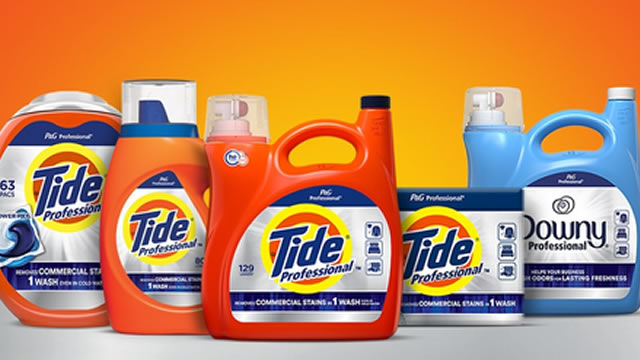
Procter & Gamble's strength lies in its diversified portfolio of leading consumer brands across five key divisions: Beauty, Grooming, Health Care, Fabric & Home Care, and Baby, Feminine & Family Care. These brands, including household names like Pampers, Tide, Gillette, and Crest, are largely considered essential by consumers, providing a defensive moat against economic downturns. This inherent demand for everyday necessities contributes to PG's stable revenue streams and predictable cash flows, a critical factor for a dividend-paying stalwart.
The company's operational performance in fiscal Q3 2026 showcased this resilience, with net sales of $21.24 billion and 3% organic sales growth, exceeding analyst expectations. This performance was achieved despite a reported 15% decrease in category growth rates in the U.S. during December 2025, reflecting weak consumer confidence. P&G's ability to navigate such headwinds, partly through strategic pricing actions as seen in fiscal 2023's organic sales growth across every quarter, demonstrates the pricing power of its established brands.
Looking ahead, P&G maintained its fiscal year 2026 guidance, projecting all-in sales growth in the range of 1% to 5% and diluted EPS growth between 1% and 6% versus fiscal 2025 diluted EPS of $6.51. This guidance, reiterated as recently as May 4, 2026, underscores management's confidence in the enduring demand for its products and its ability to deliver consistent, albeit moderate, growth. The company's focus on brand partnerships and product pipeline innovation is expected to further support future shareholder returns, ensuring its market leadership in the consumer defensive sector.
What Are the Valuation Considerations for PG Stock?
As of June 12, 2026, Procter & Gamble shares trade at $149.61, reflecting a 0.86% increase from the previous close. The stock has seen some near-term momentum, up 0.9% over the past day and 2.1% over the past week, contrasting with a 4.0% decline in its one-year total shareholder return. This recent uptick comes after the stock appeared to have bottomed in early 2026, trading near the lower end of its historical valuation range, around $140.
Currently, PG trades at a trailing twelve-month (TTM) P/E ratio of 21.69. This multiple is slightly below the peer average of 25.3x but close to a fair ratio of 22.4x, suggesting the market is not paying an extreme premium for its earnings. However, some analysts, like andre_santos, suggest a fair value of $121.06, implying PG is 23.6% overvalued at its current price. This divergence in valuation perspectives highlights the debate around whether PG's stability and dividend reliability justify its current trading multiples.
Analyst sentiment is generally positive, with 14 analysts providing ratings as of June 14, 2026. The consensus rating is "Buy," with 21% recommending "Strong Buy," 29% "Buy," and 50% "Hold." No analysts currently recommend "Sell" or "Strong Sell." The average analyst price target is $163.07, representing a potential upside of approximately 9% from the current share price of $149.61. This target has been slightly trimmed from earlier estimates of $164.09 (May 4, 2026) and $164.18 (April 20, 2026), reflecting modestly lower assumptions for revenue growth and profit margins.
How Do Share Buybacks and Capital Allocation Enhance Shareholder Value?
Beyond its consistent dividend, Procter & Gamble actively returns capital to shareholders through significant share buyback programs. In fiscal Q2 2026, the company's buyback activity reduced the outstanding share count by 1.4% for the year, with expectations for this brisk pace to continue in upcoming quarters. This strategy is particularly effective for long-term investors, as a reduced share count boosts earnings per share (EPS) and enhances the value of remaining shares, compounding returns over time.
The company's strong cash flow generation is more than sufficient to support both its dividend payments and these substantial share repurchases. For the trailing twelve months, PG reported free cash flow (FCF) of $6.22 per share, with a TTM FCF yield of 4.3%. This robust FCF allows P&G to maintain a healthy balance sheet, characterized by increased cash, current, and total assets, a 2% increase in equity, and low leverage with long-term debt approximately 0.5x its equity. Such financial prudence provides a solid foundation for sustained capital returns.
P&G's capital allocation strategy is further validated by its high return on invested capital (ROIC) of 15.5%, which is double its estimated cost of capital. This indicates effective management in deploying capital to generate profitable growth. The company also boasts a "Wide Moat" rating from Morningstar and a "Solid" Moody's Debt Rating, underscoring its competitive advantages and financial stability. These factors, combined with a low beta of 0.39, position PG as a reliable investment for those prioritizing stability and consistent shareholder returns.
What Are the Potential Risks and Opportunities for PG?
While Procter & Gamble presents a compelling case for stability and income, investors should be aware of potential risks and opportunities. One notable challenge has been the decline in its SK-II brand sales in Greater China, experiencing a 30% drop due to unfavorable market conditions and challenges faced by Japanese brands. This regional weakness, coupled with a broader 15% decrease in U.S. category growth rates in December 2025, suggests that even defensive giants are not immune to shifts in consumer sentiment and geopolitical factors.
However, P&G's global diversification and continuous innovation provide significant opportunities. The company's maintained fiscal 2026 guidance, with organic sales growth expected to be flat to up 4% versus the prior year, suggests an ability to adapt and find growth in various markets. Positive momentum is anticipated in Europe and Latin America as comparisons ease, which could offset some of the challenges in other regions. Furthermore, P&G's ongoing investment in brand partnerships and product pipeline will be crucial for sustaining future growth and market share.
From a valuation perspective, while some models suggest overvaluation, the company's P/E of 21.69 is not excessively high compared to its peers and historical averages. The consistent share buybacks and dividend growth act as a strong floor for the stock price, offering a margin of safety. For investors seeking a blend of income, stability, and moderate growth, PG's robust fundamentals and proven track record make it a strong candidate, particularly in a market environment that increasingly values resilient businesses.
Procter & Gamble remains a top-tier dividend aristocrat, offering a blend of stability, consistent income, and moderate growth potential. Its defensive brand portfolio, coupled with a commitment to shareholder returns through dividends and buybacks, makes it an attractive option for long-term investors seeking a reliable anchor in their portfolios. While its valuation requires careful consideration, PG’s enduring market position and financial strength suggest it will continue to deliver value for years to come.
Want deeper research on any stock? Try Kavout Pro for AI-powered analysis, smart signals, and more. Already a member? Add credits to run more research.
Related Articles
Category
You may also like


Will Innovation in Tide and Pampers Revive PG's Volume Growth?

Air Products and Chemicals (APD) Could Be a Great Choice

This 2.9%-Yielding Dividend Stock Has Paid Investors for More Than a Century -- and It's on Sale
Breaking News
View All →Featured Articles
Top Headlines

Apple Stock Analysis: Buy or Sell After WWDC?

Amazon CEO reportedly raised Anthropic model concerns before government crackdown

Amazon voiced concerns about Anthropic AI models before US government's crackdown, source says

EXPANSION: Corning and Amazon deepen AI infrastructure partnership