MarketLens
Procter & Gamble's Resilient Innovation Outshines Colgate-Palmolive's Premium Valuation

Key Takeaways
- Procter & Gamble's Q1 2026 earnings beat, driven by beauty and grooming, underscores its innovation-led strategy and ability to navigate a "K-shaped" economy.
- Colgate-Palmolive, while also beating estimates with strong sales growth, carries significantly higher valuation multiples and leverage, signaling greater risk.
- PG's superior financial health, lower P/E, and robust dividend growth position it as the more fundamentally attractive long-term play in a challenging consumer environment.
The Consumer Staples Showdown: Innovation vs. Optimization
The consumer staples sector, often a haven for stability, has seen its leading players, Procter & Gamble (NYSE: PG) and Colgate-Palmolive (NYSE: CL), navigate a complex macroeconomic landscape marked by inflation, shifting consumer behaviors, and geopolitical tensions. Both giants recently reported fiscal Q1 2026 earnings that surpassed Wall Street expectations, yet their underlying strategies and financial profiles present a stark contrast for investors. As of July 2, 2026, Procter & Gamble, with a market capitalization of $352.55 billion, trades at $151.40, while Colgate-Palmolive, a smaller but formidable competitor, stands at $95.13 with a market cap of $76.12 billion.
This head-to-head comparison reveals two distinct approaches to sustaining growth and profitability. Procter & Gamble is doubling down on "integrated superiority," a strategy focused on product innovation, premium brand positioning, and enhanced digital engagement to justify higher prices and maintain consumer loyalty. Conversely, Colgate-Palmolive emphasizes operational optimization through digital tools, data analytics, and automation, while leveraging its strong presence in faster-growing emerging markets. The question for investors is not just which company delivered a better quarter, but which business model is better equipped to deliver sustainable value in the years ahead.
A Tale of Two Balance Sheets: Valuation and Financial Health
While both companies operate in the resilient household and personal care sector, a deeper dive into their financial fundamentals reveals significant differences in their valuation and balance sheet strength. Procter & Gamble trades at a trailing 12-month (TTM) price-to-earnings (P/E) ratio of 21.66x, a notable discount compared to Colgate-Palmolive's TTM P/E of 36.67x. This valuation gap becomes even more pronounced when examining other metrics, as detailed in the table below.
| Metric | Procter & Gamble (PG) | Colgate-Palmolive (CL) |
|---|---|---|
| Market Cap | $352.55 billion | $76.12 billion |
| Current Price | $151.40 | $95.13 |
| TTM P/E | 21.66x | 36.67x |
| TTM P/S | 4.07x | 3.66x |
| Gross Margin | 50.3% | 60.1% |
| Operating Margin | 23.2% | 21.2% |
| Net Margin | 19.2% | 10.0% |
| Return on Equity | 31.3% | 475.1% |
| Debt/Equity | 0.68x | 54.99x |
| Dividend Yield | 2.8% | 2.2% |
| Payout Ratio | 61.1% | 87.9% |
Data as of July 4, 2026, from FMP API and AllInvestView.
Colgate-Palmolive boasts a higher gross margin at 60.1% compared to PG's 50.3%, indicating superior pricing power or lower cost of goods sold. However, this advantage doesn't translate to the bottom line, where PG's net margin of 19.2% significantly outpaces CL's 10.0%. This suggests PG is more efficient at managing its operating expenses and taxes. Perhaps the most striking difference lies in their leverage: CL's debt-to-equity (D/E) ratio of 54.99x dwarfs PG's remarkably low 0.68x, highlighting a substantially riskier capital structure for Colgate-Palmolive. While CL's return on equity (ROE) of 475.1% appears exceptional, it's largely a function of its extremely low book value ($0.61 per share), which can distort the metric and doesn't necessarily reflect operational superiority. For dividend investors, PG offers a higher yield of 2.8% with a more sustainable payout ratio of 61.1%, compared to CL's 2.2% yield and 87.9% payout.
Procter & Gamble's Innovation Engine: Sustaining Growth in a K-Shaped Economy
Procter & Gamble's fiscal Q1 2026 performance, reported on October 24, 2025, demonstrated its ability to thrive even in a bifurcated consumer landscape. The company posted adjusted earnings per share of $1.99, handily beating analyst expectations of $1.90. Revenue also surpassed forecasts, reaching $22.39 billion against an anticipated $22.18 billion. This strong showing was particularly fueled by its beauty and grooming segments.
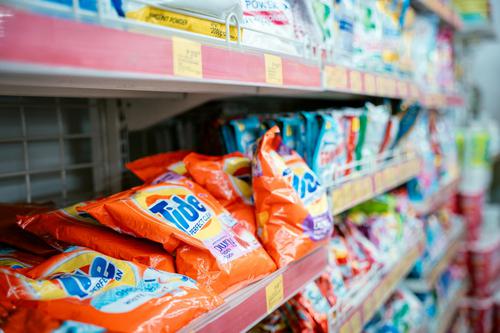
CEO Jon Moeller acknowledged a "challenging consumer and geopolitical environment" during the earnings call, noting a "K-shaped" economy where spending patterns diverge based on income levels. Despite these headwinds, P&G achieved 2% organic sales growth for the quarter, with net sales rising 3%. CFO Andre Schulten elaborated on the consumer dynamics, stating, "The consumer environment is not great, but stable." He observed that while less cash-constrained shoppers seek value in larger pack sizes, those living paycheck-to-paycheck are stretching product usage. To counter flat volume in some categories like health care and fabric and home care, P&G is prioritizing innovation. Schulten highlighted that Tide is initiating shipments of its "biggest upgrade to liquid detergent in 20 years," a move designed to justify premium pricing and reinforce product superiority. The beauty division, encompassing brands like Olay and SK-II, was a bright spot, reporting 4% volume growth and 6% overall sales growth, with Olay's Super Serum line performing exceptionally well. Similarly, the grooming business, including Gillette and Venus, saw volume rise 1% and sales increase 5%. This focus on innovation-driven premiumization, rather than broad-based price hikes, is central to PG's strategy for sustaining growth and defending market share in a competitive environment.
Colgate-Palmolive's Efficiency Drive: Emerging Market Tailwinds and North American Headwinds
Colgate-Palmolive also delivered a strong Q1 2026 performance, with adjusted earnings per share of $0.97 on revenue of $5.324 billion, both exceeding analyst estimates. The company reported robust net sales growth of 8.4% for the quarter, showcasing its ability to expand its top line. This momentum is largely attributed to Colgate's strong global presence, particularly in emerging markets, which have been key drivers of its recent performance.
However, Colgate's narrative is not without its challenges. While global sales benefited from its diversified portfolio of everyday essentials, the North American market presented a tougher picture. According to a June 2026 article by Vandita Jadeja for Yahoo Finance, Colgate's North America sales fell 1.8%, with volume declining 3%. This regional weakness was primarily due to "private label competition" eroding shelf space for core Colgate brands like Speed Stick. The company is actively combating these pressures by focusing on operational efficiency and resilience. Its strategy involves leveraging digital tools, data analytics, automation, and enhanced supplier engagement to optimize operations. A productivity program is also a key driver of its margin strategy, aiming to offset rising raw-material and logistics costs and navigate uneven category growth. Despite these efforts, Colgate faces "margin pressure from rising raw-material and logistics costs and heightened regulatory scrutiny on plastics and ingredient safety," as noted in a March 2026 analysis of its competitive landscape. The company's ability to sustain its overall growth trajectory will depend on balancing its strong emerging market performance with mitigating the competitive and cost pressures in mature markets like North America.
The Bear Case: Macro Pressures and Competitive Intensity
Both Procter & Gamble and Colgate-Palmolive, despite their recent earnings beats, are not immune to significant headwinds that could pressure future performance. For Procter & Gamble, the "challenging consumer and geopolitical environment" cited by CEO Jon Moeller continues to be a major concern. The company has already absorbed $400 million in after-tax costs from tariffs for fiscal 2026, though this is an improvement from its prior outlook of $800 million. However, the potential for renewed trade tensions, such as former President Donald Trump's stated intention to terminate trade talks with Canada, could lead to higher costs ahead. More broadly, PG has warned of nearly $1 billion in after-tax cost headwinds tied to geopolitical disruptions, energy inflation, logistics costs, and supply-chain instability stemming from the Middle East conflict. This substantial cost pressure could constrain margin expansion, even with P&G's focus on premiumization and productivity. Furthermore, some segments, including baby, feminine, and family care, as well as health care and fabric and home care, reported flat or declining volumes in Q1 2026, indicating that innovation alone may not fully offset demand softness.
Colgate-Palmolive faces its own set of challenges, particularly in its home market. The 1.8% decline in North American sales and 3% volume drop underscore the intensifying competition from private label brands. While CL's efficiency drives and emerging market exposure offer some offset, the company's significantly higher debt-to-equity ratio of 54.99x makes it more vulnerable to rising interest rates or economic downturns compared to PG's robust balance sheet. Both companies also contend with "heightened competition" and increasing "consumer sensitivity to pricing," forcing them to continuously innovate and justify value in a market where consumers are increasingly scrutinizing every purchase. These macro and competitive pressures represent concrete risks that could temper growth and profitability for both consumer staples giants.
Wall Street's Verdict: A Clear Preference for Stability
Wall Street analysts generally maintain a constructive, albeit differentiated, view on Procter & Gamble and Colgate-Palmolive following their Q1 2026 earnings. For Procter & Gamble, the consensus rating from 52 analysts is a Buy. Specifically, 29 analysts rate PG a Buy, 22 recommend a Hold, and only 1 suggests a Sell. The median price target for PG is $162.50, implying a potential upside of 7.3% from its current price of $151.40. Recent analyst actions, such as Wells Fargo and UBS maintaining their Overweight and Buy ratings, respectively, on April 27, 2026, reinforce this positive sentiment. Analysts are largely optimistic about PG's ability to leverage its strong brand portfolio, innovation pipeline, and pricing power to navigate inflationary pressures and maintain market leadership.
In contrast, Colgate-Palmolive receives a more cautious consensus rating of Hold from 45 analysts. The breakdown shows 19 Buy ratings, 24 Hold ratings, and 2 Sell ratings. The median price target for CL stands at $99.50, suggesting a more modest upside of 4.6% from its current price of $95.13. Barclays maintained an Equal Weight rating on May 5, 2026, while JP Morgan maintained an Overweight rating on May 4, 2026. The analyst community appears to acknowledge CL's growth drivers, particularly in emerging markets and through efficiency programs, but remains wary of its higher valuation multiples, elevated debt levels, and competitive pressures in key regions like North America. The divergence in analyst sentiment clearly reflects a preference for Procter & Gamble's more robust financial health and consistent execution in a challenging environment.
The Verdict: Procter & Gamble's Enduring Strength
In the ongoing battle for consumer staples dominance, Procter & Gamble emerges as the more compelling investment opportunity, particularly for those seeking stability, financial strength, and consistent returns. While both PG and CL demonstrated resilience with their Q1 2026 earnings beats, PG's strategic focus on innovation-led premiumization, combined with its superior financial health, positions it for more sustainable long-term growth and margin expansion. Its significantly lower P/E ratio of 21.66x and robust net margin of 19.2% offer a more attractive valuation and profitability profile compared to Colgate-Palmolive's higher 36.67x P/E and 10.0% net margin.
Colgate-Palmolive's impressive gross margins and strong performance in emerging markets are noteworthy, but these strengths are overshadowed by its highly leveraged balance sheet, evidenced by a debt-to-equity ratio of 54.99x, and the persistent competitive pressures in its North American segment. Procter & Gamble, with its conservative leverage, consistent dividend growth, and diversified portfolio, is better equipped to absorb macroeconomic shocks and maintain its trajectory. Wall Street's consensus "Buy" rating for PG, with a median price target implying a 7.3% upside, further reinforces this view.
For investors looking to allocate capital in the consumer staples sector, Procter & Gamble represents a fundamentally sound choice.
- Entry Zone: Investors could consider accumulating PG shares in the range of $148.00 to $152.00.
- 12-Month Target: Based on analyst consensus, a 12-month price target of $162.50 appears achievable.
- Invalidation Level: A sustained close below $140.00 would invalidate the current bullish thesis, suggesting deeper structural issues or a significant deterioration in market conditions.
Procter & Gamble's enduring strength and disciplined strategy make it the clear leader in this consumer staples showdown.
Want deeper research on any stock? Try Kavout Pro for AI-powered analysis, smart signals, and more. Already a member? Add credits to run more research.
Related Articles
Category
You may also like


Global Oral Care Market Outlook 2026-2036: Daily Replenishment Demand and Premiumization Drive Growth for Colgate-Palmolive, Procter & Gamble, and Unilever

Will Innovation in Tide and Pampers Revive PG's Volume Growth?

Why Colgate's Innovation Strategy Is Fueling Market Share Gains
Breaking News
View All →Featured Articles
Top Headlines
This Semiconductor ETF Is Up 54% This Year and Refuses to Own Intel

Alphabet (GOOGL) Exceeds Market Returns: Some Facts to Consider

Intel (INTC) Outpaces Stock Market Gains: What You Should Know

Will AMD Be a $1 Trillion Company Before 2026 Is Over?