MarketLens
Is SpaceX Really Going Public in 2026

Key Takeaways
- SpaceX is gearing up for a potential mid-2026 IPO, targeting a staggering $1.5 trillion to $1.75 trillion valuation, which could make it the largest public offering in history.
- The company's immense growth is driven by its vertically integrated Starlink satellite internet business and the ambitious Starship rocket program, alongside new ventures like orbital AI data centers.
- Retail investors face significant liquidity challenges and high valuation risks, with limited direct pre-IPO access and the potential for extreme volatility post-listing.
Is SpaceX Really Going Public in 2026?
The financial world is buzzing with anticipation: SpaceX, Elon Musk’s ambitious aerospace venture, is widely expected to launch an initial public offering (IPO) as early as mid-2026. Prediction markets, like Kalshi, show a strong consensus, with an 81% probability of an announcement before August 1, 2026, and 71% before July 1, 2026. This isn't just another tech listing; it's poised to be a landmark event, potentially the largest IPO in history, aiming to raise a colossal $50 billion and surpass Saudi Aramco’s $29 billion debut.
Musk himself has hinted at a valuation as high as $1.75 trillion, though Morningstar's analysis suggests a more conservative, yet still astronomical, $1.5 trillion. This valuation places SpaceX firmly among the world's most valuable companies, potentially ranking as the sixth-largest in the U.S. by market cap. The company recently bolstered its narrative by merging with Musk’s AI firm, xAI, in an all-stock deal that valued the combined entity at approximately $1.25 trillion (SpaceX at $1 trillion, xAI at $250 billion). This strategic move positions SpaceX not just as a space company, but as an "AI plus space infrastructure platform," broadening its appeal to a wider investor base.
Historically, Musk has expressed reservations about taking SpaceX public, citing the intense scrutiny and short-term demands of public markets, which could conflict with the company's long-term, capital-intensive R&D. However, the sheer scale of SpaceX's current ambitions – from scaling Starship and expanding Starlink to building orbital AI data centers and establishing Moonbase Alpha – necessitates an unprecedented influx of capital. A public listing, potentially on Nasdaq, complete with a dual-class share structure to ensure Musk retains control, is now seen as an increasingly necessary step to fund these audacious endeavors.
What's Driving SpaceX's Sky-High Valuation?
SpaceX’s eye-popping valuation, whether $1.5 trillion or $1.75 trillion, isn't just speculative hype; it's underpinned by two transformative growth engines: Starlink and Starship. These two segments are projected to be the primary drivers justifying such a valuation over the next five to seven years. Starlink, the company's satellite internet constellation, has already achieved remarkable scale, boasting 9.2 million subscribers across over 150 countries and doubling its subscriber base for two consecutive years.
This vertical integration, encompassing satellite design, manufacturing, launch, and network operations, gives Starlink an unparalleled advantage. In 2025, Starlink is estimated to have generated $10.6 billion in revenue and $5.8 billion in EBITDA, representing a robust 54% margin and accounting for roughly 67% of SpaceX's total company revenue. The sheer number of operational satellites—over 9,600, or about 66% of all active satellites globally—demonstrates its dominance and the significant barrier to entry for competitors.
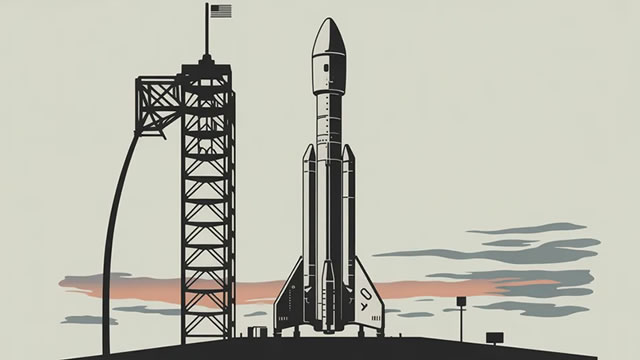
Beyond Starlink, the Starship super-heavy reusable rocket is central to SpaceX's future growth and valuation. Its successful commercialization on or near proposed timelines is critical. Starship is not just a rocket; it's the key to unlocking new frontiers, from Mars colonization to the ambitious concept of orbital data centers. While the latter, envisioning up to 1 million satellites for space-based AI computing, remains a long-duration call option with zero revenue assigned in current models due to its immense scale requirements (e.g., 6,667 Starship flights annually), it highlights the company's long-term vision. The company’s de-risked financial profile, including $7.5 billion in EBITDA and double-digit free cash flow margins (excluding the EchoStar spectrum purchase), further positions it to withstand public market scrutiny.
What Are the Risks for Investors?
While the potential for SpaceX is immense, investors must contend with substantial risks, particularly given the company's sky-high valuation. At $1.5 trillion, SpaceX is priced at a premium, reflecting ambitious growth expectations and significant market optimism. This valuation, which was approximately 50x projected 2025 revenue at a $800 billion private valuation, leaves little room for execution missteps or market challenges. Any shortfall in performance or market perception could lead to significant valuation adjustments, potentially resulting in substantial losses for investors.
The company's ambitious projects, including Starship development and global satellite networks, require enormous ongoing capital expenditure and face considerable technical hurdles. The space industry itself introduces inherent operational risks, from the possibility of launch failures to technical setbacks that could materially impact operations and investor confidence. For instance, while Starship is a game-changer, its commercialization timeline is a primary risk factor. Should its development stall or safety incidents occur, significant valuation risk exists.
Furthermore, the space industry is intensely competitive, facing pressure from both established aerospace giants and emerging private ventures. While SpaceX currently holds a dominant position, conducting 80% of U.S. space launches in 2025, sustained dominance is not guaranteed. The "Musk-amplified volatility" is another factor; the company's stock is expected to trade like Tesla, but with even greater swings, given the shared "factory-first DNA" and Musk's leadership style. Investors will likely discount management timelines by 1.5x-2.5x while maintaining directional conviction. The recent acquisition of xAI, while broadening the narrative, also adds business integration complexity that is difficult to underwrite.
How Can Retail Investors Gain Exposure to SpaceX?
For the average retail investor, gaining direct exposure to SpaceX before its IPO is challenging, as private market investments are typically restricted to accredited investors. However, several indirect avenues exist, each with its own risk profile and degree of concentration. One of the most direct, albeit imperfect, ways to gain exposure is through publicly traded companies that have a strategic tie-in or direct investment in SpaceX.
EchoStar (NASDAQ: SATS) stands out as a unique proxy. The company acquired $11.1 billion in SpaceX stock as part of a $19 billion spectrum sale to SpaceX, and another $2.6 billion in SpaceX stock from a subsequent spectrum sale. While EchoStar was a struggling mid-cap telecom, these transactions have transformed its balance sheet, leaving it with approximately $12.7 billion in net cash and a significant stake in SpaceX. Analysts estimate that SpaceX could account for roughly 62.5% of EchoStar's value at current prices, offering a potentially discounted way to bet on SpaceX's success.
Beyond individual stocks, several exchange-traded funds (ETFs) and public venture capital funds offer indirect exposure. The ARK Venture Fund (ARKV.X), for instance, holds shares of SpaceX and other private companies. Similarly, the ERShares Private-Public Crossover ETF (XOVR) lists SpaceX as its top holding, with some reports suggesting a concentrated 46% stake in SpaceX, though this high weighting is unusual for ETFs and typically applies only at the time of purchase. Other funds like the State Street SPDR S&P Kensho Final Frontiers ETF (NYSEMKT: ROKT) also include companies involved in space travel and exploration, offering broader industry exposure. These funds provide diversification but dilute direct SpaceX impact.
What Does a SpaceX IPO Mean for the Broader Space Industry?
A SpaceX IPO is poised to be a structural turning point for the entire space economy, fundamentally reshaping the competitive landscape and mainstreaming space as an investable asset class. On one hand, it will likely extend SpaceX's already formidable lead. With an additional $30 billion to $50 billion in public-market capital, SpaceX can iterate faster, front-load scale, and further squeeze competitors trying to match its high cadence, low-cost, vertically integrated model. This could lead to consolidation at the top, as smaller players struggle to keep pace with SpaceX's capital deployment and operational efficiency.
However, the IPO also presents a "rising-tide effect" for the broader industry. The sheer magnitude of a SpaceX listing will undoubtedly attract unprecedented investor attention to the space sector. This increased visibility and capital formation could benefit other space ventures, particularly those requiring larger checks to scale. Early investors in SpaceX, cashing in on their gains, might redeploy that capital into other promising space startups, fostering innovation across the ecosystem. We've already seen this dynamic play out, with other publicly traded space businesses like AST SpaceMobile and Rocket Lab experiencing increased investor interest since the IPO news broke.
Yet, this rising tide won't lift all boats equally. While some new space companies may thrive, others in direct competition with SpaceX could suffer if SpaceX continues its trajectory of ever-increasing dominance. The IPO will force a re-evaluation of business models across the industry, pushing companies to differentiate or risk being outmaneuvered. Ultimately, a public SpaceX will validate the commercial space sector as a legitimate, high-growth investment category, moving it beyond the realm of sovereign wealth funds and long-horizon institutional investors into the portfolios of everyday market participants.
What's the Smart Play for Retail Investors?
For retail investors eyeing the SpaceX IPO, the smart play involves a blend of cautious optimism and strategic patience. The company's potential is undeniable, but so are the risks associated with its ambitious valuation and the inherent volatility of a high-profile, capital-intensive venture led by Elon Musk. Direct pre-IPO access is largely limited, making indirect plays through ETFs or companies like EchoStar the primary options for early exposure.
Post-IPO, expect initial trading to be highly volatile, with valuations often reflecting hype as much as fundamentals. Investors should approach a SpaceX listing with genuine enthusiasm for its long-term potential but also with genuine discipline regarding position sizing and risk management. Don't chase the initial surge; instead, consider building a position gradually, focusing on the company's long-term execution of its Starship and Starlink roadmaps.
The SpaceX IPO is more than just a stock listing; it's a bet on the future of space exploration and connectivity. For those with a three-to-five-year horizon and a tolerance for significant volatility, the asymmetry could be favorable. However, for most, a diversified approach to the broader space economy, rather than a concentrated bet on a single, highly valued stock, may offer a more prudent path to participate in this exciting new frontier.
Want deeper research on any stock? Try Kavout Pro for AI-powered analysis, smart signals, and more. Already a member? Add credits to run more research.
Related Articles
Category
You may also like


Will Elon Musk Really Merge SpaceX with Tesla Before Its IPO?

Could 2026 Be The Year Of Monster IPOs?

Strategy (MSTR) Stock in 2026: Crypto Kick-Start or Another Gut Punch?
Breaking News
View All →Featured Articles
Top Headlines

Why Oracle Stock Popped Today

Nvidia Regains Steam as It Enters the Enterprise AI Agent Race

UK watchdogs press Meta, TikTok, Snap and YouTube to block children

Vertex Pharmaceuticals (VRTX) Registers a Bigger Fall Than the Market: Important Facts to Note