MarketLens
Is Target's $2 Billion Bet Enough to Revitalize Growth

Key Takeaways
- Target is embarking on an aggressive $2 billion investment strategy in 2026, aiming to reverse declining sales and revitalize its brand under new CEO Michael Fiddelke.
- The retailer is focusing on enhancing both in-store and digital experiences through extensive remodels, AI-driven personalization, and strategic category overhauls, including a significant push into groceries and beauty.
- Despite recent sales pressures and employee bonus cuts, Target's strong balance sheet, healthy dividend yield, and impressive free cash flow growth provide a solid foundation for its ambitious transformation efforts.
Is Target's $2 Billion Bet Enough to Revitalize Growth?
Target Corporation (NYSE: TGT) is making a bold move, announcing an incremental $2 billion investment in 2026 to jumpstart growth and reverse a challenging period of declining sales. This substantial capital allocation, split between over $1 billion in additional capital expenditures and $1 billion in operating investments, signals a decisive shift in strategy under new CEO Michael Fiddelke, who took the helm in February 2026. The retailer aims for a 2% sales growth plan for 2026, a critical target after four consecutive quarters of declining customer traffic and a 1.5% year-over-year drop in net sales to $25.3 billion in Q3 2025.
This aggressive investment comes at a pivotal moment for Target, as consumers, battered by "inflation fatigue" and economic uncertainty, are increasingly prioritizing needs over wants. The company's historical identity, built on design and aspirational shopping, is being challenged by a clear shift in consumer behavior. With merchandise sales falling 1.9% year-over-year in Q3 2025, particularly in non-essential goods, Target recognizes the urgent need to adapt. The new strategy is designed to regain volume and confidence by enhancing the shopping experience, strengthening key categories, and leveraging technology to meet evolving customer expectations.
The $2 billion commitment is part of a broader multi-year strategy, with Target planning to invest a total of approximately $5 billion in 2026 for new stores, remodels, technology, and supply chain improvements. This includes opening more than 30 new stores this year, with a long-term goal of 300 new stores by 2035, and undertaking over 130 full-store remodels. These investments are not merely cosmetic; they represent a fundamental re-evaluation of how Target interacts with its customers and positions itself in a fiercely competitive retail landscape. The success of this ambitious plan will hinge on its ability to resonate with today's value-conscious yet digitally savvy families.
How is Target Redefining the In-Store and Digital Experience?
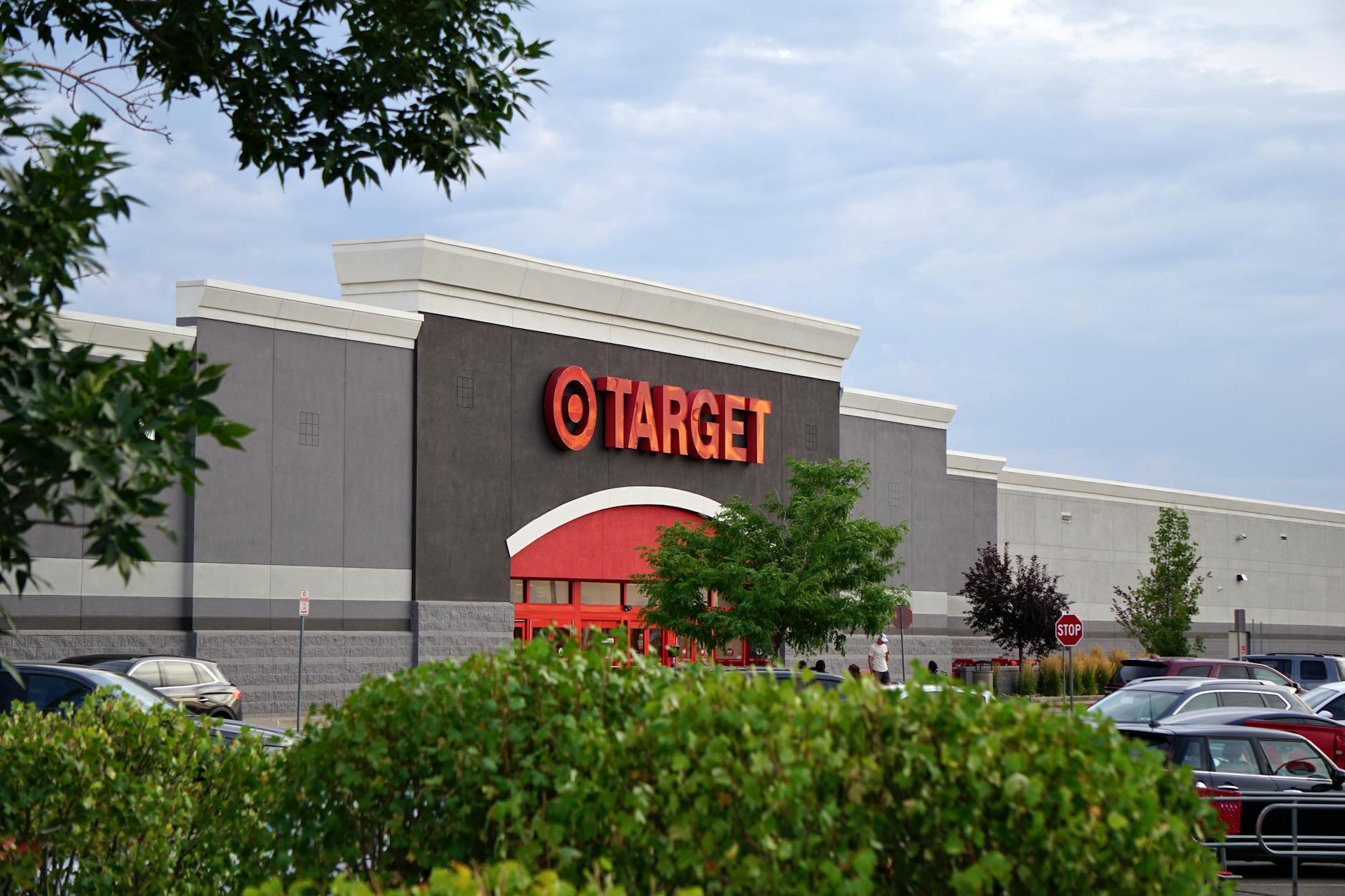
Target's strategic revamp centers on a dual approach: a significant overhaul of its physical store footprint and an acceleration of its digital capabilities, all designed to elevate the guest experience. The company plans the largest store refresh in a decade, updating floor plans and displays across all locations. This includes doubling the square footage dedicated to groceries in over half of its remodeled stores, recognizing that grocery sales, which hit $24.14 billion last year and accounted for 23% of net sales, are crucial for driving customer traffic and one-stop shopping. Furthermore, Target will launch a "Beauty Studio" in over 600 stores, replacing its previous Ulta Beauty partnership, to attract younger consumers with prestige beauty brands.
On the technology front, Target is making substantial investments in AI and new technologies to enhance personalized shopping experiences and improve operational efficiency. CEO Michael Fiddelke outlined plans to leverage generative AI for trend analysis, allowing merchants to respond to emerging ideas faster and bring culturally relevant assortments to market. The company is also modernizing its core systems, expanding real-time data access, and rebuilding its search and recommendations engine to provide smarter, more relevant digital results. This focus on AI-powered personalization is critical, as companies utilizing such tools report up to 35% higher redemption rates in loyalty programs.
The digital transformation extends to fulfillment, with Target aiming for faster, more frictionless online and in-person shopping. Its network of nearly 2,000 stores already doubles as fulfillment centers, contributing to a $20 billion digital business. Building on strong digital comparable sales growth of 4.3% in Q2 2025 and over 25% growth in same-day delivery, Target is optimizing its operational model. This includes designating certain stores as fulfillment hubs while others focus exclusively on in-store experience and drive-up services, a strategy refined through trials in markets like Chicago. The goal is to ensure consistency and convenience across all channels, making shopping "delightful, inspiring, and easy."
What Do Target's Financials Tell Us About Its Resilience?
Despite recent headwinds, Target's financial position reveals a company with underlying strength, capable of funding its ambitious transformation. The company's current market capitalization stands at $55.10 billion, with shares trading at $121.27, near the upper end of its $83.44 – $126.00 52-week range. While TTM revenue growth was negative at -1.7% and net income declined -9.4% in FY2025, the company did report a Q4 EPS of $2.44, surpassing analyst expectations and demonstrating robust profitability in the most recent quarter. This suggests that while top-line growth has been challenging, Target is managing its bottom line effectively.
Valuation metrics present a mixed picture. Target trades at a P/E ratio of 13.85, which is reasonable compared to the broader market and its sector's average P/E of 43.8. Its P/S ratio of 0.52 indicates that the market values its sales at a relatively low multiple, reflecting the current sales decline but also potentially offering value if growth initiatives succeed. The company boasts a strong Return on Equity (ROE) of 26.1% and a Return on Invested Capital (ROIC) of 10.7%, showcasing efficient capital deployment. Furthermore, Target maintains a healthy balance sheet with a low Debt-to-Equity (D/E) ratio of 0.35, providing ample financial flexibility for its planned investments.
Perhaps most encouraging for investors is Target's impressive Free Cash Flow (FCF) growth of 46.6% in FY2025, with a TTM FCF per share of $6.35. This strong cash generation capability is vital for funding the $2 billion in incremental investments without over-leveraging the company. Target also offers an attractive dividend yield of 3.7%, with a sustainable payout ratio of 50.8%, indicating its commitment to returning value to shareholders even amidst strategic shifts. While the Current Ratio of 0.94 is slightly below the ideal 1.0, it's not uncommon for large retailers with efficient inventory management. Overall, Target's financials suggest a resilient company with the resources to execute its turnaround plan.
Navigating the Consumer Shift: Value, Loyalty, and AI
Target's strategic overhaul is a direct response to a fundamental shift in consumer behavior, where "inflation fatigue" and economic uncertainty have pushed value to the forefront. The company has already begun cutting prices on some 3,000 foods, beverages, and essentials, a structural adjustment expected to extend through 2026. This move acknowledges that consumers are postponing spending decisions and prioritizing needs over wants, forcing Target to rethink its aspirational positioning and compete more directly on price, a domain traditionally dominated by rivals like Walmart.
To counter this, Target is also doubling down on loyalty and personalization, recognizing that the "rewards for spend" playbook is no longer sufficient. The company is evolving its Target Circle loyalty program to deepen guest engagement and further scaling its paid Target Circle 360 membership. The goal is to create a "relationship engine" rather than just a transactional lever, making members feel recognized and understood. This aligns with broader industry trends where consumers expect instant value, omnichannel consistency, and hyper-personalization, with AI playing a crucial, albeit often invisible, role in delivering tailored offers and experiences.
The retailer is also sharpening its focus on key product categories where it can differentiate itself. This includes refreshing the home experience with new items and improved in-store displays, relaunching flagship owned-brands like Threshold, and maximizing in-house design capabilities for women's style. Furthermore, Target is expanding its "Fandom and culture" categories, such as sports, pop culture, toys, and trading cards, reimagining "Fan Central" with expanded shop-in-shops. These efforts aim to capture the "digitally savvy, style-focused, and value-conscious" modern family, offering a compelling blend of affordability, unique assortments, and a superior shopping experience that justifies their choice over competitors.
The Human Element: Employee Morale and Leadership
While Target's strategic plan heavily emphasizes capital investments and technological advancements, the human element—specifically employee morale and leadership—plays a critical, often overlooked, role in its success. The company's decision to cut employee bonuses for the second consecutive year, with salaried employees receiving only 75% of eligible bonuses (down from 87% in 2024), highlights the profitability pressures Target has faced. This move, alongside the previous reduction of 1,800 corporate roles, raises questions about employee morale at a time when the company is simultaneously investing "hundreds of millions of dollars" in additional store payroll and training for 2026.
New CEO Michael Fiddelke, who has a two-decade tenure across merchandising, finance, operations, and HR, brings a deep understanding of Target's internal workings. His leadership is crucial for navigating this complex period, balancing cost-cutting measures with the need to motivate and empower the company's 440,000 employees. Fiddelke's plan to increase payroll and training expenditures in 2026, despite the bonus cuts in 2025, suggests a long-term commitment to its workforce, aiming for a more profitable year for employees in the future. The success of initiatives like the "10-4 policy," which mandates specific customer interactions, will depend heavily on genuine employee buy-in rather than mere compliance.
The retail industry saw a 116% increase in CEO exits in 2025, making it the top industry for leadership turnover. This underscores the intense pressure on retail executives to deliver results amidst challenging market conditions. Fiddelke's appointment and his comprehensive strategic plan signal a fresh direction, but he faces the dual challenge of revitalizing the brand externally while fostering a positive and engaged workforce internally. Investing in training and career growth for teams is one of Target's four core growth priorities, recognizing that a strong, motivated team is essential for delivering the "delightful, inspiring, and easy" guest experience central to its comeback strategy.
What Does This Mean for Investors?
Target's ambitious $2 billion investment plan and strategic overhaul present a compelling, albeit high-stakes, narrative for investors. The company is clearly committed to regaining market share and customer loyalty by addressing core issues like declining sales and shifting consumer preferences head-on. With its stock trading at $121.27, near its 52-week high, the market appears to be cautiously optimistic about these initiatives, but the execution will be key.
The strong balance sheet, healthy Free Cash Flow generation, and attractive 3.7% dividend yield provide a safety net, making TGT a potentially interesting play for long-term investors willing to weather the transition. However, the success of these investments hinges on Target's ability to effectively compete on value, differentiate its product assortments, and seamlessly integrate its enhanced in-store and digital experiences. Investors should closely monitor comparable sales growth, operating margins, and the effectiveness of the new loyalty programs as indicators of whether Target's significant bet will pay off in sustained growth and shareholder returns.
Target is making a necessary pivot in a dynamic retail environment. The coming quarters will be crucial in determining if these strategic adjustments can truly reverse the tide and usher in a new chapter of growth for the iconic retailer.
Want deeper research on any stock? Try Kavout Pro for AI-powered analysis, smart signals, and more. Already a member? Add credits to run more research.
Related Articles
Category
You may also like


Is Chegg's $40B Skilling Market Bet a True Turnaround Catalyst?

Can OpenAI-led Conversational Commerce Drive TGT's Next Growth Wave?

Can lululemon's "Power of Three x2" Strategy Still Hit FY26 Targets?
Breaking News
View All →Featured Articles
Top Headlines

TSLY: Tesla's Uncertainty Is Fueling This Income Machine

Apple's Brand-New Products Represent an Aggressive AI Push

McMahon: "This is the Year" for MSFT, Likes SMERY in AI Trade

Bitcoin Surges to $74,000 After President Trump Throws Support Behind Key Crypto Bill