MarketLens
Is the Energy Transition Now a National Security Imperative

Key Takeaways
- The global energy transition is no longer solely driven by environmental concerns but has fundamentally shifted to a national security imperative, accelerated by recent geopolitical conflicts.
- The Iran war, specifically the closure of the Strait of Hormuz, has exposed critical vulnerabilities in global oil supply chains, pushing nations towards energy independence through diversified sources.
- Investment opportunities are emerging in renewable energy, nuclear power, and critical mineral supply chains, as governments prioritize domestic capacity and resilience over traditional market efficiencies.
Is the Energy Transition Now a National Security Imperative?
Yes, the global energy transition has decisively pivoted from primarily an environmental initiative to a critical national security imperative, a shift dramatically underscored by recent geopolitical events. For decades, the narrative around moving away from fossil fuels centered on climate change and sustainability. However, the escalating conflict in the Middle East, particularly the war in Iran and its impact on vital shipping lanes, has laid bare the profound vulnerabilities inherent in a global energy system reliant on concentrated hydrocarbon supplies. This reorientation means that energy independence and resilience are now paramount, even at the expense of traditional economic efficiency.
The conflict, which saw the Strait of Hormuz effectively closed by threats from the Iranian regime, choked off approximately 16 million barrels per day of oil from the global market. This immediate and severe disruption caused futures prices for both Brent crude and US benchmark West Texas Intermediate (WTI) crude to surge by more than 40% since the conflict began. Such volatility and supply chain fragility highlight that energy dependence equates to vulnerability, forcing governments to rethink their strategic energy postures. The current crude oil price of $102.38, despite a slight daily dip of 0.49%, remains elevated, reflecting persistent geopolitical risk premiums.
This strategic pivot is not merely a theoretical exercise; it’s being hard-wired into policy. Governments are increasingly pursuing protectionist agendas, implementing measures like foreign direct investment (FDI) screening, local content rules, and export controls on raw materials. These policies aim to reduce exposure to adversarial suppliers and anchor domestic energy capacity, reinforcing state-led industrial policies across various regions. The US Inflation Reduction Act and the EU’s Clean Industrial Deal are prime examples, demonstrating a clear intent to build resilient, localized energy supply chains, even if it means higher initial costs.
The implications for investors are clear: the focus is shifting from pure cost optimization to geopolitical resilience. Companies that can demonstrate robust, secure supply chains for energy transition technologies, or those contributing directly to national energy sovereignty, are likely to see increased government support and capital flows. This new corporate playbook demands that commercial opportunities are now conditional on geopolitical resilience, ensuring projects can withstand external shocks and maintain stakeholder confidence.
How Has the Iran War Accelerated This Strategic Pivot?
The war in Iran has served as an undeniable accelerant for the energy transition, fundamentally altering the calculus for nations worldwide. The immediate and severe disruption to global oil markets, particularly the effective closure of the Strait of Hormuz, exposed the fragility of a system built on open, trade-friendly supply chains. This chokepoint, through which a significant portion of the world's oil passes, became a stark symbol of how quickly energy can be weaponized and how vulnerable importing nations truly are to geopolitical instability.
This crisis has reinforced a critical distinction: while oil is imported daily, a solar panel or an electric car is imported only once. This difference highlights the enduring vulnerability of relying on continuous, uninterrupted flows of hydrocarbons from politically volatile regions. The war has transformed energy from a neutral commodity back into a strategic instrument, forcing policymakers to prioritize energy security and resilience above all else. Even as the Energy sector saw a slight decline of 0.41% today, the Oil & Gas Energy industry still posted a robust +7.19% gain, reflecting the persistent demand and pricing power in a constrained supply environment.
The conflict has also highlighted the complex interplay between traditional fossil fuels and the emerging energy landscape. Despite the push for renewables, the International Energy Agency (IEA) and OPEC consistently indicate that hydrocarbons will continue to shape global energy security for decades. This means the transition will be neither linear nor abrupt; it will involve a strategic recalibration where countries like Saudi Arabia, the UAE, and Qatar are already adjusting their energy diplomacy, using long-term LNG contracts as a form of geopolitical hedging.
For investors, the Iran war has amplified the need to assess geopolitical risk not as an external factor, but as an intrinsic component of energy investments. Companies heavily reliant on globalized supply chains for critical energy components, or those operating in regions with high geopolitical tension, face increased scrutiny. Conversely, firms that can offer solutions for localized energy production, secure supply chains, or technologies that reduce reliance on volatile imports are now positioned for strategic advantage.
What Does This Mean for Renewable Energy Investments?
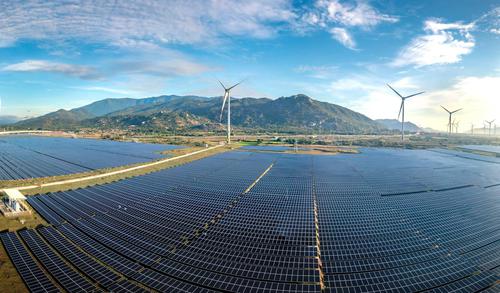
The geopolitical pivot towards energy security presents a monumental opportunity for renewable energy, transforming it from a "green" initiative into a cornerstone of national independence. The IEA's "Renewables 2025" report highlights that renewable deployment has already significantly reduced fuel import needs and enhanced electricity supply security in many countries. For instance, in the EU, renewables prevented the share of imported fossil fuels in electricity supply from nearly doubling during the 2022 energy crisis. This tangible benefit of reduced import dependence is now a primary driver for accelerated investment.
However, this acceleration comes with its own set of challenges and new vulnerabilities, particularly concerning critical mineral supply chains. While renewables offer localized energy generation, their manufacturing relies heavily on minerals like cobalt, lithium, and magnesium. The processing of these "electric eighteen" critical materials is highly concentrated, with China, for example, processing over 65% of all cobalt and 88% of all magnesium. This creates new points of potential vulnerability, shifting dependence from oil-producing nations to mineral-processing giants.
Governments are responding with proactive industrial policies to secure these supply chains. The US Department of Energy lists over 50 critical minerals across all sectors, and policymakers are actively seeking to diversify sourcing and processing capabilities. This means significant investment is likely to flow into domestic mining, refining, and manufacturing capacities for renewable energy components. Companies involved in these areas, from rare earth extraction to battery production, stand to benefit from state-led support regimes and strategic partnerships.
The rapid growth in renewable electricity generation, particularly solar PV, is also straining existing grid infrastructure. The Netherlands, for example, has seen a five-fold increase in solar PV capacity between 2018 and 2023, leading to severe grid congestion that challenges both climate targets and energy security. This bottleneck necessitates massive investments in grid expansion, modernization, and smart grid technologies. Companies specializing in grid infrastructure, energy storage solutions, and demand-side management are crucial to unlocking the full security benefits of renewables.
For investors, the renewable energy sector offers immense long-term growth potential, but with a nuanced understanding of risk. Focus should be on companies with diversified critical mineral sourcing, strong domestic manufacturing capabilities, or those providing essential grid infrastructure solutions. The shift is not just about installing more panels and turbines, but about building an entire resilient ecosystem around them, making the sector ripe for strategic, security-driven capital allocation.
Is Nuclear Energy Making a Comeback as a Strategic Asset?
Absolutely, nuclear energy is experiencing a significant strategic reawakening, shedding its long-standing stigma to emerge as a vital component of national energy security and independence. For years, nuclear power faced widespread rejection due to safety concerns and waste disposal challenges. However, the current geopolitical landscape, marked by energy supply disruptions and the urgent need for stable, low-carbon baseload power, has fundamentally changed this perception. Nuclear is now recognized for its efficiency, reliability, and most importantly, its ability to provide energy sovereignty.
The shift was evident at COP28, where the inclusion of nuclear energy alongside natural gas marked a pragmatic turn in climate discussions. A remarkable 22 countries committed to tripling their nuclear capacity by 2050, with US climate envoy John Kerry emphasizing that achieving net-zero emissions without nuclear energy is simply not feasible. This collective commitment signals a global recognition of nuclear’s indispensable role, moving it from a controversial option to a strategic necessity in the energy transition.
Nuclear power offers a compelling solution to the "energy trilemma" – balancing security, affordability, and environmental sustainability. Unlike intermittent renewables, nuclear plants provide consistent, dispatchable power, reducing reliance on volatile fossil fuel imports and mitigating grid instability. This makes it an attractive option for nations seeking to bolster their energy independence and insulate themselves from geopolitical shocks. The long operational lifespans of nuclear plants also provide decades of predictable energy supply, a stark contrast to the daily uncertainties of oil markets.
Investment in nuclear energy is poised for a resurgence, spanning from advanced reactor technologies to uranium mining and enrichment. Governments are likely to provide significant incentives and regulatory support for new nuclear builds, as well as for extending the life of existing facilities. This includes funding for research and development into small modular reactors (SMRs), which promise greater flexibility, lower costs, and enhanced safety features, making nuclear power more accessible and deployable.
For investors, this means exploring opportunities in companies involved in nuclear power plant construction, maintenance, fuel cycle services, and advanced reactor development. The renewed political will and strategic imperative behind nuclear energy suggest a long-term growth trajectory, driven by national security concerns rather than purely economic or environmental factors. This is a sector where state-led industrial policies and international cooperation will play a crucial role in de-risking investments and accelerating deployment.
What Are the Broader Geopolitical and Economic Implications for Investors?
The broader geopolitical and economic implications of this security-driven energy transition are profound, reshaping global trade, capital flows, and risk assessments for investors. The fragmentation of the global energy system, moving away from open, market-based integration towards competing regional coalitions, is creating new barriers to investment and altering cost structures across energy value chains. Defensive trade measures, foreign direct investment screening, and export controls are becoming commonplace, making cross-border energy projects more complex and riskier.
This fragmentation carries material costs, as supply chains reconfigure around new bottlenecks and redundancy replaces just-in-time optimization. Energy-intensive industries are already facing higher and less predictable power and fuel costs, directly impacting margins and investment planning. The current 10-Year US Treasury yield at 4.35% and a normal 2s/10s spread of +0.53% suggest a stable, albeit higher, cost of capital environment, which will further pressure projects with uncertain geopolitical risk profiles. Investors must now factor in "geopolitical resilience" as a core metric for capital allocation, contracting architecture, and regulatory strategy.
The transition also creates new forms of dependency, particularly around critical minerals and clean-energy supply chains. Control over these resources, renewable manufacturing capacity, hydrogen infrastructure, and energy-related data systems is emerging as a new source of strategic power. This means countries like China, with significant dominance in mineral processing (e.g., 65% of cobalt, 88% of magnesium), will wield considerable influence. Investors need to scrutinize the geographic concentration of their supply chains and consider the political stability of sourcing regions.
Furthermore, the shift impacts traditional petrostates, many of which are now in a desperate race against time to extract resources before their value diminishes. This creates potential instability in regions heavily reliant on oil and gas revenues, particularly in the Middle East and Africa. While oil and gas will remain relevant for decades, the long-term outlook for these economies is shifting, leading to a "repoliticization" of energy where diplomacy focuses on managing the pace of transition and securing investment, rather than simply maximizing exports.
For investors, this means a more complex, multi-polar energy landscape. Diversification of energy assets, with a strong emphasis on domestic or allied-nation supply chains, will be key. Opportunities will arise in sectors that enable energy independence, such as advanced manufacturing for renewables, nuclear technology, and the development of secure critical mineral supplies. However, the increased state intervention and protectionist policies will necessitate a deeper understanding of regulatory frameworks and geopolitical dynamics in every investment decision.
What Does This Mean for Investors?
The energy transition, now firmly rooted in national security, demands a strategic re-evaluation of investment portfolios, favoring resilience and domestic capacity over traditional globalization. Investors should prioritize companies that are either direct beneficiaries of government-led energy independence initiatives or those that provide critical solutions for secure, diversified energy systems. This isn't just about "green" growth anymore; it's about strategic growth in a fragmented world.
Consider the ongoing volatility in commodity markets, with crude oil trading at $102.38 and natural gas at $2.89, both reflecting the immediate impact of geopolitical tensions. While the Energy sector as a whole saw a slight dip today, the Oil & Gas Energy industry still posted a strong +7.19% gain, indicating that even amidst the transition, the immediate demand for traditional fuels remains high, especially when supply is threatened. This creates a complex environment where both old and new energy paradigms offer distinct, albeit intertwined, investment opportunities.
Looking ahead, the upcoming economic events, such as the Durable Goods Orders and ISM Services PMI, will provide further insights into the broader economic health and industrial demand, which indirectly impacts energy consumption and investment. However, the overarching theme remains clear: the future of energy investment will be heavily influenced by national security agendas, making robust supply chains, domestic production capabilities, and strategic partnerships paramount.
Investors should focus on companies that are well-positioned to benefit from increased government spending on energy infrastructure, R&D in advanced energy technologies, and efforts to secure critical mineral supply chains. This includes firms in renewable energy manufacturing, nuclear power development, grid modernization, and domestic mining and processing of essential materials. The era of cheap, globally sourced energy is giving way to a more secure, albeit potentially more expensive, localized energy future.
The global energy system is undergoing a profound reconstruction, driven by the urgent need for national security and resilience. Investors who adapt to this new paradigm, prioritizing strategic independence and robust supply chains, will be best positioned to navigate the evolving landscape and capitalize on the immense opportunities ahead. The shift from oil is indeed a massive power move, and smart capital will follow.
Want deeper research on any stock? Try Kavout Pro for AI-powered analysis, smart signals, and more. Already a member? Add credits to run more research.
Related Articles
Category
You may also like


Opinion | Time to Take Oil out of Newsom's Hands

Is 2026 the Year to Go Big on Defense ETFs?

Can GE Vernova's Strategic Acquisitions Boost Its Energy Transition?
Breaking News
View All →Featured Articles
Top Headlines

7 Dividend Increases Expected In April 2026

Brilliant Buys for Uncertain Times: 2 Growth Stocks to Own for the Long Term

Nvidia Stumbled in the First Quarter: Here are My Top 3 Nvidia Predictions for the Second Quarter

Argentarii LLC Purchases 3,891 Shares of Microsoft Corporation $MSFT