MarketLens

Log in

Why is Cybersecurity Now a National Security Imperative

3 hours ago
SHARE THIS ON:

Why is Cybersecurity Now a National Security Imperative

Key Takeaways

  • Escalating global cyber threats, from nation-state actors to sophisticated ransomware gangs, are driving unprecedented demand for advanced cybersecurity and IT solutions across U.S. critical infrastructure and defense.
  • Government contractors like CACI, Leidos, and Parsons are uniquely positioned to capitalize on this imperative, offering essential services in cyber defense, IT modernization, and AI-powered national security initiatives.
  • Despite varying growth profiles, these companies exhibit strong financial fundamentals and benefit from long-term, non-discretionary government spending, making them resilient investments in an uncertain geopolitical landscape.

Why is Cybersecurity Now a National Security Imperative?

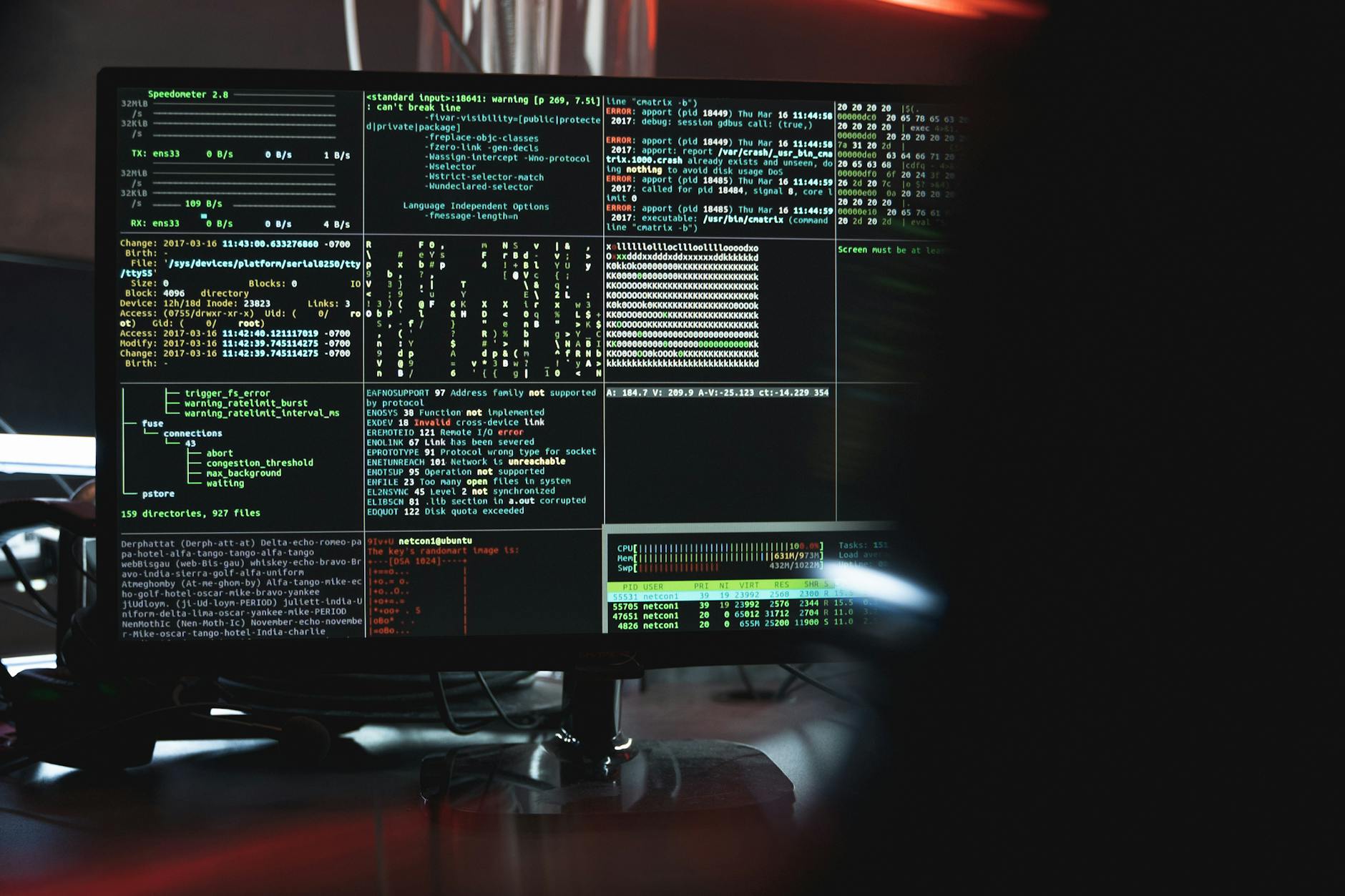
The digital battleground has never been more active, transforming cybersecurity from a mere IT concern into a core national security imperative. In early 2024, security researchers uncovered that Volt Typhoon, a China-linked threat actor, had maintained unauthorized access to a small Massachusetts utility's operational technology (OT) network for nearly a year. This wasn't about immediate disruption; it was about intelligence gathering, pre-positioning for future physical infrastructure attacks. Such incidents underscore a chilling reality: critical infrastructure, from energy grids to water systems, is under constant, sophisticated assault.

The threat landscape is alarmingly diverse. Beyond state-sponsored reconnaissance, hacktivists, often aligned with geopolitical conflicts, are causing significant disruption. Russian hacktivists targeted the U.S. in 2024 and 2025 in response to support for Ukraine, while Iranian groups caused water overflows in U.S. systems in December 2024. Cybercriminals, meanwhile, continue to weaponize ransomware, with attacks jumping 9% in 2024 and leading to a record $16.6 billion in losses. These attacks, often low-sophistication phishing or vishing, reveal fundamental gaps in baseline security across vital sectors like healthcare, financial services, and IT.

What makes this evolving threat particularly concerning is the growing integration of artificial intelligence (AI) into cyber operations. AI is set to accelerate both the pace and scale of attacks, enabling adversaries to conduct operations that previously required significantly more resources and expertise. The U.S. government recognizes the cost of inaction, measured not just in economic losses but in compromised public safety and national security. This urgent need for robust defense creates a fertile ground for specialized government contractors.

How is the U.S. Government Responding to Evolving Cyber Threats?

The United States is undergoing a significant strategic shift in its approach to cybersecurity, moving away from fragmented, voluntary compliance towards more stringent, proactive measures. As the nation entered a critical cyber policy window in 2026, the question became not if to mandate minimum security standards, but how quickly to implement them. The 2026 Cyber Strategy for America, while brief, outlines six key pillars, including securing critical infrastructure and shaping adversary behavior. This strategy emphasizes streamlining regulation while simultaneously increasing the requirements to harden critical systems.

Key agencies are driving this change. The Department of Defense (DoD) unveiled its DIB Cybersecurity Strategy 2024 to strengthen national cyber defenses, focusing on collaboration with the Defense Industrial Base (DIB). This strategy aims to safeguard the nation, uphold technological superiority, and fortify the cybersecurity posture of DIB contractors through iterative risk assessments, training, and information sharing. It explicitly acknowledges the U.S. dependence on foreign and sole-source suppliers, signaling increased attention to supply chain vulnerabilities.

The Cybersecurity and Infrastructure Security Agency (CISA) is also at the forefront, having published its 2023-2025 Strategic Plan to spearhead national cyber defense and reduce risks to critical infrastructure. In 2025, CISA triaged over 30,000 incidents and published more than 1,600 products, demonstrating its proactive approach. CISA's 2025-2026 International Strategic Plan further underscores the need for global collaboration, recognizing the geographical dispersion of risks and the importance of sharing timely threat information. This multi-pronged government response translates directly into increased demand for sophisticated cybersecurity and IT services from the private sector.

What Role Does AI Play in Modern National Security and Defense?

Artificial intelligence is rapidly becoming an indispensable, albeit double-edged, sword in the realm of national security and defense. On one hand, AI is a vital tool for detecting and mitigating cyber threats, capable of analyzing vast amounts of network data to predict breaches and deploy countermeasures with speed and precision. The U.S. Department of Defense's "Project Maven," for instance, leverages AI to analyze massive datasets across military networks, significantly improving response times to cybersecurity incidents. This capability is critical as threat volumes have outpaced human capacity, and attack sophistication, driven by AI-powered phishing and polymorphic malware, has skyrocketed.

The military's adoption of AI is accelerating, with the U.S. Department of Defense allocating $4.9 billion for AI research and development in 2025, focusing on autonomous systems, data analytics, and improved decision-making. AI-powered autonomous systems like drones and unmanned ground vehicles are providing new ways to engage threats without risking human lives, while AI tools analyze satellite and drone data for intelligence gathering, detecting enemy movements, and predicting future activities. AI-driven predictive maintenance is also projected to save the DoD up to $5 billion annually by optimizing repair schedules and minimizing downtime.

However, AI also introduces new vulnerabilities. Malicious actors can exploit AI systems to launch more sophisticated attacks or evade detection. The complexity of AI-based defense systems can also challenge military personnel's understanding and control, raising concerns about reliability and transparency. As AI evolves from enhancing specific tasks to managing full mission cycles across air, land, sea, cyber, and space domains, the need for robust, AI-powered defenses, coupled with human oversight, becomes paramount. This dual nature of AI creates a continuous demand for advanced solutions from specialized contractors.

How Are CACI, Leidos, and Parsons Positioned in This Landscape?

In this environment of escalating threats and strategic government response, companies like CACI International (NYSE: CACI), Leidos Holdings (NYSE: LDOS), and Parsons Corporation (NYSE: PSN) are exceptionally well-positioned. These firms are not just defense contractors; they are critical enablers of national security, providing the sophisticated IT, cybersecurity, and engineering services the government desperately needs. Their deep integration into federal agencies, particularly the DoD and intelligence communities, provides a stable, long-term revenue stream largely insulated from economic cycles.

CACI, with a market cap of $12.81 billion, specializes in enterprise IT, national security, and intelligence solutions. The company reported a robust 12.6% revenue growth and 20.0% EPS growth in FY2025, demonstrating strong operational performance. Its P/E ratio of 24.65 reflects investor confidence in its growth trajectory, while a healthy current ratio of 1.97 indicates solid liquidity. CACI's focus on areas like AI-enabled defense tools and securing federal networks aligns perfectly with the 2026 Cyber Strategy's emphasis on modernizing government IT and building cyber talent. Analysts have a consensus "Buy" rating with a median price target of $776.00, suggesting significant upside from its current price of $579.84.

Leidos, a larger player with a market cap of $19.92 billion, offers a broader portfolio spanning defense, intelligence, civil, and health markets. The company's TTM P/E of 14.33 and P/FCF of 12.26 suggest a more attractive valuation compared to CACI, especially given its impressive ROE of 31.1% and ROIC of 15.0%. Leidos's 3.1% revenue growth in FY2025, coupled with 20.7% EPS growth and a 30.7% increase in free cash flow, highlights its efficiency and profitability. The company's dividend yield of 1.1% (payout 14.5%) also offers a modest income component. With a consensus "Buy" rating and a median price target of $215.00 against its current price of $157.58, Leidos appears to be a compelling value proposition.

Parsons, with a market cap of $5.74 billion, focuses on critical infrastructure, defense, and intelligence. Despite a slight revenue decline of -5.7% in FY2025, the company delivered 3.8% EPS growth and boasts a strong Net Debt/EBITDA of 1.84, indicating manageable leverage. Its P/E of 23.73 and P/FCF of 13.98 are competitive, and its gross margin of 22.5% is the highest among the three, suggesting strong project profitability. Parsons' work in securing critical infrastructure, including water utilities and transportation systems, directly addresses key vulnerabilities highlighted by CISA. Analysts rate Parsons a "Buy" with a median price target of $82.00, well above its current $53.62.

What Are the Key Investment Considerations and Risks?

While the tailwinds for government cybersecurity and IT contractors are strong, investors should consider several factors and potential risks. The primary driver for these companies is government spending, which, while generally stable, can be subject to budget cycles, political shifts, and evolving priorities. The 2026 Cyber Strategy for America, for instance, emphasizes streamlining regulation, which could reduce compliance burdens but also potentially shift the competitive landscape. Furthermore, the "unleashing" of the private sector into more aggressive offensive cyber operations, as hinted by the strategy, could introduce new liabilities and ethical debates that deter some participants.

Competition within the defense and government services sector remains fierce. While CACI, Leidos, and Parsons are established players, new entrants or smaller, specialized firms could emerge with innovative solutions, particularly in rapidly evolving areas like AI and quantum computing. The ability of these companies to continuously innovate, attract top talent, and adapt to new technological demands, such as quantum-aware AI security models, will be crucial for sustained growth. The 2026 strategy explicitly calls for a rapid expansion of cyber talent versed in autonomous systems and AI-enabled defense tools, posing a workforce challenge.

From a valuation perspective, CACI's P/E of 24.65 and Leidos's P/E of 14.33 (TTM) should be evaluated against their respective growth rates and market positions. Leidos appears to offer a more attractive valuation for its growth and profitability metrics. Parsons, despite its higher gross margin, saw a revenue decline in FY2025, which warrants closer scrutiny of its forward guidance. Investors should also monitor contract win rates and pipeline visibility, as these are key indicators of future performance in this sector. Geopolitical events, while often driving demand, can also introduce supply chain disruptions or unforeseen operational challenges.

The Long-Term Outlook for National Security Contractors

The long-term outlook for national security contractors like CACI, Leidos, and Parsons remains robust, driven by an undeniable and growing need for advanced cyber and IT capabilities. The persistent and evolving threat landscape, coupled with the U.S. government's strategic pivot towards mandatory security standards and AI-powered defenses, creates a durable demand environment. These companies are not merely beneficiaries of government spending; they are integral partners in safeguarding critical infrastructure and maintaining national security.

Their deep expertise, established relationships, and ability to integrate cutting-edge technologies, particularly AI, into complex defense and intelligence systems position them for sustained growth. While individual company performance may vary, the overarching trend of increased investment in cybersecurity and IT modernization ensures a strong foundation. For investors seeking resilience and exposure to essential services in an increasingly digital and volatile world, these national security contractors offer a compelling proposition.


Want deeper research on any stock? Try Kavout Pro for AI-powered analysis, smart signals, and more. Already a member? Add credits to run more research.

SHARE THIS ON:

Related Articles

Category

You may also like

Stock News2 days ago

CERAWEEK Energy security key to national security, Shell CEO says

Shell CEO Wael Sawan stated energy security is vital for national security on Tuesday, warning that supply disruptions impacting Asia due to the U.S.-Israel-Iran conflict may reach Europe by next mont...
Crypto News1 week ago

Michael Saylor Warns a Quantum Threat to Bitcoin Would Also Break the Internet

Michael Saylor warned that quantum computers capable of breaking Bitcoin security would also compromise the entire internet infrastructure. This shared cryptographic foundation means a threat to crypt...
Stock News2 weeks ago

Cyberwarfare Threat Rises: Time to Boost Cybersecurity ETF Exposure?

Cybersecurity ETFs may present a compelling investment opportunity due to rising threats from areas like AI expansion and cyberwarfare.
Stock News2 months ago

China bans dozen US and Israeli cybersecurity firms over national security concerns: report

China banned cybersecurity software from several U.S. and Israeli firms, including VMware and Palo Alto Networks, citing national security concerns in a report.

Breaking News

View All →

Top Headlines

View More →
Stock News1 hour ago

Microsoft, Meta, and Alphabet Stocks Are All Getting Hammered. But I Think Only 1 Is Worth Buying

Stock News3 hours ago

Why the Verdict Against Meta and YouTube Could Change Social Media

Stock News4 hours ago

How Much Further Could Micron Stock Fall?

Stock News4 hours ago

Microsoft's role in an AI agent world is a problem for them, says Intelligent Alpha's Doug Clinton

Stock News4 hours ago

Here's Why Tesla (TSLA) Fell More Than Broader Market