MarketLens

Log in

Is the New Texas Refinery a Game-Changer for US Energy Independence

3 weeks ago
SHARE THIS ON:

Is the New Texas Refinery a Game-Changer for US Energy Independence

Key Takeaways

  • A $300 billion refinery project in Brownsville, Texas, backed by India's Reliance Industries, aims to be the first major US refinery built in 50 years, significantly boosting domestic refining capacity.
  • The initiative promises enhanced US energy security, thousands of jobs, and a substantial improvement in the trade balance by processing 60 million barrels per year of American light shale oil.
  • While the project aligns with an "America First" energy agenda and offers clear economic benefits, its long-term environmental impact and the complexities of global energy policy present notable challenges for investors to consider.

Is the New Texas Refinery a Game-Changer for US Energy Independence?

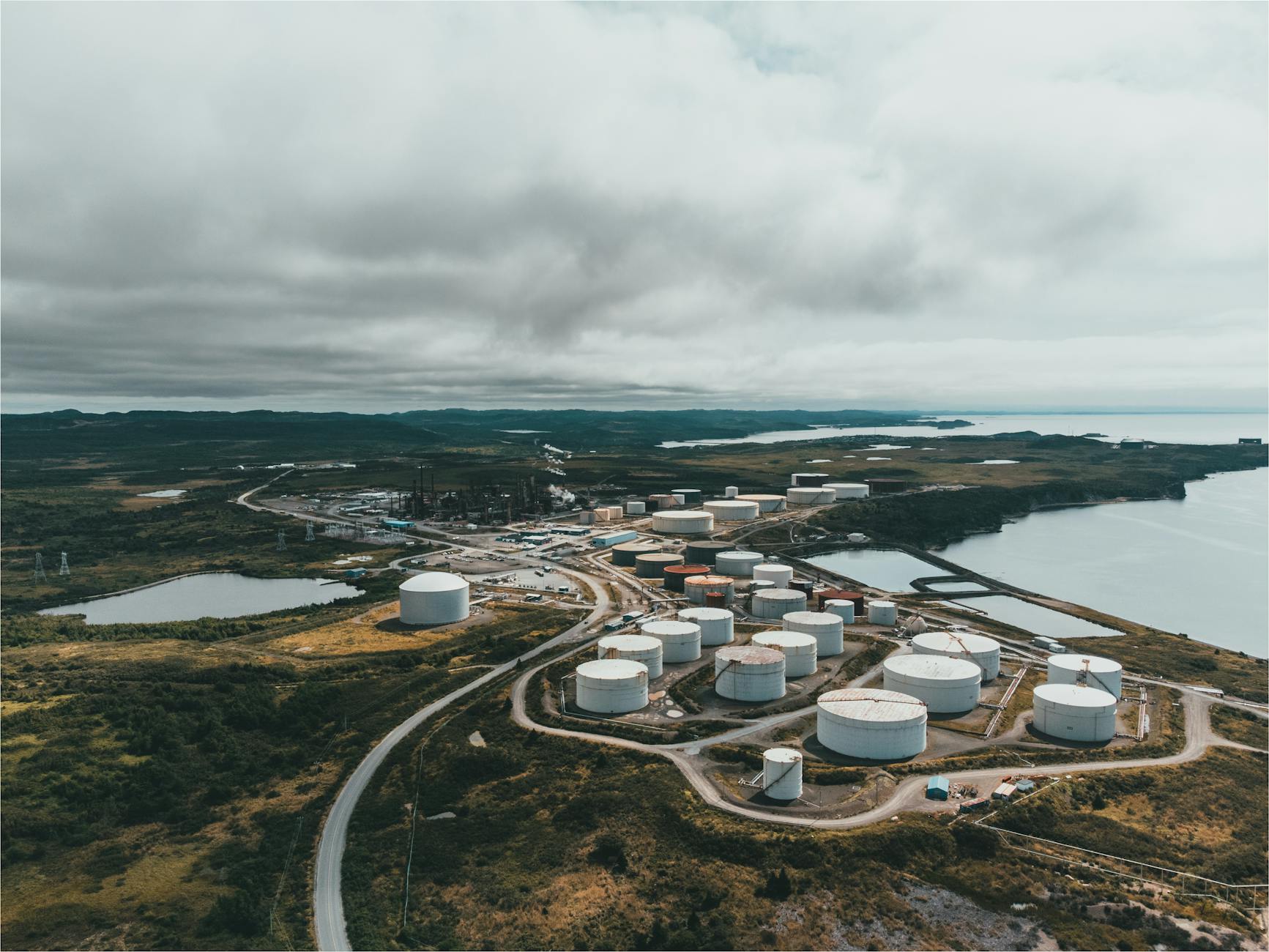
The announcement of a $300 billion oil refinery project in Brownsville, Texas, backed by India's Reliance Industries, marks a significant moment for the US energy landscape. Former President Donald Trump, in a Truth Social post, hailed this as a "historic deal" and the "biggest in U.S. history," emphasizing its role in restoring "American energy dominance." This facility, developed by America First Refining, is poised to be the first major new oil refinery in the United States in 50 years, a period during which the nation's refining capacity has seen incremental upgrades rather than new greenfield construction.

This ambitious undertaking comes at a critical juncture for global energy markets. Geopolitical tensions, particularly the ongoing conflict in the Middle East and concerns over potential disruptions in the Strait of Hormuz, have injected considerable volatility into oil prices. Crude Oil (CLUSD) is currently trading at $85.66, reflecting a +2.65% increase from its previous close, with its 52-week range spanning from $54.98 to $119.48. Such price fluctuations underscore the urgency behind initiatives aimed at bolstering energy security and domestic supply chains.

The Brownsville project is not merely about adding capacity; it's a strategic move to leverage America's abundant light shale oil resources. The refinery is specifically designed to process 100% US light shale oil from the Permian Basin, a crucial detail that underscores its contribution to national energy independence. By converting domestic crude into refined products like gasoline, diesel, and jet fuel, the US aims to reduce its reliance on imported refined fuels and insulate itself from global supply shocks. This focus on domestic sourcing and refining is a cornerstone of the "America First" energy policy, promising both economic and strategic advantages.

Local officials in Brownsville are already celebrating the project, anticipating a substantial boost to the regional economy. The Port of Brownsville, with its deep-water access, is strategically positioned to become a major energy and trade gateway. The construction and eventual operation of the refinery are expected to generate thousands of high-quality jobs, offering wages that exceed market averages and injecting billions of dollars into South Texas. This blend of national energy strategy and local economic development makes the Brownsville refinery a compelling narrative for investors tracking the energy sector.

What Economic Impact Will This Massive Project Deliver?

The economic ripple effects of the Brownsville refinery are projected to be substantial, extending far beyond the immediate construction phase. At an estimated $300 billion, this project is touted as a monumental investment, promising to reshape regional and national economic metrics. A core component of this impact stems from its processing capabilities: the refinery is designed to handle 60 million barrels per year of US light shale oil. This massive intake will be transformed into approximately 50 billion gallons of refined petroleum products, including gasoline, diesel, and jet fuel, valued at roughly $175 billion.

Crucially, the project is expected to significantly improve the US trade balance by an estimated $300 billion. This improvement is a direct result of redirecting domestically produced crude oil, which might otherwise be exported, into local refining operations. By reducing the need for imported refined fuels and potentially boosting exports of finished products, the refinery strengthens the national economy's resilience against external market pressures. This strategic shift from exporting raw crude to exporting value-added refined products represents a significant economic upgrade.

The job creation aspect is another major highlight. The development and operation of a facility of this scale will necessitate thousands of construction jobs, followed by a substantial number of permanent, well-paying positions. This influx of employment opportunities will provide a much-needed economic stimulus to the South Texas region, fostering growth in ancillary industries and services. The Brownsville Municipal officials have emphasized the project's role in generating quality employment and reinforcing the city's importance as a key energy hub.

Furthermore, the refinery's location within a federally designated Economic Opportunity Zone, coupled with the Port of Brownsville's existing infrastructure and deep-water access, enhances its logistical and economic viability. This strategic placement allows for efficient sourcing of Permian Basin shale oil via rail and pipeline, and seamless distribution of refined products to both domestic and international markets. The 20-year offtake agreement, covering the purchase and processing of 1.2 billion barrels of US light shale oil valued at approximately $125 billion, provides a long-term revenue stream and stability for the project, underpinning its economic projections. This commitment ensures a steady demand for the refinery's output, mitigating market risks for investors.

How Does Reliance's Involvement Reshape Global Energy Dynamics?

Reliance Industries Limited (RELIANCE.NS), under the leadership of Mukesh Ambani, is not just an investor but a strategic partner whose involvement significantly elevates the Brownsville refinery's global standing. As India's largest privately held energy company, Reliance operates the world's biggest oil refinery complex in Jamnagar, India, and boasts a substantial market capitalization. Its decision to back the US project underscores a broader strategy to expand its global footprint and diversify its energy portfolio beyond its traditional strongholds.

Reliance's participation also highlights the evolving energy relationship between the US and India. This partnership strengthens bilateral ties, positioning India as a key player in supporting US energy security initiatives. For Reliance, investing in a US-based refinery designed to process American shale oil offers a strategic hedge against geopolitical risks and supply chain vulnerabilities in other regions. It allows the company to tap into a stable and abundant crude source, while also gaining access to the lucrative US domestic and export markets for refined products.

The move is particularly interesting given Reliance's recent history with Russian oil. In the past, Reliance was India's largest buyer of Russian crude, importing nearly 600,000 barrels a day in 2025. However, due to Western sanctions and the need to maintain access to US and European markets, Reliance significantly cut its Russian crude imports, with purchases sliding to about a tenth of previous rates. While a temporary US waiver allowed some Russian crude imports earlier in 2026, the long-term trend for Reliance has been to reduce reliance on sanctioned entities. This investment in a US refinery, processing exclusively American crude, aligns perfectly with a strategy of de-risking its supply chain and adhering to international compliance standards.

This partnership also reflects a broader shift in global energy dynamics, where major players are seeking to secure diverse and reliable energy sources amidst increasing geopolitical fragmentation. The Brownsville refinery, by leveraging Reliance's vast refining expertise and global market access, is poised to become a critical node in the international energy trade. It represents a tangible commitment to energy security and economic cooperation, potentially influencing future investment patterns in the global refining sector.

What Are the Key Feasibility and Environmental Hurdles?

The Brownsville refinery project, while ambitious, faces a complex array of feasibility and environmental hurdles that investors must scrutinize. On the bull side, the project benefits from strong political backing under an "America First" agenda, which prioritizes streamlining permits and lowering taxes to attract such investments. Its strategic location at the Port of Brownsville, a deep-water foreign trade zone, offers unparalleled logistical advantages for both crude intake from the Permian Basin and refined product distribution. The refinery's design to exclusively process US light shale oil addresses a critical domestic need, as the US currently has a surplus of this crude but a shortage of refining capacity specifically engineered for it. The 20-year offtake agreement further de-risks the project by guaranteeing the purchase and processing of 1.2 billion barrels of US light shale oil, valued at $125 billion.

However, the bear case highlights significant challenges. The sheer scale of the $300 billion investment raises questions about the exact funding structure and whether the entire amount is solely for the refinery or a broader US-India investment agreement. While touted as "the cleanest refinery in the world" with advanced technologies for cleaner production, it remains a fossil fuel project. This places it directly in the crosshairs of environmental groups and climate policies, especially given former President Trump's history of rolling back environmental regulations and criticizing renewable energy. His administration's past efforts to halt offshore wind projects and keep aging coal plants open have faced considerable legal pushback, suggesting that this refinery could encounter similar opposition.

The US already has 132 petroleum refineries in operation, and while this new facility is the first "major" one in decades, the market for refined products is competitive. The timeline for construction and full operation, with a groundbreaking expected in April 2026, is still lengthy, and project delays are common for infrastructure of this magnitude. Furthermore, the long-term political landscape remains a significant variable. A shift in presidential administrations could lead to a different energy policy emphasis, potentially impacting regulatory support, permitting processes, or even the broader economic incentives for fossil fuel projects.

Ultimately, the project's success hinges on its ability to navigate these complex environmental, regulatory, and political currents while delivering on its ambitious economic promises. Investors will need to weigh the undeniable strategic and economic benefits against the potential for protracted legal battles, shifting policy winds, and the inherent risks associated with such a massive, long-term infrastructure development in a rapidly evolving energy market.

What Does This Mean for Energy Sector Investors?

For investors eyeing the energy sector, the Brownsville refinery project presents a multifaceted opportunity and a complex risk profile. On one hand, it signals a renewed commitment to traditional fossil fuel infrastructure in the United States, aligning with a potential "America First" energy policy that emphasizes domestic production and refining. This could translate into sustained demand for US crude oil, particularly light shale from the Permian Basin, benefiting upstream producers. The project's promise of increased domestic refining capacity also suggests greater stability in the supply of refined products, potentially moderating price volatility for consumers and industrial users.

However, investors must also consider the long-term implications of such a large-scale fossil fuel investment in an era increasingly focused on energy transition. While the refinery is marketed as "the cleanest in the world," it still contributes to carbon emissions, which could expose it to future carbon taxes, stricter environmental regulations, or even stranded asset risks if global climate policies accelerate. The current US inflation rate stands at 2.33%, and while the refinery aims to reduce energy costs, the broader economic environment, including interest rates (10-year Treasury yield at 4.15%), will influence the project's financing costs and overall profitability.

The involvement of Reliance Industries (RELIANCE.NS) adds an international dimension, offering investors exposure to a global energy giant with a proven track record in large-scale refining. Reliance's strategic diversification into the US market could be seen as a positive move, enhancing its resilience and market access. However, for investors primarily focused on US domestic energy plays, the foreign partnership introduces an element of cross-border regulatory and political dynamics. The project's success could also spur further investment in US energy infrastructure, creating opportunities for companies in construction, engineering, and logistics.

Ultimately, the Brownsville refinery represents a significant bet on the continued relevance and growth of the fossil fuel industry in the US. Investors should monitor the project's progress closely, paying attention to regulatory approvals, construction timelines, and any shifts in energy policy. While it offers a clear pathway to enhanced energy security and economic growth, the environmental and political headwinds cannot be ignored, making it a high-stakes play in the evolving global energy landscape.

The Brownsville refinery is a bold statement on US energy policy, promising significant economic benefits and a bolstering of national security. Its success will hinge on navigating complex environmental concerns and political shifts, but for now, it marks a pivotal moment for the domestic energy sector and global energy markets. Investors should watch closely as this historic project takes shape, understanding its potential to reshape the future of American energy.


Want deeper research on any stock? Try Kavout Pro for AI-powered analysis, smart signals, and more. Already a member? Add credits to run more research.

SHARE THIS ON:

Related Articles

Category

You may also like

Stock News1 week ago

Will USA Rare Earth's Arnold Partnership Enhance Rare-Earth Supply Chains?

USA Rare Earth partnered with Arnold to expand domestic rare-earth magnet supply, aiming to increase U.S. access for critical industries and lower foreign reliance.
Stock News3 weeks ago

Trump touts ‘historic’ $300B Texas refinery as first new US plant in nearly 50 years

America First Refining announced plans for a new $300B oil refinery in Brownsville, Texas, marking the first new U.S. plant in almost 50 years.
News3 weeks ago

Why Iranian Regime Change Would Transform Global Energy Markets

A change in the Iranian regime could transform global energy markets by potentially lifting international sanctions that have strangled its large oil industry for years.
Stock News3 weeks ago

Does $150 Oil Matter to Nvidia?

The question of Nvidia's performance if oil prices reach $150 is being raised, given the current price is $108.

Breaking News

View All →

Top Headlines

View More →
Stock News2 hours ago

Arm Holdings: The Chip Designer Drawing NVIDIA Comparisons—Is It Justified?

Stock News3 hours ago

Amazon's $200 Billion AI Spending Spree Is Lighting the Fuse for Explosive Growth

Stock News3 hours ago

Got $5,000? 3 AI Supercycle Growth Stocks at Every Layer of the Stack.

Stock News3 hours ago

5 Incredible AI Stocks to Buy in April

Stock News4 hours ago

Apple's 50th Anniversary Was April 1. Is the Tech Giant's Stock Worth Buying and Holding for Another 50 Years?