Key Takeaways
- The Sprott Rare Earths Ex-China ETF (REXC) offers investors a unique, pure-play avenue into critical minerals, specifically designed to bypass China's dominant supply chain.
- Geopolitical tensions and the global clean energy transition are driving a strategic imperative for Western nations to diversify rare earth sourcing, creating a strong tailwind for REXC's investment thesis.
- While REXC presents a compelling narrative, its nascent stage, relatively small asset base, and concentrated holdings introduce liquidity and idiosyncratic risks that investors must carefully consider.
Is the Sprott Rare Earths Ex-China ETF (REXC) a Strategic Play in a Geopolitically Charged Market?
The Sprott Rare Earths Ex-China ETF (REXC) has emerged as a timely investment vehicle, directly addressing the escalating geopolitical competition over critical minerals. Launched on April 15, 2026, REXC aims to provide targeted exposure to the rare earths supply chain, explicitly excluding Chinese companies. This strategic focus positions the ETF at the nexus of national security, economic independence, and the burgeoning clean energy transition, offering a distinct alternative for investors wary of China's near-monopoly.
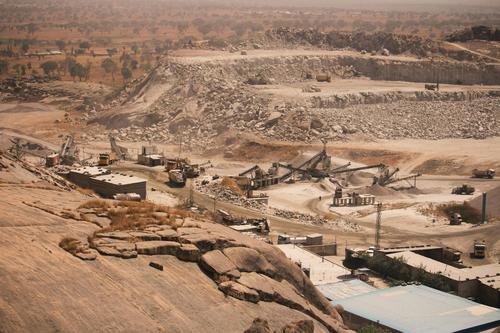
Rare earth elements (REEs), a group of 17 metallic elements, are indispensable for modern technology, powering everything from electric vehicles (EVs) and wind turbines to advanced defense systems and consumer electronics. Despite their name, these elements aren't truly "rare" in abundance, but rather in concentrated, economically viable deposits. The challenge lies in their complex extraction and processing, a domain where China has historically held, and continues to wield, significant control. This dominance has transformed REEs from mere commodities into strategic geopolitical assets, prompting Western nations to aggressively pursue supply chain diversification.
REXC's inception reflects a broader global shift. Governments across the G7 are pouring billions into subsidies and regulatory frameworks, like the U.S. Inflation Reduction Act and the EU's Critical Raw Materials Act, to foster domestic and allied critical mineral projects. These initiatives prioritize non-Chinese sourcing, aiming to reduce vulnerability to potential supply disruptions or weaponization of trade. For investors, REXC represents a direct bet on this "de-risking" trend, offering a portfolio of companies poised to benefit from these legislative tailwinds and the push for a more resilient, ex-China rare earths ecosystem.
The ETF's pure-play approach is a key differentiator. Unlike broader critical materials funds that might include significant exposure to lithium, copper, or even Chinese entities, REXC allocates approximately 99% of its holdings to companies primarily focused on rare earth mining, exploration, or processing outside of China. This laser focus provides a clear investment thesis for those specifically targeting the rare earths segment and its unique geopolitical drivers.
Why Are Rare Earths So Critical, and What's Driving the Ex-China Push?
Rare earth elements are far more than just industrial inputs; they are foundational to the technological advancements defining the 21st century, making them critical for both economic prosperity and national security. From the powerful magnets in EV motors and wind turbine generators to the precision components in missile guidance systems and fighter jets, REEs are irreplaceable. The global demand for these minerals is projected to surge dramatically, with the IEA forecasting a 3.5-fold increase for energy transition minerals by 2030, and lithium demand potentially rising 40-fold. This accelerating demand, coupled with existing supply chain vulnerabilities, has elevated rare earths to a top-tier geopolitical concern.
China's near-monopoly over the rare earths supply chain is the primary catalyst for the ex-China push. Beijing currently controls roughly 70% of global rare earth mining, over 90% of refining capacity, and the vast majority of magnet production. This overwhelming dominance grants China significant leverage, as demonstrated by its past export restrictions on certain critical minerals. The most recent example came in April 2026, when China imposed rigorous export controls on heavy rare earth elements (HREEs) like lutetium, yttrium, dysprosium, and terbium, requiring licenses from the Ministry of Commerce. Such actions underscore the fragility of global supply chains reliant on a single, potentially adversarial, source.
Western nations, particularly the G7, are actively coordinating strategies to break this "stranglehold." A May 6, 2026, meeting of G7 trade ministers in Paris, for instance, explicitly aimed to accelerate critical minerals supply chain diversification. Discussions included incentives to boost alternative sources, coordinated procurement strategies, and the potential for a permanent secretariat to ensure long-term initiatives. The urgency is palpable: achieving the clean energy transition, with its reliance on EVs and renewable energy, requires scaling mineral supply chains that currently run almost entirely through China. This strategic paradox is forcing governments to invest heavily in developing non-Chinese alternatives.
The implications for investors are clear: companies operating outside China in the rare earths sector are likely to benefit from sustained government support, subsidies, and strategic partnerships. This creates a compelling investment narrative for funds like REXC, which specifically target these "ex-China beneficiaries." The goal is not just to secure supply but to build entirely new, resilient ecosystems that can withstand geopolitical shocks and ensure technological leadership for allied nations.
How Does REXC Stack Up Against Other Rare Earths ETFs?
REXC distinguishes itself significantly from existing rare earths and critical materials ETFs, primarily through its explicit ex-China mandate and pure-play focus. Before REXC's launch, investors seeking exposure to rare earths often found themselves indirectly invested in Chinese companies or a broader basket of critical materials that diluted their rare earth focus. This new Sprott offering changes the game, providing a genuinely distinct option for those prioritizing supply chain diversification.
Consider the landscape: the VanEck Rare Earth and Strategic Metals ETF (REMX) and the Global X Rare Earth & Critical Materials ETF (EART) have been the primary options. As of early 2026, REMX had approximately 24% of its portfolio in rare earths, but also a substantial 38% in lithium and nearly 30% exposure to China. EART, similarly, held around 19% in rare earths, with a significant 34% in copper and about 25% exposure to Chinese companies. These funds take a much broader view of "critical materials," often including a wide array of industrial metals and significant Chinese holdings.
REXC, in stark contrast, allocates approximately 99% of its holdings to companies whose primary business is rare earth mining, exploration, or processing, with Chinese securities entirely excluded. This makes REXC the only fund among the three with an explicit policy to invest at least 80% of assets in rare earths companies, as defined in its prospectus. For investors specifically looking to mitigate the risks associated with Chinese state-owned enterprises and geopolitical leverage, REXC offers an unparalleled level of targeted exposure.
The expense ratios also vary, though not dramatically. REXC carries an expense ratio of 0.65%, slightly higher than REMX at 0.58% and EART at 0.59%. However, for thematic funds, especially newly launched ones, the bid-ask spread can often overshadow the annual fee. REMX, with its substantial ~$2.6 billion in assets under management (AUM), benefits from greater liquidity and tighter spreads. EART, at ~$51 million AUM, is serviceable but can see wider spreads. REXC, being newly launched with a current market cap of $2.3 million and total assets of $31.15 million, should be considered less liquid by institutional standards until it attracts more AUM. This liquidity factor is a critical consideration for early investors, as noted in REXC's own prospectus.
What Are the Key Holdings and Potential Risks for REXC Investors?
REXC's portfolio, while focused, exhibits a relatively high concentration in its top holdings, reflecting the genuinely small universe of publicly traded rare earth companies operating outside of China. As of its launch, the fund held 34 companies, with two names dominating a significant portion of the portfolio. This concentration is a double-edged sword, offering high conviction but also amplifying idiosyncratic risks.
The two largest holdings in REXC are Lynas Rare Earths Ltd (ASX:LYC) and MP Materials Corp (NYSE:MP). Lynas Rare Earths, an Australian company, represents approximately 21.12% of the portfolio and is the world's largest ex-China rare earths producer, operating the Mt Weld mine in Western Australia. MP Materials, based in the United States, accounts for roughly 19.59% of the fund and is the only integrated rare earth producer in the U.S., centered around its Mountain Pass mine in California. Together, these two companies comprise nearly 40% of REXC's portfolio. While both are critical players in the ex-China rare earths ecosystem, a significant negative event or operational setback at either company could have an outsized impact on the ETF's performance. The index's 20% single-position cap and 49% aggregate cap for positions above 5% provide some structural limits, but the concentration remains notable.
Beyond concentration, REXC faces several other risks inherent to its niche and nascent status. Liquidity is a primary concern. With a market cap of just $2.3 million and total assets of $31.15 million, REXC is a relatively small ETF. Its trading volume on May 7, 2026, was 239,633 shares, which, while decent for its size, means that large buy or sell orders could impact its price more significantly than a larger, more established fund. The prospectus itself warns that "an active trading market for shares may not develop or be maintained," underscoring the importance of AUM growth for long-term viability and tighter bid-ask spreads.
Furthermore, the rare earths market itself is characterized by volatility. Thin markets and limited liquidity contribute to dramatic price movements based on small shifts in supply or demand. Technical processing complexities, including the management of radioactive byproducts, and stringent environmental regulations add significant cost and time to new projects, creating high barriers to entry and execution risks for the underlying companies. Geopolitical risk, while a tailwind for the ex-China thesis, can also introduce uncertainty through trade policies, export controls, and international cooperation frameworks that can shift rapidly.
What Does This Mean for Investors Looking at REXC?
For investors, REXC represents a high-conviction bet on a critical, geopolitically sensitive sector. The ETF's pure-play, ex-China strategy aligns directly with the strategic imperatives of Western governments to secure supply chains for the clean energy transition and national defense. This narrative provides a compelling long-term tailwind, as global powers are committed to reducing reliance on China and fostering alternative sources. The current price of $22.92, after a -3.39% dip on May 7, 2026, sits within its 52-week range of $20.30 to $25.39, suggesting it's trading in a relatively tight band since its recent inception.
The investment case for REXC is rooted in the expectation that the structural shift away from Chinese rare earth dominance will continue to accelerate. This will likely translate into increased funding, subsidies, and strategic partnerships for the companies within REXC's portfolio, potentially driving their growth and profitability. The ETF offers a diversified basket of these companies, mitigating some of the single-stock risk inherent in this concentrated industry, although the fund itself remains concentrated in its top two holdings.
However, investors must approach REXC with a clear understanding of its risks. Its status as a newly launched ETF means it lacks a long track record, and its relatively small AUM could lead to liquidity challenges and wider bid-ask spreads, especially during volatile market periods. The high concentration in Lynas Rare Earths and MP Materials means that company-specific operational or regulatory issues could disproportionately affect the fund's performance. The overall rare earths market is also prone to volatility due to supply-demand imbalances and complex processing requirements.
Ultimately, REXC is a tactical tool for investors who believe that the future of energy independence and national security hinges on a rare earths supply chain that begins and ends outside of Chinese borders. It's a play on a macro trend with significant government backing, but one that comes with the inherent risks of a niche, early-stage investment. Due diligence on the fund's liquidity, expense ratio, and the underlying health of its top holdings is paramount.
The Road Ahead for Ex-China Rare Earths
The path forward for the ex-China rare earths sector, and by extension REXC, is one of strategic necessity and significant investment. The global rare earth market, valued at $8.15 billion in 2026, is projected to grow at an 8.6% compound annual growth rate through 2036. This growth is underpinned by the relentless demand from electric vehicles, renewable energy expansion, and defense modernization programs. The current geopolitical landscape ensures that this market transformation will continue to be a priority for Western governments.
Near-term development will focus on establishing initial processing capabilities in strategic locations, often with direct government support. These pioneering facilities are crucial for demonstrating commercial viability and building the technical expertise necessary for broader market development. Medium-term expansion, however, will depend on sustained premium pricing for non-Chinese rare earths and continued policy support from Western governments, which will be vital for attracting the necessary private capital.
For REXC, the key question in the months and years ahead is whether it can attract sufficient assets under management to become a functionally liquid and widely adopted investment instrument. Sprott's track record with other thematic funds suggests it understands how to market to an interested audience. If rare earth supply chain concerns continue to escalate, REXC is uniquely positioned to capture that interest.
The Sprott Rare Earths Ex-China ETF offers a compelling, albeit specialized, opportunity for investors to align with a powerful geopolitical and economic trend. Its pure-play exposure to the ex-China rare earths supply chain provides a direct avenue to capitalize on the global push for critical mineral independence. While early investors must weigh the genuine portfolio differentiation against the inherent liquidity and concentration risks of a newly launched, niche ETF, the strategic importance of its underlying theme suggests a potentially impactful long-term trajectory.
Want deeper research on any stock? Try Kavout Pro for AI-powered analysis, smart signals, and more. Already a member? Add credits to run more research.