MarketLens
Is Visionary AI Poised to Dominate the Edge AI Revolution

Key Takeaways
- Visionary AI's patented AI Image Signal Processor (ISP) is a breakthrough in edge computing, transforming rigid hardware into flexible, software-defined imaging.
- Strategic partnerships with industry titans like Qualcomm and Chips&Media position Visionary AI for rapid adoption across high-growth industrial and consumer sectors.
- While the market opportunity in industrial automation and smart factories is immense, investors must weigh the significant challenges of edge deployment complexity and intermittent connectivity.
Is Visionary AI Poised to Dominate the Edge AI Revolution?
Visionary AI, an Israeli startup making waves in the artificial intelligence landscape, is rapidly emerging as a critical player in the burgeoning edge AI market. The company recently unveiled its patented AI-based Image Signal Processor (ISP), a technology that promises to fundamentally reshape how cameras and sensors operate in industrial and consumer environments. This innovation is not just an incremental improvement; it represents a paradigm shift from traditional, fixed-function hardware to a more adaptable, software-defined imaging pipeline.
The broader technological world is already moving beyond the days when every byte of data needed to be shipped to energy-hungry data centers for processing. The explosion of powerful, energy-efficient microchips and the maturation of 5G networks have paved the way for intelligence to reside directly on devices—at the "edge." This shift is driven by necessity: as sensors proliferate into the trillions, sending all that information to the cloud becomes unfeasible due to bandwidth limits, latency issues, and privacy concerns. Processing data where it's created, directly on the device, offers a compelling solution.
Visionary AI's technology directly addresses these challenges by enabling real-time, high-quality video processing directly on the edge, without reliance on cloud compute. This capability is crucial for applications demanding instantaneous decision-making and robust data security. The company's recognition as one of CB Insights' "100 Most Promising AI Startups" underscores its potential to disrupt established markets and capture significant value in the evolving edge computing ecosystem.
For investors, understanding Visionary AI's unique differentiation and the market forces driving edge AI adoption is paramount. The company's approach to imaging, moving the core processing from static hardware to dynamic AI software, could unlock unprecedented levels of clarity, adaptability, and intelligence in camera systems. This positions Visionary AI not just as a component provider, but as an enabler of next-generation intelligent edge devices across a multitude of industries.
How Does Visionary AI's Patented AI ISP Differentiate Itself?
Visionary AI's core differentiation lies in its AI-based full Image Signal Processor (ISP), a patented technology that replaces traditional, rigid hardware-based pipelines with intelligent neural networks. For decades, ISPs have been fixed-function hardware chips, limited in their image quality performance and unable to adapt after production. Visionary AI, in collaboration with Chips&Media, has transformed this model by introducing an AI software-based full ISP pipeline that delivers exceptional video quality and, crucially, can be tuned, optimized, and updated over the air.
This breakthrough builds upon Visionary AI's acclaimed AI denoiser, extending it into a comprehensive imaging pipeline that leverages deep expertise in AI, computer vision, and hardware acceleration. The AI ISP delivers a generational leap in performance and efficiency, offering superior video quality across all lighting and motion conditions in real-time. This means reduced blur and noise, increased sharpness, and enhanced color accuracy, which are critical for object detection and overall situational awareness in demanding environments.
Unlike competitors that might offer partial AI enhancements, Visionary AI's solution is a full AI ISP, meaning the entire imaging pipeline is software-defined and AI-driven. This allows camera systems to adapt more easily to new sensors, varying lighting conditions, and diverse use cases, while also accelerating development cycles and reducing system complexity for manufacturers. The ability to achieve 16-bit floating-point precision ensures exceptional accuracy and image quality, a key advantage in applications where precision is paramount.
The technology's ability to operate entirely on-device, processing raw Bayer sensor input to YUV output at real-time 4K video at 30 frames per second, is a significant competitive edge. This on-device processing maintains strict latency constraints, which is vital for modern edge applications like autonomous vehicles, robotics, and industrial automation. This flexibility and performance were recognized when Visionary AI's AI ISP was awarded the 2026 Edge AI and Vision Product of the Year Award in the Camera or Sensor category, highlighting its industry-leading innovation.
What is the Market Opportunity for Edge AI in Industrial Automation?
The market opportunity for edge AI in industrial automation is nothing short of transformative, with the global edge AI market projected to reach $118.69 billion by 2033, growing at a 21.7% CAGR annually. Manufacturing, in particular, has been the most vigorous early adopter of local AI technology, with the "Smart Factory" concept becoming a reality rather than a mere fad. Edge AI use cases in this sector are laser-focused on reducing downtimes, ensuring safety, and improving supply chain efficiency with accuracy levels that human capabilities cannot match.
Consider predictive maintenance 2.0, a cornerstone of Industry 4.0. Edge-deployed machine learning systems analyze sensor data from motors, compressors, and CNC machines continuously. They can detect subtle vibration profiles, acoustic signatures, or thermal drifts to predict equipment failure weeks in advance with 95% accuracy, cutting unplanned outages by 40% and extending asset life by 25%. This proactive approach saves chemical and heavy industry plants significant capital expenditure and minimizes disruption.
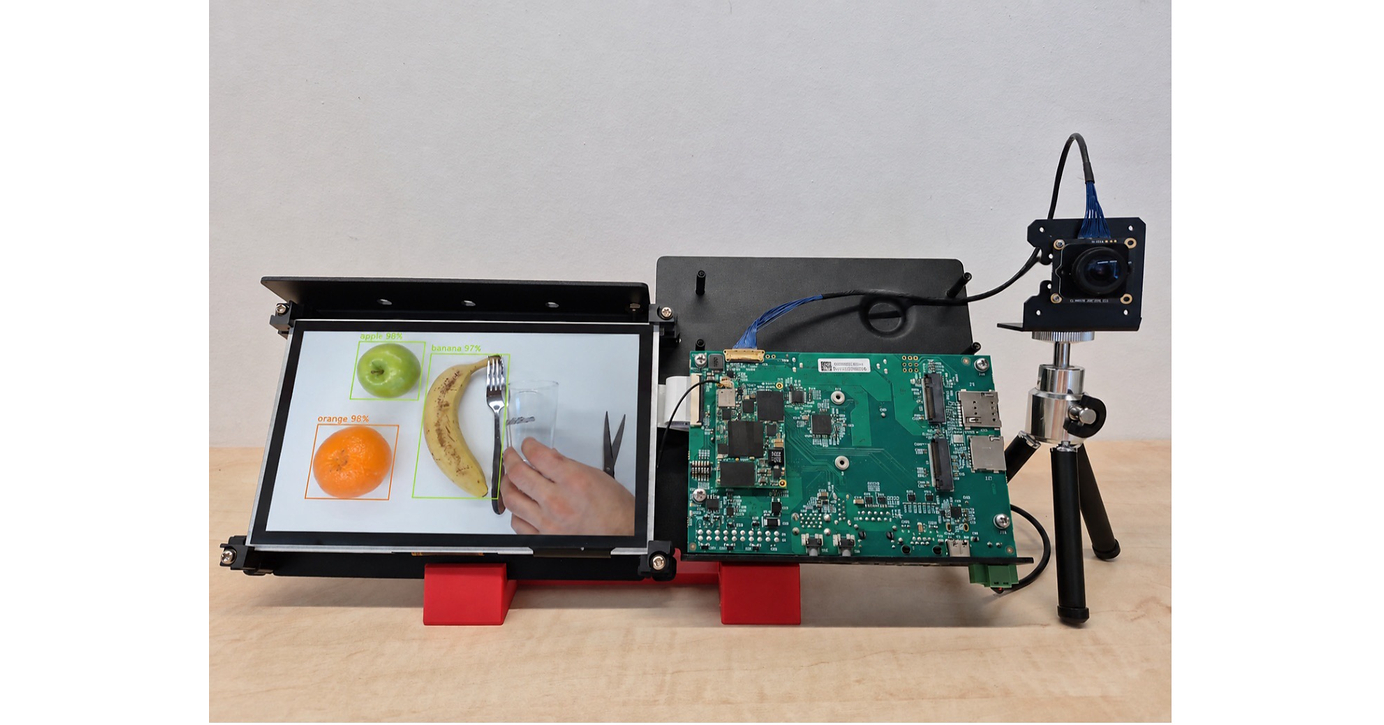
Beyond maintenance, smart manufacturing environments leverage computer vision at the edge for inline quality inspection. These systems catch surface defects, dimensional errors, and assembly mistakes faster than any human inspector, without production footage ever leaving the facility. For high-volume assembly lines, cameras embedded with neural processing units can detect defects like scratches or misalignments in real-time, leading to 25% throughput increases and payback in 6-9 months through lower rework costs.
The benefits extend to robotic welding and material handling, where cobots and AGVs demand split-second decisions in dynamic environments. Edge AI optimizes paths and avoids collisions, with warehouses reporting 35% fewer errors via swarm coordination over local meshes. The ability to retool lines for new models without downtime, starting with small pilots and scaling to fully autonomous operations, underscores the flexibility and efficiency that edge AI brings to the factory floor.
Who Are Visionary AI's Key Partners and Competitors?
Visionary AI has strategically aligned itself with major industry players, a crucial move for a small-cap innovator looking to scale. Its collaboration with Chips&Media, Inc., a global leader in multimedia IP with over 3 billion units shipped and adopted by 150+ semiconductor companies, is particularly significant. This partnership combines Visionary AI's AI software with Chips&Media's silicon-proven hardware IP, creating the world's first AI-based full ISP that is both high-performance and area-efficient. This joint effort was publicly showcased at CES 2026, marking a major debut for the technology.
Another pivotal partnership is with Qualcomm, a dominant force in mobile and edge processing. Visionary AI's AI ISP is now running on Qualcomm Snapdragon Gen 4 Mobile Platforms, enabling real-time 4K video at 30 frames per second directly on the edge. This integration extends Visionary AI's reach into smartphones, robotics, drones, and security cameras, leveraging Qualcomm's vast ecosystem. The collaboration was announced at the Snapdragon Summit in October 2023, with claims that their combined technology could deliver "night vision" capabilities surpassing human vision, illuminating scenes as dark as 0.2 lux.
In the competitive landscape, Visionary AI operates within the broader industrial AI vision systems market. While its AI ISP is a foundational technology, it competes with established players offering complete vision systems. Companies like Overview.ai lead with rapid deployment (training models in under 1 hour with as few as 5 images) and on-device NVIDIA GPU processing, boasting 75% reduction in inspection costs. Other notable competitors include Cognex ViDi (strong for high-volume applications), Keyence AI Vision (excelling in precision measurement), and SICK AI Inspection (specializing in logistics).
Visionary AI's approach is distinct: instead of offering a full system, it provides the intelligent "eyes" for these systems. Its AI ISP can potentially be integrated into solutions from various hardware manufacturers, making it an enabling technology rather than a direct competitor to all. The company's recent Edge AI and Vision Product of the Year Award for "Best Camera or Sensor" further validates its unique position and technological superiority in this specific component category, distinguishing it from broader system providers.
What are the Challenges and Risks for Visionary AI?
Despite its innovative technology and strategic partnerships, Visionary AI faces significant challenges inherent in the broader edge AI market, particularly in industrial environments. One primary hurdle is edge deployment complexity. A survey revealed that 27% of respondents flag this as a top barrier to adoption, distinct from general integration challenges. Deploying AI models at the edge is not merely an extension of cloud-first strategies; it's a fundamentally different operating environment with unique constraints.
Compute constraints are a major issue. Unlike the cloud where GPU instances can be scaled infinitely, edge devices are limited by physical size, power consumption, and environmental factors like temperature and hazardous area certifications. A model performing flawlessly on a cloud GPU might need significant optimization, such as quantization or pruning, to run on an edge device with a fraction of the compute budget. This optimization often risks degrading model accuracy, turning a 97% accurate cloud model into a 91% accurate edge model, which can be critical for quality inspection.
Connectivity is intermittent, not guaranteed, in many industrial settings. Welding cells generate electromagnetic interference, older plant networks are not designed for continuous data streaming, and some areas lack wired connectivity entirely. Edge AI systems must be designed to handle these unreliable networks, deciding whether to queue data, infer locally with potentially outdated models, or stop processing. Only 34% of respondents in a survey reported having production systems with real-time data streaming, highlighting a significant infrastructure gap.
Furthermore, security exposure multiplies at the edge. Every edge device represents a potential attack surface on the operational technology (OT) network. OT security teams, rightly cautious, often impose lengthy review cycles, adding months to deployment timelines. Devices need hardening, firmware management, segmented network access, and auditable data flows. With 30% of companies citing data privacy and compliance as a top AI adoption challenge, the burden at the edge, where sensitive operational telemetry is processed locally, is considerably higher than in centralized cloud deployments. These operational realities present substantial hurdles for Visionary AI's widespread adoption.
What Does This Mean for Investors?
For investors, Visionary AI represents a compelling, albeit high-risk, opportunity in the rapidly expanding edge AI sector. The company's patented AI ISP technology is a genuine differentiator, offering a software-defined, adaptable imaging solution that directly addresses critical limitations of traditional hardware. This innovation, coupled with strategic alliances with industry giants like Qualcomm and Chips&Media, positions Visionary AI to capture significant market share as industrial automation and smart devices increasingly rely on on-device intelligence.
The potential revenue impact is substantial, driven by the projected 21.7% CAGR of the global edge AI market. As more manufacturers embrace Industry 4.0 and demand real-time, secure, and low-latency processing, Visionary AI's technology could become an indispensable component across various applications, from predictive maintenance to advanced robotics. Its ability to enhance video quality in extreme conditions, even "surpassing human vision" in low light, opens doors to new use cases in security, automotive, and consumer electronics.
However, investors must temper optimism with a realistic assessment of the operational challenges. The complexity of edge deployment, intermittent connectivity, and heightened security concerns in industrial environments mean that market adoption, while promising, may not be linear. Visionary AI's success will hinge not only on its superior technology but also on its partners' ability to navigate these real-world deployment hurdles and integrate its solutions seamlessly into diverse industrial ecosystems.
Ultimately, Visionary AI is a company to watch closely. Its technological prowess and strategic partnerships offer a strong bull case for long-term growth in the edge computing space. Yet, the inherent complexities of industrial AI deployments and the competitive landscape demand careful consideration of execution risk.
Visionary AI is at the forefront of a technological shift, offering a foundational component for the future of intelligent edge devices. Its success will be a testament to how effectively cutting-edge AI software can overcome the practical challenges of real-world industrial environments. Investors should monitor its integration progress and broader market adoption closely for signs of sustained momentum.
Want deeper research on any stock? Try Kavout Pro for AI-powered analysis, smart signals, and more. Already a member? Add credits to run more research.
Related Articles
Category
You may also like


Wetour Robotics Demonstrates Real-Time Multi-Modal Edge AI Across VisionLink and Conductor Modules of the Orchestra Physical AI Platform

Cognex Launches In-Sight Vision Controller Powered by NVIDIA

AI is here to stay, and it will disrupt every industry: Vast Data CEO
Breaking News
View All →Featured Articles
Top Headlines

8 billionaires who fled California before the “Wealth Tax” hit — and one who didn't

Elon's Terafab Is Moving at “Light Speed” — and That Could Mean Big Things for Tesla

REITs Excel, Earnings Swell, Fed Rebels

2 stocks to hit $2 trillion market cap by Q4 2026