MarketLens

Log in

Is Voyager Space (VOYG) Poised for Lift-Off with NASA's CLD Program

9 hours ago
SHARE THIS ON:

Is Voyager Space (VOYG) Poised for Lift-Off with NASA's CLD Program

Key Takeaways

  • NASA's recent reaffirmation of its Commercial LEO Destinations (CLD) program strategy provides a crucial catalyst for Voyager Space (VOYG) and its Starlab commercial space station initiative.
  • Starlab, a joint venture with Airbus, has demonstrated significant technical progress and secured key partnerships, positioning it as a strong contender for NASA's upcoming Phase 2 contract awards.
  • While the competitive landscape remains intense, Voyager's diversified strategy, including its private astronaut missions and expandable habitat investments, suggests a robust long-term play in the burgeoning space economy.

Is Voyager Space (VOYG) Poised for Lift-Off with NASA's CLD Program?

Voyager Space (VOYG), through its Starlab joint venture, appears increasingly well-positioned to secure a significant contract from NASA's Commercial Low Earth Orbit (LEO) Destinations (CLD) program, presenting a compelling, albeit speculative, investment opportunity. The recent decision by NASA to revert to its original CLD strategy, coupled with Starlab's technical advancements and strategic partnerships, underscores a potentially transformative period for the company. Investors should closely monitor the upcoming Request for Proposals (RFP) and subsequent contract awards, which could serve as a major re-rating event for VOYG.

The context for this optimism stems from NASA's critical need to replace the aging International Space Station (ISS), slated for deorbiting in 2030. For over two decades, since November 2, 2000, the ISS has been continuously occupied, serving as a vital platform for scientific research, particularly on human adaptation to space for future Moon and Mars missions. However, NASA no longer intends to build and operate its own LEO station, instead opting for a public-private partnership model under the CLD program. This strategy aims to foster a sustainable commercial market where NASA is just one of many customers, a vision strongly supported by industry groups like the Commercial Space Federation.

A pivotal moment occurred on June 1, 2026, when NASA officially agreed to "stick with the existing plan" for CLDs, reversing a contentious proposal from March 24, 2026, that suggested a government-funded module attached to the ISS. This earlier proposal, introduced by Administrator Jared Isaacman following a September 2025 review by then-Acting Administrator Sean Duffy, had sparked significant backlash from industry players. Commercial Space Federation President Dave Cavossa hailed NASA's decision as "great news," emphasizing that the discussions had "made the industry stronger" and were now ready to "move forward with the procurement this summer," with a draft RFP "expected later this month" (June 2026). This reaffirmation provides much-needed clarity and stability for companies like Voyager, allowing them to proceed with confidence in their commercial station development.

What Makes Starlab a Frontrunner in the Commercial Space Station Race?

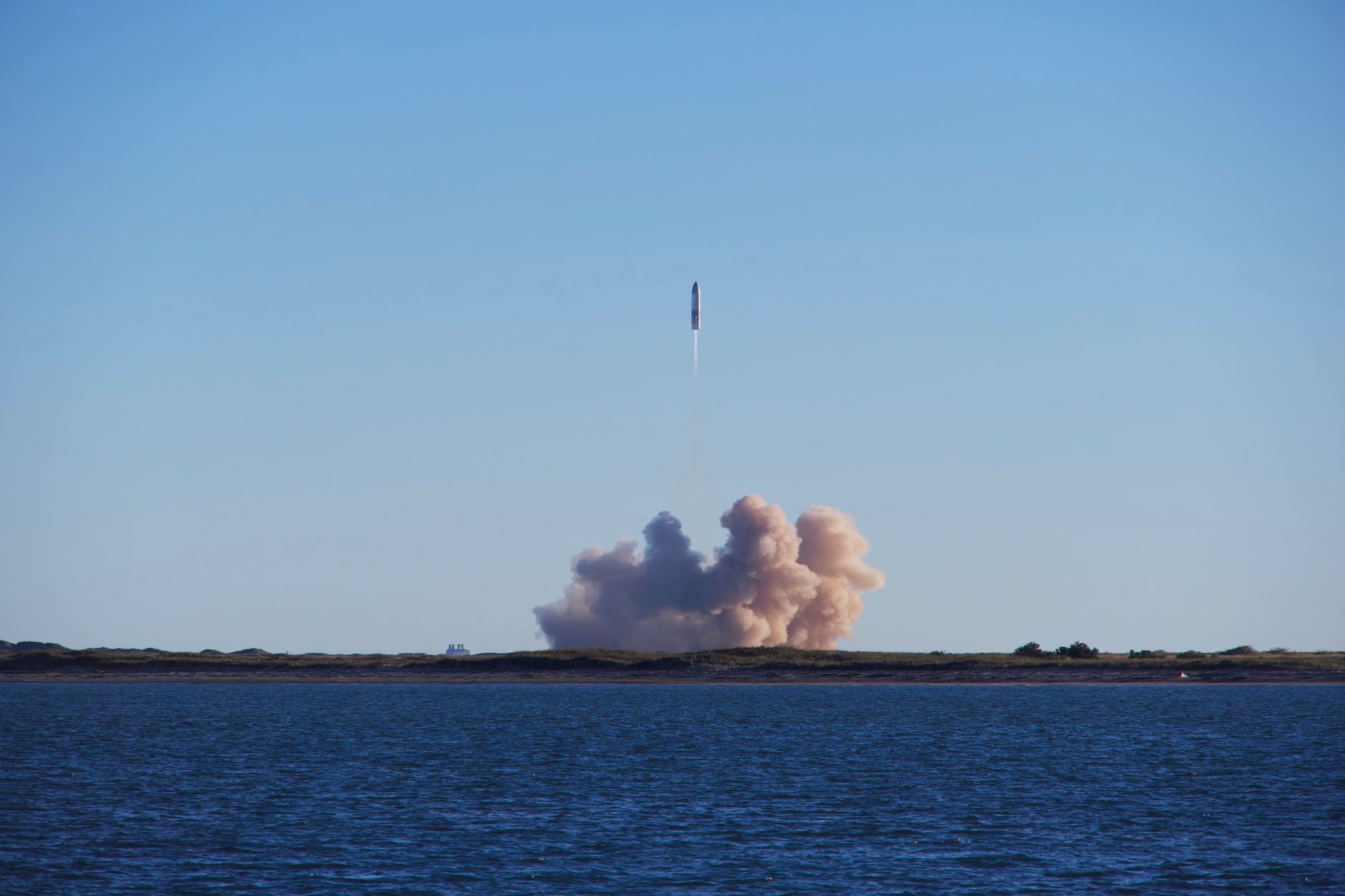
Starlab, the commercial space station being developed by a joint venture between Voyager Space and Airbus, stands out as a formidable contender in the CLD program due to its advanced design, robust partnership network, and consistent technical progress. Unlike some modular designs, Starlab is envisioned as a single-module station, designed to be launched all at once, which could allow it to reach full operational capacity instantly. The station is targeting a launch in 2029 aboard SpaceX’s Starship rocket, one of the few vehicles capable of accommodating its large 8-meter diameter and a pressurized volume approximately 45% of the ISS's US segment.

The Starlab venture has strategically built a powerful consortium of partners, including Airbus, Mitsubishi Corporation, MDA Space, Palantir, Northrop Grumman, and Hilton. Airbus Defence and Space, which finalized its joint venture with Voyager Space on January 9, 2024, provides critical design support and technical expertise. Northrop Grumman, which initially had its own CLD concept, joined the Starlab project on October 4, 2023, abandoning its independent efforts and contributing its expertise, including the development of an autonomous docking system for its Cygnus spacecraft. MDA Space, joining on May 29, 2024, took an equity stake and will provide advanced robotic arm technologies from its MDA Skymaker line for external operations. Even Hilton is involved, designing astronaut facilities and hospitality suites, highlighting Starlab's focus on a comprehensive, commercially viable platform.

Starlab's technical development has been marked by a series of successful milestones, instilling confidence in its readiness. The project passed its Preliminary Design Review (PDR) with NASA in March 2025, solidifying its updated rigid metallic pressure vessel design after an earlier pivot from an inflatable concept. More recently, in February 2026, Starlab completed its Commercial Critical Design Review (CCDR) with NASA, a crucial step before full flight manufacturing. Voyager also announced in April 2026 that it is kicking off demonstration missions for an alternative urine processor (AUP) and a free-space optical (FSO) link, validating essential capabilities. Furthermore, Vivace has begun fabricating the primary aluminum-based module at NASA’s Michoud Assembly Facility, a structure expected to be one of the largest single spaceflight elements ever developed, with manufacturing having kicked off in Q3 2023. These tangible steps underscore Starlab's transition from concept to concrete hardware, backed by $147 million of the $217.5 million CLD award already paid out by NASA.

What Are the Financial Implications for VOYG and the Commercial LEO Market?

The financial implications for Voyager Space (VOYG) from the CLD program are substantial, though the full scope remains to be realized as the commercial LEO market matures. The estimated cost for Starlab's development ranges from $2.8 billion to $3.3 billion, a significant investment that highlights the scale of this endeavor. Voyager has already received a substantial portion of its initial $217.5 million Space Act Agreement (SAA) award from NASA, with $147 million paid out, demonstrating NASA's commitment to the project. This initial funding is critical for de-risking the early development phases and attracting further private investment.

The long-term financial upside for VOYG hinges on Starlab's ability to generate recurring revenue from a diverse customer base beyond NASA. Starlab is designed with a primary focus on research applications, featuring the George Washington Carver Science Park with dedicated labs for biology, plant habitation, physical science, and materials research. This focus positions it to capture demand from government agencies, academic institutions, and commercial entities seeking microgravity research capabilities. Voyager's IPO filing in January 2025 signaled its intent to tap public markets for capital, which will be crucial for funding the remaining development costs and scaling operations.

While specific revenue projections for Starlab are not publicly detailed, the vision is for a sustainable commercial market where NASA is just one customer. This implies a future where Starlab generates revenue from in-space manufacturing, technology trials, and potentially even space tourism, though the latter is not its primary focus. The agreement with The Exploration Company in May 2024 for three cargo missions to and from Starlab on its Nyx vehicle already indicates early commercial interest. The successful transition from the ISS to commercial platforms like Starlab represents a multi-billion-dollar market opportunity, with the President’s Budget Request (PBR) for FY2026 including $272.3 million for CLD development and $2.1 billion over the next five years, underscoring the government's financial commitment to this transition.

How Does Starlab Stack Up Against Its CLD Competitors?

The competition in the commercial LEO destination market is intense, with several prominent players vying for NASA's crucial Phase 2 funding. Beyond Starlab, key competitors include Axiom Station (Axiom Space), Orbital Reef (Blue Origin, Sierra Space, Boeing), and Haven (Vast). Each offers a distinct approach, and Starlab's strategy of a single-module launch and strong research focus provides both advantages and challenges in this competitive landscape.

Axiom Space, a frontrunner, is planning to launch a two-module station by 2028, with long-term plans for an independent four-module station. Axiom has a significant head start, having been awarded a NASA contract in 2020 to provide habitable commercial modules to be attached to the ISS, with the goal of becoming a free-flying station. Axiom is also the only competitor to have already led commercial flights to the ISS, giving it valuable operational experience. Its structures for the AxPPTM, AxH1, and AxH2 modules are being manufactured by Thales Alenia Space, with the first module planned to launch to the ISS in 2027. This timeline puts Axiom in close competition with Vast's Haven-2, which is expecting to launch its single-module Haven-1 station in Q1 2027.

Orbital Reef, a collaboration between Blue Origin, Sierra Space, and Boeing, was granted $130 million by NASA in 2021 to develop its design. However, Orbital Reef has been noted for its "sluggish pace" compared to its competitors, which could put it at a disadvantage for Phase 2 funding. Starlab's unique selling proposition lies in its single-launch design, which, while targeting a later 2029 launch than some competitors, would instantly achieve full capacity. This contrasts with modular designs that require multi-year assembly campaigns. Starlab's CEO Tim Kopra has even suggested the possibility of launching additional Starlabs if demand warrants, highlighting the scalability of their approach. While Axiom has various studies for station uses, Starlab already has flights booked from international suppliers, which could be a significant strength in the Phase 2 award evaluation. The geopolitical backdrop, with China's Tiangong space station having achieved permanent occupancy in 2022, also adds urgency to the U.S. effort to maintain leadership in LEO.

Beyond Starlab: Voyager's Broader Strategic Vision in Space

While Starlab is a cornerstone of Voyager Space's strategy, the company is actively pursuing a broader vision that extends beyond commercial LEO destinations, aiming to establish itself as a diversified leader in the evolving space economy. This comprehensive approach mitigates some of the risks associated with a single large-scale project and positions Voyager for long-term growth across multiple segments of the space industry. The company's recent activities underscore its commitment to building a robust portfolio of space capabilities.

On April 15, 2026, Voyager Technologies (NYSE: VOYG) announced it had signed an order with NASA for the seventh Private Astronaut Mission (PAM) to the International Space Station, designated VOYG-1, launching no earlier than 2028. This mission is not just a one-off event; it represents a critical bridge to future commercial space stations and deep-space platforms. It will stress-test and refine life-support technologies, crew operations protocols, and integrated systems architectures that will be essential for lunar surface missions. This experience in crewed mission execution, built on the ISS, directly supports NASA’s strategy to transition LEO operations to the private sector and establishes a sustainable framework for human spaceflight services.

Furthermore, Voyager has made strategic investments, such as its multi-million-dollar stake in Max Space, a company developing expandable habitat technology. Max Space's architecture focuses on maximizing livable volume and reducing surface deployment costs, with habitats designed to deploy up to 20 times their stowed volume. This technology addresses a central infrastructure challenge for sustained lunar presence and aligns with Voyager’s broader strategic lunar initiative. By combining its heritage in ISS mission management, Starlab's commercial station development, and private astronaut flight execution, Voyager is building a seamless capability to support NASA and future commercial customers for complex, crewed, long-duration missions, solidifying its position as a transformative force in defense and space technology.

Voyager Space (VOYG) stands at a pivotal juncture, with NASA's reaffirmed CLD program strategy providing a clear runway for Starlab's development. The company's strong partnerships, technical progress, and diversified strategic initiatives position it favorably in the burgeoning commercial space market. Investors should recognize the significant potential for VOYG as it navigates the competitive landscape and aims to secure its place as a leader in the next era of human spaceflight.


Want deeper research on any stock? Try Kavout Pro for AI-powered analysis, smart signals, and more. Already a member? Add credits to run more research.

SHARE THIS ON:

Related Articles

Category

You may also like

Stock News3 days ago

Voyager Technologies Is Set To Launch In 2027 And Beyond (Rating Upgrade)

Voyager Technologies (VOYG) received a Strong Buy rating with a $67 price target, driven by Starlab, Artemis/CLPS, and Golden Dome programs. A $275mm backlog and 1.3x book-to-bill support growth.
Stock News6 days ago

Top 5 Stocks That Will Profit From SpaceX's NASA Launch Monopoly After Blue Origin's Pad Collapse

SpaceX's NASA launch monopoly strengthened after Blue Origin's New Glenn pad collapse, with at least a year rebuild timeline. Five stocks poised to benefit from SpaceX's increased launch dominance.
Stock News1 week ago

Are You Looking for a Top Momentum Pick? Why Virgin Galactic (SPCE) is a Great Choice

Virgin Galactic (SPCE) is being evaluated as a potential momentum play for investors. The analysis seeks to determine if the company's current market positioning and performance metrics align with the...
Stock News2 weeks ago

The Commercial Space Economy Just Crossed a Real Revenue Threshold and After Following This Industry for Years These Are the 3 ETFs Worth Owning

The commercial space sector has reached a milestone by achieving recurring commercial revenue at scale. This transition marks a shift from experimental development to consistent, revenue-generating op...

Breaking News

View All →

Top Headlines

View More →
Stock News23 minutes ago

Are Investors Overlooking Meta Platforms Stock?

Stock News1 hour ago

Why Microsoft Stock Slipped Today

Stock News1 hour ago

Microsoft (MSFT) Stock Falls Amid Market Uptick: What Investors Need to Know

Stock News1 hour ago

Amazon Adds AI Image Search to Its Shopping App

Stock News1 hour ago

Adobe Q2: The Market Has Lost Its Mind With This Low Valuation