MarketLens
Is Hyster-Yale Materials Handling (HY) Poised for a Lift-Off

Key Takeaways
- Hyster-Yale Materials Handling (HY) recently received an "Outperform" upgrade from Northland Securities with a $50 price target, signaling potential for a 36% upside from its previous close.
- The broader material handling equipment market is poised for significant growth, driven by e-commerce expansion, automation, and reshoring trends, creating a favorable macro environment for HY.
- Despite recent financial headwinds and a challenging Q2 2025, HY's strategic focus on electrification, automation, and a strong dividend yield of 3.91% could position it as a compelling contrarian play for long-term investors.
Is Hyster-Yale Materials Handling (HY) Poised for a Lift-Off?
Hyster-Yale Materials Handling (NYSE: HY), a stalwart in the industrial equipment sector, has recently caught the eye of Wall Street, sparking renewed interest in a stock that has navigated a challenging period. Shares of the lift truck and material handling solutions manufacturer jumped 6.82% today, closing at $39.34, following a significant upgrade from Northland Securities. This move from "Market Perform" to "Outperform," accompanied by a $50 price target, suggests a potential 36% upside from its previous close of $36.83, positioning HY as a potential contrarian play for investors looking beyond the immediate headwinds.
The upgrade comes at a pivotal time for Hyster-Yale, which has faced market contractions and reduced volumes across its product lines, leading to an operating loss in Q2 2025. However, the analyst's bullish stance hinges on an anticipated recovery in demand, aligning with broader industry trends that point towards a resurgence in the material handling equipment market. For investors, the question isn't just about the immediate price target, but whether HY's strategic initiatives and the evolving industrial landscape can sustain long-term growth and justify a higher valuation.
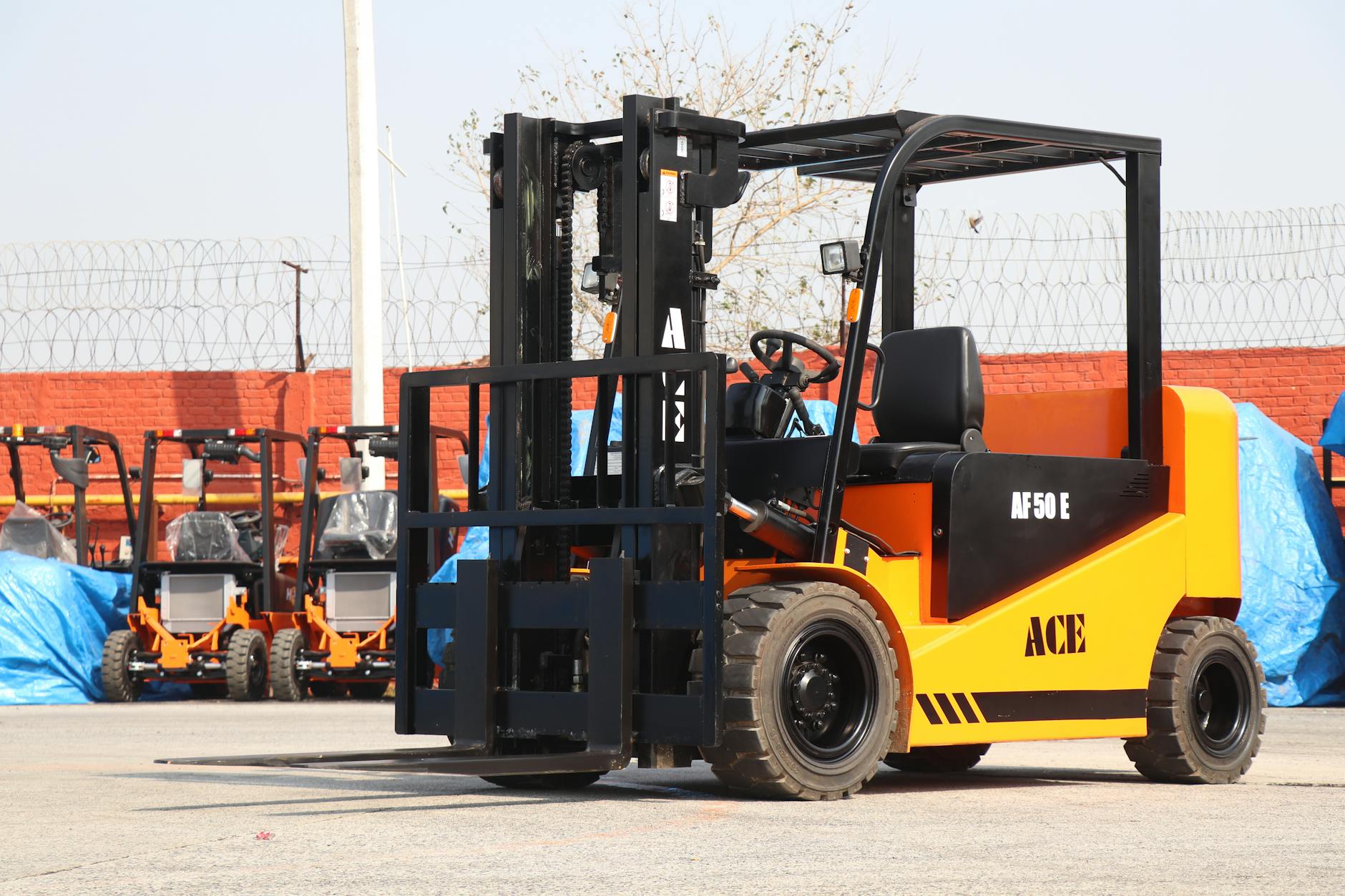
Hyster-Yale, known for its Hyster and Yale brands, designs, engineers, manufactures, and supplies a comprehensive range of lift trucks and aftermarket parts, serving diverse sectors from manufacturing and warehousing to logistics. The company's business model is deeply intertwined with the health of global supply chains and industrial activity. Understanding the confluence of micro-level company strategy and macro-level market dynamics is crucial to assessing whether HY is truly on the cusp of a rebound or if the recent optimism is premature.
What Macro Trends Are Driving the Material Handling Equipment Market?
The material handling equipment (MHE) market, the very ecosystem Hyster-Yale operates within, is undergoing a transformative period, fueled by several powerful macro trends. This isn't just about forklifts moving pallets; it's about the fundamental re-engineering of global supply chains. The market was estimated at $189.6 billion in 2025 and is projected to grow from $202.3 billion in 2026 to $372.6 billion by 2035, at a robust CAGR of 7%. This significant expansion provides a strong tailwind for established players like Hyster-Yale.
A primary driver of this growth is the relentless expansion of e-commerce. As online shopping platforms reach wider audiences and logistics infrastructure continues to develop, warehouse owners are compelled to invest in efficient material handling equipment to manage increasingly complex supply chain ecosystems. Automated material handling solutions, in particular, offer businesses the convenience and efficiency needed for packaging, bulk material handling, and streamlined supply chain management, a trend that is only accelerating. The US alone saw e-commerce sales reach $870 billion in 2021, accounting for 13.2% of retail sales, underscoring the scale of this shift.
Beyond e-commerce, the market is also benefiting from the rising sales of durable and non-durable goods, particularly in regions like North America, which is also witnessing increased adoption of automated warehouse practices. Technological innovations, including advancements in battery technology for electric forklifts (like lithium-ion and hydrogen fuel cells), and the broader digitalization of logistics, are further propelling market growth. The hydrogen fuel cell forklift market alone is projected to reach $10.0 billion by 2033 from $0.92 billion in 2025, growing at an impressive CAGR of 34.77%. These trends collectively paint a picture of an industry ripe for investment and innovation, directly impacting Hyster-Yale's long-term prospects.
How Does Hyster-Yale's Financial Health Stack Up Against Competitors?
Hyster-Yale's financial performance in the trailing twelve months (TTM) reflects a company navigating a challenging environment, yet with strategic investments positioning it for future growth. The company reported TTM revenue of $220.90 per share, translating to a market capitalization of $697.6 million. While its P/E ratio stands at a high 258.14, indicative of suppressed earnings, other valuation metrics like P/S at 0.18 and P/FCF at 13.04 suggest a more reasonable valuation relative to its sales and cash flow generation. The EV/EBITDA of 10.63 also offers a more normalized view of its operational value.
Profitability margins have been tight, with TTM gross margin at 18.1%, operating margin at 1.3%, and net margin at a slim 0.1%. These figures highlight the competitive pressures and macroeconomic headwinds impacting the industrial machinery sector. However, Hyster-Yale has demonstrated resilience, with TTM revenue growth of 4.6% and net income growth of 13.0% year-over-year in FY2024. The company's balance sheet shows a current ratio of 1.39 and a debt-to-equity ratio of 0.87, indicating a manageable level of leverage, though its net debt/EBITDA of 3.86 suggests some reliance on debt relative to its operational earnings.
In the fiercely competitive material handling industry, Hyster-Yale faces formidable rivals such as Toyota Material Handling, which commanded a substantial 29.04% market share in 2024, and KION Group. To differentiate, Hyster-Yale has strategically invested in Nuvera Fuel Cells, LLC, gaining in-house expertise in hydrogen fuel cell technology—a critical area for clean energy in material handling. This vertical integration, alongside advancements in Operator Assist Systems (OAS) and modular product designs, underscores Hyster-Yale's commitment to innovation and operational efficiency, aiming to sustain its competitive advantages against rapid technological shifts and market share battles.
What Are Analysts Saying, and What's the Valuation Story?
Analyst sentiment around Hyster-Yale is a mixed bag, reflecting the company's current challenges alongside its long-term potential. The recent "Outperform" upgrade from Northland Securities to a $50 price target stands out, implying a significant upside from the current trading price. However, the broader analyst consensus is more tempered. Wall Street analysts currently hold a "Buy" consensus rating for HY, based on 7 analysts: 3 "Buy" ratings, 3 "Hold" ratings, and 1 "Sell" rating. The median price target across analysts is $40.00, with a high of $40.00 and a low of $40.00 according to the real-time data, which conflicts with some web-scraped data showing a higher target from Northland. This discrepancy highlights the dynamic nature of analyst revisions and the importance of focusing on the most recent updates.
Looking at the company's valuation, the TTM P/E ratio of 258.14 is certainly high, suggesting that current earnings are significantly depressed relative to the stock price. This can be a red flag for value investors, but it also implies that the market might be pricing in a substantial recovery in future earnings. For context, the Industrials sector average P/E is around 49.6, making HY appear expensive on a trailing basis. However, the forward EPS estimate for FY 2028 is $2.28, and for FY 2029, it's projected to reach $3.98. If these projections materialize, the forward P/E would drop considerably, making the current valuation more palatable.
The company's last reported earnings on November 4, 2025, saw an EPS miss of -$0.09 on revenue of $1.0 billion. The upcoming Q4 and FY 2025 financial results, scheduled for March 3, 2026, will be crucial. Analysts are projecting an EPS of -$1.20 for Q4 2025, a significant 181.63% drop year-over-year, with revenue expected to decrease by 14.15% to $916.43 million. These short-term forecasts underscore the current operational difficulties. Yet, the dividend yield of 3.91% (with a quarterly payout of $0.36/share) remains attractive, signaling a commitment to shareholder returns even amidst a challenging earnings environment, though the payout ratio of 925.9% indicates it's currently unsustainable without a significant earnings recovery.
How Will the 2026 Manufacturing Outlook Impact Hyster-Yale?
The broader manufacturing industry outlook for 2026 presents a complex but potentially favorable landscape for Hyster-Yale. Economic volatility and shifting policies are forcing manufacturers to retool operations, with artificial intelligence (AI) and automation emerging as critical tools for agility and resilience. This trend directly benefits companies like HY, which provide the material handling equipment essential for modern, automated factories and warehouses. The material handling equipment market is intrinsically linked to manufacturing investment, and the Deloitte 2026 Manufacturing Industry Outlook highlights continued investment in technology, including agentic AI, to boost competitiveness.
A significant theme for 2026 is the acceleration of reshoring supply chains. Driven by favorable tax policies, supply chain security priorities, and national interest concerns, domestic reshoring and regional supply chains are expected to rise significantly. This will lead to accelerated demand and investment in domestically-produced components, particularly in mission-critical sectors like defense, electrical transmission, and building materials. As manufacturing operations return or expand within regions, the demand for efficient material handling solutions—from lift trucks to automated systems—will naturally increase, providing a direct boost to Hyster-Yale's order books.
However, the manufacturing sector also faces challenges, notably geographic labor constraints. The struggle to attract workers for both skilled trades and basic line operations will intensify in 2026. This labor shortage further incentivizes manufacturers to adopt automation and advanced material handling solutions to maintain production efficiency and reduce reliance on manual labor. Technologies like 3D printing and automated metal cutting are becoming critical for agile manufacturing, allowing companies to customize on-site and reduce excess inventory. Hyster-Yale's focus on Operator Assist Systems (OAS) and automated solutions directly addresses these industry pain points, making its offerings more relevant than ever.
What Are the Investor Implications and the Road Ahead for HY?
For investors considering Hyster-Yale, the current landscape presents a classic contrarian opportunity, but one that demands careful consideration of both the bullish catalysts and inherent risks. The Northland upgrade, with its $50 price target, clearly signals a belief in an impending demand recovery, aligning with the robust growth projections for the overall material handling equipment market, particularly driven by e-commerce and automation. HY's strategic investments in electrification and hydrogen fuel cell technology position it well for the industry's future, while its established brands, Hyster and Yale, provide a strong competitive moat.
However, the path to recovery is not without bumps. The company's recent financial performance, including an operating loss in Q2 2025 and projected negative EPS for Q4 2025, indicates that the turnaround is still in its early stages. The high TTM P/E ratio of 258.14 suggests that a significant portion of future growth is already priced in, making the stock vulnerable if the anticipated recovery falters or is delayed. Investors must weigh the potential for a cyclical rebound against the ongoing macroeconomic uncertainties and intense competition from larger players like Toyota and KION.
The upcoming Q4 and FY 2025 earnings release on March 3, 2026, will be a critical event, offering fresh insights into the company's operational health and management's outlook. Positive surprises in order backlogs, margin improvements, or a more optimistic guidance could provide the necessary catalyst for sustained upward momentum. Conversely, further disappointments could temper enthusiasm. For long-term investors with a high tolerance for risk, HY could offer substantial rewards if the macro tailwinds materialize and the company successfully executes its strategic vision, but patience and diligent monitoring will be key.
Hyster-Yale presents a compelling, albeit speculative, opportunity for investors betting on a cyclical rebound in industrial demand and the transformative power of automation. While short-term headwinds persist, the long-term growth trajectory of the material handling market, coupled with HY's strategic positioning, suggests a potential for significant upside. However, the path ahead requires careful navigation, with the upcoming earnings call serving as a crucial checkpoint for this contrarian play.
Want deeper research on any stock? Try Kavout Pro for AI-powered analysis, smart signals, and more. Already a member? Add credits to run more research.
Related Articles
Category
You may also like


Are You Looking for a Top Momentum Pick? Why Hecla Mining (HL) is a Great Choice

Should Investors Get Rid of Ryder Stock Despite Its Lower Valuation?

Could Novo Nordisk's New Weight-Loss Pill Be Just What Its Stock Needs?
Breaking News
View All →Featured Articles
Top Headlines

Amazon says drone strikes damaged 3 facilities in UAE and Bahrain

This AI Stock Is Up 11% in Just 1 Week. Time to Buy?

Down 18% This Year, Is Microsoft's Stock in Trouble?

Why Lockheed Martin & Palantir Technologies Should Be in Your Portfolio Right Now