MarketLens
Is Vulcan Materials Company Poised for a Decade of Infrastructure-Driven Growth

Key Takeaways
- Vulcan Materials Company (VMC) is strategically positioned to capitalize on the multi-year tailwinds from the $1.2 trillion Infrastructure Investment and Jobs Act (IIJA), with its extensive aggregate reserves and dominant market presence in high-growth U.S. regions.
- Despite a premium valuation, VMC's robust operational efficiency, commitment to sustainability, and strong customer relationships underpin its ability to drive margin expansion and consistent earnings growth amidst elevated demand.
- Investors should monitor VMC's ability to navigate inflationary pressures, secure timely permitting for new quarries, and effectively integrate digital and sustainable practices to maintain its competitive edge and justify its current valuation.
Is Vulcan Materials Company Poised for a Decade of Infrastructure-Driven Growth?
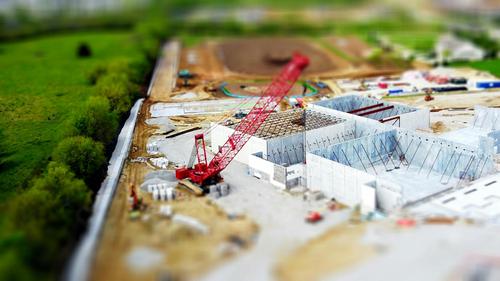
Vulcan Materials Company (VMC) stands at a pivotal juncture, uniquely positioned to benefit from a generational wave of infrastructure spending across the United States. As the nation's largest producer of construction aggregates—the foundational materials for roads, bridges, and buildings—VMC is a direct beneficiary of the $1.2 trillion Infrastructure Investment and Jobs Act (IIJA) signed into law in 2021. This legislation, allocating approximately $550 billion in new spending through 2026, promises a sustained surge in demand for VMC's core products.
The company's strategic footprint, encompassing 425 active aggregates facilities across 23 states, the U.S. Virgin Islands, and parts of Mexico and Canada, places it squarely in the path of major public works projects. With an impressive 16.6 billion tons of proven and probable aggregates reserves as of 2025, Vulcan offers unparalleled supply reliability, a critical factor for multi-year, multi-billion dollar infrastructure endeavors. This capacity allows contractors to avoid costly delays, often paying a premium for VMC's guaranteed supply.
Beyond public infrastructure, VMC also serves robust private sector demand, including non-residential commercial developers building warehouses, offices, and industrial sites. The U.S. non-residential construction market saw a 6.4% rise in 2024 to $913 billion, with e-commerce logistics expansion driving warehouse spending up 12% year-over-year. This diversified demand profile, coupled with its dominant market share in crushed stone (which accounted for 58.3% of the U.S. aggregates market in 2024), underscores Vulcan's entrenched position in the essential materials sector.
The company's ability to consistently meet stringent engineering specifications and provide technical consultation for custom aggregate and asphalt mixes further solidifies its market leadership. This value-added approach, which includes integrated quality assurance and on-spec batch rates exceeding 95%, reduces project rework and extends asset life, making Vulcan a preferred partner for complex projects. These factors combine to paint a compelling picture of sustained demand and pricing power for VMC over the coming years.
How Does Vulcan Materials Translate Infrastructure Spending into Profit?
Vulcan Materials Company's operational model is finely tuned to convert the anticipated surge in infrastructure spending into tangible financial gains, primarily through its dominant aggregates segment and integrated downstream operations. The company's core strength lies in its extensive network of quarries and distribution terminals, strategically located near high-growth metropolitan areas and federal infrastructure corridors. This proximity minimizes transportation costs, a significant competitive advantage in a bulk materials business where logistics efficiency is paramount.
The IIJA's allocation of nearly $350 billion to the Federal-Aid Highway Program through FFY 2026, including $40 billion for bridge repair, directly fuels demand for VMC's aggregates. Notably, $16.2 billion of these bridge funds are earmarked for projects in Vulcan-served states, ensuring a direct pipeline of revenue. This public sector exposure, which comprised approximately 30% of VMC's $10.6 billion revenue in 2024, is expected to grow, supported by additional state and local transportation funding measures that generated over $20 billion in revenues for Vulcan-served areas in 2025.
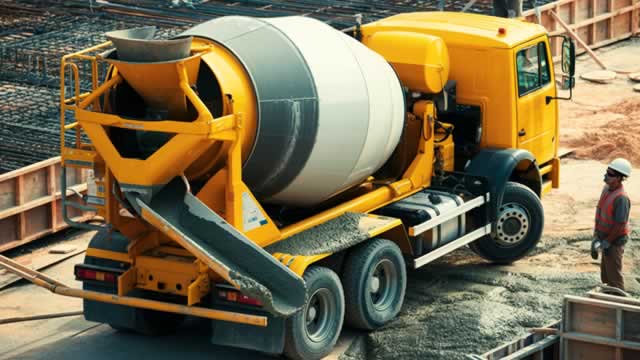
VMC's profitability metrics reflect its operational leverage. From 2023 to 2025, aggregates gross profit per ton increased by 17%, from $7.40 to $8.66. Cash gross profit per ton saw an even stronger 20% rise, from $9.46 to $11.33. These improvements demonstrate the company's ability to expand margins, even as it scales production. The integration of asphalt and ready-mixed concrete production, operating across ~2,000 plants and terminals, allows VMC to capture additional value downstream and ensures materials arrive fresh, directly impacting project schedules and reducing waste.
Furthermore, VMC's focus on logistics and supply chain management, moving approximately 100 million tons annually through 350+ distribution terminals and a fleet of ~1,300 owned trucks, generates substantial efficiencies. The company estimates annual savings of $50–80 million from trimming deadhead miles and cutting fuel use. These efficiencies, combined with a disciplined approach to capital allocation and a 0.7% dividend yield with a 24.0% payout ratio, position VMC to deliver consistent returns to shareholders as infrastructure demand accelerates.
What Are Vulcan's Competitive Advantages Beyond Raw Materials?
Vulcan Materials Company differentiates itself not just through its vast aggregate reserves, but also through a multi-faceted approach to customer relationships, technological integration, and environmental stewardship. These elements collectively fortify its market position and create significant barriers to entry for competitors. The U.S. aggregates market is moderately consolidated, with competition defined by control of geographically constrained reserves, logistics efficiency, and regulatory adaptability, rather than just price.
VMC's dedicated account management for large contractors and public agencies provides a single point of contact for complex orders, coordinating logistics across multiple job sites. This "high-touch" model fosters strong partnerships, boosting contract renewal rates and client loyalty. Technical consultation, where Vulcan engineers collaborate with customer project teams to craft custom aggregate and asphalt mixes, is a key value-added service. This reduces project rework and can save up to 8% on lifecycle costs, translating transactions into long-term partnerships.
Digital transformation is another critical competitive lever. By the end of 2025, VMC upgraded its digital portals, allowing customers to track deliveries, manage invoices, and place orders in real-time. This cut invoice processing time by ~30% and reduced delivery queries by ~22%, while improving on-time fulfillment rates by 5-8%. Digital orders rose 18% year-over-year in 2024, reflecting rapid adoption and a move away from analog touchpoints. These tools not only enhance customer satisfaction but also generate granular data for improved demand forecasting.
Environmental stewardship and community engagement are increasingly vital for maintaining a "social license to operate." Vulcan proactively mitigates noise, dust, and traffic, reporting less than 1% of planned expansions faced local legal challenges in 2024. The company invests $50 million annually in reclamation efforts, repurposing quarries as parks or reservoirs, and boasts 99% citation-free environmental inspections. Its commitment to sustainable materials, including recycled aggregates and low-carbon concrete (comprising 12% of its product mix by late 2025), further enhances its appeal to clients pursuing green building certifications and positions it favorably for future regulatory landscapes.
What Financial Health and Valuation Metrics Should Investors Consider?
Assessing Vulcan Materials Company's financial health and valuation requires a look beyond just revenue growth, considering its capital-intensive nature and cyclical industry exposure. As of April 28, 2026, VMC trades at $291.46, with a market capitalization of $38.06 billion. The stock has seen its 52-week range between $247.60 and $331.09, indicating some volatility but also resilience.
From a valuation perspective, VMC's TTM P/E ratio stands at 35.57, which is on the higher side for a basic materials company, suggesting the market is pricing in significant future growth. Its P/S ratio of 4.80 and P/FCF of 33.52 also reflect a premium. The EV/EBITDA of 16.85 provides a more comprehensive view, accounting for debt, and still indicates a robust valuation relative to peers. This premium is likely justified by its market leadership, extensive reserves, and the long-term visibility provided by federal infrastructure spending.
Looking at profitability, VMC demonstrates solid margins: gross margin at 27.3%, operating margin at 20.1%, and net margin at 13.6%. These figures are healthy for the industry and reflect the company's pricing power and operational efficiencies. Returns on capital are also respectable, with ROE at 12.8%, ROA at 6.5%, and ROIC at 8.0%. While Adjusted EBITDA rose 13% in 2025, invested capital increased 16%, slightly reducing annual ROIC by 50 basis points, a metric to watch for capital efficiency.
The company's balance sheet appears sound, with a debt-to-equity ratio of 0.63 and a current ratio of 2.69, indicating good liquidity and manageable leverage. Net Debt/EBITDA at 2.03 is also within a comfortable range. Growth metrics for FY2025 were strong, with revenue up 6.9%, net income and EPS both up 18.5%, and free cash flow surging 40.8%. These growth figures, combined with a projected $9.6 billion revenue and $1.5 billion earnings by 2028 (requiring 8.1% yearly revenue growth), suggest that the current valuation is supported by strong fundamental performance and future expectations.
What Are the Key Risks and Opportunities for Vulcan Materials?
While Vulcan Materials Company is well-positioned, investors must consider both the opportunities and inherent risks that could impact its trajectory. The primary opportunity remains the sustained demand from public infrastructure projects, particularly the IIJA, which provides long-term visibility. Beyond highways and bridges, VMC benefits from IIJA-funded projects in railroads, airports, seaports, and water systems, diversifying its public sector exposure. The company's focus on high-growth Sunbelt markets, which are experiencing significant population and economic expansion, further enhances its organic growth potential.
Another significant opportunity lies in the growing demand for specialty aggregates and sustainable materials. VMC's value-added sales grew ~4% in 2024, with specialty-aggregate margins outperforming bulk by roughly 150 basis points. Its expanding lineup of recycled aggregates and low-carbon concrete aligns with evolving environmental regulations and customer preferences, offering a pathway to higher-margin products and market differentiation. Furthermore, the company's strategic acquisitions, such as the $1.3 billion purchase of U.S. Concrete in 2023, have expanded its market presence and product offerings, bolstering its competitive moat.
However, several risks warrant attention. VMC's dependence on U.S. construction activity makes it susceptible to economic downturns, interest rate fluctuations, and shifts in federal, state, and local funding priorities. The concentration of its operations in weather-sensitive Sunbelt markets exposes it to potential disruptions from severe weather events, which can impact production and delivery schedules. Permitting new quarries remains a significant challenge, often involving lengthy regulatory processes and potential local opposition, despite VMC's strong community engagement efforts.
Competition in the aggregates market, though moderately consolidated, is intense, with players like Martin Marietta Materials and CRH Americas Materials vying for market share. Inflationary pressures on fuel, labor, and other operating costs could compress margins, despite VMC's efficiency initiatives. Geopolitical factors, particularly those affecting its Mexican operations, and cybersecurity threats also represent ongoing concerns. Investors should closely monitor VMC's ability to navigate these challenges while capitalizing on the unprecedented tailwinds from infrastructure investment.
Vulcan Materials Company presents a compelling investment case, underpinned by its market leadership, vast reserves, and the multi-year tailwinds from federal infrastructure spending. While its valuation reflects these strengths, the company's operational efficiencies, strategic investments in technology and sustainability, and disciplined capital allocation should enable it to drive consistent growth. Investors looking for exposure to the foundational elements of the U.S. economy, with a strong competitive moat, will find VMC a robust contender for long-term portfolio consideration.
Want deeper research on any stock? Try Kavout Pro for AI-powered analysis, smart signals, and more. Already a member? Add credits to run more research.
Related Articles
Category
You may also like


Manufactured Housing: The Wide Moat Hidden In Plain Sight

3 Reasons Why Growth Investors Shouldn't Overlook Valmont (VMI)

Tenaris: The Picks-And-Shovels Play For An Oil Supply Crisis
Breaking News
View All →Featured Articles
Top Headlines

Alphabet Is Rebuilding Search as a Transaction Engine

Meta is still burning money on AR/VR

Satya Nadella says he's ready to ‘exploit' the new OpenAI deal

Meta shares slide as tech giant hikes AI spending forecast, warns of youth social media backlash