MarketLens
Is Deere & Company Poised for an Infrastructure Boom Beyond Agriculture

Key Takeaways
- Deere & Company (DE) is strategically diversifying its revenue streams, with its Construction & Forestry segment poised to capitalize on rural infrastructure spending, offsetting a cyclical downturn in large agriculture.
- The company's significant investments in technology, including acquisitions like Tenna and a focus on automation and precision, are transforming it into a "Smart Industrial" player with potential for higher-margin recurring revenue.
- Despite short-term agricultural headwinds and tariff costs, Deere's strong balance sheet, robust Construction & Forestry order book, and analyst consensus point to an earnings inflection and potential upside for investors.
Is Deere & Company Poised for an Infrastructure Boom Beyond Agriculture?
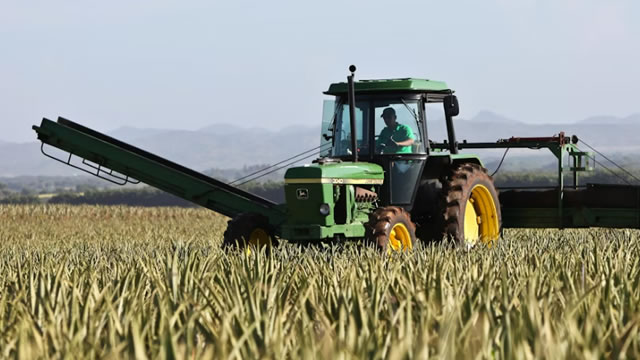
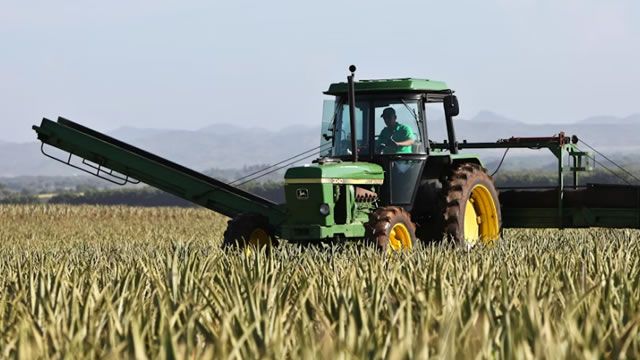
Deere & Company, long synonymous with green and yellow agricultural machinery, is increasingly positioning its Construction & Forestry (C&F) segment to capture significant opportunities arising from government spending on rural infrastructure and smaller public works projects. While the large agriculture market faces a cyclical downturn, the C&F division is emerging as a critical growth engine, offering investors a diversified revenue stream and a compelling narrative beyond traditional farming equipment. This strategic pivot is not merely opportunistic but reflects a deliberate effort to leverage Deere's engineering prowess and extensive dealer network in new, high-growth areas.
The tailwinds for infrastructure spending are robust, driven by legislative mandates and the ongoing need to modernize aging public works across the United States and globally. This includes everything from road maintenance and bridge repairs to utility upgrades and rural broadband expansion – projects that heavily rely on the earthmoving and compact machinery that Deere's C&F segment provides. The company's leadership has explicitly highlighted the "ongoing recovery in demand within both the construction and small agriculture segments," reinforcing the idea that these areas will provide a strong foundation for future growth.
Deere's Q1 2026 results underscored this shift, with the C&F segment delivering standout performance. This momentum is expected to continue, with the company projecting its construction and small agriculture and turf segments to be up 15% over the previous year. Such growth provides a crucial counterbalance to the anticipated 5% to 10% decline in its production and precision agriculture segments for fiscal 2026. For investors, this diversification means less reliance on the often-volatile agricultural commodity cycle and greater exposure to more stable, government-backed spending initiatives.
The company's commitment to investing $20 billion in U.S. manufacturing over the next decade, including new facilities like the Kernersville, North Carolina excavator campus, further solidifies its capacity to meet this burgeoning demand. This strategic investment not only enhances production capabilities but also strengthens domestic supply chains, potentially mitigating future tariff impacts. Deere is clearly not just reacting to market shifts but actively shaping its future by investing heavily in the segments poised for long-term expansion.
How Strong is Deere's Construction & Forestry Segment Amidst Agricultural Headwinds?
Deere's Construction & Forestry (C&F) segment has indeed turned a corner, delivering impressive results in Q1 2026 that stand in stark contrast to the challenging outlook for large agriculture. The segment reported net sales up a remarkable 34% to $2.67 billion, with operating profit more than doubling, surging by 111%. This performance significantly boosted the overall company's Q1 revenue, which increased 13% to $9.61 billion, beating analyst estimates. The C&F segment's operating margin also expanded from 3.3% to 5.1%, indicating improved efficiency and pricing power.
A key indicator of future strength is the C&F segment's order bank, which rose over 50% in a single quarter, reaching its highest level since May 2024. This surge in orders for excavators, road-building equipment, and compact machinery suggests sustained demand driven by infrastructure spending and stabilizing housing and commercial construction. This robust pipeline provides visibility into future revenue, offering a reassuring counterpoint to the "bottom of the current cycle" narrative for large agricultural equipment.
Deere is not just selling more machines; it's also strategically enhancing its C&F offerings through targeted acquisitions and technological integration. The company recently completed its acquisition of Tenna in February 2026, a fleet management platform that automates contractor workflows and provides near real-time equipment insights. This acquisition, alongside Virtual Superintendent (acquired roughly a year prior), forms part of Deere's "three-layer strategy" covering machines, job-site tasks, and full-fleet optimization. These moves are designed to create a brand-agnostic digital layer, improving efficiency and customer stickiness.
While the Production and Precision Agriculture segment grapples with an estimated $1.2 billion in full-year tariff costs and a projected sales decline, the strength in C&F, coupled with a 58% year-over-year jump in operating profit for Small Agriculture and Turf, is providing crucial offsets. CEO John May noted that these positive developments "reinforce our belief that 2026 represents the bottom of the current cycle and provides us with a strong foundation for accelerated growth going forward." This diversified strength is vital for navigating the current market dynamics and positioning Deere for an eventual rebound across all segments.
What Role Does Technology Play in Deere's Diversification and Future Growth?
Deere & Company is undergoing a profound transformation, evolving from a traditional equipment manufacturer into what many now describe as a "data and robotics company that happens to build very large machines." This "Smart Industrial" shift is central to its diversification strategy and future growth, fundamentally altering its business model and valuation potential. The company's relentless focus on technology, particularly in precision agriculture and construction, is not just about incremental improvements but about creating entirely new revenue streams and enhancing operational efficiency for its customers.
In agriculture, this technological leap is evident in autonomous farm equipment and "superhuman sensing capability." Deere's acquisitions of Blue River Technology (See & Spray vision system), Bear Flag Robotics, and GUSS Automation highlight its commitment to automation, AI, and advanced sensors. These innovations allow for precision farming, treating each plant exactly as needed, which can significantly reduce chemical and fertilizer use, saving farmers money and promoting sustainability. The company's X9 combine harvester, equipped with stereo cameras, GNSS, and predictive speed automation, exemplifies this real-time, data-driven approach.
The technology push extends seamlessly into the Construction & Forestry segment. The acquisition of Tenna, for instance, is not merely about adding a new product but integrating a fleet management platform that automates contractor workflows and provides critical equipment insights. This brand-agnostic digital layer, combined with Deere's Virtual Superintendent, allows for comprehensive job-site and full-fleet optimization. Such digital solutions enhance productivity, reduce downtime, and offer customers a competitive edge, making Deere's equipment more than just iron and steel.
Crucially, this technological pivot also opens the door to a "SaaS" (Software as a Service) model. Deere aims to achieve 10% recurring revenue from software, a goal that, if successful, could fundamentally change its valuation multiple, moving it closer to a "tech" P/E ratio. The John Deere Operations Center platform, which manages autonomous fleets and provides data insights, is central to this strategy. This shift towards subscription-based services and data analytics represents a high-margin opportunity that could significantly boost long-term profitability and shareholder value.
What Are the Key Financials and Valuation Metrics for Deere Investors?
Deere & Company (DE) currently trades at $563.86, reflecting a slight daily dip of -0.67% from its previous close of $567.69. The company commands a substantial market capitalization of $152.30 billion, placing it firmly among industrial giants. Its 52-week trading range of $433.00 to $674.19 indicates significant price volatility over the past year, with the current price sitting comfortably above the low but still well below its peak. This suggests potential upside if market sentiment improves and growth catalysts materialize.
Looking at its valuation, Deere's TTM P/E ratio stands at 31.66, which is relatively high for an industrial company, reflecting the market's perception of its "tech" pivot and future growth potential. Other key metrics include a P/S of 3.31, P/FCF of 42.59, and EV/EBITDA of 18.02. While these multiples are elevated, they are partially justified by the company's strong operating margins (TTM Operating Margin: 18.5%) and net margins (TTM Net Margin: 10.5%), which demonstrate efficient management and profitability.
For Q1 2026, Deere reported net income of $656 million, or $2.42 per share, exceeding analyst estimates of $2.05. This performance, despite lower net income compared to the prior year due to higher tariffs and mix headwinds, was driven by robust revenue growth of 13% to $9.61 billion. The company has also boosted its full-year fiscal 2026 net income forecast to a range of $4.5 billion to $5.0 billion, up from an earlier guidance of $4.00 billion to $4.75 billion, signaling confidence in its diversified segments.
Despite a TTM revenue decline of -11.6% and net income drop of -29.2% year-over-year for FY2025, largely due to the agricultural cycle, the company's long-term growth trajectory remains impressive. Over the past five years, cumulative revenue per share grew 48.9% and net income per share surged 111.5%. Deere's commitment to shareholder returns is also evident, with a dividend yield of 1.1% and a 9.2% increase in dividend per share for FY2025, alongside nearly $750 million returned to shareholders in Q1 alone through dividends and share repurchases.
What Does This Mean for Investors?
For investors, Deere & Company presents a nuanced but compelling investment case, balancing cyclical agricultural headwinds with robust growth in its Construction & Forestry segment and a transformative technological shift. The current analyst consensus is a "Buy," with an average price target of $632.56, implying a 12.18% upside from the current price. The highest target of $793.00 suggests a significant 40.64% upside, reflecting strong conviction in Deere's long-term potential, particularly as the agricultural cycle bottoms out and infrastructure spending accelerates.
The bull case hinges on several factors. First, the strong performance and order book in the C&F segment, fueled by government infrastructure spending, provide a crucial buffer against the agricultural downturn. Second, Deere's "Smart Industrial" strategy, with its emphasis on precision agriculture, automation, and a potential "SaaS pivot," promises higher-margin recurring revenue and a re-rating of its valuation multiple. The company's substantial investments in R&D and manufacturing capacity underscore its commitment to these growth avenues.
However, investors must also acknowledge the bear case. The agricultural sector remains challenging, with large agriculture sales expected to decline and the company facing an estimated $1.2 billion pre-tax headwind from tariffs in 2026. Regulatory pressures, such as "Right to Repair" legislation and increasingly strict emissions regulations, could also impact profit margins. Furthermore, competition from rivals like Caterpillar in construction and AGCO in agriculture remains intense, requiring Deere to continually innovate and execute flawlessly.
Ultimately, Deere is not just an equipment manufacturer; it's a technology-driven industrial powerhouse navigating a complex macro environment. Its ability to leverage its brand, dealer network, and technological leadership to capture opportunities in infrastructure and precision solutions will be key. The current stock price, while reflecting some of the agricultural challenges, may not fully price in the long-term benefits of its strategic diversification and technological transformation.
Deere & Company is navigating a cyclical trough in its core agriculture business by strategically diversifying into robust construction markets and aggressively pursuing technological leadership. Investors willing to look beyond short-term agricultural headwinds may find a compelling opportunity in a company transforming itself into a "Smart Industrial" leader, poised for accelerated growth as infrastructure spending ramps up and its tech-driven solutions gain wider adoption. The current valuation, while reflecting some optimism, still offers potential upside as the market fully appreciates Deere's evolving business model and strong execution.
Want deeper research on any stock? Try Kavout Pro for AI-powered analysis, smart signals, and more. Already a member? Add credits to run more research.
Related Articles
Is the U.S. Infrastructure Boom Sustainable
Category
You may also like


Gladstone Land's 7.2% Yielding Preferreds Benefitting From Buybacks

Caterpillar and Deere Hit Opposite Cycle Peaks: One Rides Momentum, One Hunts Value

Will Sterling's Geographic Expansion Fuel Its Next Growth Cycle?
Breaking News
View All →Featured Articles
Top Headlines

Amazon Eyes 2026 Entry to Satellite Internet Market Dominated by Musk's Starlink

Amazon Says Rufus Gives It an Edge in Agentic Commerce Race

Meta's AI Bet, and the Evolution of Smart Glasses

Tesla Just Confirmed When Optimus Becomes a Real Product