MarketLens
Jabil's AI Pivot: Why a 46x P/E Might Just Be the Entry Point

Key Takeaways
- Jabil's Intelligent Infrastructure segment is booming, with fiscal year 2026 AI-related revenue projected at $13.6 billion and a third hyperscale customer secured.
- Strategic investments in liquid cooling (Mikros acquisition) and a $500 million U.S. expansion underscore Jabil's commitment to AI manufacturing.
- Despite a premium valuation of 46.51x earnings, Jabil's long-term growth trajectory in AI infrastructure justifies the market's optimism, though margin expansion remains a focus.
The AI Infrastructure Architect
Jabil Inc. (NYSE: JBL) finds itself at the epicenter of the artificial intelligence revolution, rapidly transforming from a diversified electronics manufacturer into a critical enabler of the AI infrastructure buildout. Trading at $376.75 as of June 25, 2026, the company commands a market capitalization of $39.75 billion, reflecting significant investor confidence in its strategic pivot. This valuation comes after a remarkable run, with shares having climbed from a 52-week low of $189.60 to near their high of $428.93, driven by a series of strategic moves and robust earnings reports that highlight its expanding role in the burgeoning AI economy.
The catalyst for Jabil's re-rating is clear: the insatiable demand for AI hardware. As hyperscale cloud providers and technology giants race to deploy next-generation computing infrastructure, Jabil's expertise in complex manufacturing, from server and rack integration to advanced cooling solutions, has become indispensable. The market is increasingly recognizing Jabil not merely as a contract manufacturer, but as a foundational partner in building the physical backbone of the AI age.
Financial Foundations: A Mixed Picture
Jabil's recent financial performance paints a picture of a company in transition, with strong top-line growth in its strategic segments contrasting with some underlying profitability shifts. For the trailing twelve months (TTM), Jabil reported revenue of $318.99 billion, translating to earnings per share (EPS) of $8.19. While the company boasts impressive returns on equity (ROE) of 62.4% and return on invested capital (ROIC) of 18.2%, its net margin for the TTM stood at a modest 2.6%.
The fiscal year 2025 saw a mixed performance, with revenue growth of 3.2% year-over-year, but net income and EPS experienced significant declines of 52.7% and 47.0%, respectively. This divergence highlights the ongoing shift in Jabil's business mix and the investments required to capitalize on new opportunities. However, the market's focus is firmly on the future, as evidenced by the company's strong second-quarter fiscal year 2026 results, released on March 18, 2026. Jabil surpassed expectations with net revenue of $8.3 billion for the quarter, driven by a substantial 52% year-over-year increase in its Intelligent Infrastructure segment. Core diluted EPS for Q2 FY26 reached $2.69, exceeding analyst forecasts.
| Metric (TTM) | Value | Metric (Q2 FY26) | Value |
|---|---|---|---|
| Revenue | $318.99B | Net Revenue | $8.3B |
| EPS | $8.19 | Core Diluted EPS | $2.69 |
| Gross Margin | 9.2% | Core Operating Income | $436M |
| Operating Margin | 4.3% | Core Operating Margin | 5.3% |
| Net Margin | 2.6% | Intelligent Infra. YoY | 52% |
| ROE | 62.4% | Adj. Free Cash Flow | $360M |
| ROIC | 18.2% | ||
| P/E | 46.51x | ||
| P/FCF | 26.43x |
Looking ahead, Jabil has raised its full-year fiscal 2026 revenue outlook to $35.00 billion and its core EPS outlook to $12.70, up from previous forecasts of $34.00 billion and $12.25, respectively. This upward revision is a direct consequence of the accelerating demand from its AI-focused customers, signaling confidence in its ability to execute on these high-growth opportunities.
Building the Future: Strategic Investments & Partnerships
Jabil's aggressive pursuit of the AI infrastructure market is backed by significant strategic investments and key partnerships designed to expand its capabilities and global footprint. The company is not merely reacting to demand; it is actively shaping the supply chain for next-generation AI deployments. These initiatives position Jabil as a crucial partner for hyperscale customers seeking to scale their AI operations efficiently and reliably.
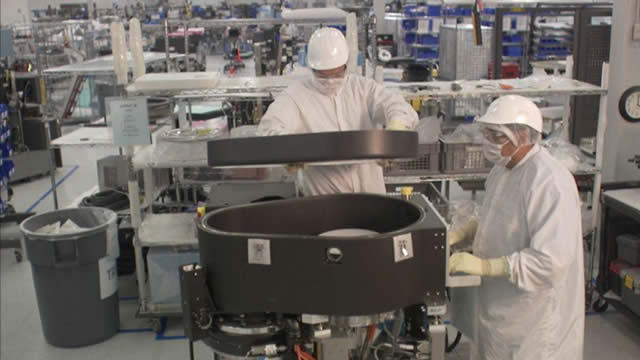
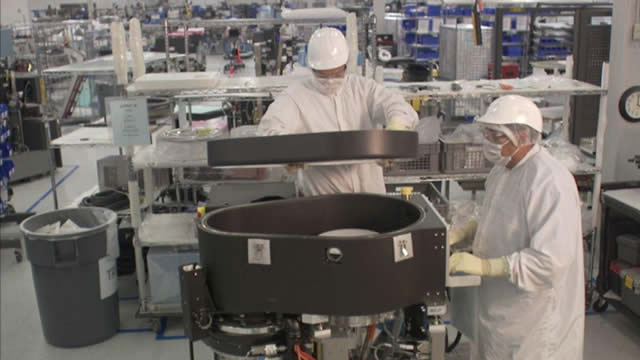
A cornerstone of this strategy is the expansion of its U.S. manufacturing capacity. In June 2025, Jabil announced plans to invest $500 million over several years to expand its footprint in the Southeast United States, specifically in North Carolina's Rowan County. This new facility, expected to be operational by mid-2026, will create nearly 1,200 jobs and provide large-scale manufacturing capabilities for cloud and AI data center infrastructure. CEO Mike Dastoor emphasized the importance of this domestic expansion, stating, "This initiative is a key element of our long-term strategy to diversify our commercial portfolio and strengthen Jabil’s presence in the U.S."
Complementing its organic growth, Jabil has also made strategic acquisitions. In October 2024, the company acquired Mikros Technologies, a New Hampshire-based provider of advanced microchannel cold plate manufacturing. This acquisition is critical for supporting the extreme heat flux levels generated by modern AI processors, enabling Jabil to scale component supply for AI liquid cooling systems. Furthermore, Jabil is expanding its global reach through partnerships, most notably the strategic alliance announced on June 15, 2026, with Adani Group in India. This collaboration aims to establish a vertically integrated AI and data center infrastructure manufacturing platform in India, targeting global demand for AI-ready hardware and positioning India as a significant export hub. CEO Mike Dastoor noted that this partnership is "another step forward in our efforts to create long-term value for customers throughout the AI ecosystem." These moves, alongside securing a third hyperscale customer in Q3 FY26—an engagement expected to become a billion-dollar opportunity by fiscal year 2028—underscore Jabil's deepening integration into the AI supply chain.
The Liquid Cooling Imperative
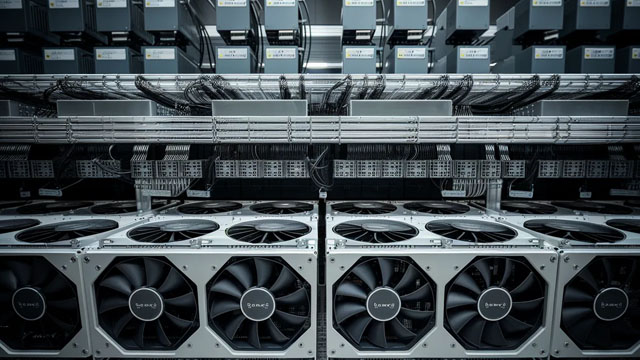
As AI workloads become more intensive, traditional air-cooling methods for data centers are proving increasingly inefficient, paving the way for liquid cooling solutions. Jabil has strategically positioned itself at the forefront of this shift, recognizing the imperative for advanced thermal management in high-density AI and high-performance computing (HPC) environments. The data center liquid cooling market, valued at $6 billion in 2026, is projected to surge to $27.1 billion by 2035, growing at a compound annual growth rate (CAGR) of 18.2%. This exponential growth is driven by the widespread deployment of AI accelerators, increasing rack densities exceeding 60 kW, and a global emphasis on energy efficiency.
Jabil's acquisition of Mikros Technologies in October 2024 was a prescient move, adding advanced microchannel cold plate manufacturing capabilities essential for managing heat flux levels above 1 kW/cm². This expertise allows Jabil to address the precision manufacturing and reliability requirements of high-volume AI liquid cooling systems. The company's offerings now span a comprehensive range of AI hardware, including compute, storage, networking, optics, power, cooling, and full rack integration. This end-to-end capability is crucial for hyperscalers and enterprises looking to deploy AI at scale, as it simplifies complex supply chains and ensures optimal performance.
Beyond component-level solutions, Jabil's partnerships, such as the one with Adani Group, aim to build a full-spectrum AI infrastructure ecosystem. This includes manufacturing Power Distribution Units (PDUs), Coolant Distribution Units (CDUs), and advanced thermal management systems, all critical for next-generation liquid-cooled AI racks. By integrating these solutions, Jabil is enabling data center operators to manage escalating thermal loads, optimize energy efficiency, and support the most demanding compute deployments across hyperscale, colocation, and enterprise environments.
Navigating Headwinds: The Bear Case
Despite Jabil's compelling narrative in the AI infrastructure space, several headwinds and risks warrant consideration for a balanced perspective. The company's diversified portfolio, while offering resilience, also includes segments facing challenges. The Connected Living & Digital Commerce segment, for instance, saw an 8% year-over-year revenue decrease in Q2 FY26, reflecting planned program attrition and a shift away from lower-margin businesses. This indicates that not all parts of Jabil's business are benefiting equally from the AI boom, and some restructuring is ongoing.
Supply chain constraints, particularly in critical components like memory and PCBs, pose an ongoing risk. While Jabil's global footprint and supply chain expertise help mitigate some of these issues, the intense demand from AI data centers for high-bandwidth DRAM continues to strain the market. This can lead to higher component costs or delays, potentially impacting Jabil's ability to meet customer demand and maintain margins. Geopolitical uncertainty also remains a pervasive concern, with potential implications for global trade, manufacturing operations, and overall business stability. CEO Mike Dastoor acknowledged these uncertainties, stating that the company is "being conservative given global uncertainties" in its margin guidance.
Furthermore, while Jabil's revenue growth in Intelligent Infrastructure is robust, the core operating margin guidance for fiscal year 2026 remains at approximately 5.7%, with a target of 6% for fiscal year 2027. This indicates that despite the significant revenue expansion, margin improvement is expected to be gradual. The high capital expenditures required to build out new facilities and acquire advanced technologies, while necessary for long-term growth, could also pressure free cash flow in the short term. The substantial reduction in employee count from 236,000 in 2023 to 135,000 in 2025, while potentially reflecting efficiency gains or divestitures, could also signal underlying business shifts or challenges in certain areas.
Analyst Consensus: Pricing in the Future
The analyst community has largely embraced Jabil's strategic pivot towards AI infrastructure, reflecting the company's strong execution and promising outlook. Following its Q3 FY26 earnings report on June 17, 2026, Jabil saw its fiscal 2026 revenue outlook raised to $35.00 billion and its adjusted earnings outlook increased to $12.70 per share. This upward revision, surpassing consensus estimates, underscores the positive sentiment surrounding Jabil's AI-driven growth.
Zacks Investment Research currently assigns Jabil a Zacks Rank #2 (Buy), supported by a Momentum Score of A and a Growth Score of B. This favorable rating aligns with the company's strong earnings momentum and expanding participation in long-term manufacturing trends, particularly AI infrastructure. Analysts are particularly optimistic about Jabil's ability to leverage its end-to-end manufacturing capabilities to help customers scale AI deployments, integrating compute, storage, networking, power, and advanced cooling solutions. CEO Mike Dastoor's statement on the Q3 FY26 earnings call that "Demand for AI hardware is not slowing down. If anything, it’s accelerating" has resonated with the market, reinforcing confidence in Jabil's growth trajectory.
The market's current valuation of Jabil, with a TTM P/E ratio of 46.51x, reflects these elevated expectations for future growth. While this multiple is higher than many industrial peers, it is increasingly common for companies seen as critical enablers of the AI revolution. Analysts are pricing in the significant revenue contributions from new hyperscale customers and the expanding addressable market for AI hardware manufacturing. The proposed alliance with Adani Enterprises in India, though not yet finalized, is also viewed as a significant long-term upside, with meaningful contributions anticipated from fiscal year 2028 onwards.
The Verdict: A Calculated Bet on AI's Backbone
Jabil is not merely participating in the AI boom; it is actively building its physical infrastructure. The company's aggressive investments in manufacturing capacity, strategic acquisitions like Mikros Technologies, and pivotal partnerships with hyperscalers and global conglomerates like Adani Group firmly establish it as a critical enabler of the intelligence revolution. While the current valuation of 46.51x TTM earnings reflects significant optimism, it is a price the market is willing to pay for a company positioned to capture a substantial share of the rapidly expanding AI hardware market. The negative year-over-year growth in net income and EPS for FY25, coupled with modest margin expansion guidance, indicates that Jabil is in a transitional phase, prioritizing strategic growth and market share over immediate profitability. However, the robust performance of its Intelligent Infrastructure segment and the raised FY26 outlooks suggest this strategy is beginning to bear fruit.
For investors with a long-term horizon and a conviction in the sustained growth of AI infrastructure, Jabil presents a compelling, albeit high-multiple, opportunity. The company's ability to secure a third hyperscale customer, with a projected billion-dollar revenue opportunity by FY28, provides a clear runway for future growth. While supply chain constraints and geopolitical uncertainties remain watch factors, Jabil's diversified capabilities and strategic focus on high-growth areas position it favorably.
Entry Zone: Investors should consider accumulating Jabil shares in the $360 - $370 range, seeking to capitalize on any short-term market pullbacks. 12-Month Target: Based on the robust AI-driven growth and raised FY26 outlook, a 12-month price target of $450 is justifiable, representing a potential upside of nearly 20% from current levels. Invalidation Level: A sustained close below $320 would invalidate the bullish thesis, signaling a significant deterioration in AI demand or execution.
Want deeper research on any stock? Try Kavout Pro for AI-powered analysis, smart signals, and more. Already a member? Add credits to run more research.
Related Articles
Is Nvidia's Entry into AI Laptops a Game Changer
Category
You may also like


Jabil Bets Big on India's AI Infrastructure Push: Time to Buy?

Can Growing Defense Spending Boost Jabil's Future Growth Prospects?

Jabil, Inc. (JBL) Hits Fresh High: Is There Still Room to Run?
Breaking News
View All →Featured Articles
Top Headlines
Microsoft Is Paying Too Much In Capex To Drive Revenue Growth

MSFT Investors Have Opportunity to Lead Microsoft Corporation Securities Fraud Lawsuit

Amazon (AMZN) Suffers a Larger Drop Than the General Market: Key Insights

Apple (AAPL) Sees a More Significant Dip Than Broader Market: Some Facts to Know