MarketLens

Log in

Jobs Miss Forces Fed Rethink, Igniting Gold and Silver's Safe-Haven Rally

6 hours ago
SHARE THIS ON:

Jobs Miss Forces Fed Rethink, Igniting Gold and Silver's Safe-Haven Rally

Key Takeaways

  • Weaker-than-expected June U.S. jobs data has significantly reduced the probability of Federal Reserve rate hikes, driving a sharp rally in gold and silver as investors anticipate a more dovish monetary policy stance.
  • While gold benefits primarily from its safe-haven status and reduced opportunity cost in a lower-rate environment, silver is also seeing strong demand from expanding industrial applications in solar, electric vehicles, and AI infrastructure.
  • This immediate market reaction contrasts with recent analyst forecasts from Goldman Sachs and J.P. Morgan, which had lowered 2026 gold targets based on expectations of no rate cuts, suggesting a potential divergence between market pricing and prior consensus.

The Fed's Roadmap Just Hit a Detour

The U.S. labor market delivered a significant surprise on July 5, 2026, with June's nonfarm payrolls adding a mere 57,000 positions. This figure came in at less than half the consensus forecast of 110,000 new jobs, and followed a downward revision of the previous month's reading from 172,000 to 129,000. The immediate market response was a dramatic repricing of Federal Reserve policy expectations, sending gold and silver surging as investors rapidly unwound bets on further rate hikes.

This unexpected softening in labor conditions has profound implications for the Fed's monetary policy trajectory. Just days earlier, on July 3, 2026, Fed rate hike odds for the upcoming July 29 meeting had fallen to 22% following an earlier jobs miss. The latest data has further cemented the view that the central bank may be forced to adopt a more dovish stance, potentially shifting from a "higher for longer" narrative to one of easing. This sentiment was reflected in the precious metals market, with gold and silver posting notable gains.

Gold and Silver's Immediate Rebound

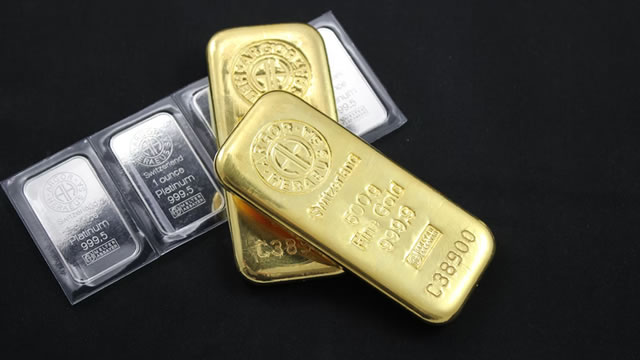
In the wake of the disappointing jobs report, both gold and silver futures experienced a robust rally. Gold futures (GCUSD) climbed 1.64% to $4,193.20 on July 5, 2026, recovering from earlier losses and hitting a day range high of $4,214.10. Silver futures (SIUSD) saw an even more pronounced jump, surging 2.63% to $62.67, with its price reaching a day high of $63.73. This strong performance underscores the metals' role as safe-haven assets, particularly when economic data signals potential headwinds for growth and a shift in monetary policy.

The rally in precious metals was accompanied by a decline in U.S. Treasury yields, as market participants adjusted their expectations for future interest rates. While the 2s/10s spread remained normal at +0.35% as of July 2, 2026, the overall downward pressure on yields makes non-yielding assets like gold and silver more attractive. The unemployment rate, which edged lower to 4.2% in June, did not deter the rally, as the underlying weakness in job creation overshadowed the headline figure, suggesting a drop in labor force participation rather than robust hiring.

CommodityPrice (2026-07-05)Daily ChangeDaily % ChangeDay Range52-Week Range
Gold$4,193.20+$67.50+1.64%$4,133.80 – $4,214.10$3,290.20 – $5,626.80
Silver$62.67+$1.61+2.63%$61.38 – $63.73$36.12 – $121.30

The immediate impact of the jobs data was to temper expectations of "higher-for-longer" interest rates, a sentiment that had previously kept the U.S. dollar relatively strong and precious metals under pressure. With traders shifting their outlook from potentially one to two Fed rate increases in 2026 to between zero and one hike, the dollar has remained depressed near a two-week low, further driving flows toward gold and silver.

The Shifting Sands of Monetary Policy

The June jobs report has effectively thrown a wrench into the Federal Reserve's previously anticipated rate roadmap. For months, the market had been grappling with the prospect of sticky inflation and a resilient labor market, which had underpinned expectations for continued hawkishness from the Fed. Indeed, as recently as June 17, 2026, the Federal Reserve held interest rates steady at 3.50% to 3.75%, an outcome that futures markets had priced at 97%. However, the latest employment figures suggest that the economic landscape is evolving more rapidly than the Fed's prior projections.

This softening labor data, coupled with easing inflation fears in the face of recent crude oil price slumps, is creating a compelling case for a more dovish Fed stance. Bob Haberkorn, a senior commodities broker at R.J. O’Brien, articulated this shift, stating, "That was a pretty big miss. It’s pretty bullish for gold for the remainder of the year. With data like that, I don’t see how the Fed is going to be in a position to raise rates." Such a pivot in policy would reduce the opportunity cost of holding non-yielding assets like gold, enhancing its appeal to investors seeking a hedge against economic uncertainty and currency devaluation. The Fed's Beige Book, which recently highlighted reduced economic activity across multiple regions, further amplifies speculation of potential rate cuts, with some analysts even anticipating a 50 basis-point cut in September.

Beyond Safe-Haven: Silver's Industrial Tailwinds

While gold's rally is predominantly driven by its safe-haven appeal and monetary policy expectations, silver benefits from a dual identity as both a monetary hedge and a critical industrial input. This unique positioning means that while it often follows gold's lead in times of uncertainty, it also possesses its own set of demand drivers that can amplify its performance. The ongoing global buildout of data centers, the escalating power demands of AI workloads, and broader electrification trends are all contributing to a structurally higher industrial consumption profile for silver.

Solar photovoltaic technology, for instance, accounted for nearly 29% of total silver industrial demand in 2024, a significant increase from approximately 11% in 2014. This trend, alongside the expansion of electric vehicles and AI infrastructure, is expected to remain a key driver of silver demand growth through 2030. Crux Investor highlighted in March 2026 that the global silver market is projected to enter its sixth consecutive year of supply deficit in 2026, with an estimated shortfall of 67 million ounces, forcing reliance on finite above-ground inventories. Physical investment demand is also on the rise, forecast to increase 20% in 2026 to approximately 227 million ounces, marking the highest level in three years. This combination of robust industrial demand and tightening physical liquidity provides a strong fundamental backdrop for silver, making it more than just a higher-beta extension of gold's safe-haven rally.

The Bear Case: Sticky Inflation and Dollar Strength

Despite the immediate bullish reaction to the jobs data, a significant bear case for precious metals persists, primarily centered on the potential for sticky inflation and a stronger U.S. dollar. As of June 25, 2026, Core PCE, the Federal Reserve's preferred inflation gauge, rose to 3.4% over the past year, in line with expectations and a tick above the prior 3.3%. This indicates that inflation is not falling, but rather remaining stubbornly high, or even ticking higher. Such persistent inflation could limit the Fed's ability to implement aggressive rate cuts, even in the face of softening labor markets.

Przemyslaw Radomski, CFA, writing for Golden Meadow on Investing.com in June 2026, suggested that gold could slide below $3,500 if the U.S. Dollar Index (USDIDX) were to rally further. He noted that the USD Index had barely broken above 100 at the time and had significant room to rally towards stronger resistance at 102.87. A stronger dollar typically exerts downward pressure on dollar-denominated commodities like gold and silver. Furthermore, while the AI trade has bought time for the broader market, Radomski pointed to the significant increase in capital spending by memory makers like Micron as a potential over-extension. If this imbalance in the AI trade corrects, it could impact overall market liquidity, which would likely be felt by precious metals. The bear case argues that the current rally is a pause at the lows, not a fundamental turn, and that the underlying pressures from a strong dollar and sticky inflation remain.

Analyst Divergence on 2026 Outlook

The recent market movements in gold and silver highlight a fascinating divergence in analyst expectations for 2026. Prior to the latest jobs data, several major financial institutions had adjusted their forecasts, largely anticipating a less dovish Fed. For instance, Goldman Sachs, on June 22, 2026, lowered its price target for gold by the end of 2026 from $5,400 to $4,900 per troy ounce. This reduction was explicitly tied to the expectation that the U.S. Federal Reserve would not cut interest rates in 2026, thereby exerting sustained pressure on gold prices in the short term.

Similarly, J.P. Morgan, in its 2026 Market Outlook, also lowered its forecast, expecting the gold price to reach $5,000 per troy ounce in the final quarter of 2026, averaging $4,753 per ounce for the full year. Gregory Shearer, head of Base and Precious Metals Strategy at J.P. Morgan, noted that despite these adjustments, the bank maintains a bullish recommendation for gold, citing inelastic supply and continued strong demand from central banks and investors. In contrast, the World Gold Council (WGC), in its "Gold Outlook 2026," offered probability scenarios: a mild economic cooling with falling interest rates could see gold rise 5% to 15%, while a global recession with geopolitical shocks could lead to a more significant 15% to 30% increase. With gold currently trading at $4,193.20, Goldman Sachs' $4,900 target implies an upside of approximately 16.8%, while J.P. Morgan's $5,000 target suggests a 19.2% upside. These targets, while still positive, reflect a more tempered outlook than the immediate market reaction to the jobs report.

The Verdict: A Dovish Pivot for Precious Metals

The weaker-than-expected U.S. jobs data on July 5, 2026, has served as a critical inflection point for the Federal Reserve's monetary policy outlook, immediately igniting a robust safe-haven rally in gold and silver. This data has forced a rapid repricing of interest rate expectations, shifting the narrative from persistent hawkishness to the increasing likelihood of a dovish pivot, thereby reducing the opportunity cost of holding non-yielding precious metals. While analysts like Goldman Sachs and J.P. Morgan had recently tempered their 2026 gold price targets based on expectations of no rate cuts, the market's swift reaction suggests a potential divergence, with investors now anticipating a more accommodative Fed.

For investors looking to capitalize on this shift, the current environment presents a compelling entry point for precious metals. Gold, at $4,193.20, is well-positioned to benefit from reduced rate hike probabilities and ongoing geopolitical uncertainties. Silver, trading at $62.67, offers additional upside potential due to its critical role in burgeoning industrial sectors like solar, EVs, and AI, which are driving structural demand amidst a projected supply deficit.

Entry Zone: Investors could consider accumulating gold in the range of $4,150 to $4,250 per ounce, and silver between $61.50 and $63.50 per ounce, capitalizing on any short-term volatility. 12-Month Target: Given the potential for a dovish Fed pivot and continued safe-haven demand, a 12-month target for gold is set at $4,800 per ounce, with silver targeting $75 per ounce as industrial demand accelerates. Invalidation Level: A sustained break below $3,950 for gold or $58 for silver would invalidate this thesis, signaling a stronger-than-expected return to hawkish Fed policy or a significant deterioration in industrial demand. The Fed's rate roadmap has been altered, and precious metals are ready to navigate the new path.


Want deeper research on any stock? Try Kavout Pro for AI-powered analysis, smart signals, and more. Already a member? Add credits to run more research.

SHARE THIS ON:

Related Articles

Category

You may also like

Stock News3 days ago

Gold and silver rally as NFP miss dents Fed-hike bets - Kitco AM Report

Gold and silver rallied sharply after June payrolls missed expectations, pressuring the dollar and cooling near-term Fed rate-hike bets.
Forex News1 months ago

Gold (XAUUSD), Silver, Platinum Forecasts – Silver Tests New Highs As Rally Continues

Silver prices are testing new highs as the metal continues its rally, despite headwinds from a strengthening U.S. dollar and rising Treasury yields. The asset's resilience suggests strong underlying d...
Forex News1 months ago

Gold, Silver, and Miners Amid New Levels of Absurd

Geopolitical tensions escalated after the US struck Iranian ports yesterday, despite a nominal ceasefire agreement. This development increases regional instability, potentially driving safe-haven dema...
Stock News2 months ago

Gold prices see some renewed buying as U.S job openings falls to 6.87 million

Gold prices rose as U.S. job openings fell to 6.87 million. The decline in labor market demand serves as a catalyst for renewed buying interest in the precious metal, reflecting shifting investor sent...

Breaking News

View All →

Top Headlines

View More →
Stock News3 hours ago

The $82 Annual Fee Is Just the Start: TQQQ's Hidden Cost Structure Explained

Stock News5 hours ago

Nvidia Stock Is Down 13% Over the Last Month. Here's Why That Could Be Good News.

Stock News6 hours ago

AMD vs Palantir: Which AI Giant Is a Better Buy?

Stock News6 hours ago

Amazon will stop accepting new customers for Mechanical Turk

Stock News6 hours ago

The Energy Stock Most Investors Overlook-And Why You Should Consider Adding It to Your Portfolio Today.