MarketLens
New Leadership, New Strategy: Ocado's Urgent Pivot to Profitability

Key Takeaways
- Ocado Group is reportedly preparing to appoint a successor to long-serving CEO Tim Steiner, signaling a profound shift in leadership at a critical juncture for the company.
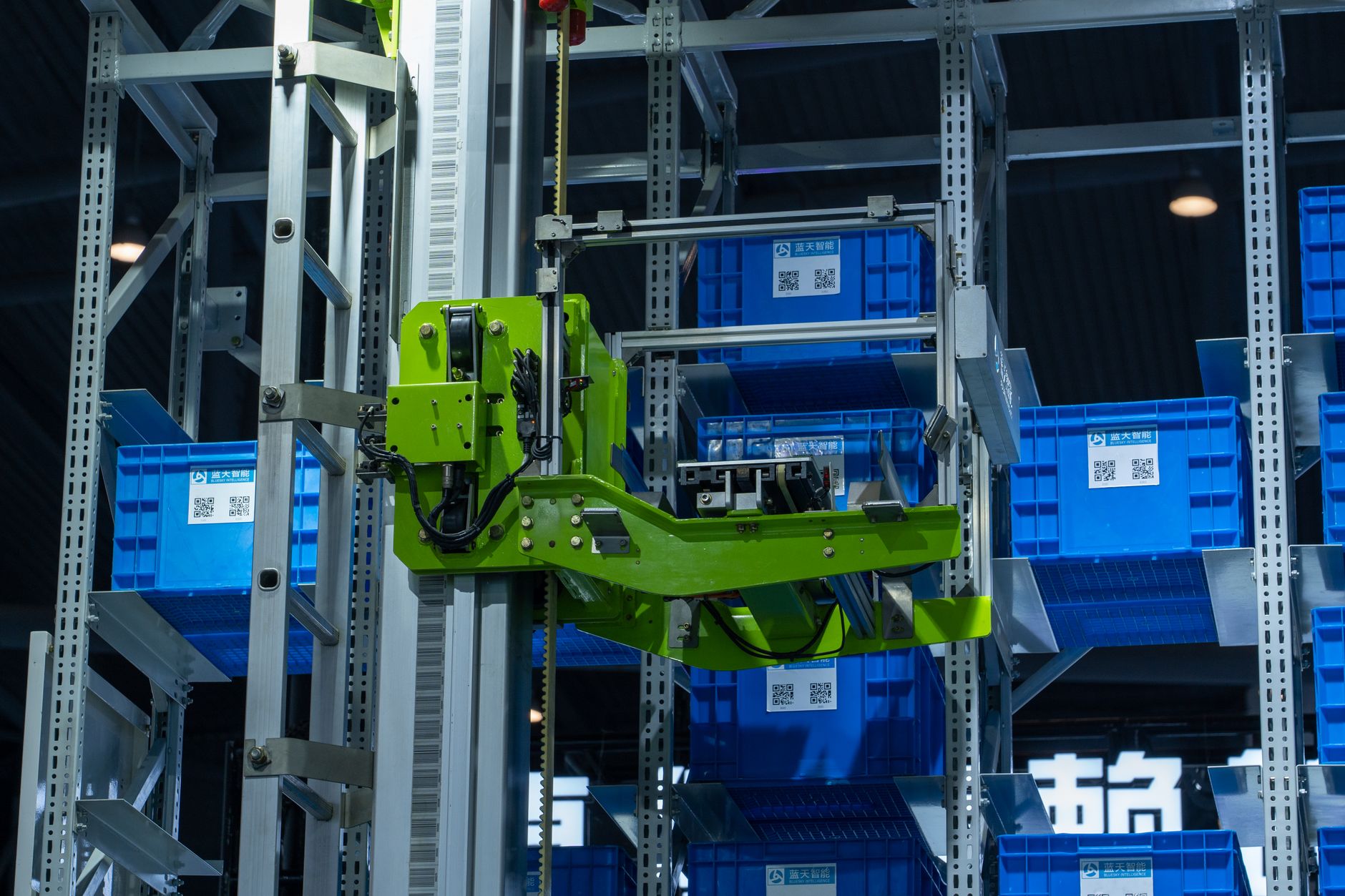
- The incoming CEO will inherit a mandate to accelerate Ocado's strategic pivot away from its capital-intensive Customer Fulfilment Centre (CFC) model towards more flexible, multi-modal solutions like Micro-Fulfillment Centers (MFCs) and in-store automation.
- This leadership transition is set against a backdrop of significant financial pressure, with the company targeting cash-flow positivity in the second half of 2026 amid ongoing restructuring and job cuts.
Ocado Group (LON: OCDO), the British technology firm that pioneered online grocery fulfillment, is reportedly preparing for a significant leadership change. On June 21, 2026, Sky News reported that the company is lining up a successor to its founder and long-time Chief Executive Officer, Tim Steiner, with Niklas Heuveldop, CEO of Ericsson’s Vonage, mentioned as a potential candidate. This news arrives at a pivotal moment for Ocado, which is actively overhauling its strategic direction and grappling with persistent profitability challenges. The departure of a founder CEO after over 26 years at the helm marks a definitive end to one era and the urgent beginning of another, where the focus must shift from ambitious innovation to disciplined commercial execution and financial sustainability.
The Founder's Legacy and Its Limits
Tim Steiner, appointed CEO in January 2000, has been the driving force behind Ocado's journey from a pure-play online grocer to a global technology pioneer. Under his leadership, Ocado developed its proprietary Ocado Smart Platform (OSP), featuring highly automated Customer Fulfilment Centres (CFCs) that promised unparalleled efficiency in online grocery. His total yearly compensation of £2.11 million (comprised of 39.1% salary and 60.9% bonuses) and direct ownership of 2.39% of the company’s shares, valued at $47.46 million, underscore his deep vested interest in the company's trajectory.
However, Steiner's tenure has also been marked by a steadfast commitment to the large CFC model, which has recently faced significant headwinds. In February 2026, Ocado announced plans to cut approximately 1,000 jobs, representing about 5% of its global workforce, primarily in UK-based R&D and support roles. This move followed the completion of major development phases for its robotics suite, but also coincided with setbacks from key partners. Kroger, Ocado’s major U.S. partner, closed three automated warehouses, resulting in a $350 million one-time compensation payment to Ocado. Similarly, Sobeys in Canada closed its Calgary robotic warehouse and paused another site. These developments highlighted the limitations of the capital-intensive CFC model, particularly its inflexibility and high upfront investment, which proved challenging in dynamic grocery markets.
Indeed, Steiner himself conceded that Ocado was "not blameless" in these CFC closures, acknowledging a strategic misstep. He has since become a "born again" convert to Micro-Fulfillment Centers (MFCs), with Ocado now planning to build its first MFCs in two formats: side-of-store centers ranging from 4,000 to 10,000 square feet, and standalone MFCs up to 17,000 square feet. This admission from a founder who once championed the large-scale model underscores the profound strategic re-evaluation underway.
The Strategic Pivot: Multi-Modal Future
The reported leadership transition coincides with Ocado's aggressive pivot towards a more diversified and flexible fulfillment strategy. On December 30, 2025, Ocado Group announced the end of its mutual exclusivity arrangements with major international partners, including Kroger. This strategic shift allows Ocado to sell its proprietary technology to a broader range of retailers globally, moving beyond the constraints of exclusive partnerships that limited its market reach. CEO Tim Steiner articulated this new direction, stating, "Our transformation into a multi-modal fulfillment ecosystem positions us uniquely in the market."
This "multi-modal" approach encompasses a broader spectrum of solutions, from the traditional large CFCs to in-store automation and smaller-scale MFCs. The company is also upgrading the software in its existing CFCs to enable same-day fulfillment, a critical capability that addresses evolving consumer expectations for rapid delivery. At Groceryshop 2025, Steiner emphasized that "Consumers never want it slower or more expensive," highlighting the imperative for speed and cost efficiency. He noted that Ocado is now hitting 2-2.5 hour delivery windows at better than hypermarket economics, a testament to the ongoing refinement of its technology.
Beyond grocery, Ocado is actively marketing its Ocado Storage and Retrieval System (OSRS) to non-grocery sectors, having secured its first major deal with McKesson Canada for pharmaceutical distribution. This expansion into new industries, alongside new global launches in Poland with Auchan Polska, Spain with Bon Preu, and South Korea with Lotte, demonstrates a clear intent to diversify revenue streams and leverage its technological expertise across a wider commercial landscape. The company's strategic vision has evolved to a platform-first direction with a two-track product strategy (CFCs plus Store-Based Automation) and a clearer commercial focus, aiming to re-engage multiple markets with simplified priorities.
Financial Reality Check
Despite strategic pivots and technological advancements, Ocado Group continues to face significant financial scrutiny. In the second half of fiscal year 2025, the company reported a 12% increase in group revenue and a substantial rise in adjusted EBITDA to £178 million, up £66 million from the previous year. Net cash inflows also reached £100 million, bolstered by strategic financial management. Ocado Retail, its joint venture with Marks & Spencer, notably saw a 15.4% revenue increase.
However, these positive figures were overshadowed by ongoing profitability challenges. The company still posted a pre-tax loss of £375 million last year. Following its H2 2025 earnings release on February 26, 2026, Ocado’s stock price dropped by 8.47%, closing at £215.1. This decline, despite strong financial results, reflected investor concerns over future guidance and market conditions. The stock's volatility is further highlighted by its beta of 2.53, significantly higher than the market average, and a 32% decline over the past six months.
Analysts have also expressed mixed sentiment. While J.P. Morgan remains "overweight" on the stock, citing potential new deals in Asia and the Middle East, Barclays maintains an "underweight" rating. In August 2025, analysts downgraded their revenue forecasts for Ocado Group, although they still anticipate a robust 52% annualized growth until the end of 2025, a stark contrast to the 15% annual decline over the preceding five years. The company's forward guidance includes an ambitious plan to reduce costs by £150 million by FY27, with significant reductions in technology spending. Ocado projects continued revenue growth, with forecasts of $686.07 million for FY25 and $745.99 million for FY26, and expects to become cash-flow positive in the second half of 2026.
The Bear Case: Execution and Competition
While Ocado's strategic pivot is a necessary response to market realities, the path to successful execution is fraught with challenges. The company's historical reliance on large-scale CFCs means that its expertise in building and operating smaller, more flexible MFCs and store-based automation is still developing. As one LinkedIn post from The Grocer in March 2026 highlighted, CEO Tim Steiner's belief that Ocado will perfect its MFC solutions by 2027 and be commercially ready for "thousands of MFCs in late 2027 or 2028" might be overly optimistic, given the inherent difficulties in building reliable MFCs and the technology required for Store Based Automation (SBA).
The competitive landscape is also intensifying. Rivals like AutoStore, which recently expanded its partnership with Amazon, and Symbotic, with a contract to install 600 MFCs for Walmart, are already ahead in the MFC space. These competitors offer viable solutions now, while Ocado is still in the process of refining its offerings. This puts pressure on Ocado to accelerate its development and deployment, or risk losing further market share.
Furthermore, the company's internal management structure has faced scrutiny. Challenges such as siloed or fragmented leadership across its technology, solutions, and retail joint venture segments, coupled with inconsistent communication during restructurings, could impede efficient execution. AB Bernstein analysts have warned that Ocado Group could face a challenging phase as its core CFC business contracts and store-based automation remains years away from achieving its full potential. The fact that major UK grocers like Tesco and Sainsbury's, along with delivery services like Deliveroo, have quietly built their own fulfillment solutions, bypassing Ocado's technology entirely, underscores the competitive threat and the difficulty of convincing retailers to adopt Ocado's new offerings.
Analyst View: Divided Outlook
The analyst community remains divided on Ocado's prospects, reflecting the high stakes and uncertainty surrounding its strategic transformation. As noted by Dominique Pierre Locher on LinkedIn, Barclays maintains an "underweight" rating, while J.P. Morgan is "overweight," anticipating new deals in Asia and the Middle East. This split sentiment highlights the tension between Ocado's long-term technological potential and its near-term execution risks.
In August 2025, Simply Wall St reported that analysts had downgraded their revenue forecasts for Ocado Group for the current year, indicating a more cautious outlook on its immediate financial performance. Despite this, the consensus still projects a significant acceleration in revenue growth, with forecasts of 52% annualized growth until the end of 2025, a dramatic improvement over the 15% annual decline seen in the prior five years. This suggests that while analysts are wary of current challenges, they recognize the potential for a turnaround if the strategic pivot succeeds.
InvestingPro analysis, however, offers a more optimistic valuation perspective, suggesting that Ocado's stock appears undervalued at current levels based on its Fair Value assessment. This implies that despite the recent 8.47% stock drop post-earnings and the 32% decline over the past six months, there might be an underlying value proposition for investors willing to look beyond near-term headwinds. The average tenure of Ocado's management team is 3.3 years, and the board is 4.1 years, indicating a relatively stable leadership structure outside of the CEO role, which could provide some continuity during the transition.
The Verdict
Ocado Group stands at a critical juncture, with the reported departure of its founder CEO Tim Steiner marking a definitive shift towards a new era. The incoming leader faces the formidable task of accelerating a strategic pivot from capital-intensive CFCs to a more flexible, multi-modal fulfillment ecosystem, all while steering the company towards its ambitious goal of cash-flow positivity in the second half of 2026. This transition is not merely a change in personnel but a fundamental re-calibration of Ocado's business model in a rapidly evolving retail landscape.
For investors, the immediate future hinges on execution. The company's ability to successfully deploy its new MFC and in-store automation solutions, secure new international partnerships post-exclusivity, and demonstrate tangible progress on its £150 million cost-reduction plan will be paramount. While the long-term vision of a diversified technology platform remains compelling, the near-term challenges of competitive pressure and operational complexity cannot be understated.
Given the current strategic overhaul and the uncertainty surrounding new leadership, a cautious approach is warranted. Investors should look for clear signals of successful MFC deployments and new partnership announcements.
Entry Zone: Consider initiating a position if the stock pulls back to the £190-£200 range, reflecting a more conservative valuation given the execution risks. 12-Month Target: A successful leadership transition and initial signs of strategic traction could see the stock re-test £280, representing a recovery towards its 52-week high. Invalidation Level: A sustained close below £175 would invalidate the thesis, signaling deeper structural issues or significant execution failures.
The next CEO's success will be measured not by grand visions, but by the disciplined delivery of profitability and market share in a fiercely competitive environment.
Want deeper research on any stock? Try Kavout Pro for AI-powered analysis, smart signals, and more. Already a member? Add credits to run more research.
Related Articles
Is NIO's Profitability Pivot a Game Changer
Category
You may also like


Jumia Shareholders Elect New Supervisory Board, Deepening African Expertise as Company Targets 2027 Profitability

Domino's Pizza UK: The Pizza Winner Takes It All

ROBO: Global Manufacturing Improvements Can Deliver Growth For Industrial Automation
Breaking News
View All →Featured Articles
Top Headlines

You Can't Buy Anthropic Stock Yet, but You Can Buy These 4 AI Stocks Instead

Tesla Driver Using Autopilot Crashes Into Home, Killing a Woman, Officials Say

Veteran Tech Investor: Meta Is ‘One of the Best Advertising Machines Ever Built' With 46% Upside

The Next $1 Trillion AI Winner May Already Be Hiding Inside Nvidia's Supply Chain