NRG Energy's Strategic Gas Bet Faces a Steep Market Discount

Key Takeaways
- NRG Energy's (NRG) Q2 Adjusted EPS of $1.49 missed consensus by 18%, triggering a 17.4% single-day stock sell-off despite reaffirmed full-year guidance.
- The company is making a strategic shift, investing heavily in contracted gas capacity for data centers (BYOP) and state-backed reliability projects (TEF), designed for stable, infrastructure-like cash flows.
- While these long-term growth vectors and the stable Vivint Smart Home segment offer compelling value, the market remains wary of NRG's 7.58x Net Debt/EBITDA and recent earnings volatility, creating a significant discount to analyst price targets.
The Quarter That Broke the Streak
NRG Energy reported a challenging second quarter for 2026, with Adjusted EPS coming in at $1.49 against a consensus estimate of $1.82, an 18% miss. This disappointment, despite a revenue beat of $7.481 billion versus expectations of $7.31 billion, sent NRG shares tumbling 17.43% to $114.34 on August 4, 2026, immediately pushing the stock to just above its 52-week low of $112.57. The market's sharp reaction appears to be a direct consequence of this earnings miss, particularly as it follows a similar pattern in Q1 2026 where Adjusted EPS also fell short of consensus.
Despite these near-term setbacks, management reaffirmed its full-year 2026 guidance for Adjusted EPS of $7.90 to $9.90 and Adjusted EBITDA of $5.325 billion to $5.825 billion. Crucially, the Q2 earnings call also served as a platform for NRG to detail its "Bring Your Own Power" (BYOP) data center strategy, a significant multi-billion-dollar investment aimed at providing contracted generation for hyperscalers. This simultaneous announcement of both a material earnings miss and an ambitious long-term growth plan set up a clear tension: is the market overlooking long-term value in its focus on short-term volatility, or is it rightly signaling concern about execution and the capital demands of this strategic pivot?
What the Numbers Actually Say
NRG's Q2 2026 results show a mixed picture beyond the headline EPS miss. Consolidated Adjusted EBITDA increased a robust 33.9% year-over-year to $1.217 billion, up from $909 million in Q2 2025. Revenue also grew 11.0% to $7.481 billion over the same period. This top-line and EBITDA growth, however, masked significant shifts at the segment level. Texas segment Adjusted EBITDA declined by $131 million, falling 25.6% to $381 million, primarily due to mild weather, lower load, and a low-price environment in ERCOT, coupled with higher retail supply costs.
In contrast, the East segment saw its Adjusted EBITDA surge by $370 million, or 374%, to $469 million. This dramatic improvement was largely driven by the full integration of the 13 GW LS Power portfolio acquisition, which closed in January 2026, and higher capacity prices in PJM. The Vivint Smart Home segment also contributed to growth, with its Adjusted EBITDA rising 18% to $301 million on an 8% increase in customers. While the East segment and Smart Home provided a crucial offset to Texas weakness, the adjusted EPS figure still dropped 13.9% from $1.73 in Q2 2025 to $1.49, reflecting a mix shift, LS Power integration costs, and higher interest expense.
The company's Free Cash Flow before Growth (FCFbG) also showed resilience, climbing 12.1% to $1.025 billion in Q2 2026 compared to $914 million in the prior-year quarter, and a significant rebound from a negative FCFbG in Q1 2026. This indicates that despite the earnings miss, NRG continues to generate substantial operating cash.
| Metric (US$ Millions, except EPS) | Q2 2026 | Q2 2025 | YoY Delta | YoY % Change |
|---|---|---|---|---|
| Revenue | 7,481 | 6,740 | +741 | +11.0% |
| GAAP Net Income | 506 | (104) | +610 | N/A |
| Adjusted EPS | 1.49 | 1.73 | -0.24 | -13.9% |
| Adjusted EBITDA | 1,217 | 909 | +308 | +33.9% |
| FCF Before Growth | 1,025 | 914 | +111 | +12.1% |
| Texas Segment Adj. EBITDA | 381 | 512 | -131 | -25.6% |
| East Segment Adj. EBITDA | 469 | 99 | +370 | +374.0% |
| Vivint Smart Home Adj. EBITDA | 301 | 255 | +46 | +18.0% |
Building for the Future: Data Centers and Reliability
NRG's strategic shift is most evident in its aggressive pursuit of large-scale, contracted generation, primarily targeting the burgeoning data center market and grid reliability. As CEO Robert Gaudette stated on the Q2 earnings call, "For the largest new loads, new demand should be matched with new generation, with the customer supporting the investment." This philosophy underpins the "Bring Your Own Power" (BYOP) strategy, which saw a major update in Q2 2026.
The flagship BYOP project involves a 1.2 GW combined-cycle gas plant in Texas, developed under commercial terms with a leading global cloud and AI hyperscaler. This significant undertaking carries an estimated total investment of $3.2 billion, or approximately $2,700 per kilowatt, with commercial operations expected by late 2029. The financial structure of this project is particularly compelling: 95% of its free cash flow will be supported by capacity payments over the term, largely independent of the data center's utilization, with separate recovery of fuel and operating costs. This is expected to generate at least $500 million in annual Adjusted EBITDA and about $375 million in annual FCFbG at full operation, yielding a pre-tax unlevered IRR within the 12%–15% target range. The CFO noted this implies a build multiple of about 6.4 times run-rate EBITDA, making it more akin to an infrastructure asset than a traditional merchant generator. Furthermore, NRG has secured 5.4 GW of turbine and EPC capacity through 2032, allowing for significant expansion beyond this initial 1.2 GW project.
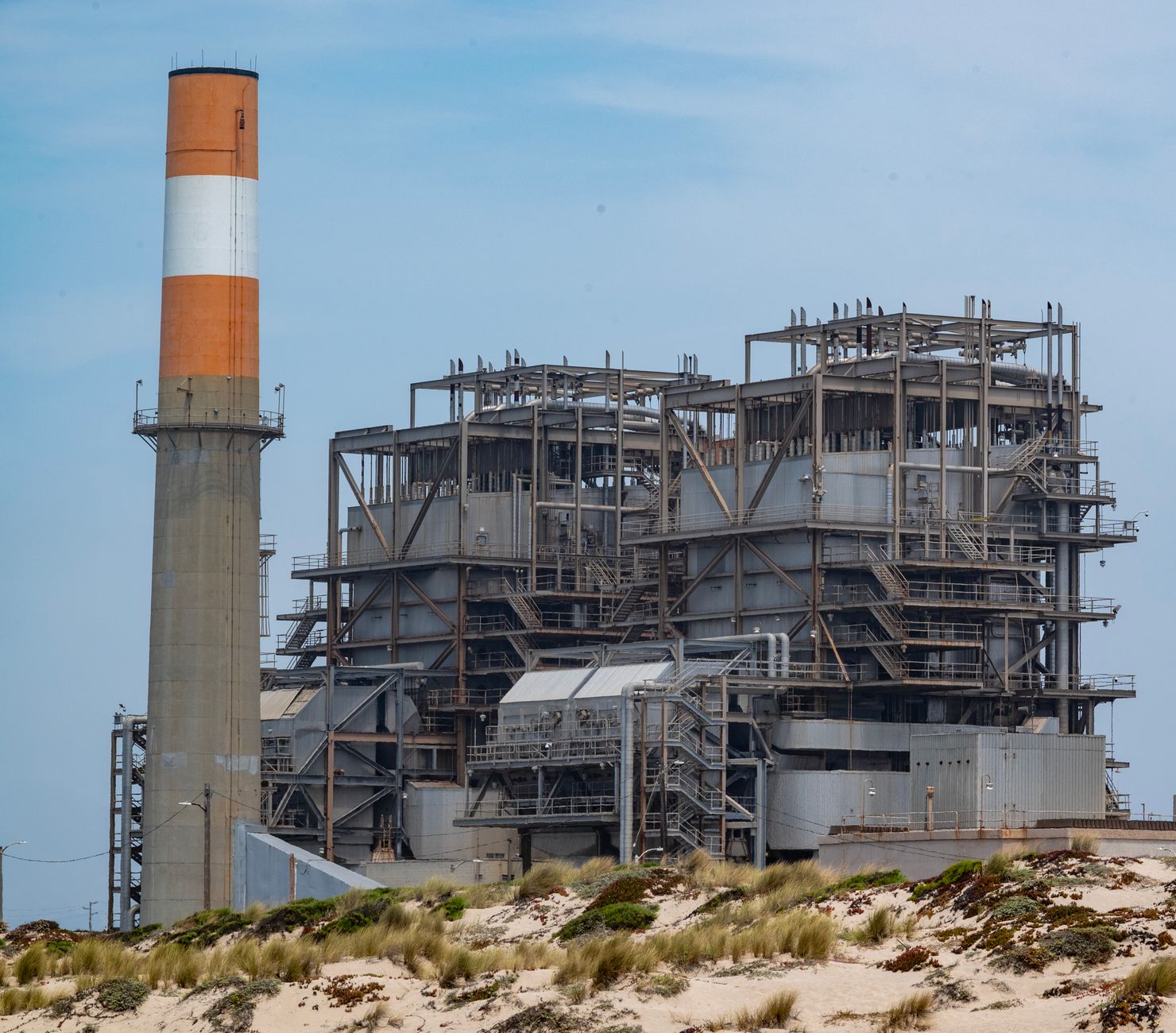
Parallel to BYOP, NRG is advancing its Texas Energy Fund (TEF) projects. These include three new dispatchable gas plants totaling 1.5 GW: the 415 MW T.H. Wharton unit, which began commercial operations in May 2026, and the 689 MW Cedar Bayou 5 and 443 MW Greens Bayou 6 units, both targeting mid-2028 commercial operation. These projects are partially financed by Texas Energy Fund loans totaling approximately $1.15 billion at a favorable 3% interest rate, along with potential completion bonuses and property tax abatements. The TEF initiatives, combined with the 13 GW LS Power portfolio acquired in January 2026, structurally reshape NRG's generation mix towards flexible, gas-fired assets with more stable, contracted revenue streams, designed to support grid reliability in a renewable-heavy environment.
The Smart Home Buffer
Amidst the capital-intensive generation build-out, NRG's Vivint Smart Home segment provides a welcome buffer of stable, high-margin, recurring revenue. This subscription-based platform continues to demonstrate robust growth and strong unit economics, diversifying NRG's earnings away from the volatile wholesale power markets.
In Q2 2026, Vivint Smart Home's Adjusted EBITDA increased by 18% year-over-year to $301 million. The customer base expanded 8% annually, reaching 2.45 million portfolio customers. The segment's monthly recurring service margin per customer stands at a healthy $44.23, based on $53.32 in monthly recurring service revenue and $9.09 in net service costs per customer per month. This translates to an annualized net service margin of about $530 per customer. While the net acquisition cost per new customer did tick up slightly to $907 in Q2 2026 from $887 in Q1 2026, the payback period remains attractive at roughly 20.5 months, or about 1.7 years. Assuming a customer lifetime of approximately 9 years, derived from an 89.5% annual retention rate, the simple lifetime value (LTV) on a net margin basis is estimated at $4,777, giving an impressive LTV:CAC ratio of 5.27x.
This consistent performance underscores Vivint's strategic importance, contributing approximately 24.7% of NRG's total segment Adjusted EBITDA in Q2 2026, despite representing only 7.8% of segment revenue. Its stable, subscription-like cash flows offer a counter-cyclical element to NRG's commodity-exposed generation business and a platform for future integration of energy management and demand response services, such as the company's virtual power plant (VPP) initiatives with partners like Sunrun.
The Elephant in the Balance Sheet
Despite the promising strategic pivot and resilient segments, the market's skepticism toward NRG appears rooted in its highly leveraged balance sheet and the substantial capital demands of its growth initiatives. As of the trailing twelve months (TTM), NRG's Net Debt/EBITDA stood at a concerning 7.58x, with a debt-to-equity ratio of 4.83. For context, management has repeatedly stated a long-term target net leverage of 3x. The current figures are significantly above this objective, raising questions about the company's financial flexibility.
The $3.2 billion BYOP project, while attractive in its economics, is heavily capital-intensive. NRG expects to incur $0.8 billion in BYOP-related capital expenditures by the end of 2026, followed by $1.0 billion in 2027 and $1.1 billion in 2028. Management has indicated that this project will be funded largely through its balance sheet, which will necessarily slow net debt reduction efforts in the near term. This high leverage could constrain NRG's ability to absorb unexpected shocks or pursue other growth opportunities without further stressing its financial position.
Adding to the financial pressure are unforeseen regulatory costs. For example, Virginia's re-entry into the Regional Greenhouse Gas Initiative (RGGI) effective July 1, 2026, applies to 1.2 GW of Virginia assets in NRG's recently acquired LS Power portfolio. This policy change is estimated to impose an incremental $70 million in costs for 2026, a burden not included in the original acquisition underwriting. Such unmodeled costs, combined with the ongoing capital deployment for BYOP and TEF projects, suggest that NRG is trying to "have it all"—aggressive capital returns, significant growth capex, and deleveraging—a strategy that demands near-perfect execution.
Wall Street's Split Verdict
Wall Street's outlook on NRG Energy, despite the recent sell-off, remains broadly positive, but with a wide range of opinions on its fair value. The consensus analyst rating is a "Buy," with 18 analysts recommending Buy, 7 on Hold, 1 on Strong Buy, and 1 on Sell out of a total of 27 analysts. This distribution indicates a general belief in NRG's long-term prospects.
However, the price targets reveal a significant dispersion of views, particularly after the Q2 earnings drop. The consensus 12-month price target stands at $202.56, with a median target of $209.00. The individual targets range from a low of $165.00 (Morgan Stanley) to a high of $226.00 (Scotiabank). This wide spread of $61.00 between the high and low targets—representing 37% of the low target—underscores the uncertainty surrounding NRG's current valuation and future trajectory.
Comparing these targets to the current price of $114.34, the implied upside is substantial: 77.1% to the consensus target, 83% to the median target, and as much as 98% to the high target. Even the lowest target of $165.00 implies a significant 44.3% upside.
| Firm | Analyst | Rating | Price Target ($) | Date |
|---|---|---|---|---|
| UBS | William Appicelli | Buy | 216 | 2026-07-28 |
| BMO Capital Markets | James Thalacker | Market Perform | 212 | 2026-07-28 |
| Barclays | Nicholas Campanella | Overweight | 204 | 2026-07-28 |
| Wells Fargo & Company | Shahriar Pourreza | Overweight | 209 | 2026-07-16 |
| Scotiabank | Andrew Weisel | Outperform | 226 | 2026-07-15 |
| Morgan Stanley | David Arcaro | Equal-Weight | 165 | 2026-06-24 |
| Goldman Sachs | Carly Davenport | Buy | 197 | 2026-03-06 |
| Jefferies | Julien Dumoulin-Smith | Buy | 181 | 2026-01-27 |
| Consensus/Median | (27 analysts) | Buy | 202.56 / 209.00 | 2026-08-04 |
The current valuation metrics also highlight this disconnect. At $114.34, NRG trades at a TTM P/E of 29.93x and an EV/EBITDA of 15.43x. However, based on the midpoint of 2026 Adjusted EPS guidance of $8.90, the implied forward P/E drops to approximately 12.85x. This sharp contrast between TTM and forward multiples suggests that the market is deeply discounting the company's ability to achieve its full-year guidance and realize the benefits of its strategic investments, while analysts see a significant re-rating opportunity if it does.
Weighing the Strongest Objection
The most compelling argument against a bullish stance on NRG, despite its strategic pivot, revolves around the sustainability of its ambitious growth projects and aggressive capital returns in the face of persistently high leverage and recent earnings volatility. With a Net Debt/EBITDA ratio of 7.58x, significantly above its stated long-term target of 3x, NRG is attempting to fund billions in new capital expenditures for BYOP and TEF projects while simultaneously maintaining $1.0 billion in annual share repurchases and $407 million in annual dividends. This "have it all" capital allocation strategy appears unsustainable if earnings do not accelerate rapidly.
The market's sharp 17.43% sell-off following the Q2 Adjusted EPS miss, despite reaffirmed guidance, suggests investors are skeptical that NRG can meet its targets while managing its debt load. The company's first-half Adjusted EPS of $2.98 means it must deliver between $4.92 and $6.92 in H2 2026 to hit its full-year guidance midpoint of $8.90. This requires H2 EPS to be 1.6 to 2.3 times higher than H1 levels, a considerable ramp-up after a period of Texas weather headwinds and commodity price compression. If power prices remain weak in Texas, or if the integration of LS Power assets and ramp-up of TEF projects encounter delays, achieving this guidance will be challenging.
While the BYOP project promises attractive, contracted cash flows (95% FCF supported by capacity payments, 12-15% IRR), its commercial operations are not expected until late 2029. This means investors must bridge a multi-year gap of high capital intensity, elevated leverage, and potential earnings volatility before the full benefits materialize. The market's current discount reflects concerns that this bridge may be too long or too risky, potentially leading to further guidance cuts, increased financing costs, or even a need to slow capital returns to address debt.
However, the objection overstates the risk by focusing solely on the "financing gap" without fully acknowledging the structural shift in NRG's cash flow profile. The company's new gas assets, particularly the BYOP and TEF projects, are designed to generate infrastructure-like cash flows, significantly de-risking future earnings from merchant price volatility. The low-interest TEF loans and customer capital commitment in BYOP also reduce NRG's direct financing burden and risk exposure compared to traditional merchant builds. Furthermore, the stable and growing EBITDA contribution from Vivint Smart Home provides a consistent, high-margin revenue stream that offsets some commodity volatility.
Ultimately, the market is pricing in execution risk, which is a fair assessment given the scale of NRG's ambitions and recent misses. The true test of NRG's strategy, and the factor that would definitively validate or invalidate this current objection, will be the company's Net Debt/EBITDA ratio by the end of 2027. If NRG can demonstrate a clear path toward its 3x leverage target while keeping BYOP and TEF projects on budget and on schedule, the market's current skepticism will likely dissipate, allowing the stock to re-rate significantly.
The Verdict on NRG's Strategic Pivot
NRG Energy is in the midst of a profound transformation, repositioning itself from a volatile merchant power producer to a more stable, contracted energy provider for an AI-driven world. The Q2 2026 Adjusted EPS miss and subsequent 17.4% stock decline have created a deep discount, with the stock trading near its 52-week low and at an implied 2026 forward P/E of just 12.85x, well below its peers. This market reaction, while severe, appears to be an overcorrection that overlooks the long-term value creation embedded in its strategic initiatives.
The company's substantial investments in contracted gas generation (BYOP and TEF projects) for data centers and grid reliability, coupled with the consistent, high-margin contribution from Vivint Smart Home, are designed to generate durable, infrastructure-like cash flows. While the high leverage and execution risk are valid concerns, the attractive project economics and the structural shift towards de-risked revenue streams present a compelling opportunity for long-term investors.
Our stance on NRG is Bullish for investors with a multi-year horizon who are willing to tolerate near-term volatility. The current share price offers a significant margin of safety relative to analyst targets and the intrinsic value of its transforming asset base.
- Entry Zone: Accumulate shares in the $110-$120 range, close to its 52-week low of $112.57.
- 12-Month Target: $195.00, reflecting the consensus analyst target and anticipated re-rating as NRG demonstrates progress on its 2026 guidance and capital projects.
- Invalidation Level: A sustained close below $110.00, particularly if accompanied by a further guidance cut or deterioration in the Net Debt/EBITDA trajectory, would signal a fundamental breakdown in the investment thesis.
Want deeper research on any stock? Try Kavout Pro for AI-powered analysis, smart signals, and more. Already a member? Add credits to run more research.
Related Articles
What Triggered the Global Gas Market Shock
What Triggered Fermi's Steep Decline
Has the Energy Sector's Q1 Rally Run Out of Gas
Category
You may also like


NRG Energy's Historic Run Isn't Over Yet

U.S. Power Outlook: How Surging Demand Is Reshaping The Generation Puzzle

Natural Gas is Wildly Profitable Around the World. In Texas, Prices are Negative.
Breaking News
View All →Featured Articles
Top Headlines

MSFT IMPORTANT DEADLINE: ROSEN, NATIONAL TRIAL COUNSEL, Encourages Microsoft Corporation Investors with Losses in Excess of $100K to Secure Counsel Before Important August 11 Deadline in Securities Class Action – MSFT

Palantir Q2: Patience Is A Virtue

Nvidia (NVDA) Beats Stock Market Upswing: What Investors Need to Know

CEO Alex Karp Just Delivered the News Palantir Stock Investors Have Been Waiting For