MarketLens

Log in

Oil's Illusion of Abundance: Why Exxon and Chevron Are Primed for a 2026 Supply Crunch

6 hours ago
SHARE THIS ON:

Oil's Illusion of Abundance: Why Exxon and Chevron Are Primed for a 2026 Supply Crunch

Key Takeaways

  • Despite official forecasts projecting an oil surplus, structural underinvestment and geopolitical instability are setting the stage for a significant supply crunch by late 2026.
  • The industry faces a multi-trillion-dollar investment deficit and rapid shale decline rates, creating a "treadmill effect" that current production levels cannot sustain long-term.
  • Integrated majors like Exxon Mobil and Chevron, with their lower breakevens and strategic assets, are uniquely positioned to benefit from the inevitable price appreciation as global spare capacity dwindles.

The Looming Paradox: Scarcity Hiding in Plain Sight

Global oil markets are currently gripped by a profound paradox. On one hand, official agencies project an era of "super glut," suggesting an abundance of crude that will drive prices lower. On the other, a growing body of analysis points to deep structural fragilities and chronic underinvestment, signaling an impending supply crisis. Today, Crude Oil (CLUSD) trades at $81.78, a notable increase of 3.58% in a single day, yet still well below its 52-week high of $119.48. This volatility hints at the underlying tension in the market, where the "illusion of plenty" may soon give way to a stark reality of scarcity.

The stakes are high for investors. If the market is indeed mispricing a looming supply crunch, the implications extend beyond energy markets, touching monetary systems and geopolitical power structures. The conventional wisdom, which assumes a ready "release valve" for supply in times of crisis, is increasingly outdated. Past shocks in 1973, 1990, and even 2022 saw Saudi spare capacity or rerouted Russian barrels provide buffers. However, the current landscape for 2026 suggests no such easy solutions. This makes the present moment a critical inflection point for understanding the true trajectory of oil prices and identifying the companies best equipped to navigate it.

The Illusion of Abundance: Why Official Forecasts Miss the Mark

The bearish case for oil in 2026 often hinges on projections from institutions like the International Energy Agency (IEA). In its December 2025 Oil Market Report, the IEA projected global oil supply to grow by 3 million barrels daily in 2025 and another 2.4 million in 2026, significantly outpacing demand growth of 830,000 and 860,000 barrels respectively. This arithmetic suggests a projected surplus of 3.7 million barrels per day by the end of next year, a figure that, on paper, should be "catastrophically bearish," potentially pushing prices into the $40s or lower.

However, this seemingly straightforward calculation masks deeper structural issues. As Shanaka Anslem Perera highlighted in a December 2025 Substack piece, "The Great Oil Paradox of 2026," the IEA, EIA, and OPEC often measure different things. The IEA itself, in August 2025, conceded it could not account for 1.47 million barrels per day of crude that appeared in production statistics but never materialized in consumption, exports, or inventory data. This "missing oil" represents a significant measurement gap, equivalent to Iraq's entire output vanishing into statistical noise. Such discrepancies suggest that the reported "abundance" may be more statistical anomaly than physical reality, setting the stage for a market repricing when the true supply picture emerges.

Structural Cracks: Underinvestment and the Shale Treadmill

Beneath the surface of reported abundance lies a critical problem: chronic underinvestment in oil production. Industry experts estimate that approximately $5 trillion in investment is required over the next five years to maintain adequate global production capacity. This translates to roughly $1 trillion annually, yet current global upstream spending hovers around $600-700 billion per year, creating an annual deficit of $300-400 billion. This persistent gap has accumulated over several years, threatening future supply adequacy.

The challenge is compounded by the inherent nature of modern oil production, particularly in North American shale regions like the Permian Basin. Unconventional shale wells exhibit hyperbolic decline curves, with rapid initial production drops of 40-60% in the first year. This creates a "treadmill effect" where producers must continuously drill new wells merely to maintain field-level output. The Dallas Federal Reserve's Q1 2025 Energy Survey revealed that the average price needed for new well profitability stood at $65 per barrel, with larger producers averaging $61. With WTI trading near $57 at that time, new drilling in marginal acreage became economically challenged, leading to a slowdown in investment decisions that will manifest as supply gaps years later. The long development cycles of oil projects, ranging from 6 to 17 years from discovery to full production, mean that investment decisions delayed today will create significant supply gaps by 2026-2027, precisely when current inventory buffers are expected to deplete.

Geopolitical Flashpoints: The Supply Chain Under Siege

Geopolitical factors are further amplifying the vulnerabilities created by underinvestment, transforming potential supply disruptions into concrete constraints. Current sanctions regimes have already removed substantial production capacity from global markets. Russian production, for instance, faces constraints of 1-2 million barrels per day due to secondary sanctions, while Iranian export limitations stand at 1.5-2 million barrels per day. These figures represent significant portions of global supply that are effectively offline or operating under severe restrictions.

The Strait of Hormuz, a critical chokepoint for global oil flows, remains a flashpoint. As of July 2026, the US military has restarted enforcement of a naval blockade against Iranian ports following a breakdown in a ceasefire agreement. This has led to the redirection of commercial vessels and increased risks for mariners attempting to transit the strait. The UK Trade Maritime Information Center noted on July 14, 2026, that "US-assisted commercial transits continued despite the elevated threat environment," highlighting the ongoing tension. Such disruptions, alongside ongoing regional conflicts affecting Red Sea shipping routes, underscore how easily "extra supply" can vanish. The widening gap between bullish stock sentiment and discounted oil has Currency Research Associates warning that the odds are rising "that the opposite will happen — equities will fall, and oil will rise in 2026." This political risk, often mispriced by markets, could trigger rapid price spikes.

Exxon and Chevron: Navigating the Coming Supply Crunch

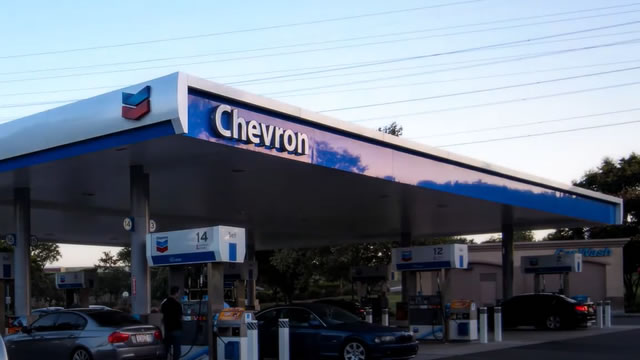
In a market increasingly defined by structural scarcity, integrated oil majors like Exxon Mobil (XOM) and Chevron (CVX) are uniquely positioned to thrive. Their scale, diversified asset bases, and lower breakeven costs provide a significant competitive advantage. While the industry grapples with underinvestment, these giants have continued to execute on key projects. For instance, ExxonMobil announced in November 2025 that its Stabroek Block in Guyana reached 900,000 barrels daily production, a remarkable scale-up from 120,000 barrels daily in 2020. This makes Guyana one of the world’s most significant new oil provinces and a crucial growth driver for Exxon.

Furthermore, firms like ConocoPhillips and Chevron have demonstrated an ability to hit record production targets with streamlined workforces and breakeven costs as low as $16 per barrel. This efficiency paradox, where digital decoupling allows computational physics and sensor data to separate production from labor, means these companies can remain profitable even at lower price points, while smaller, less efficient producers struggle. As the global supply crunch intensifies, Exxon and Chevron's robust balance sheets and access to capital will allow them to continue investing in proven reserves and enhanced recovery projects, further solidifying their market position. With Exxon Mobil currently trading at $147.39 and Chevron at $187.36, both are well-positioned to capture upside as crude prices respond to tightening supply.

The Bear Case: A Drowning in Super Glut

While the structural scarcity argument gains traction, a significant counter-narrative posits an impending "Super Glut" that could overwhelm markets. This bearish view, championed by some analysts and reports like Fortune's February 2026 piece "Forget 'peak oil': the era of scarcity is dead, and now we're drowning in abundance," argues that the world is extracting hydrocarbons faster than the global economy can burn them. The IEA's January 2026 report projected global oil supply to surge by 2.5 million barrels per day, reaching a record 108.7 million bpd, driven largely by the "Americas Quintet" (the U.S., Canada, Brazil, Guyana, and Argentina).

This perspective highlights several demand-side and logistical constraints. The EV fleet is now displacing over 1.6 million barrels per day, while 20% efficiency gains in internal combustion engines have triggered a permanent 3% annual decline in gasoline demand across developed nations. China's strategic stockpiling, which accumulated crude at approximately 1 million barrels daily through 2025, is nearing its limit, with functional storage expected to max out by the third quarter of 2026. Once these cushions are exhausted, excess supply would be forced into expensive floating storage, potentially triggering a mass exodus by algorithmic trading systems and collapsing prices by 30% in a single 48-hour session. This "price trap," driven by skyrocketing storage costs, represents a formidable bear case that cannot be ignored.

Analyst View: Pricing the Unseen Risk

The divergence between the "super glut" and "structural scarcity" narratives creates a complex landscape for analysts. While no specific analyst targets for Exxon Mobil or Chevron were provided in the research context, the broader market sentiment appears to be grappling with this paradox. The IEA's July 17, 2026, report, which again cut its 2026 demand forecast, suggests a prevailing view of demand weakness. However, this macro perspective often overlooks the granular, structural issues that underpin long-term supply.

The warning from Currency Research Associates, noted in a recent article, that "equities will fall, and oil will rise in 2026" encapsulates the asymmetric risk distribution. This suggests that the market, in its current state, is underestimating the potential for a supply-driven price shock. For investors, this implies that the current valuations of oil majors may not fully reflect the upside potential from a tightening market. The "illusion of plenty" has led to a collective blind spot, where the market is focused on headline production figures while ignoring the underlying investment deficit and geopolitical fragilities that are poised to redefine the supply-demand balance.

The Verdict: Positioning for the Inevitable Squeeze

The global oil market is on the cusp of a significant repricing event. While the narrative of abundance dominates official forecasts, the underlying structural realities of underinvestment, rapid production declines, and escalating geopolitical risks point to an inevitable supply squeeze by late 2026. The "illusion of plenty" is unsustainable, and the market is poised to recognize the true cost of years of deferred capital expenditure.

For investors, this presents a compelling opportunity in well-positioned integrated oil majors. Exxon Mobil (XOM) and Chevron (CVX), with their robust production profiles, lower breakeven costs, and strategic assets, are best equipped to navigate this shift. We anticipate that as the market confronts the reality of tightening supply, crude oil prices will move higher, driving significant upside for these companies.

Entry Zone: Investors should consider accumulating positions in Exxon Mobil between $145.00 and $148.00, and Chevron between $185.00 and $188.00. 12-Month Target: Our 12-month target for Exxon Mobil is $175.00, representing a potential upside of nearly 19% from current levels. For Chevron, we set a target of $210.00, indicating a potential gain of over 12%. Invalidation Level: This thesis would be invalidated if WTI crude oil prices consistently trade below $70.00 per barrel, signaling a fundamental breakdown in demand or an unexpected surge in sustainable supply. The era of cheap oil is ending; the smart money is already positioning for scarcity.


Want deeper research on any stock? Try Kavout Pro for AI-powered analysis, smart signals, and more. Already a member? Add credits to run more research.

SHARE THIS ON:

Related Articles

Category

You may also like

Stock News1 months ago

Draining the Tank: Big Oil Runs on Fumes

Crude oil's geopolitical risk premium evaporated after a US-Iran diplomatic breakthrough, breaking the crude rally. The violent rerating reflects a sudden shift in supply expectations.
Stock News1 months ago

Exxon SVP Warns Oil Could Spike to $150-160 Per Barrel in ‘Coming Weeks'

Brent crude prices could rise to $150–$160 per barrel in the coming weeks, according to an Exxon senior vice president. This potential surge is driven by global oil inventories currently approaching a...
News1 months ago

Is The U.S. Running Out Of Oil? Setting The Record Straight

U.S. Strategic Petroleum Reserve levels have reached historic lows following aggressive drawdowns. Despite net exporter status, the U.S.
Stock News2 months ago

Big Oil Stays the Course Despite Historic Dislocation in Energy Markets

Exxon, Chevron, and other major oil producers are prioritizing shareholder returns over capital investment despite facing the most significant supply shortfall in decades. These firms continue to dist...

Breaking News

View All →

Top Headlines

View More →
Stock News29 minutes ago

SPY's 0.0945% Fee Could Cost You Thousands Over Two Decades Against Its Own Sister Fund

Stock News40 minutes ago

Forget the Russell 2000. This Small-Cap ETF May Be the Smarter Buy

Stock News1 hour ago

S&P 500 Snapshot: Index Drops Below 50-Day MA

Stock News1 hour ago

Coca-Cola (KO) Falls More Steeply Than Broader Market: What Investors Need to Know

Stock News1 hour ago

Why Coca-Cola Stock Flopped on Friday