MarketLens
Ryanair's Q1 Profit Dip: A Strategic Retreat to Dominate Europe's Skies

Key Takeaways
- Ryanair's Q1 profit after tax plunged 34% to €538 million, primarily due to a surge in unhedged jet fuel costs and a 6% drop in average fares driven by geopolitical uncertainty.
- Despite the short-term earnings hit, the airline's robust fuel hedging strategy and recent debt repayment position it with a significant cost advantage over less-prepared European rivals.
- Management's cautious outlook for summer pricing, coupled with expectations of industry consolidation, suggests Ryanair is strategically sacrificing near-term yield to secure long-term market dominance.
The Geopolitical Headwind That Grounded Q1 Profits
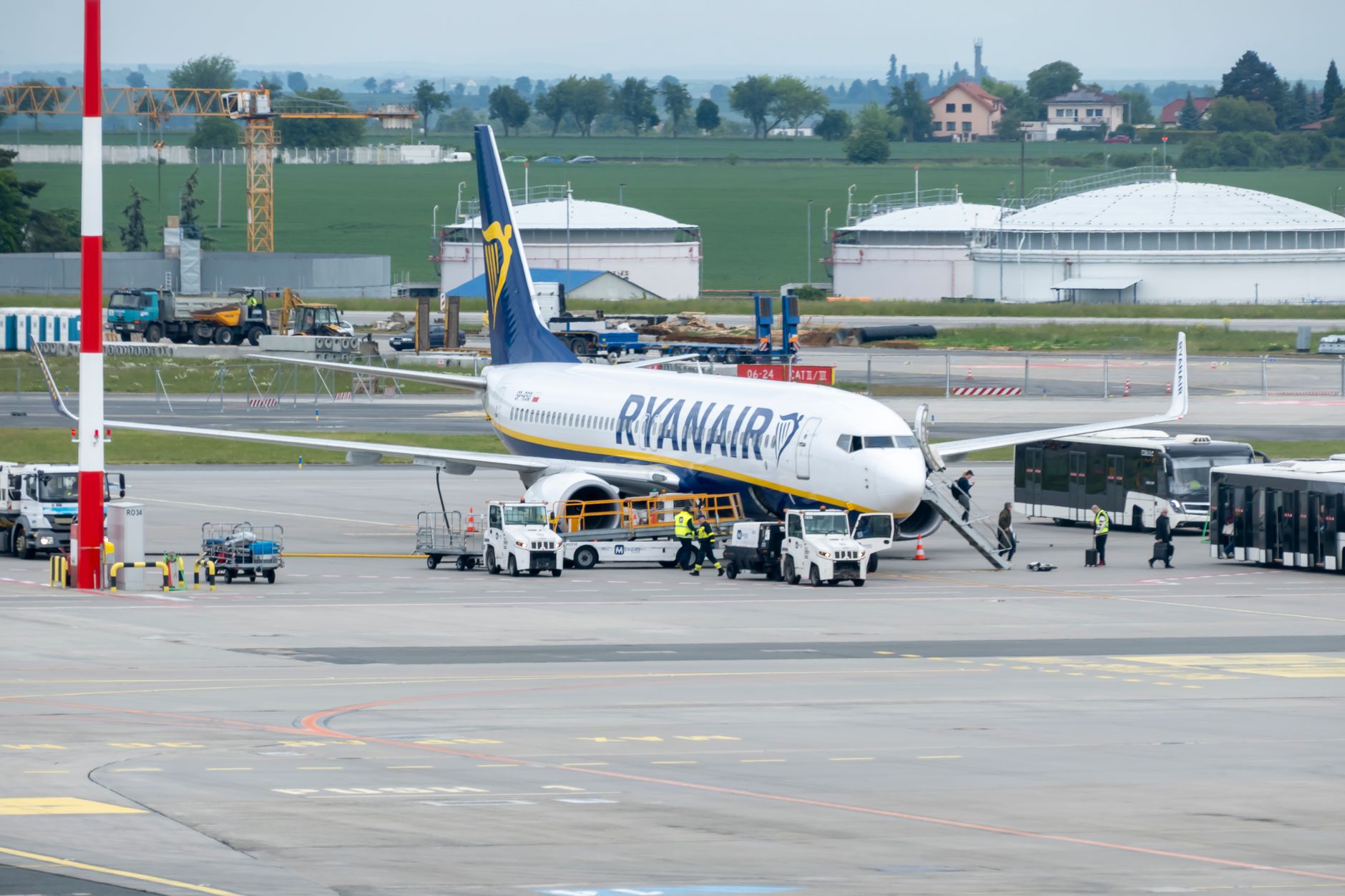
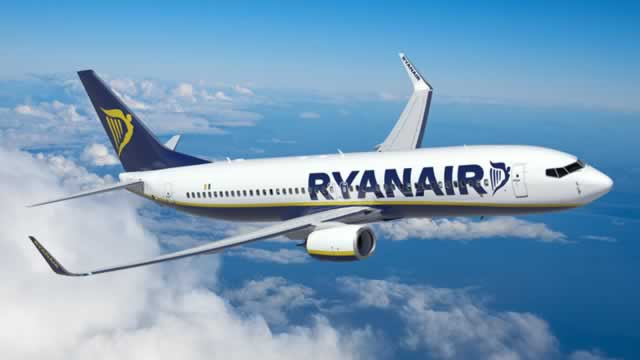
Ryanair Holdings plc (NASDAQ: RYAAY), Europe's largest low-cost carrier, found itself in a turbulent patch during its first fiscal quarter, reporting a 34% decline in profit after tax to €538 million for the three months ending June 30, 2026. This sharp drop from €820 million a year earlier, announced on July 20, 2026, sent shares tumbling, with the stock currently trading at $58.89, near the lower end of its 52-week range of $53.14 to $74.24. The immediate catalyst for this earnings miss was a potent combination of surging jet fuel prices, exacerbated by the ongoing US-Iran conflict, and a strategic decision to lower fares to stimulate demand amidst heightened consumer hesitancy.
The geopolitical landscape has significantly reshaped the operating environment for airlines. The outbreak of the US-Iran conflict in February 2026 and the subsequent closure of the Strait of Hormuz in March 2026 triggered a major shock to global energy markets. Crude oil prices surged 64% in March, and jet fuel prices, in particular, doubled within weeks, reaching $1,838 per tonne in early April before stabilizing above $1,500 per tonne. This dramatic increase in fuel costs, coupled with concerns about supply shortages in Europe, created an unprecedented challenge for carriers. For Ryanair, this meant that while traffic grew a robust 6% to 61.3 million passengers, the benefits were largely negated by external pressures. The Q1 results, falling short of the €579 million consensus forecast, highlight the vulnerability of even the most efficient airlines to macro-level disruptions, setting the stage for a potential shakeout across the European aviation sector.
A Deep Dive into Ryanair's Q1 Financials
Ryanair's Q1 2027 financial performance, covering April to June 2026, reveals a stark picture of cost inflation and pricing pressure, despite healthy passenger volume growth. Total revenue for the quarter edged up just 1% to €4.38 billion, a modest increase that belies the underlying operational shifts. Scheduled revenue, which accounts for the bulk of the airline's top line, actually dipped 1% to €2.91 billion. This decline occurred even as passenger traffic surged 6%, indicating that the average fares were significantly lower than the previous year. Indeed, average fares fell 6% year-on-year, a direct consequence of the company's "load-active/yield passive" strategy in a challenging market.
The primary driver of the profit contraction was a substantial 11% increase in operating costs, which reached €3.81 billion. Unit costs rose 5%, largely attributable to the spike in unhedged jet fuel prices. While Ryanair boasts a conservative hedging strategy, with 80% of its fiscal year 2027 jet fuel requirements locked in at approximately $67 per barrel, the remaining 20% that trades at market rates saw its cost more than double during the quarter, reaching around $150 per barrel. This unhedged exposure proved to be a significant drag on profitability. The table below summarizes key financial metrics for the quarter, illustrating the squeeze on margins.
| Metric | Q1 FY27 (Apr-Jun 2026) | Q1 FY26 (Apr-Jun 2025) | Change |
|---|---|---|---|
| Profit After Tax | €538 million | €820 million | -34% |
| Total Revenue | €4.38 billion | €4.34 billion | +1% |
| Operating Costs | €3.81 billion | €3.43 billion | +11% |
| Passengers Carried | 61.3 million | 57.8 million | +6% |
| Average Fares | - | - | -6% YoY |
| Scheduled Revenue | €2.91 billion | €2.94 billion | -1% |
| Ancillary Revenue | €1.47 billion | €1.40 billion | +5% |
All figures are approximate based on reported changes.
Beyond fuel, other cost pressures included rising maintenance expenses for an aging fleet and significant crew pay increases agreed under new multi-year collective labor agreements. Additionally, supplier compensation, which previously offset some costs, ceased after the final delivery of its Boeing 737-8200 "Gamechanger" aircraft in February 2026. These factors collectively eroded the gains from increased traffic and ancillary revenue, which rose in line with passenger growth to €1.47 billion.
The Dual Squeeze: War, Fuel, and Fare Stimulation
The narrative behind Ryanair's Q1 results is one of a dual squeeze: external geopolitical turmoil driving up costs, and internal strategic pricing to maintain market share. The US-Iran conflict, which escalated in early 2026, directly impacted global energy markets, particularly jet fuel. The closure of the Strait of Hormuz, a critical chokepoint for global oil flows, led to a dramatic surge in crude oil prices, which then cascaded into an even more pronounced increase in jet fuel costs. Morgan Lewis reported in May 2026 that jet fuel prices had surged more than 120% since the onset of hostilities, reaching $1,838 per tonne in early April 2026. While the current crude oil price sits at $84.56 per barrel, the refined product premium has widened dramatically, intensifying cost pressures for airlines.
This fuel price volatility directly hit Ryanair's unhedged fuel exposure. Despite 80% of its FY27 fuel being hedged at a favorable $67 per barrel, the remaining 20% was subject to market prices that more than doubled to approximately $150 per barrel during Q1. This spike erased much of the benefit from traffic growth. Ryanair Group CEO Michael O’Leary acknowledged the challenging environment, stating on the Q1 earnings call that "There's a war going on in the world. There's a lot of uncertainty," which led to consumer hesitancy and a shift towards last-minute bookings.
To counteract this demand softness, Ryanair pursued its characteristic "load-active/yield passive" strategy, opting to stimulate demand through lower fares. This resulted in a 6% year-on-year drop in average fares for Q1. While this approach successfully drove a 6% increase in passenger volume, it came at the expense of revenue per passenger, which declined 5%. The airline had initially expected low single-digit fare increases for Summer 2026, but the geopolitical events forced a recalibration. O'Leary further cautioned that pricing was "trending weaker rather than stronger" in the current quarter, with fares facing a mid-single-digit year-on-year fall through the summer. This strategic sacrifice of near-term yield underscores Ryanair's commitment to maintaining its market-leading load factors and expanding its passenger base, even in a volatile environment.
Ryanair's Defensive Moat: Hedging and a Debt-Free Balance Sheet
While Ryanair's Q1 results reflect the immediate pressures of the geopolitical landscape, the airline's robust financial and operational strategies provide a significant defensive moat, positioning it for long-term resilience. Central to this defense is its conservative jet fuel hedging policy. As of the Q1 report, Ryanair has 80% of its fiscal year 2027 jet fuel requirements hedged at approximately $67 per barrel, a price significantly below the market rates that soared to $150 per barrel for unhedged fuel in Q1. Furthermore, the company has already locked in 15% of its fiscal year 2028 fuel needs at $85 per barrel, taking advantage of a brief ceasefire-related dip in oil prices.
This aggressive hedging strategy, as highlighted by CEO Michael O'Leary, "insulates Ryanair against further oil price swings and widens its cost advantage over competitors." Many European rivals, particularly those with less comprehensive hedging programs or higher unhedged exposure, are facing much steeper cost increases. Ryanair's CFO Neil Sorahan, in a July 20, 2026 CNBC interview, explicitly warned that "some of the weaker carriers who were already struggling before the war possibly go to the wall in the winter," drawing parallels to the collapse of Spirit Airlines in the U.S. due to similar pressures. Ryanair's ability to maintain a relatively stable fuel cost base, despite market volatility, is a critical competitive differentiator.
Beyond hedging, Ryanair's balance sheet strength provides an additional layer of protection. The airline recently repaid its final €1.2 billion bond in May 2026, leaving the group debt-free. This strong liquidity and unencumbered fleet stand in stark contrast to many competitors grappling with heavy debt loads and rising financing costs. A debt-free status provides immense flexibility, allowing Ryanair to weather prolonged periods of market instability, continue strategic investments, and potentially capitalize on opportunities arising from industry consolidation. This disciplined capital structure, combined with its low-cost operating model and fuel-efficient "Gamechanger" aircraft, creates a formidable competitive advantage in a capacity-constrained European market.
The European Shakeout: Opportunity Amidst Distress
The current environment, characterized by elevated fuel prices and constrained capacity, is setting the stage for a significant shakeout in the European airline sector, an outcome Ryanair is strategically positioned to exploit. The ongoing US-Iran conflict has not only driven up fuel costs but also introduced widespread economic uncertainty and consumer hesitancy, forcing many airlines to re-evaluate their operational plans. Ryanair's CFO Neil Sorahan has been vocal about the potential for weaker European carriers to fail, creating an opportunity for stronger players to consolidate market share.
European short-haul capacity is expected to remain constrained until at least 2030, a situation exacerbated by ongoing aircraft delivery delays from major OEMs (Original Equipment Manufacturers) and persistent Pratt & Whitney engine repair issues. This supply-side bottleneck, combined with the financial strain on less-hedged or debt-laden airlines, is accelerating industry consolidation. Unprofitable airlines, further hit by high jet fuel prices, have already begun withdrawing capacity, leaving them less able to compete with Ryanair's much lower costs.
Ryanair's strategy of maintaining high load factors through aggressive pricing, even if it means sacrificing near-term yield, is a calculated move to solidify its market position. As competitors struggle with higher operating costs and reduced demand, Ryanair's widening cost advantage and robust balance sheet allow it to continue expanding its network and passenger base. For instance, in Q1 alone, Ryanair added three new operating bases in Rabat, Tirana, and Trapani, alongside launching 130 new Summer 2026 routes. This aggressive capacity deployment, coupled with its industry-leading operational resilience, positions Ryanair to capture market share from distressed rivals. The long-term vision is clear: to grow profitably to over 300 million passengers per annum by FY34, leveraging a consolidating market.
The Bear Case: Lingering Headwinds and External Risks
While Ryanair's strategic positioning offers a compelling long-term narrative, several significant risks could still derail its trajectory and challenge its ability to capitalize on a consolidating market. The most immediate concern remains the volatility of jet fuel prices, particularly the 20% of its fuel requirements that remain unhedged. Any further escalation of the US-Iran conflict, or new geopolitical disruptions, could send crude oil and jet fuel prices soaring beyond current levels, severely impacting profitability despite the extensive hedging. CEO Michael O’Leary explicitly stated that the FY27 outcome "remains heavily exposed to adverse external developments, incl. conflict escalation in the Middle East and Ukraine, risks to fuel supply shortages, [and] higher for longer fuel prices on our unhedged 20%."
Beyond fuel, broader macroeconomic shocks pose a substantial threat. The consumer hesitancy observed in Q1, driven by economic uncertainty and inflation fears, could persist or even worsen, leading to a sustained period of weaker demand for air travel. If consumers continue to delay bookings or opt for fewer trips, Ryanair's "load-active/yield passive" strategy could lead to deeper fare cuts, further eroding margins without a corresponding increase in traffic. The airline's Q2 pricing, currently trending broadly flat, offers limited visibility, and the final outcome for peak summer bookings remains uncertain.
Operational risks also loom large. Despite Ryanair's strong operational resilience, the European aviation sector is prone to disruptions, including air traffic control (ATC) strikes and mismanagement, which can lead to significant flight cancellations and compensation liabilities. Furthermore, the reliance on new aircraft deliveries from OEMs and engine repairs from Pratt & Whitney introduces supply chain risks that could constrain Ryanair's planned capacity growth. While the company has taken steps like purchasing spare LEAP-1B engines, prolonged delays could still impact its ability to expand and capture market share as quickly as intended.
Analyst View: A Bullish Consensus Despite Short-Term Pain
Wall Street analysts maintain a largely bullish outlook on Ryanair, despite the recent Q1 earnings miss and the challenging operating environment. The consensus rating for RYAAY is a "Buy," with 17 analysts contributing to the assessment (1 Strong Buy, 10 Buy, 4 Hold, 2 Sell, 0 Strong Sell). This positive sentiment reflects confidence in Ryanair's long-term strategy and its ability to navigate current headwinds.
The median analyst price target for RYAAY stands at $79.50, with a range from a low of $79.00 to a high of $80.00. Relative to the current share price of $58.89, this median target implies a substantial upside potential of approximately 35.0%. This target suggests that analysts believe the market is currently undervaluing Ryanair's strategic advantages, such as its robust hedging, debt-free balance sheet, and potential for market share gains in a consolidating industry.
Recent rating changes also reflect this underlying confidence. Evercore ISI Group, for instance, maintained its "Outperform" rating on June 25, 2026, following an upgrade from "In Line" to "Outperform" on March 12, 2026. This indicates a belief that Ryanair's competitive position is strengthening relative to its peers, even as the broader market faces turbulence. Analysts are likely factoring in Ryanair's ability to leverage its cost structure and liquidity to emerge stronger from the current period of industry distress, ultimately leading to higher profitability and a re-rating of its shares.
The Verdict: Navigating Turbulence for Long-Term Dominance
Ryanair's Q1 profit decline, while significant, appears to be a calculated sacrifice in a period of unprecedented geopolitical and economic volatility. The 34% drop in profit after tax was a direct consequence of surging unhedged fuel costs and a strategic decision to lower fares to maintain passenger volumes amidst consumer hesitancy. However, beneath this short-term earnings hit lies a strengthening competitive position. Ryanair's aggressive fuel hedging strategy, which has 80% of its FY27 fuel locked in at a favorable $67 per barrel, provides a critical cost advantage over less-prepared rivals. Coupled with its recently achieved debt-free status, the airline possesses a formidable defensive moat that enables it to weather market storms and capitalize on industry consolidation.
The European airline sector is ripe for a shakeout, with weaker carriers facing existential threats from elevated fuel prices and constrained capacity. Ryanair, with its disciplined capital structure and low-cost operating model, is strategically positioned to absorb market share and expand its network, as evidenced by its continued traffic growth and new route launches. While the immediate future holds uncertainty regarding summer pricing and potential geopolitical escalations, the long-term narrative points towards Ryanair emerging as an even more dominant force.
For investors with a high tolerance for short-term volatility, Ryanair presents a compelling opportunity. The current share price of $58.89 offers a significant discount to the analyst consensus target, reflecting the market's focus on immediate headwinds rather than underlying strategic strengths.
Entry Zone: Investors could consider accumulating shares in the $55.00 - $60.00 range, capitalizing on the current market uncertainty. 12-Month Target: A target price of $79.50 is realistic, aligning with the median analyst consensus and reflecting a re-rating as market conditions stabilize and Ryanair's competitive advantages become more apparent. Invalidation Level: A close below $53.00 would invalidate this thesis, suggesting a more fundamental deterioration in Ryanair's competitive position or a prolonged, severe downturn in the European aviation market.
Ryanair's Q1 may have been turbulent, but its strategic flight plan remains firmly on course for long-term market leadership.
Want deeper research on any stock? Try Kavout Pro for AI-powered analysis, smart signals, and more. Already a member? Add credits to run more research.
Related Articles
Category
You may also like


Ryanair Extends O'Leary Contract to 2032 With 10 Million-Share Option
Ryanair's May Traffic Numbers Show Five-Month Straight Growth

Can Ryanair's debt-free balance sheet boost its low-cost edge?
Breaking News
View All →Featured Articles
Top Headlines

Rosen Law Firm Encourages Alibaba Group Holding Limited Investors to Inquire About Securities Class Action Investigation - BABA

Jimothy keeps on giving: Amazon and others match winning bid for raccoon art, to benefit food bank

Chipotle Mexican Grill (CMG) Sees a More Significant Dip Than Broader Market: Some Facts to Know

Microsoft (MSFT) Ascends While Market Falls: Some Facts to Note