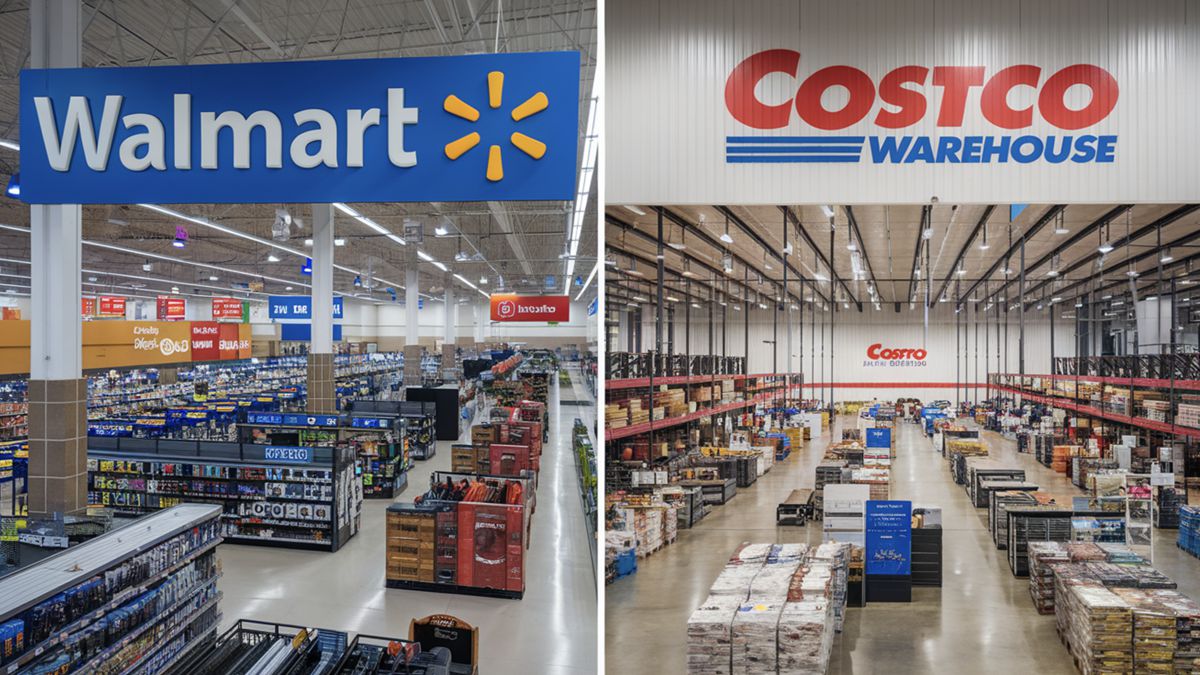
Understanding the Business Models
Walmart: The Retail Colossus
Walmart’s business model is built on the promise of “Everyday Low Prices.” As the world’s largest retailer, Walmart offers a vast array of products, from groceries to electronics, across its extensive network of physical stores and a growing e-commerce platform. This omnichannel approach allows Walmart to cater to a broad consumer base, reaching 230 million global customers in 2022.
- Customer Segments: Walmart targets general consumers and businesses, emphasizing affordability and convenience.
- Value Proposition: The company provides a wide variety of products at low prices, leveraging its massive scale to negotiate favorable terms with suppliers.
- Channels: Walmart operates through physical stores and a robust online presence, enhancing its reach and accessibility.
- Revenue Streams: Primarily driven by product sales, Walmart reported a staggering $643 billion in revenue for 2023.
Costco: The Membership-Based Powerhouse
Costco, on the other hand, operates on a membership-based warehouse model. This approach allows Costco to offer high-quality products in bulk at competitive prices, appealing to both individual members and businesses. In 2023, Costco boasted 71 million paid members, underscoring the strength of its membership model.
- Customer Segments: Costco focuses on members seeking bulk purchases, offering significant savings and value.
- Value Proposition: By limiting its product selection, Costco keeps costs low and passes the savings onto its members.
- Channels: The company primarily operates through warehouse stores, creating a unique shopping experience.
- Revenue Streams: Costco generates revenue from both product sales and membership fees, with $242.29 billion in total revenue for 2023.
Financial Performance and Market Position
Walmart: A Revenue Juggernaut
Walmart’s financial performance is nothing short of impressive. With over $643 billion in revenue for 2023, the company outpaces Costco significantly. Walmart’s gross profit stood at $152.5 billion, with an operating income of $21.5 billion. Despite its massive scale, Walmart maintains a net margin of 2.39%, reflecting its focus on cost-efficient operations.
- Growth Strategy: Walmart plans to open 150 new stores and upgrade 1,400 existing ones, with e-commerce sales growing by 23% globally in 2023.
- Market Share: Holding 8.6% of the overall US retail market, Walmart’s dominance is evident.
Costco: Efficiency and Loyalty
Costco’s financial metrics reveal a company that excels in efficiency and customer loyalty. With $242 billion in revenue for 2023, Costco’s gross margin was 12.39%, and its net margin was 2.73%. The company’s membership renewal rate of around 90% highlights its strong customer retention.
- Growth Strategy: Costco added 23 new warehouses in 2023 and continues to expand its in-house product lines.
- Market Share: While holding 2.3% of the US retail market, Costco dominates the warehouse club sector with over 60% market share.
Analyst Perspectives: Which Stock is the Better Choice?
Walmart: A Strong Contender
Analysts generally view Walmart as a solid investment, particularly due to its broad market exposure and robust digital ecosystem. In 2024, Walmart’s stock rose by 53%, with a forward price-to-earnings (P/E) ratio of 34. The company’s focus on e-commerce and higher-margin revenue streams, such as advertising and membership, positions it well for future growth.
- Analyst Upgrades: Truist upgraded Walmart from Hold to Buy, citing its strong market share gains and growth potential.
- Financial Projections: Walmart forecasts revenue growth between 3.75% and 4.75% for fiscal 2025, with an expected EPS increase of 8%.
Costco: A Growth Leader
Costco’s stock performance has been remarkable, with a 60% increase over the past year. Analysts appreciate Costco’s simpler business model and faster growth rate, despite its higher valuation. The stock trades at a forward P/E ratio of 50, reflecting investor confidence in its continued success.
- Analyst Downgrades: Despite its strengths, Truist downgraded Costco from Buy to Hold, citing potential sales friction and high valuation.
- Financial Projections: Analysts expect Costco’s revenue to grow by 5% and earnings by 14% in fiscal 2024.
Customer Satisfaction: The Ultimate Test
Customer satisfaction is a critical factor in evaluating retail giants. According to the American Customer Satisfaction Index, Costco consistently outperforms Walmart, with a score of 85 compared to Walmart’s 74. This gap highlights Costco’s superior customer experience, driven by its value offerings and efficient operations.
Conclusion: A Balanced Perspective
In the battle between Walmart and Costco, each company brings unique strengths to the table. Walmart’s vast scale and diverse product range make it a formidable player, particularly appealing to value-conscious consumers. Its strong e-commerce growth and strategic investments position it well for future success.
Costco, meanwhile, excels in efficiency and customer loyalty, offering a compelling membership model that drives high per-visit spending. Its focus on quality and bulk sales resonates with a dedicated customer base, ensuring steady growth.
For investors, the choice between Walmart and Costco depends on individual preferences and investment goals. Walmart offers stability and broad market exposure, while Costco presents a growth-oriented opportunity with a focus on efficiency and customer satisfaction.
Ultimately, both stocks are solid long-term investments, but careful consideration of their business models, financial performances, and market positions will guide investors in making informed decisions. As the retail landscape continues to evolve, Walmart and Costco remain at the forefront, each carving its path to success.