MarketLens

Log in

Weyerhaeuser: A Timber Giant at a Crossroads

1 week ago
SHARE THIS ON:

Weyerhaeuser: A Timber Giant at a Crossroads

Key Takeaways

  • Weyerhaeuser's vast timberland holdings provide a resilient, inflation-hedged foundation, positioning it for long-term value despite current housing market headwinds.
  • Strategic growth initiatives, particularly in Natural Climate Solutions and portfolio optimization, are poised to drive substantial Adjusted EBITDA uplift of $1.5 billion by 2030.
  • While near-term financials show pressure from a cyclical housing downturn, analyst consensus points to significant upside potential, contingent on market recovery and trade policy stability.

Weyerhaeuser: A Timber Giant at a Crossroads?

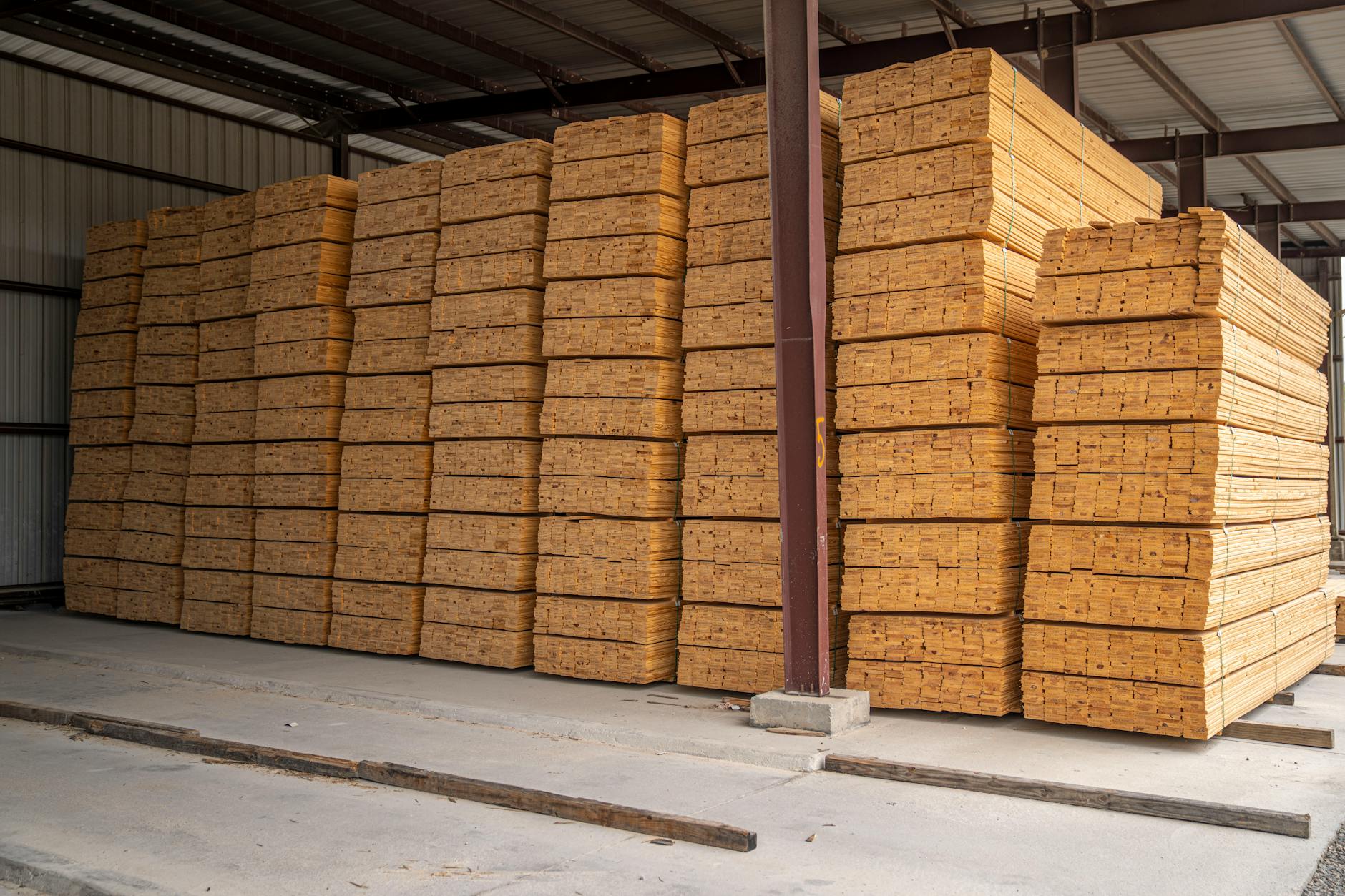
Weyerhaeuser Company (NYSE: WY) stands as a titan in the timber industry, managing an unparalleled portfolio of approximately 11 million acres of timberlands across the U.S. and an additional 14 million acres under long-term licenses in Canada. This sheer scale, combined with its Real Estate Investment Trust (REIT) structure, offers unique tax benefits and positions the company as a foundational asset in the real estate sector. Despite its robust asset base, Weyerhaeuser currently navigates a complex market environment, grappling with cyclical pressures in housing while simultaneously pursuing strategic growth initiatives.

The company's stock, trading at $24.53 as of market close on February 27, 2026, reflects this tension. While the broader Real Estate sector saw a positive day, climbing +2.44%, WY's share price remained relatively flat, up just +0.04%. This performance underscores the disconnect between the intrinsic value of its timberland assets and the immediate challenges facing its Wood Products segment. Investors are weighing the long-term resilience and sustainability of its vast land holdings against the near-term volatility driven by housing market dynamics and commodity prices.

Weyerhaeuser's business model is deeply integrated, owning timberlands, manufacturing wood products, and managing real estate, energy, and natural resources. This vertical integration provides a durable moat, allowing the company to control its supply chain and optimize value creation from its forests. However, this also ties its fortunes closely to the cyclical nature of the housing market, where demand for lumber and other wood products can fluctuate wildly. The current environment, characterized by high interest rates and cautious homebuilding activity, has undoubtedly impacted recent financial performance, yet the underlying asset quality remains a compelling draw for long-term investors.

The narrative for Weyerhaeuser is one of "cyclical pain versus underlying value." Its extensive timberland portfolio and REIT status provide a significant floor to its valuation, with some analysts suggesting a hard floor of $35–$39 per share. This implies substantial upside from current trading levels, provided the company can navigate the ongoing market bumps and execute on its strategic vision. The question for investors isn't if the value is there, but when the market will fully recognize it amidst the prevailing macro uncertainties.

How Do Weyerhaeuser's Timberland Assets Provide Resilience and Diversification?

Weyerhaeuser's vast timberland holdings are more than just trees; they represent a tangible, resilient asset class that offers significant diversification and inflation-hedging characteristics for an investment portfolio. Timberland has historically demonstrated its ability to act as an effective hedge against inflation, as the value of both the underlying land and the standing timber tends to appreciate with rising price levels. This makes Weyerhaeuser an attractive proposition during periods of economic uncertainty, providing a stable, long-term investment thesis rooted in real assets.

The company's commitment to sustainable forestry practices further enhances the long-term value and resilience of its assets. Weyerhaeuser reforests 100% of its harvested acres, planting over 100 million tree seedlings annually – roughly 190 trees per minute. This century-long dedication to sustainable yield forestry ensures that harvesting does not diminish the forest's ability to provide the same volume in the future, safeguarding the asset base for generations. This responsible management not only supports ecological outcomes but also secures a continuous supply of timber, underpinning future revenue streams.

Beyond traditional timber harvesting, Weyerhaeuser actively maximizes the value of its land through various avenues. Its "Higher and Better Use" (HBU) land sales monetize parcels that have greater development potential, generating additional revenue streams. Furthermore, the company leases approximately 98% of its owned Southern acreage for recreational purposes, demonstrating an innovative approach to leveraging its extensive land base for diverse income. These initiatives highlight how Weyerhaeuser extracts value beyond just cutting trees, diversifying its revenue sources and enhancing asset utilization.

The U.S. timberlands market alone is valued at approximately $210 billion, underscoring the scale and importance of Weyerhaeuser's position. Its integrated model, which includes owning timber through the entire chain, provides a durable competitive advantage. This strategic control over its raw materials, combined with its disciplined capital allocation, contributes to the perceived hard floor valuation of $35–$39 per share by some analysts. These factors collectively illustrate how Weyerhaeuser's timberland assets offer a robust foundation, providing both intrinsic value and a hedge against broader market fluctuations, making it a unique diversifier within the real estate sector.

What Are the Key Growth Catalysts Beyond Traditional Timber?

Weyerhaeuser is actively cultivating significant growth avenues beyond its traditional timber and wood products segments, with Natural Climate Solutions (NCS) emerging as a particularly promising catalyst. The company aims to generate $100 million in Adjusted EBITDA from these projects by the end of 2025, signaling a strategic pivot towards monetizing the ecological value of its vast timberlands. This initiative, which includes carbon and other ecosystem services, positions Weyerhaeuser to capitalize on the growing demand for high-quality, verifiable carbon offsets as corporations and governments pursue net-zero emissions goals.

At its Investor Day in December 2025, Weyerhaeuser unveiled an ambitious strategy to accelerate growth, targeting $1.5 billion of incremental Adjusted EBITDA by 2030, measured against a 2024 baseline. This includes $1 billion from identified growth initiatives, with $230 million expected from Strategic Land Solutions, of which $170 million is specifically attributed to its Climate Solutions business. This clear roadmap underscores management's commitment to leveraging its timberlands for new, high-value revenue streams that align with global sustainability trends.

Another significant growth driver lies in the anticipated recovery of the housing market and the increasing demand for mass timber construction. Industry forecasts project a rebound in the housing market, with the National Association of REALTORS® (NAR) anticipating a 14% increase in home sales and a 4% climb in home prices for 2026. Similarly, Compass Real Estate projects a 5% increase in home sales, reaching 4.25 million units in 2026. This improving environment is expected to drive increased demand for lumber and other wood products, directly benefiting Weyerhaeuser's sales volumes and pricing.

The rising adoption of mass timber products, such as cross-laminated timber (CLT), for large-scale commercial and residential buildings presents a new, high-value end market for Weyerhaeuser's logs. This sustainable building movement requires significant volumes of high-quality wood fiber, and as a major supplier to the construction industry, Weyerhaeuser is perfectly positioned to meet this demand. These combined catalysts—from monetizing carbon sequestration to supplying the next generation of sustainable construction—illustrate a forward-looking strategy that diversifies Weyerhaeuser's income and enhances its long-term growth potential beyond the traditional timber cycle.

What Are the Key Risks and Headwinds Facing Weyerhaeuser?

Despite its compelling long-term prospects, Weyerhaeuser faces several significant risks and headwinds that warrant careful consideration from investors. Foremost among these is the company's high sensitivity to the U.S. housing market. Timber demand is tightly linked to housing starts and renovation activity, making Weyerhaeuser's earnings highly susceptible to fluctuations in mortgage rates and consumer spending. A sustained period of high interest rates or a prolonged slowdown in new construction could continue to pressure lumber prices and, by extension, Weyerhaeuser's core timber and wood products revenues.

The company's financial leverage also presents a notable risk. With a net debt of 4.90x EBITDA, Weyerhaeuser carries a higher debt load than its historical averages. This elevated leverage puts additional pressure on cash flow, and if business conditions remain slow, managing this debt could become more challenging. While management has demonstrated careful capital allocation, including a 55-year streak of dividend payments and $735 million returned to shareholders in 2024 through dividends and buybacks, a sustained period of weak earnings could strain its financial flexibility.

Furthermore, Weyerhaeuser's profitability metrics, such as its operating margin of 6.7% and free cash flow (FCF) yield of 3.1%, are currently trailing their five-year averages of 19.41% and 6.86%, respectively. This margin compression limits the company's ability to reinvest in growth initiatives or significantly increase shareholder returns. While these figures are a casualty of cyclical pressures, a prolonged period of suppressed margins could impede its ability to capitalize fully on market recoveries or strategic expansions.

Finally, the potential for a resolution in U.S.-Canada softwood lumber disputes introduces a layer of trade policy risk. While current tariffs, approaching 40% on Canadian softwood lumber, benefit U.S. timberland owners by making domestic timber more competitive, a significant easing of these duties (potentially to 15-20%) could flood the market with Canadian lumber. This influx could pressure lumber prices lower in the near term, introducing new volatility and disrupting any nascent recovery. Investors must monitor these macro and policy factors closely, as they will significantly influence Weyerhaeuser's trajectory in the coming quarters.

How Do Valuation Metrics and Analyst Sentiment Stack Up?

Weyerhaeuser's current valuation metrics present a mixed picture, reflecting the ongoing tension between its cyclical challenges and long-term asset value. The stock trades at a P/E ratio of 54.61x, significantly higher than the Real Estate sector average of 21.8x and the market average of 26.32x. This elevated P/E suggests that the market is pricing in a substantial rebound in future earnings, rather than reflecting its current trailing twelve-month (TTM) EPS of $0.45. Similarly, its P/FCF of 32.21x is also above the sector average of 12.3x, indicating a premium for its cash-generating potential despite a recent -74.2% year-over-year decline in FCF.

However, other metrics offer a more favorable view. Weyerhaeuser's Price-to-Sales (P/S) ratio of 2.54x is below the Real Estate sector average of 4.1x, suggesting that its assets may offer valuation support relative to its revenue generation. Its Enterprise Value (EV) to EBITDA of 21.87x is also on the higher side, but the company's vast, irreplaceable timberland assets often command a premium not fully captured by traditional earnings multiples during cyclical downturns. The company's book value per share stands at $13.07, with a Price-to-Book (P/B) of 1.88x, which is reasonable for a REIT with significant land holdings.

Analyst sentiment, despite the mixed financials, leans predominantly bullish. A consensus "Buy" rating from 7 analysts, with 29% recommending a "Strong Buy" and 43% a "Buy," underscores optimism about Weyerhaeuser's future. The average price target is $29.00, implying an upside of approximately 18.2% from its current price of $24.53. Some analysts have even set targets as high as $38, suggesting a potential 36% upside if earnings and market confidence rebound. This disconnect between current trading levels and analyst targets highlights the market's expectation for a future rebalancing of supply and demand in the lumber cycle.

The company's dividend yield of 3.4% provides a modest income cushion, though its payout ratio of 187.0% indicates that the current dividend is not fully covered by TTM earnings. This is a common characteristic during cyclical troughs for companies like Weyerhaeuser, which prioritize maintaining a consistent base dividend. Management's guidance for FY25 Adjusted EBITDA was raised to approximately $390 million, with FY26 EBITDA forecast also raised by 4%, signaling an improving outlook. While near-term volatility is expected, the long-term investment case hinges on the anticipated recovery in housing and the successful execution of its growth strategies.

What Does This Mean for Investors?

For investors considering Weyerhaeuser, the current landscape presents a nuanced opportunity. The stock is trading at $24.53, near the lower end of its 52-week range of $21.16 – $31.66, suggesting a potential entry point for those with a long-term horizon. While recent financial performance has been impacted by housing market headwinds, the company's vast, sustainably managed timberland assets provide a robust foundation and a natural hedge against inflation. This makes Weyerhaeuser a compelling option for portfolio diversification, especially for investors seeking exposure to real assets.

The bullish analyst consensus, with an average price target of $29.00, indicates confidence in a future rebound. However, investors should be prepared for continued volatility in 2026, as the stock's trajectory will be heavily influenced by housing data, mortgage rate trends, and the outcome of U.S.-Canada trade negotiations. The anticipated recovery in housing starts and the structural supply constraints in the lumber market are key catalysts that could drive significant upside, but any delays in this recovery could prolong the current period of suppressed earnings.

Weyerhaeuser's strategic focus on Natural Climate Solutions and its ambitious $1.5 billion Adjusted EBITDA growth target by 2030 represent significant long-term value creation opportunities. These initiatives, coupled with its disciplined capital allocation and integrated business model, position the company to benefit from evolving market demands for sustainable resources. While the high P/E ratio reflects market expectations for future growth, the underlying asset value and diversified revenue streams offer a margin of safety.

Ultimately, Weyerhaeuser is an investment for those willing to look beyond the immediate cyclical pain. Its unique position as a timberland REIT, combined with its commitment to sustainability and strategic growth, offers a compelling narrative for long-term capital appreciation and portfolio resilience. Investors should monitor key macro indicators and the company's execution on its growth initiatives, but the underlying value of its timber assets provides a strong anchor in an otherwise volatile market.

Weyerhaeuser offers a unique blend of stability through its vast land holdings and growth potential from emerging climate solutions. While patience is required to navigate the current housing cycle, the long-term narrative for this timber giant remains compelling for value-oriented investors.


Want deeper research on any stock? Try Kavout Pro for AI-powered analysis, smart signals, and more. Already a member? Add credits to run more research.

SHARE THIS ON:

Related Articles

Category

You may also like

Stock News3 days ago

Disney Bull vs Bear: What Big Changes at the Entertainment Giant Really Mean for Investors

Walt Disney (NYSE: DIS) stock is at an inflection point as the entertainment giant faces significant strategic changes.
Stock News1 week ago

New report: Medicare Advantage enrollment depicts industry at a crossroads, with concentrated growth and retrenchment

A new HealthScape Advisors report indicates Medicare Advantage enrollment is at a crossroads, showing concentrated growth alongside industry retrenchment.
Stock News1 months ago

Weyerhaeuser Q4 Loss Narrower Than Estimates, Revenues Miss, Stock Down

Weyerhaeuser's Q4 reported loss narrowed versus estimates, but revenues missed projections due to weakened wood products pricing amid tough market conditions.
Stock News1 months ago

Does the Kraft Group Partnership Signal Upside for BigBear.ai Stock?

BigBear.ai Holdings (BBAI) announced a strategic partnership with the Kraft Group's International Forest Products LLC (IFP) to implement advanced efficiency technologies. This collaboration involves I...

Breaking News

View All →

Top Headlines

View More →
Stock News1 hour ago

Oracle expected to slash thousands of jobs as massive AI spending creates financial cash crisis

Stock News4 hours ago

Apple, Tesla, and Alphabet All Sinking As Oil Prices Explode Higher

Stock News4 hours ago

Surging Oil Prices Threaten NVIDIA, Amazon, and Meta

Stock News4 hours ago

2 Red-Hot Growth Stocks to Buy in 2026

Stock News5 hours ago

Prediction Markets Are Booming, but I'd Rather Bet on These 3 AI Stocks