MarketLens
What Are Crypto Perpetual Futures and Why Do They Matter

Key Takeaways
- The CFTC's imminent framework for U.S. crypto perpetual futures aims to repatriate trillions in offshore liquidity and establish the U.S. as a dominant player in digital asset derivatives.
- This regulatory shift creates significant opportunities for regulated exchanges and institutional investors, but also introduces new risks tied to leveraged trading and potential market volatility.
- Active traders should prepare for increased market depth and new strategies, while closely monitoring regulatory nuances and the evolving competitive landscape between centralized and decentralized platforms.
What Are Crypto Perpetual Futures and Why Do They Matter?
Crypto perpetual futures, often simply called "perps," are derivative contracts that allow traders to speculate on the future price of cryptocurrencies without an expiration date. Unlike traditional futures, which have a fixed settlement date, perps can be held indefinitely as long as traders maintain sufficient margin. This flexibility, combined with the ability to use significant leverage, has made them incredibly popular, especially among retail traders globally.
The sheer scale of this market is staggering. In 2025, the top ten crypto perp exchanges processed a whopping $92.9 trillion in trading volume, marking a 64.6% increase from the previous year. This surge occurred even amidst a challenging fourth quarter for crypto, underscoring the product's resilience and demand. Globally, perpetual futures now account for approximately 75% of total crypto trading volume, and over 90% of all crypto derivatives volume, making them the dominant instrument in the digital asset space.
For years, however, American traders have largely been sidelined, confined mostly to spot markets or traditional futures with expiry dates. While platforms like Binance and Bybit facilitated trillions in offshore perp trading, U.S. participants were left to watch. This regulatory vacuum drove significant liquidity and innovation overseas, creating a fragmented global market where the U.S. lagged. The CFTC's move is a direct response to this exodus, aiming to bring this massive market back onshore.
Why is the CFTC Bringing Perpetual Futures Onshore Now?
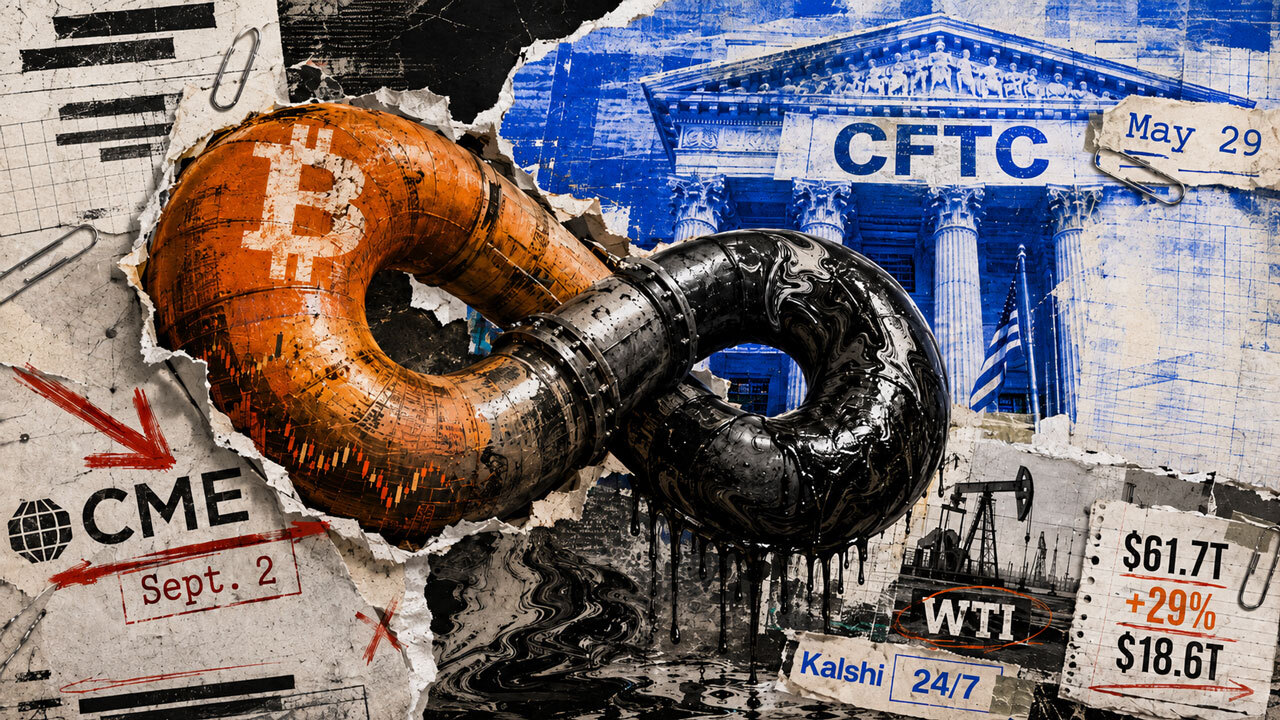
The Commodity Futures Trading Commission (CFTC) is gearing up to establish a framework for crypto perpetual futures in the U.S. within "the next month or so," as announced by Chairman Michael Selig at the Milken Institute’s Future of Finance conference. This isn't just a minor policy tweak; it's a strategic maneuver to reclaim a colossal market share and solidify the U.S.'s position as a leader in digital finance. The primary motivation is clear: repatriate the immense liquidity that has migrated to offshore platforms.
Selig explicitly stated that the "prior administration drove a lot of these firms and the liquidity offshore," leaving the U.S. with a regulatory void. This created a situation where American traders, both institutional and retail, had to access these products via unregulated or less regulated foreign exchanges, often through VPNs. The goal now is to provide a safe, federally regulated environment for these products, complete with robust investor protections to prevent the kind of catastrophic blow-ups seen in some offshore venues.
Consider the scale of the prize: from July 2025 to February 2026, offshore perpetual futures trading volume reached an astonishing $14 trillion, a figure that doubled within just six months. The total notional volume for centralized crypto derivatives hit $85.70 trillion in 2025, with perps likely accounting for $51 trillion to $77 trillion of that annual activity. Recapturing even a fraction of this market would be a massive boon for U.S. exchanges, market makers, and the broader financial ecosystem, generating significant trading fees and fostering innovation domestically.
What Does This Mean for Market Liquidity and Trading Opportunities?
The introduction of regulated crypto perpetual futures in the U.S. is poised to be a game-changer for market liquidity and will unlock a wealth of new trading opportunities. For years, institutional capital has largely avoided the offshore, unregulated perp markets due to compliance concerns. A CFTC-approved framework provides the necessary regulatory legitimacy, potentially ushering in a wave of institutional participation that could dramatically deepen order books and reduce slippage.
This influx of capital would not only enhance price discovery but also create a more robust and efficient market. We could see tighter spreads on major crypto pairs like Bitcoin and Ethereum, benefiting all traders. Furthermore, the ability to hold leveraged positions indefinitely, without the hassle of rolling over contracts, offers unparalleled flexibility for hedging strategies, directional bets, and arbitrage opportunities. This is particularly attractive for sophisticated traders who rely on continuous market exposure.
The move is also expected to foster greater competition among domestic exchanges. While CME Group already offers perpetual-like futures on Bitcoin and Ethereum, the CFTC's broader framework could pave the way for other major U.S. exchanges like Coinbase and Kraken to launch their own "true perpetual futures." This competition would likely drive innovation in product offerings, lower trading fees, and improve overall service quality, ultimately benefiting the end-user. The U.S. market, currently lagging, is set to become a vibrant hub for crypto derivatives.
What are the Risks and Challenges for Investors?
While the prospect of U.S. crypto perpetual futures is exciting, investors must be acutely aware of the inherent risks and challenges. The primary concern revolves around leverage. Perpetual futures are margined derivatives, meaning traders can control large positions with a relatively small amount of capital. While this amplifies potential profits, it equally magnifies losses, leading to rapid liquidation events if the market moves unfavorably.
Consider the recent market dynamics: Bitcoin's perpetual funding rate recently hit -6%, its most negative level in three months, signaling aggressive short positioning. Coin-margined open interest climbed to 687,000 BTC, indicating a market deeply coiled for a squeeze. Such conditions can lead to "liquidation cascades," where a sharp price move triggers forced selling or buying, further accelerating the price action and causing significant volatility. In a brutal 24-hour period, crypto derivatives traders recently faced approximately $471 million in futures position liquidations, with $348 million in short positions liquidated.
Moreover, the regulatory landscape remains complex. While the U.S. is liberalizing, European regulators are tightening their stance. The European Securities and Markets Authority (ESMA) has warned that crypto perpetuals may be akin to Contracts for Difference (CFDs), subjecting them to strict retail protection rules. This divergence could fragment global liquidity and force traders to choose between jurisdictions. The CFTC will need to strike a delicate balance between fostering innovation and implementing robust investor protections, including conservative leverage caps, stringent KYC/AML requirements, and transparent funding rate methodologies, to ensure market integrity and stability.
How Will This Impact Existing Crypto Platforms and the Competitive Landscape?
The CFTC's move to allow perpetual futures will fundamentally reshape the competitive landscape for crypto platforms, both centralized and decentralized. For established U.S. exchanges like Coinbase and Kraken, this presents a monumental opportunity to expand their offerings and attract institutional capital that has been hesitant to engage with offshore or unregulated venues. Coinbase, for instance, already has a dedicated webpage for perps, signaling its readiness to enter this market.
However, the impact on decentralized finance (DeFi) protocols, particularly those specializing in on-chain perpetuals like Hyperliquid, is a nuanced story. The bull case for Hyperliquid is that regulatory legitimacy for perps acts as a rising tide, validating the entire market and potentially drawing more users into the broader ecosystem. Hyperliquid has rapidly gained prominence as a leading on-chain perps venue, boasting significant open interest and 24/7 markets. For traders seeking self-custodial, non-KYC'd access, Hyperliquid remains a primary option, and the CFTC cannot directly regulate it.
The bear case for platforms like Hyperliquid, however, is equally compelling. Much of their value proposition stemmed from the absence of legitimate U.S. alternatives. Once Coinbase Advanced, Kraken, or a CME-affiliated venue lists CFTC-cleared Bitcoin and Ethereum perps for U.S. institutional users, the narrative shifts. Institutional allocators prioritize prime brokerage relationships, regulated counterparties, and audited infrastructure – features that DeFi protocols typically do not offer. Regulated U.S. perps could also tighten spreads on the most liquid pairs, potentially compressing fee revenues for existing platforms. The ultimate outcome will depend on whether the increased overall market volume outweighs the shift in market share towards regulated, centralized offerings.
What Does This Mean for Investors Going Forward?
The CFTC's impending framework for crypto perpetual futures marks a pivotal moment for the U.S. digital asset market. Investors should prepare for a significant increase in market depth and trading activity, as trillions in offshore liquidity are targeted for repatriation. This regulatory clarity is a net positive for the institutional adoption of crypto derivatives, potentially paving the way for more sophisticated financial products and strategies.
However, the journey won't be without its bumps. The inherent volatility of leveraged products demands a cautious approach, and investors must understand the risks of liquidation cascades. Keep a close eye on the specific regulatory details the CFTC unveils, particularly regarding leverage limits and investor protections, as these will dictate the market's structure and accessibility. The battle for market share between centralized, regulated exchanges and decentralized platforms will be a fascinating narrative to watch unfold, offering both opportunities and challenges for active traders and long-term investors alike.
Want deeper research on any stock? Try Kavout Pro for AI-powered analysis, smart signals, and more. Already a member? Add credits to run more research.
Related Articles
Category
You may also like


Derivative Markets Explode on Shiba Inu: Should We Worry?

If the CFTC “only does Bitcoin,” why did it just invite crypto's biggest CEOs into the room?

Here are the 3 things to watch that will move bitcoin and crypto prices in 2026
Breaking News
View All →Featured Articles
Top Headlines

Why Gareth Soloway Sees The S&P 500 Hitting 5,600 by Year End

Microsoft plans to ship prototype of next Xbox console to developers in 2027

Nebius: Why NVIDIA's $2B Bet Cements its AI Leadership

Nebius Stock Charts Show Strong Momentum. Nvidia's Backing Will Help.