MarketLens
What Does Saronic's Massive Funding Round Signify for Defense Tech

Key Takeaways
- Saronic's $1.75 billion Series D funding at a $9.25 billion valuation signals a profound shift towards autonomous maritime systems in global defense strategies.
- The escalating conflict in Iran underscores the urgent demand for cost-effective, attritable drone warfare, accelerating the Pentagon's pivot to uncrewed vessels.
- Investors should scrutinize defense tech companies prioritizing software-defined platforms and scalable manufacturing, as they are poised to disrupt traditional defense contractors.
What Does Saronic's Massive Funding Round Signify for Defense Tech?
Saronic Technologies, an autonomous ship startup, recently made waves by closing a $1.75 billion Series D funding round, catapulting its valuation to a staggering $9.25 billion. This isn't just another venture capital headline; it's a powerful statement about the future of defense and the accelerating adoption of autonomous systems. The round, led by Kleiner Perkins, more than doubles Saronic's valuation from its $4 billion Series C raise early last year, reflecting an intense investor appetite for innovative defense solutions.
This significant capital infusion underscores a critical juncture where geopolitical tensions are converging with rapid technological advancements. The U.S. government, particularly the Navy, is actively seeking modern, cost-effective defense capabilities to counter emerging threats and maintain maritime superiority. Saronic's success validates the thesis that software-first approaches to military hardware can command valuations typically seen in consumer tech, challenging the long-held dominance of traditional defense contractors.
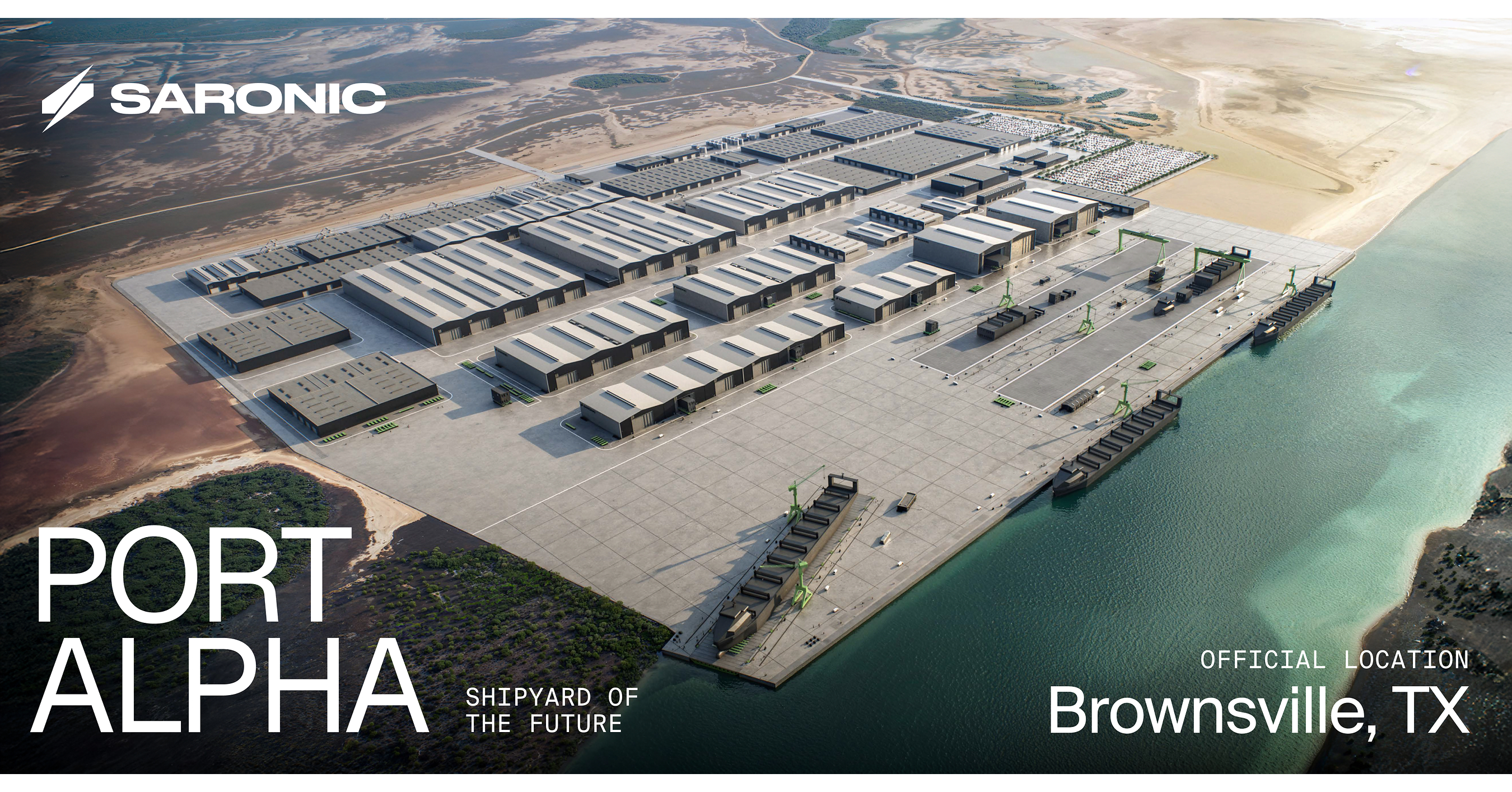
The funding will fuel Saronic's ambitious plans to scale its supply chain, expand its existing production facilities in Louisiana and Texas, and establish a new, advanced shipyard dubbed "Port Alpha." CEO Dino Mavrookas emphasized that this capital will accelerate the company's ability to produce advanced, highly capable autonomous ships at a pace not witnessed since World War II. This aggressive expansion is a direct response to growing demand from the U.S. and allied customers for platforms offering greater range, endurance, and payload capacity across a family of vessels, from the 24-foot Corsair to the 180-foot Marauder.
This moment represents a strategic bet by the Pentagon, embracing more risk on unproven platforms in exchange for potential technological leaps. It marks a clear departure from the risk-averse procurement culture that has defined military spending for decades, driven by an urgent need to counter adversaries heavily investing in autonomous systems. Saronic's ability to attract such substantial investment highlights a broader industry shift, where agility and innovation are increasingly prioritized over legacy systems and protracted development cycles.
How is the Iran Conflict Accelerating the Shift to Autonomous Warfare?
The ongoing conflict with Iran and the volatile situation in the Strait of Hormuz are serving as a stark, real-time demonstration of the critical need for autonomous warfare capabilities, directly accelerating the U.S. military's pivot to uncrewed systems. The Pentagon recently confirmed the deployment of uncrewed drone speedboats, specifically the Global Autonomous Reconnaissance Craft (GARC), for patrols against Iran. This marks the first time Washington has acknowledged using such vessels in an active conflict zone, highlighting their immediate operational relevance.
These GARC vessels, capable of surveillance and potential kamikaze strikes, have already logged over 450 hours at sea and traversed more than 2,200 nautical miles in support of Operation Epic Fury. While the Navy's broader efforts to field a fleet of uncrewed surface vessels have faced setbacks, including technical problems and cost concerns, the urgency of current conflicts is pushing rapid deployment. The war in Ukraine, where small, inexpensive uncrewed surface vessels (USVs) have inflicted significant damage on much larger Russian warships, provides a compelling blueprint for this shift.
The U.S. government is actively leaning on innovative defense tech solutions to counter low-cost drone threats from adversaries and to modernize its military. President Donald Trump's military modernization plans explicitly aim to restore maritime supremacy, particularly in the face of China's vast shipbuilding capabilities. The bottleneck in the Strait of Hormuz, with Iran effectively closing the strait and attacking commercial ships, further illustrates the immediate strategic value of integrating newer, more flexible tools into modern naval operations.
This operational context underscores the appeal of platforms like Saronic's, which are designed for rapid deployment, operate without risking human crews, and can be updated via software rather than requiring multi-year hull redesigns. The ability to deploy "attritable" systems—those that are inexpensive enough to be risked or lost in combat—is a game-changer. It allows for mass deployment and swarm tactics, providing a force multiplier that traditional, multi-billion-dollar warships simply cannot match in terms of cost-effectiveness and operational flexibility.
What Are Saronic's Key Technological Advancements and Production Ambitions?
Saronic's impressive funding round is fundamentally driven by its technological advancements and ambitious production strategy, which promise to reshape maritime defense. The company's core strength lies in its AI-driven autonomy stacks, allowing its vessels to navigate, surveil, and coordinate missions without human pilots. This software-first approach differentiates Saronic from traditional shipbuilders, enabling faster iteration and leveraging commercial AI breakthroughs rather than relying solely on slower, defense-specific R&D cycles.
The company's portfolio spans a range of autonomous surface vessels (ASVs), from the compact 24-foot Corsair to the substantial 180-foot Marauder, with plans to expand "beyond" these sizes. The Corsair, for instance, has moved from prototype to high-rate production and fielded capability in under a year, thanks to a $392 million production contract with the U.S. Navy. This rapid development cycle is a testament to Saronic's integrated approach, combining first-principles engineering with advanced manufacturing techniques and software-defined production.
Saronic is not just building boats; it's building a new model of American shipbuilding. The company acquired the Gulf Craft shipyard in Franklin, Louisiana, last year to immediately expand its capabilities. There, it's already constructing two 150-foot Marauder vessels, having progressed from initial design to full vessel development in just six months. The company has also committed a $300 million investment into expanding this shipyard, aiming to quintuple production over the next 12 months and add 1,500 new jobs.
Looking ahead, Saronic plans to build more than 20 ships annually by 2027, a goal supported by the development of "Port Alpha," its next-generation shipyard. While the exact location for Port Alpha is still under a nationwide search, it's envisioned as the most advanced shipyard in the U.S., designed to produce large autonomous ships at unprecedented speed and scale. This focus on industrial capacity, alongside technological innovation, is crucial for delivering maritime superiority for the U.S. and its allies, addressing a decades-long erosion of American shipbuilding capabilities.
What Are the Investment Implications for Defense Tech and Autonomous Systems?
Saronic's significant funding round and the broader geopolitical landscape have profound investment implications for the defense technology sector and autonomous systems. This moment signals a clear validation of the "defense tech" category, which was once shunned by venture capitalists due to regulatory complexities and slow sales cycles. Now, with rising global tensions and expanding Pentagon modernization budgets, autonomous defense platforms are attracting substantial capital, proving that software-driven military hardware can achieve consumer tech-level valuations.
For investors, this means a re-evaluation of traditional defense stocks versus agile, software-first startups. While established players like StandardAero, Inc. (NYSE: SARO), trading at $25.94 with a market cap of $8.63 billion, continue to play a vital role in aerospace engine aftermarket services and MRO, the growth narrative is increasingly shifting towards companies like Saronic. StandardAero, with its diversified client base and strong MRO positioning, saw its shares rise +2.85% today, indicating a healthy industrials sector, which is up +1.40%. However, the long-term disruptors are likely to be those innovating at the intersection of AI and hardware.
The investment thesis for autonomous systems centers on their ability to act as force multipliers, reduce risk to human personnel, and offer cost-effective alternatives to traditional, expensive manned platforms. The U.S. Navy's accelerated plans to deploy uncrewed fleets, driven by lessons from Ukraine and competition with China, creates a massive addressable market. Companies that can deliver reliable, scalable, and modular autonomous vessels will be at the forefront of this transformation.
However, investors must also consider the unique challenges of this sector. Regulatory approval for autonomous military vessels remains complex, and Navy acquisition processes still often favor established contractors with deep-seated relationships. Battlefield reliability is another critical factor; software-driven platforms need to prove their mettle under actual combat conditions, not just in controlled tests. The competitive landscape is also intensifying, with other billion-dollar defense tech unicorns like Anduril expanding into maritime autonomy and traditional players rushing to integrate AI capabilities.
What Risks and Challenges Lie Ahead for Autonomous Maritime Defense?
Despite the immense potential and significant investment flowing into autonomous maritime defense, substantial risks and challenges remain that investors must carefully consider. The primary hurdle is proving battlefield reliability under actual combat conditions. While controlled tests are promising, the unpredictable and chaotic nature of real-world conflict presents a far greater test for AI-driven systems. A single high-profile failure could significantly dampen enthusiasm and slow adoption rates.
Regulatory and ethical considerations also pose a complex challenge. The deployment of autonomous weapons systems raises questions about accountability, decision-making in lethal engagements, and the potential for unintended escalation. Governments and international bodies are still grappling with frameworks for autonomous warfare, and evolving regulations could impact development, deployment, and export opportunities for these technologies. This regulatory uncertainty adds a layer of risk not typically found in commercial tech.
Furthermore, the cybersecurity threat is paramount. Autonomous vessels, being software-defined and networked, present attractive targets for cyberattacks. Adversaries could attempt to hack, jam, or spoof these systems, potentially turning them against their operators or rendering them inoperable. Ensuring robust, resilient, and unhackable systems will require continuous investment and innovation, adding to the operational costs and development timelines.
The competitive landscape is rapidly intensifying. While Saronic has a head start with its purpose-built autonomy, traditional defense contractors like Huntington Ingalls are actively integrating AI into their existing platforms, leveraging their deep Pentagon relationships and vast resources. New entrants like Anduril are also expanding into maritime autonomy, creating a crowded field. Saronic's ability to maintain its technological edge and accelerate production will be critical in this race, especially given the long sales cycles and potentially delayed payments associated with defense contracts.
Finally, scaling production to meet ambitious targets, such as building over 20 ships annually by 2027, presents significant logistical and supply chain challenges. The U.S. has experienced a "steady erosion" of its shipbuilding capacity over decades, and rapidly rebuilding this industrial base, even with modern manufacturing techniques, is a monumental task. Securing skilled labor, raw materials, and specialized components at scale will be crucial for Saronic to deliver on its promises and justify its high valuation.
The Future of Maritime Autonomy: A Transformative Era
Saronic's recent $1.75 billion funding round is more than just a financial milestone; it's a clear signal that autonomous maritime systems are moving from experimental concepts to essential components of global defense. The confluence of geopolitical tensions, particularly the conflict in Iran, and rapid technological advancements is creating an unprecedented demand for these innovative platforms. Companies like Saronic, with their software-first approach and ambitious production plans, are poised to fundamentally reshape naval warfare and challenge the long-standing dominance of traditional defense contractors.
However, the path forward is not without its complexities. Investors must weigh the immense growth potential against significant risks, including battlefield reliability, regulatory hurdles, cybersecurity threats, and intense competition. The ability of these nascent defense tech firms to execute on their promises, scale production, and navigate the intricate defense procurement landscape will ultimately determine their long-term success. This is a transformative era for maritime autonomy, promising a future where agile, intelligent, and cost-effective uncrewed vessels play an increasingly critical role in global security.
Want deeper research on any stock? Try Kavout Pro for AI-powered analysis, smart signals, and more. Already a member? Add credits to run more research.
Related Articles
Category
You may also like


Is Swarmer the Palantir of Drones? Investors Bet Big on Defense Tech Stock

Mach 2 and Beyond: Aerospace Enters Its Biggest Spending Cycle

Chariot Defense Announces $34M Series A led by Andreessen Horowitz to scale command of power on the battlefield.
Breaking News
View All →Featured Articles
Top Headlines

After Nike's Drop, Here Are the 3 Retail Growth Stocks I'd Buy Today

Prediction: This Will Be Nvidia's Stock Price by the End of the Year

Were You Wrong to Sell Nvidia? Here's What GTC 2026 Revealed About the Next 2 Years.

Prediction: These 5 Stocks Will Be the Best Performers of 2026